

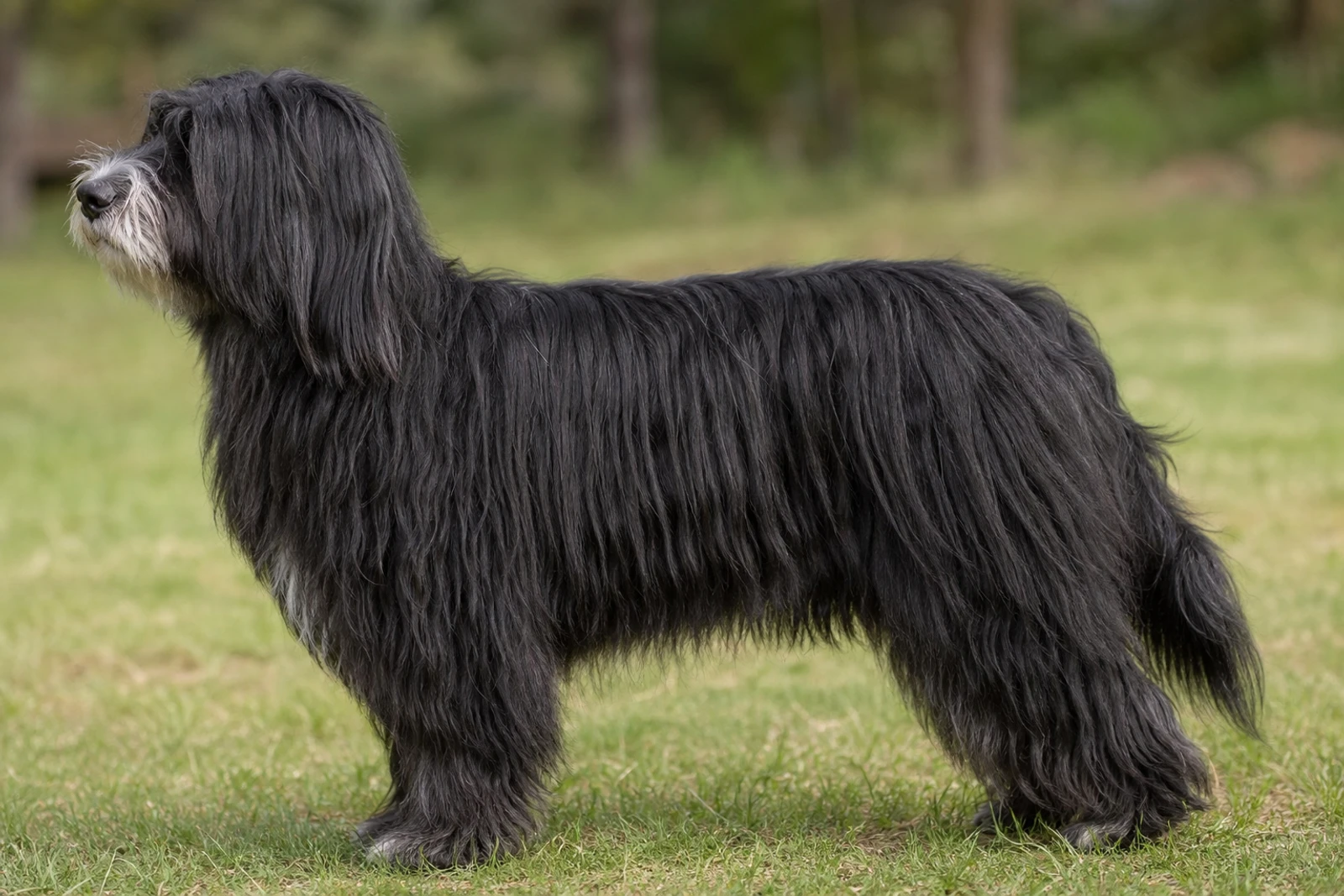
The Portuguese Sheepdog, an intelligent and hardworking herding breed from Portugal, thrives in active homes where it can channel its energy into tasks. With a strong protective instinct and deep loyalty, it bonds closely with family but remains reserved with strangers. Best suited to experienced owners with space and time for rigorous exercise and mental stimulation, this dog excels at canine sports, hiking, and farm work. Its shaggy coat requires regular care, and its independent nature calls for consistent training. Not ideal for first-time owners or apartment living, but a steadfast companion for those who match its drive.
At a glance
- Size
- Large
- Height
- 17–22 in
- Weight
- 37–60 lb
- Life span
- 12–13 years
- Coat colors
- fawn, grey, brown, yellow, black and tan
- Coat type
- long and shaggy, goat-like texture
- Group
- Working
- Origin
- Portugal
How much does a Portuguese Sheepdog cost?
Adopt / rescue
$75–$400
Usually includes spay/neuter, first shots, and a microchip.
Buy from a breeder
$700–$2,000
From a reputable, health-testing breeder.
Approximate USD. Prices vary widely by region, breeder, pedigree, age, and coat colour — adopting is the lower-cost and recommended route. Avoid suspiciously cheap “breeders”; they’re often puppy mills.
Estimate the full cost of a Portuguese Sheepdog →Want the ongoing number? Estimate the monthly food bill for a Portuguese Sheepdog with our dog food cost calculator.
Portuguese Sheepdog photos
Views
Front, side, rear and top — the full silhouette.Poses
How the breed sits, lies, moves and plays.Puppy to senior
The breed across its whole life.Expressions
The breed’s range of moods.Close-up details
Eyes, ears, nose, paws, tail and coat.Coat colors
The breed’s recognized colors.Click any photo to enlarge. We show the Portuguese Sheepdog from every angle — three views, poses, life stages, expressions, close-ups, coat and colors.
Appearance & size
The first thing you’ll notice is the shaggy, monkey-like face — a long, coarse beard, a droopy mustache, and heavy brows that half-hide dark, almond-shaped eyes. That quizzical expression isn’t just a quirk; it’s the breed’s signature, and it can read as comical, watchful, or almost eerily human depending on the angle.
Standing 17 to 22 inches at the shoulder and weighing 37 to 60 pounds, the Portuguese Sheepdog is officially a large dog but sits right at the boundary of medium. A typical dog is slightly longer than tall, giving it a rectangular silhouette that’s sturdy without being heavy. The chest is deep and well-sprung, but the forechest isn’t overdone — the front view shows moderately wide shoulders and straight forelegs that look ready to move all day.
Coat, color, and texture
The coat is the definition of rustic. It’s long, straight or gently wavy, and dense — no undercoat, which means it sheds very little but also feels more like rough goat hair than soft fluff. That single layer is weather-ready, matting easily if you don’t brush often.
Colors run from rich chestnut and warm yellow to wolf-gray, fawn, and black, often with white markings on the chest, paws, chin, or tail tip. It’s common to see a dark muzzle blending into a lighter head, especially in dogs with gray or black coats.
Key features from every angle
- Front: The head is the star. A broad skull, a strong muzzle, and a distinct stop sit behind all that facial hair. Triangular drop ears hang close to the head, practically buried in fringe. You might catch a sliver of dark nose or a flash of teeth under the mustache when the dog pants.
- Side: The slightly sloping croup and low-set tail (long, reaching to the hock, and well-feathered) create a gentle curve from hip to tip. The back is level, and the underline tucks up modestly. In motion, you’ll see a ground-covering, energetic trot with the tail carried just below the topline — maybe with a little hook at the end when the dog is excited.
- Rear: Thickly coated breeches and athletic thighs give the hind end a rumpled, working-class look. The tail hangs in a natural slight curve, and the dog’s rear movement is clean and driving, not sloppy.
There’s nothing slick or polished here. The Portuguese Sheepdog looks like it was built for herding sheep across scrubby hillsides, with a coat that doesn’t care about mud and a face that always looks like it’s solving a small puzzle.
History & origin
Portuguese Sheepdogs come from the Alentejo region, a stretch of rolling plains and cork-oak forests in southern Portugal. They first appeared roughly a hundred years ago, right around the turn of the 20th century. No one pinned down an exact year, but livestock farmers in that area needed a dog tough enough to handle long days driving sheep and goats across dry, thorny ground and smart enough to work independently for hours on end. The result was a rugged, medium-to-large herding breed built for endurance, not flash.
For decades, the dogs were simply the tools of local shepherds — never fancy, never widely known outside rural communities. They did their job quietly, moving flocks between pastures and watching for strays, often with zero human direction. But as Portugal modernized through the mid-1900s, traditional herding life shrank. By the 1970s, the breed was circling the drain, hovering close to extinction. Only a handful of dogs remained on remote farms.
What saved the Portuguese Sheepdog was a small group of dedicated fanciers who scoured the countryside for the last true examples. They tracked down surviving dogs, gathered them into careful breeding programs, and fought to preserve the working traits that made the breed valuable in the first place. Without those enthusiasts, the breed would have simply faded into memory. Instead, it began a slow, steady comeback — first in Portugal, then gradually catching the eye of herding-dog lovers elsewhere. Today, still a relatively rare sight outside its homeland, the Portuguese Sheepdog has moved beyond the collapse that nearly ended it, and it remains exactly what it was bred to be: a tireless partner for anyone who needs a clear-headed herder with enough grit to handle rough country.
Temperament & personality
Portuguese Sheepdog
A Portuguese Sheepdog isn’t a couch decoration — this is a clear-eyed, busy-minded working partner who needs a job more than it needs your approval. Bred to move livestock across rugged terrain, these dogs come hardwired with initiative and stamina. Neglect that drive and you’ll see it spill out as nuisance barking, obsessive chewing, or indoor urine marking. They are intensely loyal to their own people, but their affection runs on the terms of a respectful working relationship, not endless cuddles. Expect a dog who thinks before he obeys.
Intelligence here comes with a strong-willed streak. Harsh corrections backfire; these dogs thrive under calm, consistent handling that gives them a reason to cooperate. Fairness and clear boundaries — not volume — earn their trust. Without that, anxiety-driven behaviors like lip licking, head turning, and restlessness become the norm. Many Portuguese Sheepdogs are alert watchdogs, quick to sound off at an unfamiliar approach. How far that goes depends on early socialization, but you’ll rarely need a doorbell.
Around the house, they form tight bonds with their family. They’re often reserved, not effusive, with strangers. Children need guidance: the breed’s herding instinct can surface as nipping or circling, and they do not appreciate having meals interrupted. Teach kids to give the dog peaceful, undisturbed eating time to avoid food guarding. Puppies will chew to explore and ease teething; adults gnaw to keep jaws strong. Redirecting that to appropriate items early saves your furniture, and a homemade citrus peel spray works well on off-limits surfaces.
Their connection to scent is part of who they are. They read the world through their nose, and that means they’ll notice — and may revisit — spots where accidents happened. Remove urine and feces smells with an enzymatic cleaner, not just soap, to break the cue. Vinegar spray helps deter both chewing and repeat marking. When a Portuguese Sheepdog leans forward with a stiff body and hard stare, step back — that’s not playfulness. A loose, wiggly body and soft eyes tell you he’s relaxed. Give this dog an outlet for his brain and body — a solid hour of purposeful work or running, not just a yard to wander — and you’ll have a steady, intensely loyal partner who’s far more interesting than an ornament.
Good with kids, dogs & other pets
A patient, non-aggressive nature makes the Portuguese Sheepdog a quietly steady presence in a home with kids. They aren’t wired for sharp reactions, so when a child’s play gets loud or clumsy, you’re more likely to get a tolerant tail wag than a snap. That said, a 40–60-pound dog moving through a tight hallway can accidentally knock over a toddler. Young kids and any dog always need eyes-on supervision—not because the dog is a risk, but because size alone turns a happy hip check into a spilled sippy cup.
-
With children: Early exposure seals the deal. A puppy raised alongside kids who handle him gently learns to read their rhythms. Because this breed is sensitive, harsh grabbing or unexpected hugs can shut them down, so teach your kids the same calm handling you’d want for yourself. The payoff is a dog that truly enjoys being part of the family pack. Leave him isolated in a yard or alone for long stretches, and you’ll get a stressed, lonely dog—not the kid-friendly companion you signed up for.
-
With other dogs: Socialization between 3 and 16 weeks is everything. A Portuguese Sheepdog that meets a wide circle of friendly dogs early on typically plays well with others as an adult. They aren’t posturing for top dog, but they do need gradual, positive introductions. Skip that window, and you might see timidity or over-excitement around unfamiliar dogs. Forced meet-and-greets with an adult who missed out only backfire; respect his comfort zone and let him stay neutral around strange dogs if that’s where he lands.
-
With cats and small pets: No heavy prey drive comes baked into this breed, but those herding instincts can surface as a chase or a stare-down that stresses a cat. Introduce a puppy to household cats using barriers and short, reward-heavy sessions so he learns that the cat is a roommate, not livestock. Even then, don’t leave them alone together until you’ve seen repeated, calm interactions. Small pocket pets like rabbits or guinea pigs should remain in secure enclosures out of reach—not because the dog is aggressive, but because the sight of a darting fluffball might flip a switch you didn’t know was there.
Trainability & intelligence
This dog is a fast learner, but fast learning doesn’t mean automatic compliance. Portuguese Sheepdogs earned a 4/5 trainability rating for good reason — they pick up new commands and routines quickly when they see a point to it. The catch is that they also score a more moderate 3/5 for ease of training, which hints at the independent, sometimes strong-willed side of a working herder bred to make decisions without a human’s micromanagement.
You’ll get the most reliable responses when you make training a two-way conversation, not a demand. High-value rewards — especially a favorite toy or a quick game of tug — often motivate them better than food alone. Punishment-based methods backfire here. This breed is sensitive enough that a harsh correction can erode trust and turn a curious, engaged dog into one that shuts down or acts out of anxiety. Build a bank of trust first, then layer in obedience.
Recall is where that independence can show up. If something more interesting is on the horizon — a squirrel, another dog, an open field — the command “come” can go unheard. Train it early, reinforce it heavily with jackpot rewards, and never call the dog only to end the fun. Practice in increasingly distracting environments while the behavior is still rock-solid.
Start socialization before 16 weeks, exposing the puppy to different people, surfaces, sounds, and calm, friendly dogs. A Portuguese Sheepdog that misses early, positive exposure can become wary or reactive as an adult. Even with a solid foundation, keep introducing novel situations throughout the first year. The dog’s natural vigilance makes him an excellent watchful companion, but without skill-building, that vigilance tilts toward unnecessary suspicion.
- Use short, upbeat sessions. Their intelligence means they bore fast; drill-style repetitions are counterproductive.
- Reward immediately. A clicker or a verbal marker the instant the dog gets it right clarifies what you want.
- Practice patience. Clear communication and consistency pay off more than trying to “win” a battle of wills.
Bottom line? You’re not fighting a stubborn dog; you’re earning the cooperation of a clever one who wants to work with you on fair terms.
Exercise & energy needs
Plan on two solid rounds of exercise a day, not one. A Portuguese Sheepdog needs at least 60 minutes of activity twice daily — that’s the baseline for this working breed, and a single walk around the neighborhood won’t cut it. These dogs come from generations of moving livestock across Portugal’s rough terrain, so they’re built for sustained effort and sharp mental focus.
Split the sessions into morning and late afternoon to keep their mind and body settled. A fast, hilly hike, a long off-leash run in a safe area, or a bike ride where they can trot alongside you works well. Aim for real aerobic output, not just a sniff-and-stroll. Without it, you’ll likely see the flip side: restlessness, pacing, or barking that springs from too much pent-up energy.
Physical exercise is only half the equation. These are smart, problem-solving dogs that thrive when you add mental work to the daily routine. Nose work, puzzle toys, and games that make them hunt for hidden kibble can burn mental energy fast. Because they’re natural herders, structured activities like treibball (urban herding), agility, or even daily flirt pole sessions with a “stop and down” command hit both their body and their instinct to control moving objects.
Frequent, shorter bursts often work better than one long grind. Three 20-minute play-and-train sessions can be just as effective as an hour-long run, especially when you mix in obedience drills or trick training. Just watch the surface — large breed puppies and young adolescents have developing joints, so steer clear of repetitive high-impact work on concrete until growth plates close. Adults, too, benefit from softer footing for the bulk of their miles.
When you get the daily output right, you’ll have a calm, focused dog in the house — one that’s ready to crash at your feet instead of redecorating the couch.
Grooming & coat care
You’ll spot the Portuguese Sheepdog’s coat a mile off — that long, shaggy, wavy hair gives these dogs a goat-like silhouette. It’s a single coat with little to no undercoat, which means far less shed hair on your sofa than a typical double-coated herder. The trade-off: all that length tangles fast.
Brush daily with a slicker or pin brush. A metal slicker with rounded pins gets down to the skin without scratching, breaking up small knots before they turn into painful mats. Work in sections, lifting the top layer to reach the roots. Follow up with a wide-toothed comb behind the ears, under the collar, and along the back legs — the prime trouble spots. If you skip a day, expect to spend twice as long the next. Even 10 minutes of brushing each evening keeps the coat clean, loose-hair free, and surprisingly cool-weather-ready; a well-maintained single coat insulates without trapping dampness.
Bathe only every 4–6 weeks, or when your dog rolls in something truly offensive. Use a gentle dog shampoo, then rinse until the water runs clear. Leftover soap invites skin irritation under all that hair. Towel-dry thoroughly and let him air-dry in a warm place — a blow dryer on low can speed things up, but keep it moving so you don’t overheat the skin.
- Nails: Trim monthly, or whenever you hear clicks on the floor. Overgrown nails strain the feet and change gait.
- Ears: The drop ears trap moisture. Lift each flap weekly, sniff for any funk, and wipe the outer ear with a damp cotton ball. Redness or a head shake means a vet check.
- Teeth: Brush at least three times a week with dog-safe paste to head off early gum disease.
Seasonal coat care here is less about shedding explosions and more about debris. The long hair picks up burrs, twigs, and mud every time your dog runs through brush. Get in the habit of a quick post-hike finger-comb to pull out hitchhikers before they work deeper. No heavy undercoat blowout to manage, but you’ll still find some dead hair loosening in warmer months — daily brushing sweeps it away before it turns into felt.
A leave-in detangling spray helps on particularly windy, static-prone days. And because skin can be hard to see through that dense coat, regular grooming doubles as a hands-on health check: run your fingers over the ribs and back mound, feeling for bumps, dry patches, or ticks.
Shedding & allergies
If you’re picturing clouds of hair on every surface, take a breath. The Portuguese Sheepdog sheds very little — not “light” in the way a Labrador is light, but genuinely minimal. This isn’t a fluke of grooming; it’s built into the coat.
That long, shaggy, almost goat-like hair is a single coat. No dense undercoat means no spring or fall explosion of fluff. Dead hairs tend to get caught in the surrounding coat instead of dropping to the floor, so loose fur stays put until you brush it out. The trade-off? Matting. Ignore the coat for a few days and you’ll find tangles behind the ears, under the legs, and along the belly. A thorough comb-out three or four times a week keeps things manageable — and catches the little dead hair there is before it ends up on your sofa.
Drool is almost a non-issue. You won’t find long, sticky strands hanging from the jowls. A wet beard after drinking is the closest you’ll get, and that’s easy to wipe down.
Now for the allergy picture: no dog is truly hypoallergenic. All dogs produce dander and proteins in saliva and urine. Because the Portuguese Sheepdog drops so little hair, though, it also spreads less dander around your home. Many people with mild allergies do fine with this breed, but always spend real time around adults of the breed before committing — not just a quick meet at the breeder’s house. The absence of a furry tumbleweed problem doesn’t mean a zero-allergen guarantee. Still, if vacuuming up drifts of hair is your main dread, this dog takes that worry off the table, provided you’re willing to pick up a slicker brush instead.
Diet & nutrition
Feed this dog like the athlete he is, but don’t let those pleading eyes talk you into seconds. Portuguese Sheepdogs were bred to move livestock all day, so a working adult burns serious fuel. A pet who gets a walk in the morning and a romp in the yard still needs quality calories, just fewer of them — and a lot less than a dog on the farm.
Daily portions that match real activity
Start with a high-quality kibble or a well-built raw/home-cooked plan designed for an active 40–60-lb dog. A moderately active adult in the 45-lb range might land around 1,200–1,600 kcal per day, but you adjust from there. The goal is a lean body condition: you should easily feel ribs beneath a thin layer of flesh, and from above you’ll see a visible waist tuck. On days when herding, hiking, or training takes the place of a normal walk, bump the portion slightly. On lazy recovery days, drop it back so the extra doesn’t settle around the middle.
Because this is a breed that can be food-motivated, weight creep happens fast. Use a gram scale or a proper measuring cup for every meal, and never free-feed. If your Sheepdog acts like he’s starving 20 minutes after breakfast, splitting the daily ration into two or three smaller servings often takes the edge off.
Slowing down the speed-eater
A gulper needs a puzzle bowl or a slow-feeder insert — otherwise the whole bowl disappears in under a minute, which spikes the risk of bloat and leaves him mentally unsatisfied. You can also lightly blend or process home-prepared food. Dogs’ jaws move only up and down and they lack the salivary enzymes we rely on; breaking down cell walls mechanically helps unlock nutrients, especially from vegetables.
What a solid bowl looks like
Aim for meals that deliver roughly 60% raw or gently cooked muscle meat and organ meat, 20–30% dog-safe fruits and vegetables, and about 10% other nutrient-rich foods like eggs, plain yogurt, or cooked grains. Tried-and-true grains that sit well include pearl barley and white rice; both are easy on the stomach. When making a simple blend, unsalted water from steaming vegetables works fine as a base if you don’t have bone stock on hand.
Puppy to adult feeding rhythm
- Up to 4 months: four evenly spaced meals a day.
- 4 to 6 months: three meals a day.
- 6 months and older: twice a day, same as an adult. Transition a new pup by starting with lightly cooked, puréed meats, fish, and produce, or a premium large-breed puppy formula. Raw chicken wings can appear around 12 weeks if you supervise and introduce them gradually. Keep the portions tight — a fat puppy strains growing joints, and large working types pay for it later.
Senior Shepherd adjustments
Once this dog hits his later years (around 9–10+), his gas pedal may let up before his appetite does. Shift to smaller, more frequent meals — three times a day works nicely — but don’t automatically slash protein. Keeping muscle matters for joint support. Purée meals if teeth are missing or gums get tender. Weight monitoring becomes non-negotiable; reduce total daily intake by a couple of tablespoons per meal as his daily mileage drops, and check the scale every few weeks.
What not to put in the bowl
Skip rich holiday trimmings, fatty scraps, and anything deep-fried. A sudden wallop of fat can trigger pancreatitis, and a Sheepdog who learns to beg at the table will escalate that habit fast. If you do share a little plain cooked meat or egg, spoon it over his own food in his own bowl so the message stays clear: good stuff comes when he’s calm, not when he hovers.
If the waistline starts to blur, cut back by a tablespoon or two per serving and add an extra 15 minutes of chase, fetch, or uphill walking. That small tweak, applied consistently, is usually all it takes to get him back to his working weight.
Health & lifespan
A Portuguese Sheepdog’s typical lifespan sits right at 12 to 13 years. The breed carries a reputation for being sturdy and uncomplicated — it wasn’t overbred for appearance, so the laundry list of inherited conditions is mercifully short. Even so, “healthy” isn’t a permanent free pass. A few solid habits will push your dog toward the long end of that range.
Start with a vet who understands working dogs. Annual checkups catch subtle problems while they’re still easy to manage. Keep a simple preventive calendar:
- Heartworm prevention — monthly during mosquito season and for one full month after it ends. Even one missed dose opens a dangerous door.
- Rabies vaccination — legally required, and the only safe move with a disease that has no effective treatment once symptoms appear.
- Weight management — these dogs are athletic and motivated by food, so extra pounds sneak on fast. Keep your dog lean with measured meals and real exercise, not just grazing time in the yard.
The Portuguese Sheepdog’s thick, shaggy coat is built for cool-weather work, but it can become a liability in heat. On hot or humid days, move exercise to early morning or evening, always provide shade and water, and watch for heavy panting or sluggishness.
Because the breed doesn’t have widely cataloged genetic defects, responsible breeders still screen for the issues that pop up in similar herding types. Hip dysplasia and progressive retinal atrophy (PRA) are top concerns. Ask to see OFA or PennHIP hip clearances and a current CERF eye exam for any puppy’s parents. Breeders who skip these steps are gambling with your dog’s future.
Don’t overlook the mental side. Portuguese Sheepdogs are intensely attached to their people and can develop anxiety-driven behaviors — barking marathons, obsessive pacing — if isolated or handled harshly. Chronic stress grinds down physical health. Early socialization and a respectful, consistent hand keep the dog’s mind settled and its body sound.
Finally, pay attention to the small stuff: a sudden drop in appetite, reluctance to hop into the car, or a coat that loses its luster. These quiet signals often flag a brewing health issue long before a limp or cough shows up. In a breed with so few documented weaknesses, an owner who notices the tiny changes is the best health insurance you can give.
Living environment
A Portuguese Sheepdog is, at its core, a working herder bred to move livestock across Portugal’s mountainous terrain. That means an apartment or small-space setup is a non-starter for most. These dogs need room to burn off serious energy—expect to provide at least 60 to 90 minutes of vigorous exercise daily, broken into two sessions. A short leash walk around the block won’t cut it. Off-leash running, hiking, or a job like herding or advanced agility gives them the outlet their brains and bodies demand.
A securely fenced yard is practically essential. Without a defined territory to patrol, a bored Sheepdog will create its own work, often by barking at every passing delivery truck or neighbor. And yes, barking is part of the package. Their livestock-guarding heritage makes them naturally alert and vocal, which can strain relationships in tight suburban neighborhoods or shared walls. Early, consistent training helps dial back the noise, but don’t expect silence.
Their dense, weather-resistant double coat reflects mountain origins. They handle cold and damp far better than sweltering heat. In warm climates, exercise shifts to early mornings or evenings, always with access to shade and water. The coat also means they shed dirt and debris reasonably well indoors.
This is a breed that bonds hard and sticks close. Left alone for long stretches, they can slip into destructive chewing or incessant howling. If your schedule keeps you gone 8-plus hours a day, this isn’t the dog for you. Mental stimulation—puzzle toys, scent work, training sessions—paired with gradual alone-time desensitization helps build independence, but you’re still looking at a dog that wants to be with its people, working alongside them.
Who this breed suits
If you’ve ever described your ideal dog as a “weekend warrior” who can also out-think you on a Tuesday, the Portuguese Sheepdog might be your match. This is a medium-framed herder who packs the work ethic of a much larger dog into a 37–60 pound body. The right owner isn’t defined by square footage or a fenceless backyard — it’s someone who genuinely enjoys structuring a dog’s day around activity and purpose.
Best fits
- Active singles or couples who want a shadow with a motor. Plan on at least 60–90 minutes of vigorous exercise daily — trail runs, hill sprints, long off-leash hikes, or focused fetch sessions that also work the brain. A couple of short neighborhood walks won't cut it; this dog comes alive when movement has a point. They make exceptional partners for runners, cyclists, and agility competitors.
- Experienced owners comfortable with a dog that reads situations faster than most people. Portuguese Sheepdogs aren’t blindly obedient. They’re independent problem-solvers bred to guard and move flocks across the Alentejo plains with minimal human input. That means training is a conversation, not a command list. They flourish under consistent, fair handlers who use positive reinforcement and don't take stubbornness personally.
- Families with older, dog-savvy kids. In a household where children are taught to respect the dog’s space, this breed can be wonderfully protective and playful. The caveat is the herding instinct: heel-nipping and circling are hardwired behaviors. Toddlers who squeal and scatter tend to trigger the dog’s inner livestock manager, so homes with children over about eight often see a smoother fit.
Think twice if…
- You’re a first-time dog owner. Without breed experience, the combination of high mental drive, wariness toward strangers, and a need for early, meticulous socialization can quickly feel overwhelming. These dogs remember everything — a single bad encounter in puppyhood can echo for years.
- Your life is apartment-centered or sedentary. A small space isn’t a dealbreaker on its own, but this is not a dog that thrives on a midday potty break and a snuggle. Without a steady outlet, you’ll see destructive chewing, excessive barking, and neurotic pacing. A securely fenced yard is a strong plus, but only if it accompanies real engagement, not just unsupervised roaming.
- You want a gregarious, everyone’s-best-friend dog. Portuguese Sheepdogs are deeply loyal to their inner circle and naturally reserved — even aloof — with strangers. You can temper that through diligent socialization, but you won’t erase it. If your dream is a dog that slobbers on every guest at a barbecue, look elsewhere. This breed’s watchfulness makes it an excellent alert barker, but that same trait can slide into suspicion without lifelong management.
The Portuguese Sheepdog doesn’t demand acres, just a person who’ll give them a consistent job — whether that’s learning a new trick sequence, navigating an obstacle course, or hiking a new trail every weekend. For the right home, that urgency and intelligence feel less like a burden and more like a partnership. For everyone else, a lower-drive companion is the kinder choice.
Cost of ownership
You’ll likely pay $1,500 to $2,500 for a Portuguese Sheepdog puppy from a responsible breeder who screens for hip and eye health. The breed is still uncommon outside Portugal, so a months-long waiting list is typical, and you may need to travel. Rescue is a long shot—these dogs rarely appear in shelters or breed-specific groups.
Once that shaggy, whip-smart dog comes home, budget $200 to $350 a month to keep him in good shape. The biggest swing factor is his coat.
- Food: $50–$70 a month. A 37–60 lb adult with a working dog’s metabolism does well on a high-quality kibble, roughly 3 to 4 cups a day depending on activity.
- Grooming: $60–$100 per professional visit every 4–8 weeks. That long, goat-like double coat mats readily if it isn’t line-brushed down to the skin. Many owners learn to do it themselves, but you’ll still spend $50–$80 upfront on a good slicker brush, pin brush, and detangling spray, plus a solid weekly time commitment.
- Vet and preventatives: $30–$50 a month when you average out annual exams, vaccinations, and year-round heartworm/flea-and-tick meds dosed for a 40–60 lb dog.
- Pet insurance: $40–$70 a month. A comprehensive plan softens the sting of hereditary issues like hip dysplasia, which responsible breeders screen for but can’t fully eliminate.
- Treats, toys, and training: $20–$40 a month. These dogs are sharp and thrive on puzzle toys and ongoing positive-reinforcement work. A puppy training class ($100–$200 upfront) pays off fast.
If professional grooming every few weeks isn’t in the budget, you’re signing up to become a diligent home groomer. The coat won’t negotiate.
Choosing a Portuguese Sheepdog
Because this breed is still uncommon outside of Portugal, you’ll need patience to find a well-bred puppy or a suitable adult. Start by deciding between a responsible breeder and rescue, then dig into the details that matter most.
Rescue or Breeder?
Breed-specific rescues occasionally place adult Portuguese Sheepdogs, often dogs whose herding drive and watchful nature overwhelmed an unprepared home. If you go that route, ask pointed questions: Has the dog shown any resource-guarding? How is it with children and other dogs? A good rescue volunteer will be upfront about quirks because they want the match to stick. The pool is small, so expect a wait.
A responsible breeder is your more predictable path. You’re looking at a 12- to 13-year commitment — roughly the breed’s typical lifespan — so you want a dog built to go the distance, physically and mentally.
Health Clearances to Demand
Solid breeders don’t guess. They hand you paperwork. Ask for these minimums:
- Hips: OFA certification (fair or better) or a PennHIP score. In a 37–60 lb working dog, you don’t want to gamble on hip dysplasia.
- Elbows: OFA evaluation for elbow dysplasia; it’s less talked about but just as crippling.
- Eyes: A current exam from a veterinary ophthalmologist (CAER or OFA Eye). Progressive retinal atrophy pops up in the breed and steals vision silently.
- MDR1 genetic test: Portuguese Sheepdogs descend from grueling mountain work, and many carry the MDR1 mutation that makes common drugs like ivermectin lethal. A simple cheek-swab test tells you if a puppy needs alternative medications for life.
Red Flags That Save You Heartache
Walk away from a breeder who dodges these tests, claims “it’s not a problem in my lines” without proof, or has multiple litters on the ground simultaneously. Other warning signs: puppy pickup before eight weeks, no direct interaction with at least one parent on-site, pushy sales language, or a refusal to let you see where the dogs live. A contract that lacks a health guarantee or a return-to-breeder clause signals trouble you don’t need.
Picking Your Puppy
Spend time with the whole litter — not just the one the breeder hands you. A promising Portuguese Sheepdog puppy is busy but not frantic. Watch which pups break away from hoarding a toy to investigate you, then circle back to the breeder. That middle-of-the-road confidence often translates into the best family partner. A puppy that cowers in a corner or snaps when restrained needs a different home.
The breeder should have already started gentle handling, exposure to kitchen clatter, and short car rides by the time you visit. A puppy who hasn’t met a vacuum cleaner before eight weeks will face a steeper learning curve. Ask to see the mother (and the sire if he’s on-site); a shy or reactive parent can tip you off to temperament you’ll spend years managing. No matter which puppy you settle on, you’re bringing home a tenacious herder who needs a job — even if that job is agility in the backyard or weekend hikes with you. Get the source right and you’ll dodge problems that no amount of training can fully fix.
Pros & cons
-
Intelligent and trainable: Portuguese Sheepdogs are whip-smart herders that pick up commands fast and genuinely enjoy working with you. This makes them standouts in agility, obedience, and advanced trick training.
-
Fiercely loyal and protective: They bond deeply with their family and maintain a natural wariness of strangers. You get a dedicated guardian who will always sound the alarm — a real deterrent without crossing into unprovoked aggression when well bred.
-
Hardy, outdoorsy build: At 37–60 lb and protected by a dense, weather-resistant double coat, these dogs thrive on long hikes, cold mornings, and muddy trails. Their ruggedness matches the Portuguese mountains they come from.
-
Moderate shedding for a shaggy dog: That tousled, goaty look isn’t a daily fur bomb. You’ll find some hair around the house, but the coarse outer coat traps a lot of dead undercoat, keeping shedding manageable with consistent grooming.
-
Playful energy that fuels adventure: If you want a partner who’s always ready to go — running, swimming, chasing a ball for an hour straight — this breed delivers. They keep the fun going long after other dogs have flopped over.
-
Demands a real job — every day: A 20-minute stroll is a recipe for trouble. Plan on a solid hour or more of off-leash running, herding games, or structured sport work. Without it, you’ll face obsessive barking, fence-running, and furniture remodeling.
-
Coat care isn’t optional: That signature beard and long, cord-able hair mat quickly if ignored. Expect to brush 2–3 times a week, pick out burrs after hikes, and trim around the eyes and sanitary areas regularly. A low-maintenance pooch this is not.
-
Reserved with strangers, potentially reactive: Early and ongoing socialization is make-or-break. A badly socialized Portuguese Sheepdog can become suspicious, territorial, and hard to handle around guests — a liability in a busy household.
-
Herding instincts run deep: Nipping heels, circling kids, and chasing cars are hardwired behaviors. You’ll need to redirect that drive from day one, or your ankles and your neighbors’ peace will pay the price.
-
Not a beginner’s dog: Sensitivity, smarts, and intensity converge in a package that needs a confident, consistent handler. First-time owners or laid-back families who just want a chill pet will be in over their heads fast.
Similar breeds & alternatives
If the Portuguese Sheepdog’s shaggy, no-fuss working silhouette appeals to you, a handful of other herding breeds share that look but twist the dials on size, coat upkeep, or temperament.
Catalan Sheepdog (Gos d’Atura Català)
The closest Iberian cousin. Weights run 35–55 pounds and heights 17–21 inches, nearly identical to the Portuguese Sheepdog’s 37–60 pounds and 17–22 inches. Both have a long, flat or slightly wavy coat that forms natural cords if left unbrushed, and both are resourceful, independent thinkers shaped by centuries of moving flocks across rough terrain. The key difference: the Catalan tends to be a touch more reserved with strangers and may take longer to warm up in new settings, while the Portuguese Sheepdog is often described as quicker to bond with its own family. Day-to-day exercise and mental stimulation needs are a match — plan on a solid hour of off-leash running or focused work daily.
Polish Lowland Sheepdog (PON)
A stocky, muscular herder at 30–50 pounds and 16–20 inches, right in the same weight class but slightly lower to the ground. The PON’s dense, shaggy double coat demands regular line-brushing to stay mat-free, much like the Portuguese Sheepdog’s. Temperament splits a bit: PONs are famously confident, sometimes bossy, and have a superb memory — they can be a sharper, more assertive presence in the home than the Portuguese Sheepdog’s often gentler, watchful style. Both breeds need a job, but the PON’s working drive can tip into territorial guarding if not channelled early.
Bergamasco Sheepdog
Think of this as a heavier, more rustic alternative. At 57–84 pounds and 22–24 inches, the Bergamasco is a solid step up in size and heft. Its coat forms large, flat mats (flocks) that eventually felt into protective layers — a completely different maintenance ritual from the Portuguese Sheepdog’s brushable waves, and one that involves minimal brushing but occasional mat-separation. The Bergamasco is calm, patient, and deliberate, whereas the Portuguese Sheepdog tends to be quicker, more alert, and slightly more interactive. If you want the same ancient herder vibe but prefer a larger, more laid-back shadow, the Bergamasco fits; if you want a lighter, more agile partner, stick with the Portuguese.
Fun facts
- Also known as 'Cão da Serra de Aires', named after the Portuguese mountain range.
- A robust herder, it managed cattle and sheep across rugged terrain for centuries.
- Its dense, shaggy coat provided protection against harsh mountain weather.
- The breed was nearly extinct in the mid-20th century before a revival effort.
Frequently asked questions
- Is the Portuguese Sheepdog good with children?
- Portuguese Sheepdogs are generally patient and gentle with children, especially when raised together. Their herding instincts may lead them to try to corral running kids, so supervision is recommended. Early socialization can help them become calm family companions.
- Do Portuguese Sheepdogs shed a lot?
- This breed has a long, shaggy double coat that sheds moderately year-round, with heavier shedding during seasonal changes. Regular brushing helps manage loose hair, but they are not considered hypoallergenic.
- How much exercise does a Portuguese Sheepdog need?
- As a highly energetic working breed, the Portuguese Sheepdog needs at least an hour of vigorous exercise daily. Without enough physical and mental stimulation, they may become bored and develop destructive behaviors.
- How much grooming does the Portuguese Sheepdog require?
- Their thick, curly coat requires brushing several times a week to prevent mats and tangles. Occasional trimming, along with regular ear cleaning and nail trims, is necessary. Professional grooming every few months can be beneficial.
- Is the Portuguese Sheepdog suitable for apartment living?
- Portuguese Sheepdogs are not well-suited for apartment living due to their size, high energy, and need for space to roam. They thrive in homes with a securely fenced yard where they can exercise freely.
- Does the Portuguese Sheepdog bark a lot?
- This breed tends to be vocal and will often bark to alert their family of anything unusual. Their watchful nature makes them good watchdogs, though excessive barking can be managed with consistent training.
Tools & calculators for Portuguese Sheepdog owners
Quick estimates tailored to Portuguese Sheepdogs — pre-filled with this breed’s size where it matters.
Articles & stories about the Portuguese Sheepdog
Sources & standards
This profile follows recognized breed standards from the American Kennel Club (AKC) and the Fédération Cynologique Internationale (FCI), along with established veterinary and breed-club guidance. These describe general breed tendencies — every dog is an individual.