

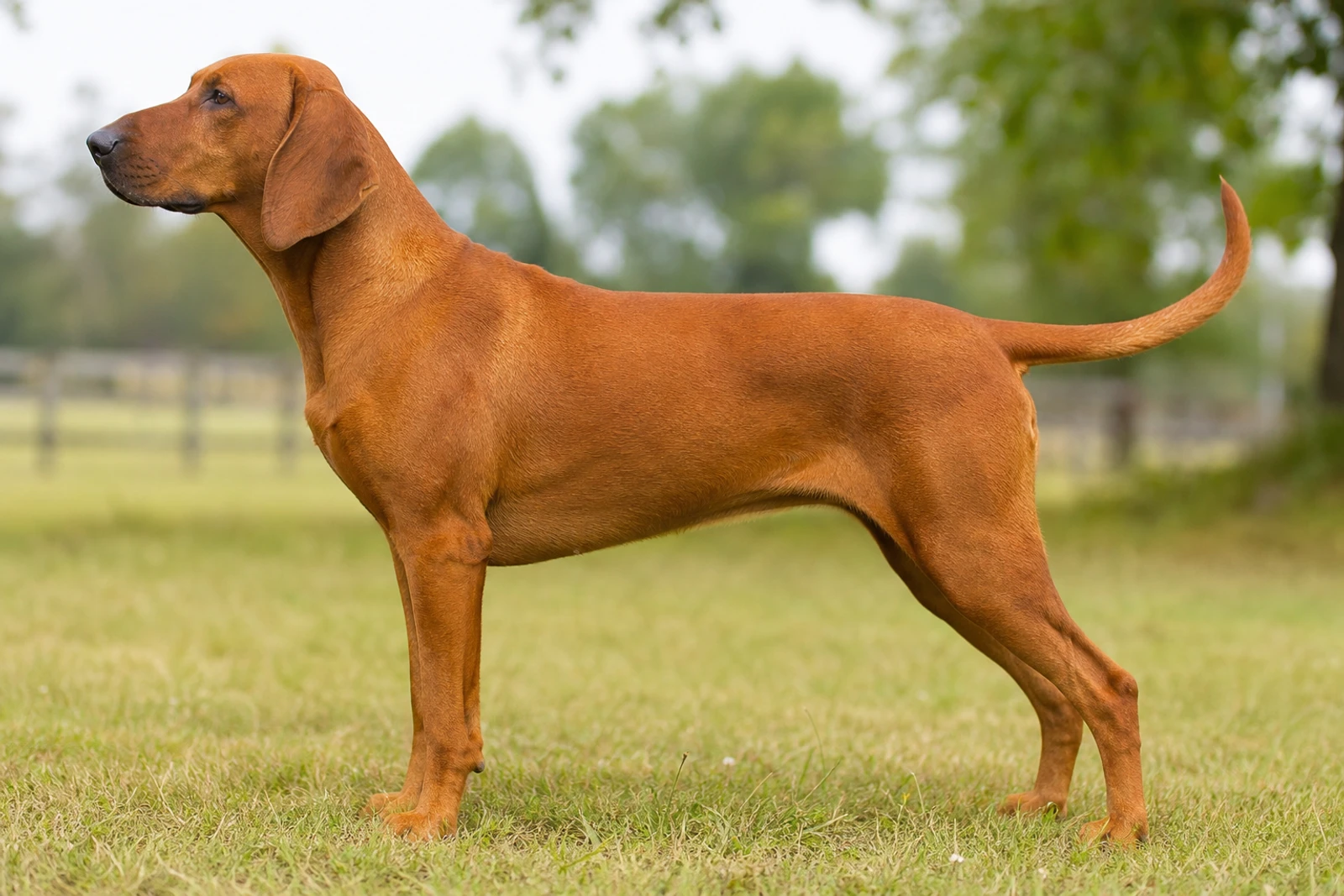
The Redbone Coonhound is a versatile scent hound known for its striking solid red coat and gentle, even-tempered personality. Bred to hunt and tree game, this medium-to-large breed is both a capable working dog and a devoted family companion. They thrive in active homes where they can get plenty of exercise and mental stimulation. Their mellow, affectionate nature makes them great with children and other dogs, though their strong prey drive and booming voice require experienced handling. Ideal for hunters or outdoor-loving families who can appreciate their baying and tracking instincts.
Redbone Coonhound Sticker Pack
36 cartoon stickers • transparent PNG • no watermark
Pinterest-ready
Share all 36 reactions as one sticker sheet
Pinterest opens with the full pack and a fresh, tailored description. You choose the public board and publish it from your own account.
Save the full pack


Choose one reaction above to share it alone, or use the full-pack button for all 36 together.












Free full-resolution download — no account, no payment, no watermark.
Includes all 36 transparent PNG stickers in one ZIP. A quick human check is required for each download.
At a glance
- Size
- Giant
- Height
- 21–27 in
- Weight
- 46–71 lb
- Life span
- 11–12 years
- Coat colors
- Red
- Coat type
- Short and smooth
- Group
- Scenthounds
How much does a Redbone Coonhound cost?
Adopt / rescue
$75–$400
Usually includes spay/neuter, first shots, and a microchip.
Buy from a breeder
$700–$2,000
From a reputable, health-testing breeder.
Approximate USD. Prices vary widely by region, breeder, pedigree, age, and coat colour — adopting is the lower-cost and recommended route. Avoid suspiciously cheap “breeders”; they’re often puppy mills.
Estimate the full cost of a Redbone Coonhound →Want the ongoing number? Estimate the monthly food bill for a Redbone Coonhound with our dog food cost calculator.
Redbone Coonhound photos
Views
Front, side, rear and top — the full silhouette.Poses
How the breed sits, lies, moves and plays.Puppy to senior
The breed across its whole life.Expressions
The breed’s range of moods.Close-up details
Eyes, ears, nose, paws, tail and coat.Coat colors
The breed’s recognized colors.Click any photo to enlarge. We show the Redbone Coonhound from every angle — three views, poses, life stages, expressions, close-ups, coat and colors.
Appearance & size
A solid, deep-red hound that looks like it was carved from mahogany and muscle — that’s the first thing you notice about a Redbone Coonhound. Listed in the giant category, this scenthound typically stands between 21 and 27 inches at the shoulder and weighs 46 to 71 pounds. Don’t let the numbers fool you; there’s nothing bulky or clumsy here. The build is clean-cut, athletic, and surprisingly agile for a dog with that much chest and bone.
Coat and color are the breed’s signature. The hair is short, smooth, and coarse to the touch — no undercoat to hide behind. The color is a rich, solid red, ranging from a deep rust to a dark, almost liver-toned mahogany. A small dab of white on the chest or toes pops up occasionally, but the dog is meant to be monochromatic. The black nose and dark brown eyes stand out sharply against that red coat, giving the face a soulful, pleading expression.
From the front, you get the full impact of a true scenthound head. The skull is fairly broad and slightly domed between long, fold-over ears that are set low and hang flat, reaching nearly to the tip of the nose. The muzzle is squared off and substantial, with tight, dry lips — no droopy jowls. The neck is clean and muscular, flowing into a deep, broad chest that houses serious lung power. Forelegs are straight with plenty of bone, ending in compact, cat-like feet with well-arched toes and thick pads.
Move around to the side and the dog’s working structure becomes clear. The back is level and strong, with a barely perceptible rise at the loin and a slight slope at the croup. Underneath, the brisket is deep — reaching down to the elbows — but there’s a distinct tuck-up behind the ribs. The tail is medium-long, thicker at the base, and tapered; when the dog’s alert, it’s carried nearly level or with a slight upward saber curve, never curled over the back.
From behind, you see moderate, powerful rear angulation. The thighs are well muscled and the hocks sit low to the ground, both standing square and driving forward in a straight line when the dog moves. That gait is efficient and ground-covering — a smooth, effortless trot that looks like a hound that could work all night without fading.
History & origin
The Redbone Coonhound was forged in the hardwood bottomlands of the American South — a purpose-built raccoon hunter with an unmistakable solid red coat. Its story begins in the late 18th and early 19th centuries, when Scottish and Irish immigrants brought red foxhounds to the frontier regions of Georgia and the Carolinas. Those early imports were fast and keen-nosed, but they needed more stamina and a colder trailing nose to handle the marshy swamps and brushy ridges where raccoons denned.
By the 1840s, a Georgia planter named George F. L. Birdsong assembled a pack of red-colored foxhounds and began selecting intently for a uniform deep-red coat, a melodious bay, and the ability to unravel hours-old scent. Birdsong’s dogs earned a reputation for treeing raccoons with relentless drive, and hunters in the region started calling them “Redbone” hounds — a nod, by most accounts, to a legendary dog named Redbone that anchored an influential Tennessee line. (Some histories credit a breeder named Peter Redbone, but the written trail is sparse.) Whatever the exact origin, the name stuck.
To boost trail ability and that signature booming voice, early breeders likely wove in small amounts of Bloodhound and possibly Irish hound blood. This cemented the breed’s deep chest, long ears, and the haunting bay that carries through the timber. The United Kennel Club recognized the Redbone Coonhound in 1902, making it one of the earliest coonhound breeds with its own registry. For most of the 20th century, the breed remained a hardworking hunter’s secret, rarely glimpsed outside rural Southern communities.
The American Kennel Club didn’t grant full recognition until 2009, but the Redbone had already stepped into the national spotlight decades earlier. Wilson Rawls’s classic 1961 novel Where the Red Fern Grows features a pair of devoted Redbone Coonhounds — Old Dan and Little Ann — and cemented the breed’s image as loyal, courageous, and deeply tuned to the hunt. Today’s Redbone still fills treeing competitions and coon-hunting rigs across the South, and a growing number find a place as even-tempered family companions — as long as they have a job that keeps their nose busy.
Temperament & personality
A Redbone Coonhound in the house is something like having a cheerful, slightly goofy athlete who’s always ready for the next adventure—as long as that adventure involves a scent trail. This is a dog who lives through his nose, and that single-mindedness shapes his whole personality. Expect a 46–71 lb hound who can go from a blissful sunbathing sprawl to a quivering, baying statue the instant a squirrel crosses the yard. He’s not hyperactive indoors provided he gets real exercise (think a solid hour of off-leash running or a long, sniffy hike, not a sedate loop around the block), but a bored Redbone will find his own entertainment—often by singing the song of his people loud enough to reach the next county.
With his family, the Redbone is affectionate to the point of being a velcro dog. He’ll lean against your legs, nudge your hand for scratches, and follow you from room to room. He’s generally patient and playful with kids who treat him respectfully, though his enthusiastic tail and long legs can topple a toddler unintentionally. Teach children early to leave him in peace when he’s eating or chewing a bone, because even the gentlest dog can develop guarding habits if he’s pestered during a meal.
This breed’s scenthound heritage brings a few behaviors you’ll notice right away. Your Redbone will likely sniff a single blade of grass for an absurdly long time, cataloging every dog that passed by. That powerful nose also explains why urine-marking can become a habit indoors if you don’t stay on top of house training and clean accidents with an enzymatic cleaner that truly erases the scent cue. Outside, he may roll in something dead with obvious delight—don’t take it as a personal insult; to his scavenger mind, it’s just fascinating information he’d like to bring home.
He’s watchful enough to bay when a stranger approaches, but aggression toward people is rare. The real challenge is his independence. Redbones have a “what’s in it for me?” streak that makes harsh corrections backfire. Consistent, upbeat training built on food rewards and scent games keeps his brain engaged and your relationship strong. Ignore that need and you may end up with a dog whose anxiety-fueled barking drives the neighbors crazy. He’s not a dog for someone who wants instant, robot-like obedience—but if you can laugh at his stubborn moments and appreciate a dog who practically vibrates with joy when you pick up the leash, you’ll get a loyal, good-natured companion who makes every walk feel like a treasure hunt.
Good with kids, dogs & other pets
With children
A Redbone Coonhound brings a patient, non-aggressive temperament to family life — usually a great match for kids. These hounds rarely snap without cause, and they tend to tolerate the noise and commotion that come with a houseful of young people. The real risk is purely physical: a 71-pound dog with a hard tail and long legs can knock over a toddler just by turning around. Supervision around small children isn’t about mistrust; it’s about managing bulk and enthusiasm.
A Redbone wants to be part of the household hubbub, not banished to the yard. They form tight bonds and can develop genuine distress when left alone for extended hours. Families where someone is around much of the day, or where kids provide plenty of interaction, will see a much happier, more settled dog.
With other dogs
Redbones were bred to run in packs, so they often thrive with another dog in the home. They’re generally friendly and playful with familiar canine housemates. That said, an under-socialized adult can tip into skittishness or pushy, vocal behavior around unfamiliar dogs. Early and ongoing positive exposure to a variety of stable, well-mannered dogs helps a Redbone carry that pack affinity into every meet-up. If you’re adopting a dog who missed those early experiences, aim for a few trusted playmates rather than off-leash chaos at a crowded dog park.
With cats and small pets
That famous scenting nose can complicate life with smaller animals. Redbones were developed to track and tree raccoons and other game, so a fleeing cat or a skittering hamster often reads as prey to pursue. Some individuals raised from puppyhood alongside the family cat learn to coexist indoors, but it’s never a sure thing. A sudden dash can spark a chase even after years of calm coexistence. Small caged pets — rabbits, guinea pigs, ferrets — need secure, dog-proof enclosures in a separate space. Outdoors, expect a Redbone to follow his nose, so a fenced yard and a strong recall are non-negotiable around any animal smaller than a Labrador.
Early socialization matters most
The window from 3 to 14 weeks is your biggest opportunity. Let the puppy meet children of different ages, calm adult dogs, and (safely handled) other pets while positively introducing him to unusual sounds, surfaces, and handling. Those gentle, consistent exposures build a dog who takes new people and situations in stride. Skip it, and you might wind up with an adult who startles at loud noises, turns fearful at the vet, or gets overexcited — and loud — whenever another dog appears.
After 14 weeks, the sensitive period closes. You can still help an older dog build coping skills, but you can’t undo a completely isolated start. Redbones raised in puppy-mill or kennel environments often carry lasting anxiety, so if you’re meeting an adult candidate, go slowly and watch how he recovers from new sights and sounds. A family ready to provide steady, calm companionship will give these social hounds what they need most.
Trainability & intelligence
The brains are there — the desire to please on your timeline, not so much. A Redbone Coonhound can learn a new trick in a handful of repetitions when he’s motivated, but the same dog will conveniently forget a command the moment a raccoon scent drifts through the yard. You’re working with a problem-solver, not a robot, so training is more about building a partnership than demanding instant compliance.
Start socialization early, that 3–14 week window is gold. Let the puppy walk on wobbly grates, hear the vacuum, meet calm strangers, and trot through the kids’ soccer practice. Redbones tend to be easygoing with people, but a lack of early exposure can turn natural curiosity into wariness or noise sensitivity later. Pile on positive experiences — treats, play, a happy tone — and you’ll have a confident adult who recovers fast from surprises.
For obedience, forget heavy-handed corrections. This breed shuts down or gets anxious when punishment enters the picture. Instead, use short, upbeat sessions loaded with high-value rewards (think tiny bits of hot dog or cheese) to teach sit, down, and a reliable check-in. Their nose rules their brain, so the biggest challenge by far is recall. When a Redbone locks onto a scent trail, he’s in a different world. Practice recall in fenced areas and never bet his safety on it off-leash in open spaces — the payoff of chasing a scent up a tree beats any treat you’ve got.
Consistency matters more than drilling. Everyone in the house should use the same cues and rules. A dog that learns “off” means off the couch today and gets a pass tomorrow will exploit the loophole every time. Keep sessions under ten minutes; if you see him losing focus, end on a success. He’ll work with you, not for you, and once that trust is built, you’ll have a clever, game partner who knows exactly what you want — he just might negotiate the terms.
Exercise & energy needs
A Redbone Coonhound won't settle for a quick jaunt around the block. This is a dog bred to track game over miles of rough terrain, and that deep-seated drive shows up the moment she's awake. Budget at least 60 to 90 minutes of genuine exercise every day, split into two sessions. A single long walk rarely cuts it — combine a hard, off-leash run or an hour-long hike in the morning with a brisk walk and a nose game in the evening. Without that outlet, you'll get a restless dog who bays, digs, or redesigns your couch.
Lean hard into what her nose was built to do. These scenthounds light up when they're tracking, so turn exercise into a sniffari. Use a long line in a quiet field and let her quarter back and forth following deer trails, or hide a few smelly treats along a woodland path. Scent work and barn hunt classes are tailor-made for the breed and will fry her brain faster than an extra mile of jogging. Puzzle toys, frozen Kongs, and scatter feeding in the yard also chip away at that mental energy between walks.
Physically, she's an endurance athlete, not a sprinter — long, steady runs, swimming, and mountain hikes all fit the bill. A healthy adult will happily trot 5 to 10 miles beside a bike or cover a half-day trail with you and still be game for a game of tug after dinner. Avoid repetitive, jarring exercise with puppies under 18 months to protect developing joints; save the pavement-pounding and big jumps for a fully grown dog.
The equation is simple: a tired Redbone naps quietly at your feet. A bored one sounds the alarm — and her deep, carrying bay travels through walls. If your day can't soak up that 60–90 minute minimum, this isn't the right breed for your household.
Grooming & coat care
The Redbone’s short, single-layer coat is nearly maintenance-free. A few minutes with a bristle brush or a rubber curry mitt once a week lifts dead hair and spreads natural oils, leaving a rich mahogany shine. During spring and fall, bump that up to every other day—the fine, bristly hairs shed steadily and weave into fabric if you ignore them.
You’ll bathe this dog rarely. The coat stays remarkably odor-free, so a bath every two to three months, or after a serious roll in something foul, is plenty. Use a mild shampoo and rinse well; the short hair air-dries fast. Between baths, a wipe-down with a damp towel handles everyday grime without stripping protective oils.
The real grooming work is ear care. Long, dropped ears trap moisture and debris, inviting infections. Check them weekly for redness, discharge, or a yeasty smell, and dry the inner flap thoroughly after swimming or a rainy outing. Nails grow quickly on this large, active dog—trim every three to four weeks, or when you hear clicking. If they get plenty of rough-surface exercise, the nails may wear down naturally, but keep an eye on the dewclaws.
Brush teeth several times a week, and use the brushing session to scan for ticks, cuts, or hot spots—a habit that pays off with a dog bred to charge through brush. A portable hand vacuum helps in heavy shedding season, but a consistent brushing routine does most of the work.
Shedding & allergies
If you picture a short-coated dog and think “low shedder,” the Redbone will happily prove you wrong. That sleek, mahogany coat is dense, with a smooth, oily texture that throws off fine, reddish hairs nonstop. You’ll find them woven into upholstery, clinging to dark pants, and drifting across the floor in sunbeams. Twice a year — usually spring and fall — the shedding kicks into overdrive as the coat blows out. During those weeks, a daily once-over with a rubber curry or hound glove pulls out handfuls of loose fur before it becomes décor.
Drool is another daily reality, though it’s not extreme. Redbones aren’t slobber faucets like some giant breeds, but their loose flews mean you’ll see wet strings after a long drink of water and some enthusiastic mealtime flinging. A towel by the water bowl keeps the mess manageable.
If anyone in your house has dog allergies, a Redbone is a risky bet. No dog is truly hypoallergenic, and this breed’s steady shedding spreads dander and dried saliva everywhere. The fine hairs stick to clothing and fabric, so running a HEPA filter and vacuum with a pet attachment helps, but it won’t eliminate the load. Don’t count on a “low-allergy” promise here — you’re signing up for a dog that leaves a trail.
Diet & nutrition
Redbones are food-motivated dogs, and that “always hungry” look can make it easy to overfeed them. Because extra weight strains the joints — and large scenthounds can be prone to hip and elbow issues — portion control isn't just about looks; it’s about keeping your dog sound for all those long runs and trailing sessions. A lean, active 55-pound Redbone typically needs 1,200–1,500 calories a day, split into two meals. If you feed kibble, check the bag’s calorie-per-cup count, measure exactly, and adjust based on whether you can feel the ribs without seeing them.
Feeding an adult Redbone
Stick to two meals daily. Twice-daily feedings help avoid the begging that sets in when a dog goes too long without food, and they lower the risk of scarf-and-bloat patterns. Whether you choose a high-quality commercial food or a balanced homemade diet, aim for roughly 60% animal protein (raw or gently cooked meat), 20–30% fruits and vegetables, and 10% extras like eggs, plain yogurt, and digestible grains such as pearl barley or white rice. That combo matches a dog’s natural physiology — meat provides the building blocks, while the produce and grains add fiber and steady energy.
A practical approach: cook a big batch of lean meat, quinoa or barley, and steamed vegetables, then mix in some canned fish (in water, no salt) or a couple of eggs a few times a week. Because a dog’s jaw moves vertically and saliva lacks digestive enzymes, blending or puréeing meals slightly boosts nutrient absorption. If your Redbone inhales food the moment the bowl hits the floor, use a puzzle bowl or scatter the kibble on a snuffle mat to slow him down.
Puppy portions and schedule
A Redbone puppy grows fast, so the feeding rhythm changes quickly. Until four months old, offer four evenly spaced meals a day. From four to six months, drop to three meals. After six months, you can move to the adult two-meal schedule. When transitioning a pup away from the breeder’s diet, go slow: start with lightly cooked and puréed meats, fish, fruits, and vegetables, or a premium puppy formula. Around twelve weeks, you can introduce raw chicken wings under close supervision — the chewing cleans teeth and builds jaw strength. Throughout puppyhood, keep growth steady by not overfeeding; a lanky, fit juvenile puts less pressure on developing hip and elbow joints than a roly-poly one.
Keeping seniors lean
A senior Redbone, often 8 years and up, still needs solid nutrition but usually burns fewer calories. Monitor weight with a hands-on test every couple of weeks. As activity tapers off, cut the daily portion gradually, not dramatically. There’s no evidence that drastically reducing protein helps older dogs; they need quality muscle maintenance. If a senior has missing teeth or a tender mouth, purée the meals. Some older dogs do better on three smaller meals instead of two, which can settle a sensitive stomach and keep energy steadier throughout the day.
Everyday habits that help
Rich, fatty foods — think holiday trimmings or greasy table scraps — can trigger pancreatitis, so keep the celebration snacks far from the dog bowl. When you do have appropriate leftovers, serve them in your Redbone’s own bowl instead of reaching under the table. That one habit alone prevents the kind of begging that’s tough to undo. And if you cook vegetables and have unsalted cooking water left, use it as the base for a quick dog-food broth. A vegetarian or vegan diet, no matter how carefully planned, isn’t species-appropriate for a Redbone; these dogs evolved to thrive on meat-based meals. Feed them accordingly, keep the measuring cup handy, and you’ll have a hunting partner that stays lean well into his teens.
Health & lifespan
A healthy Redbone Coonhound typically lives 11 to 12 years — solid for a dog that can top 70 pounds. That span isn’t guaranteed, but the choices you make every day have a real hand in it.
Redbones are generally sturdy, but like any breed they can be prone to a few inherited conditions. The big ones responsible breeders screen for include hip and elbow dysplasia, progressive retinal atrophy (PRA) — an eye disease that can lead to blindness — and hypothyroidism. You’ll want to see OFA hip and elbow clearances along with a recent eye exam from a veterinary ophthalmologist on both parents. A thyroid panel is smart, too. No test removes all risk, but it stacks the deck in your favor.
Because those long, floppy ears trap moisture, ear infections are a recurring nuisance. Keep the ears clean and dry, especially after swimming or a romp in wet woods. Redbones also have a deep chest, which means they’re among the breeds that can bloat. Avoid heavy meals right before or after hard exercise, and learn the early warning signs: a distended belly, unproductive retching, restlessness. That’s a true emergency.
Weight management matters more here than most people expect. A Redbone inhales food like a vacuum and will convince you he’s starving five minutes after dinner. An extra five pounds puts unnecessary strain on those joints and can shorten his life. Measure meals, limit table scraps, and keep him lean — you should feel ribs with a light touch but not count them from across the yard.
Preventive care is straightforward: monthly heartworm prevention during mosquito season (and one month past it) is non-negotiable in most of the US. A rabies vaccine is legally required everywhere and has no cure once symptoms hit, so don’t let it slide. Schedule annual wellness checks, and bump that to twice a year once he’s a senior. The dog who hides a limp is the same one who needs you to notice he’s a little slower getting up. Catching hip or thyroid trouble early means you can manage it before it snowballs.
Living environment
Apartment living and Redbone Coonhounds don’t mix. This is a long-legged scenthound with a deep, booming bay that he’s not shy about using — a bored or lonely Redbone can project his voice through walls and across blocks with operatic enthusiasm. If you have shared walls or noise-sensitive neighbors, you’re in for trouble.
What he really needs is a house with a securely fenced yard. Aim for at least a 6-foot fence. These dogs were bred to follow a scent with single-minded focus, and a running rabbit or rustling raccoon can short-circuit any recall training. A Redbone who catches an interesting smell will find a way over, under, or through a flimsy barrier. The fence isn’t a luxury; it’s a safety requirement.
Space inside matters, but outdoor access matters more. He’s a medium-to-large dog who can stretch out on the couch with you, yet he won’t stay calm without serious daily work. Expect to provide two long, high-energy exercise sessions — about an hour apiece. A casual neighborhood stroll won’t scratch the surface. He wants to run, sniff, and problem-solve. Off-leash hikes (in safe, fenced areas), hard runs alongside a bike, or extended scent-tracking games satisfy his body and his nose.
Climate-wise, his short, sleek coat gives him solid heat tolerance — he’s built for hot Southern nights. But he has almost no insulation against cold. In freezing weather he’ll need a coat and shorter outings. Always provide shade and water during summer workouts; he’ll push himself hard and overheat before you realize it.
Barking and baying are part of his genetic wiring. He alerts, expresses excitement, and sings out on trails. You can manage it with training, but you won’t silence it entirely. If you need a quiet dog, this isn’t your breed.
Tolerance for being left alone is low. Redbones are deeply affectionate hounds who form tight bonds with their people. When left home for a full workday without preparation, many develop separation anxiety: howling, destructive chewing, or frantic pacing. Mental stimulation and gradual desensitization help — puzzle toys, hidden treats, and lunchtime visits — but an ideal setup has someone around most of the day, or includes doggy day care. A Redbone who gets the exercise and companionship he craves settles into a relaxed, affectionate house dog. Shortchange either one, and you’ll both suffer for it.
Who this breed suits
Best-fit owners
Active families with older kids get along beautifully with this breed. Redbones are famously patient and playful, but a 60-pound dog moving at full tilt can accidentally bowl over a toddler, so supervision is key. If your household already includes daily runs, hikes, or bike rides, you’ll have a willing partner. This is a scenthound that needs a solid hour of hard running, not a couple of quick walks around the block. Without that outlet, that cheerful coonhound voice will turn to destructive chewing and relentless baying.
Singles and couples who are outdoorsy and home often also make a great match. Redbones bond deeply and hate being left alone for long stretches—separation anxiety shows up as howling that neighbors three blocks away will hear. You’ll need a work-from-home setup or the ability to bring your dog along. The payoff is an affectionate, shadow-like companion who’s up for anything from camping trips to lazy evenings on the couch (after that exercise quota is met, of course).
First-time owners? Only if you’re all-in
A Redbone is a lot of dog for a brand-new owner. They’re smart and food-motivated, but their nose easily overrides your voice commands when a scent trail lights up. Training requires consistency and a sense of humor, because a Redbone’s independent streak can outlast your patience. If you’re a first-timer willing to enroll in group classes and commit to daily intensive exercise, it can work. Otherwise, a more biddable breed might be a kinder start.
Think twice if…
Your home is an apartment or has close neighbors. The Redbone’s bay is a feature, not a bug—it’s loud, resonant, and used with enthusiasm. A shared wall will not muffle it. You also need a six-foot, securely fenced yard; invisible fences won’t stop a dog whose nose locks onto a raccoon trail. Seniors or less active owners should look elsewhere unless you can reliably provide that hour of off-leash running or hiking every single day, rain or shine. Households with cats, rabbits, or other small pets face a real gamble. These dogs were bred to tree prey, and even a well-socialized Redbone may never fully trust that the family cat isn’t a raccoon in disguise.
Cost of ownership
Bringing home a well-bred Redbone puppy from a breeder who screens hips, eyes, and ears usually runs $1,000 to $1,500. Puppies out of proven hunting or show lines can push toward $2,000. Adopting through a coonhound-specific rescue often costs $200 to $400, and young adults occasionally turn up in shelters for less.
Month to month, the biggest consistent hit is food. A 50-to-70-pound dog with the Redbone’s muscle and drive needs high-quality kibble; plan on $50 to $80. Working dogs that log hours on the trail will burn through the upper end of that.
Grooming won’t drain your wallet. Their short, dense coat sheds seasonally and needs just a weekly rubber curry and the occasional bath. If you trim nails and clean ears at home, supplies run $10 to $20 a month. A pro nail clip bumps it to $30.
- Wellness and prevention averages $40 to $70/month — annual exams, core vaccines, heartworm, and flea/tick control. Coonhounds roam, so year-round protection matters.
- Insurance or savings: premiums for a Redbone land between $35 and $65/month. It’s worth pricing early; long, pendulous ears can trap moisture and lead to infections, and the breed can be prone to hip dysplasia. Even a sturdy dog can run up a serious bill after a collision with a barbed-wire fence or a badger hole.
- Training: $100–$300 for a basic obedience or scent-work class helps channel that big, bawl-mouth personality into something livable indoors.
Set aside $50/month for the unpredictable — a broken nail, a snake bite, a torn pad. The cheapest thing about a Redbone is washing the mud off. Everything else adds up like a dog twice as loud.
Choosing a Redbone Coonhound
A rescued adult Redbone through a coonhound-specific rescue lets you skip the chewing stage and see the dog’s real personality before you commit. Many live in foster homes, so you’ll know if the dog is house-trained, safe around cats, or a committed counter-surfing artist. If you’re set on a puppy, a responsible breeder is the only safe bet — and they’ll have the health paperwork to prove it.
Health Clearances to Demand
A Redbone’s 11- to 12-year lifespan depends heavily on avoiding joint and endocrine problems. Ask to see documentation for both parents, not just a verbal promise:
- Hip dysplasia – An OFA or PennHIP evaluation with a passing score (Fair, Good, or Excellent). Good hips are not a given in this breed.
- Hypothyroidism – A full thyroid panel (not just T4) run within the past year. Untreated low thyroid leads to weight gain, skin infections, and sluggishness.
- Eye exam – A yearly CAER (formerly CERF) exam to rule out inherited eye diseases.
- Some breeders also evaluate elbows and do cardiac auscultation. If they brush off testing because “the line is clean,” treat that as a warning sign.
Red Flags That Send You Running
- Won’t let you meet the mother or see where the puppies live — at minimum via video call if it’s a geographic stretch.
- Never asks you about your yard, fencing, or experience with loud, nose-driven hounds.
- Always has a litter available or runs multiple litters simultaneously.
- Lets puppies leave before 8 weeks; 9–10 weeks is better for a scenthound’s social development.
- Handles health questions with “vet-checked” instead of providing certificates in the parents’ registered names.
Picking Your Puppy
Spend at least an hour with the whole litter. A Redbone puppy should be curious, willing to approach, and quick to bounce back from a sudden noise. The puppy who hangs back and refuses to engage is likely to struggle with a busy household. The one who relentlessly body-slams littermates may channel that drive into obsessive baying and fence climbing later. A sharp breeder will help match you — maybe to a bold pup if you plan to hunt, or a more easygoing one if you primarily want a family companion who still needs a solid hour of daily off-lead running.
Pros & cons
Pros
- A people-loving hound who’s gentle with respectful kids and always ready for a couch cuddle after a day’s work.
- The short, sleek coat sheds very little. A quick weekly rubdown with a hound glove keeps it gleaming.
- Eager to please and food-motivated, so he picks up positive training fast — especially when you’re clear and patient.
- Built to go all day: a tireless partner for long hikes, trail runs, or swimming, not just a stroll around the block.
- That deep red mahogany coat and soulful expression turn heads wherever you go.
- A generally robust breed with a typical life span of 11–12 years; responsible breeders screen for hip dysplasia and eye issues.
Cons
- A bay that rattles windows. It’s a beautiful, old-school coonhound voice, but it’s loud enough to sour neighbor relations fast.
- Nose with no pause button. When a scent trail grabs him, his ears shut off — solid recall becomes a real challenge.
- Needs a serious daily workout. A couple of 20-minute leash walks will leave you with a restless, destructive dog.
- Pack-hound roots run deep; he can struggle with separation anxiety if left alone for long hours.
- Floppy ears trap moisture (frequent checks for infections are a must), and that big hound frame comes with drool and a determined counter-surfer.
- High prey drive plus independent thinking equals an escape artist. A physically secure, tall fence is non-negotiable.
Similar breeds & alternatives
If the Redbone’s solid-red good looks and easygoing family temperament call to you but you’re not quite ready to commit, a few close cousins nudge the equation in different directions.
- Black and Tan Coonhound – Heavier, with males often exceeding 80 pounds, and distinctly lower-key indoors. The trade-off: that bigger frame comes with more drool and a voice that carries half a mile. A Black and Tan will happily crash on the couch once exercised, while a Redbone tends to stay slightly friskier inside.
- Bluetick Coonhound – Similar size (usually 45–80 pounds) but a mottled blue-ticked coat and a reputation for being a little more headstrong. Blueticks often insist on sniffing every inch before they’ll listen, and they can be more vocal around the house. The Redbone’s generally milder “houndy” volume may be the deciding factor for close neighbors.
- Treeing Walker Coonhound – Leaner, faster, and built like an athlete. Walkers are high-energy escape artists who need hard daily running and a job. If the Redbone’s exercise requirements (a solid hour of trotting and sniffing) already feel like the ceiling, the Walker will blow right past it.
- Plott Hound – The brindle powerhouse of the scenthound group, originally bred for boar. Plotts tend to be grittier, less interested in baying at every squirrel, and sometimes show a protective streak. They can be a better fit if you want a quieter but tougher hound, though they still demand intense exercise.
- Basset Hound – For a completely different physical package that shares the nose, a 40–65 pound Basset brings the same scent obsession in a low-slung, short-strided body. Perfect if you love the trailing brain but prefer a dog whose idea of a workout is a slow sniffy wander followed by a long nap.
All these breeds fall into a similar lifespan range (most live 10–12 years), so the real choice comes down to how much baying you’ll tolerate, how hard you want to run your dog, and whether the Redbone’s medium-large, 46–71-pound frame hits the Goldilocks zone for your home.
Fun facts
- Redbones are the only coonhound with a uniform red coat.
- Their distinctive baying voice is melodic and can carry for long distances.
- The breed stars in the classic story 'Where the Red Fern Grows.'
- They are known for their ability to track over water and in dense cover.
Frequently asked questions
- Are Redbone Coonhounds good with children?
- Redbone Coonhounds are generally affectionate and playful with kids, but their large size and high energy can be too much for toddlers. Supervision is recommended to prevent accidental bumping or knocking over. They tend to do best with older, respectful children who can match their activity level.
- How much exercise does a Redbone Coonhound need?
- As a true hunting breed, the Redbone Coonhound requires plenty of daily exercise—ideally an hour or more of vigorous activity like running, hiking, or scent games. Without enough physical and mental stimulation, they can become bored and may develop destructive habits. A securely fenced yard is ideal for safe off-leash exploration.
- Do Redbone Coonhounds shed a lot?
- Redbone Coonhounds have a short, dense coat that sheds moderately throughout the year. Weekly brushing with a rubber curry or hound glove helps remove loose fur and keeps the coat shiny. They are not considered a heavy-shedding breed, but you can expect some hair around the home.
- Are Redbone Coonhounds easy to groom?
- Their sleek coat is very low-maintenance, needing only occasional baths and regular brushing. However, their floppy ears require weekly checks and cleaning to prevent infections, and nails should be trimmed as needed. Overall, grooming is simple but consistent ear care is essential.
- Can a Redbone Coonhound live in an apartment?
- Redbone Coonhounds are typically not ideal for apartment living due to their high energy and loud, distinctive baying. If the owner is extremely dedicated to providing extensive daily exercise and mental enrichment, it can be done, but the breed thrives best in a home with a large, safe outdoor space.
- Is a Redbone Coonhound good for first-time dog owners?
- They can be a challenge for novice owners because of their strong prey drive, independence, and need for consistent training. First-timers may struggle to meet their exercise demands and manage their vocal nature. An experienced, patient owner who enjoys an active, sometimes stubborn dog is a better match.
Tools & calculators for Redbone Coonhound owners
Quick estimates tailored to Redbone Coonhounds — pre-filled with this breed’s size where it matters.
Articles & stories about the Redbone Coonhound
Sources & standards
This profile follows recognized breed standards from the American Kennel Club (AKC) and the Fédération Cynologique Internationale (FCI), along with established veterinary and breed-club guidance. These describe general breed tendencies — every dog is an individual.