

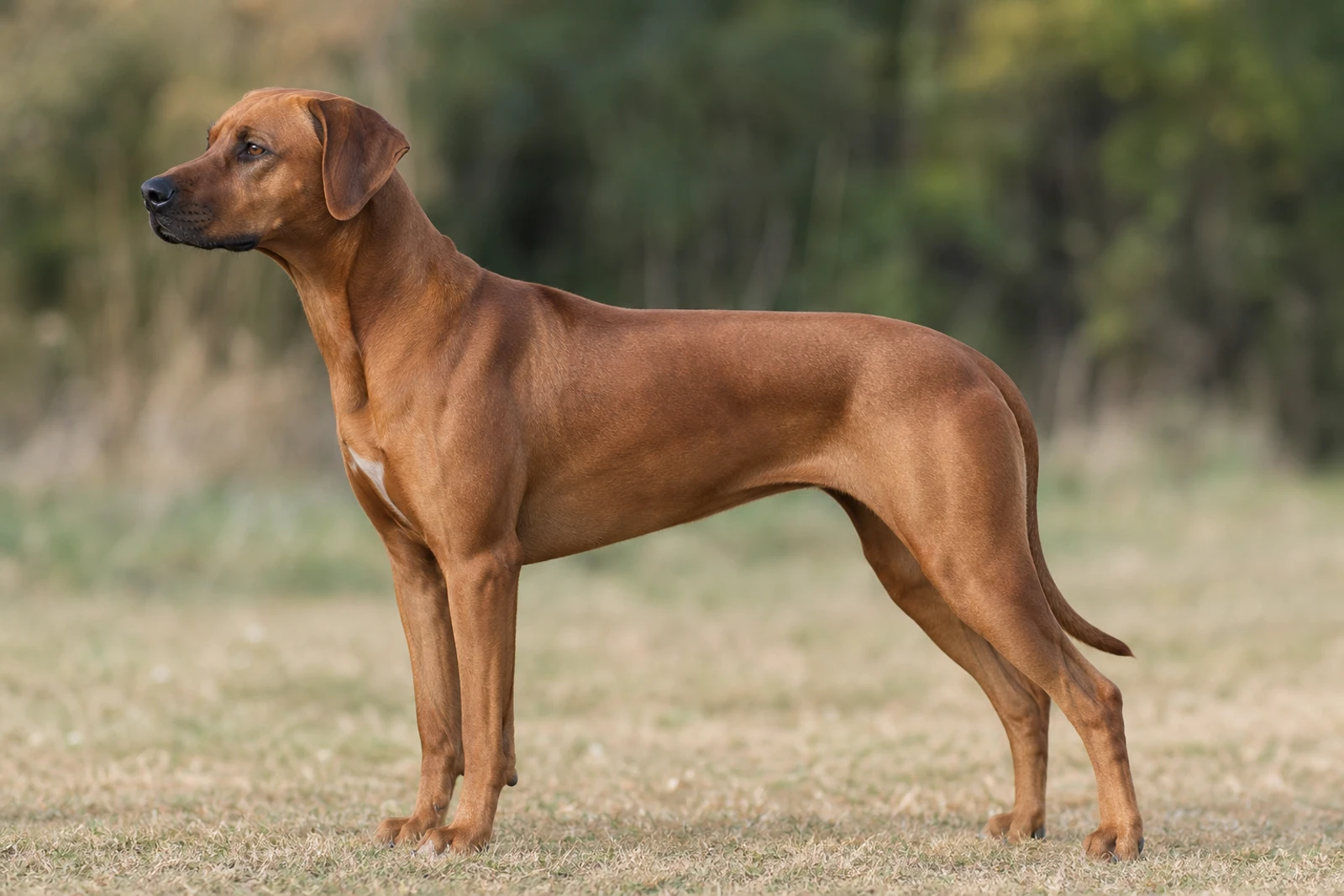
The Rhodesian Ridgeback is a large, athletic breed originally from southern Africa, bred to hunt lions and guard property. They are dignified, independent, and deeply loyal to their families. Best suited for experienced, active owners who can provide firm, consistent training and daily exercise, this breed thrives in spacious homes with yards. Not recommended for first-time dog owners or apartment living, they require early socialization to manage their reserved nature with strangers and high prey drive. With the right handler, they are courageous, intelligent, and devoted companions.
Rhodesian Ridgeback Sticker Pack
36 cartoon stickers • transparent PNG • no watermark
Pinterest-ready
Share all 36 reactions as one sticker sheet
Pinterest opens with the full pack and a fresh, tailored description. You choose the public board and publish it from your own account.
Save the full pack


Choose one reaction above to share it alone, or use the full-pack button for all 36 together.





























Free full-resolution download — no account, no payment, no watermark.
Includes all 36 transparent PNG stickers in one ZIP. A quick human check is required for each download.
At a glance
- Size
- Giant
- Height
- 24–27 in
- Weight
- 65–90 lb
- Life span
- 10–12 years
- Coat colors
- not specified
- Coat type
- Short, smooth, dense
- Origin
- southern Africa
How much does a Rhodesian Ridgeback cost?
Adopt / rescue
$100–$450
Usually includes spay/neuter, first shots, and a microchip.
Buy from a breeder
$1,200–$3,000
From a reputable, health-testing breeder.
Approximate USD. Prices vary widely by region, breeder, pedigree, age, and coat colour — adopting is the lower-cost and recommended route. Avoid suspiciously cheap “breeders”; they’re often puppy mills.
Estimate the full cost of a Rhodesian Ridgeback →Want the ongoing number? Estimate the monthly food bill for a Rhodesian Ridgeback with our dog food cost calculator.
Rhodesian Ridgeback photos
Views
Front, side, rear and top — the full silhouette.Poses
How the breed sits, lies, moves and plays.Puppy to senior
The breed across its whole life.Expressions
The breed’s range of moods.Close-up details
Eyes, ears, nose, paws, tail and coat.Coat colors
The breed’s recognized colors.Click any photo to enlarge. We show the Rhodesian Ridgeback from every angle — three views, poses, life stages, expressions, close-ups, coat and colors.
Appearance & size
The first thing you notice is the ridge — a stripe of hair growing backward along the spine, framed by two whorls right behind the shoulders. It’s not a grooming trick; it’s in the DNA, and no other breed carries it quite the same way. A correct ridge tapers to a point between the hips, crisp and symmetrical. Anything else is a disqualification in the show ring, but even in a pet, that reverse grain is the breed’s calling card.
Standing square, a Ridgeback looks like an athlete on standby. Heights run 24 to 27 inches at the shoulder, with females at the lower end and males pushing the top. Weight settles between 65 and 90 pounds — not sheer bulk, but dense, functional muscle draped over a frame built for endurance and short bursts of speed. The body is slightly longer than tall, with a deep, roomy chest that reaches down to the elbows and a flat, level topline that flows into a strong loin. From the side, you see the outline of a coursing hound: a clean tuck-up at the belly, long, straight forelegs, and well-angulated hindquarters that drive effortlessly. From the front, the chest isn’t exaggeratedly wide; it’s deep and moderately broad, with elbows held close. The neck arches up cleanly into a chiseled, wedge-shaped head — no loose skin, no coarseness. Ears are set high, hanging close to the cheeks in a soft triangle. Dark eyes with a calm, intelligent expression sit well apart.
The coat is short, sleek, and tight, with no undercoat to speak of. Run your hand against it and it’s glossy, but backwards you’ll feel that distinctive ridge with surprising resistance. Colors run from light wheaten — almost cream — to a rich red wheaten. A tiny white spot on the chest is fine; white on the toes comes and goes. The muzzle and ears are often shaded darker, black or deep brown, set against eyes that range from amber to dark brown depending on coat depth. In motion, the Ridgeback covers ground with a long, floating trot, back firm and tail carried with a slight upward curve — a picture of quiet, efficient power.
History & origin
Most people hear “lion hunter” and picture a dog fighting a lion. That’s not what the Rhodesian Ridgeback was built for. The original job was to track and corner a lion — holding it at bay with quick footwork and bold, barking harassment — until the human hunters arrived on horseback. It took intelligence, raw courage, and a refusal to back down.
The breed’s roots go back to the 16th and 17th centuries, when Dutch, German, and French Huguenot settlers arrived at the Cape of Good Hope in southern Africa. They brought their working dogs with them — mastiff types, greyhounds, and various scenthounds — but those European imports struggled with the heat, terrain, and diseases. The practical solution was to cross them with the lean, tick-resistant, ridged hunting dogs kept by the indigenous Khoikhoi people. A distinctive strip of backward-growing hair along the spine was the visible inheritance from those native dogs, and the settlers quickly learned that ridged dogs had better stamina and a keener instinct for tracking big game.
Over the next two centuries, a tough, all-purpose farm and hunting dog took shape. It wasn’t a single-minded lion bayer yet. These dogs guarded homesteads, protected livestock from predators, and brought down antelope for the family pot. They had to survive scorching days, freezing nights, and limited veterinary care — a hard reality that cemented the breed’s no-fuss resilience and strong prey drive.
The modern Ridgeback really crystallized in the late 19th century, when big-game hunters in Rhodesia (now Zimbabwe) sought a specialized lion-hunting dog. Breeders around the 1870s and later standardized the type by selectively breeding ridged dogs that combined speed, scenting ability, and the nerve to keep a lion occupied without getting mauled. The name “Rhodesian Ridgeback” was formally adopted in the early 1920s, when the first breed standard was drawn up in 1922 by a group in Bulawayo. That standard locked in the ridge as the defining trait and set the size, temperament, and athletic structure we see today.
By the 1950s, the breed had arrived in the United States, and the American Kennel Club recognized it in 1955. While actual lion hunting faded into history, the Ridgeback’s role simply shifted. Ranchers used them as guardian and hunting companions, and families discovered that a dog bred to face down a lion could also be a calm, protective housemate — provided you respect its independent streak and need for serious daily exercise.
Temperament & personality
A Rhodesian Ridgeback thinks for itself, and that’s the first thing to wrap your head around. This is a 70–90-pound hound with a deep-chested, athletic frame and a personality shaped by generations of independent hunting in southern Africa. They are calm and steady inside the house—often content to sprawl across the sofa for hours—but that quiet confidence comes with a stubborn, almost calculating streak. You don’t boss a Ridgeback around; you earn its cooperation through clear, consistent boundaries and a whole lot of patience. Heavy-handed correction will backfire fast, because these dogs remember everything and hold a grudge. Respectful, fair handling is what gets results.
Loyalty runs bone-deep. With their own people, Ridgebacks are affectionate and surprisingly gentle, leaning into you for a scratch or following you from room to room like a quiet shadow. With strangers, they are reserved, not hostile. A well-bred, properly socialized Ridgeback stands back and assesses first, which makes them exceptional watchdogs. They’ll alert you to anything out of the ordinary with a deep, powerful bark, but they don’t typically tip into nuisance barking once the situation is acknowledged. That protective instinct is real—this is not a breed that will wag its tail at every visitor. Invite guests in, let the dog see that you accept them, and the Ridgeback usually relaxes. Skip that step, and you’ll see a stiff, staring posture that says “back off,” which is exactly the kind of body language you need to read and respect.
Energy-wise, plan on a solid hour of running or off-leash hiking, not just a couple of leisurely walks. Bred to course lions over rough terrain, they have exceptional stamina and a prey drive that never really turns off. A squirrel, a cat, or a neighbor’s fluffy dog can trigger a chase in seconds, so a securely fenced yard and a reliable recall (which takes determined training) are non-negotiable. Inside, if you’ve met their exercise needs, they often surprise people with how lazy they can be—lumbering onto the couch and snoozing for hours.
With children in the home, Ridgebacks can be patient and tolerant, but small kids may get bumped by a 90-pound body moving through a doorway, and toddlers shouldn’t be left unsupervised around any large dog. Teach children to leave the dog alone during meals—never interrupt a dog while eating—because food guarding can surface if mealtime isn’t treated as a respectful, private ritual. Teething puppies will chew relentlessly, so provide a steady supply of appropriate chews to save your furniture; adult jaws stay formidable, and hard chew items help keep teeth clean and muscles strong.
This is not a beginner’s dog. The independent temperament that makes a Ridgeback so cool under pressure also means it will test you repeatedly during adolescence. Pair that with a razor-sharp memory for scent and territory—these are hounds, after all—and you may see some urine marking in a new household, especially with intact males. Clean accidents thoroughly with an enzyme-based cleaner, because any lingering scent invites repeat performances. Socialization from puppyhood with a wide variety of people, dogs, and environments is the single biggest factor in building the calm, unflappable temperament the breed is capable of. Miss that window, and you risk a dog who defaults to suspicion rather than quiet assessment.
Good with kids, dogs & other pets
Ridgebacks are generally steady and patient around children—they’re not quick to snap—but a 90-pound dog leaning against a toddler can feel like a lumber truck. You’ll need to supervise play, especially with little ones. Teach kids not to climb on the dog or disturb it while eating or sleeping. The breed’s affectionate side means they often shadow their favorite humans, which can be great for older children who understand gentle handling.
With other dogs, things get nuanced. A Ridgeback raised with a family dog and properly socialized from puppyhood usually coexists peacefully. Without that early groundwork, they can be aloof or even dominant with unfamiliar dogs. The critical socialization window closes around 12–16 weeks; puppies should meet a wide variety of calm, vaccinated dogs, people, and everyday sounds during that time. After that window, forcing an anxious adult to “make friends” often increases stress and can lead to fights. If you adopt an adult Ridgeback, accept that they may be a one-dog household or prefer very controlled introductions.
Cats and small pets are where the breed’s history as a lion-hunting hound comes into play. Many Ridgebacks have a powerful chase instinct. Some will live with a cat they were raised with, but even then, fast movements can trigger pursuit. Guinea pigs, rabbits, and other pocket pets are simply not safe with a Ridgeback unless securely housed and never together unsupervised. Early, positive exposure to cats can help, but you’re working against strong instincts. Always manage the environment—baby gates, separate spaces—and never leave them alone together if you’re not 100% sure.
No matter the scenario, supervision is mandatory. A Ridgeback that’s left untrained and unsocialized can turn into a 70+ pound hazard, not through malice but through sheer size and drive. Put in the work early, and you’ll have an easygoing family dog that treats your kids like part of the pack.
Trainability & intelligence
Start training the moment that lanky puppy walks through your door — not because the Ridgeback is slow to learn, but because he’s quick to decide what’s in it for him. This is a breed with a sharp, independent mind shaped by generations of working far ahead of hunters in southern Africa. A Ridgeback can master a new command in a handful of repetitions, then weigh whether today’s reward beats the interesting scent trailing across the yard. That’s not stubbornness; it’s a dog who thinks for himself.
Your relationship is the real currency. Harsh corrections or punishment-based methods don’t harden this dog — they erode trust and can make him shut down or get evasive. Instead, lean hard into positive reinforcement: immediate treats, a squeaky toy, or a genuine jubilant tone the instant he offers what you want. When the reward is good enough, he’ll start throwing behaviors at you to see what pays.
The Ridgeback mind
- They learn fast but bore faster. Keep sessions short and lively — five minutes of playful work beats a twenty-minute drill.
- Fairness matters enormously to this breed. If you’re inconsistent with a rule, expect him to find the gap and exploit it every single time.
- Recall needs relentless proofing. A Ridgeback locked onto a trail is a dog who truly can’t hear you. Build his recall with the most valuable currency you have (real meat, a flirt pole chase) and practice it in a hundred boring and distracting places before you ever consider off-leash freedom.
Early socialization is non-negotiable
The critical window is 3 to 14 weeks. Expose your puppy gradually to strangers, children, other dogs, vacuum cleaners, city traffic, and odd surfaces — always reading his body language so you don’t push past curiosity into fear. A well-socialized Ridgeback grows into a calm, discerning adult. A poorly socialized one can tip into aloofness or reactivity, and at 65–90 pounds of muscle, that’s a serious problem.
Treat every interaction as a negotiation where choosing you is the best deal in the room. With patience and consistent, reward-based training, you’ll end up with a dog who doesn’t just obey — he partners with you. And in a breed originally trusted to work independently around lions, that partnership is the whole point.
Exercise & energy needs
A Ridgeback won’t settle for a quick stroll around the block. Bred to cover miles alongside mounted hunters in rough African terrain, these dogs have deep reserves of stamina. Count on giving a healthy adult at least 60 to 90 minutes of true exercise every day, and split it into two distinct sessions whenever you can. A brisk 30–to–45-minute morning run or long trek on leash, followed by another solid walk or off-leash romp in the evening, usually hits the sweet spot. Without that outlet, boredom turns into shredded couch cushions, dug-up flower beds, and a dog who starts barking at every passing leaf.
Intensity matters as much as the clock. A meandering sniffy walk is fine for cool-downs, but the Ridgeback needs to stretch its legs at a trot or canter regularly. The ideal is safe, fenced free-running where the dog can really open up — this is a sighthound that loves to chase and use its nose. A long line in an open field or a securely fenced dog park with compatible playmates can work wonders. Because prey drive is baked in, off-leash reliability takes deliberate training, so don’t assume a Ridgeback will ignore a darting squirrel just because you called.
Mental exercise prevents the nervous, clingy habits an under-stimulated Ridgeback can develop. Scent games, tracking work, and puzzle toys engage the independent thinker that was bred to corner lions. Hide treats in a cardboard box maze, teach it to find a hidden toy, or join a local nose work or barn hunt class. These sessions wear out the brain just as effectively as a long run wears down the body.
- Good activities and sports: lure coursing, open-field tracking, canicross, hiking with a weighted pack (once joints are mature), and recreational agility with low jump heights. Long-line scent trailing in the woods is Ridgeback bliss.
- Puppy and joint considerations: Heavy pounding on pavement and repetitive jumping puts stress on growing bones. Save high-impact stuff like sustained running on hard surfaces and full-height agility jumps until growth plates close (around 18–24 months). Hill walking and soft-surface play are safer bets.
- Hot-weather caution: The short coat handles warmth better than a heavy double coat, but a Ridgeback’s enthusiasm can outrun its body’s signals. In high heat, move the big outing to early morning or late evening and carry water.
When life gets busy, a Ridgeback can skip a day or two without a meltdown — but a chronic lack of movement will surface as anxious pacing, whining, or destructive chewing. The dog you bring home is a quiet, easygoing housemate only after you’ve met its daily movement quota.
Grooming & coat care
The Ridgeback’s coat is one of the lowest-maintenance you’ll find in a large dog. Short, dense, and single-layered (no insulating undercoat), it evolved for Africa’s heat and thorn brush. That means no mats, no tangles, and very little doggy odor. Once a week, run a rubber curry brush or a hound glove over the body to pull out dead hair and spread natural oils. A boar-bristle brush after that brings up a mirror-like shine — especially satisfying on a deep red wheaten coat.
-
Bathing: You won’t need to do it often. A bath every 2–3 months, or when your dog has rolled in something truly regrettable, is plenty. Use a mild dog shampoo that won’t strip the coat’s natural weather resistance. Over-bathing can leave the skin dry, and a Ridgeback’s coat is basically self-cleaning if you keep up with weekly brushing.
-
Ears: Those drop ears are a vulnerability. Check them weekly for dirt, wax buildup, or a yeasty smell — especially if your Ridgeback swims or romps in tall, damp grass. Wipe the outer ear with a vet-approved solution and a cotton pad, never poking into the ear canal.
-
Nails: On a 70–90-pound dog, overgrown nails aren’t just a clicking nuisance; they can change foot posture and strain joints. Trim every 3–4 weeks, or more often if you don’t hear a tap-tap-tap on hard floors. If the quick is dark (common in this breed), trim just the hook-like tip with a sharp grinder or clipper, a sliver at a time.
-
Teeth: Aim for brushing 3 times a week with a dog-specific toothpaste. Ridgeback gums can get irritable if tartar builds up, and routine brushing helps you spot a cracked premolar from an overenthusiastic chew session early.
Shedding is minimal most of the year, but you’ll notice a seasonal uptick — usually in spring — as the coat cycles out. During that couple of weeks, bump the curry brush to 2–3 times a week and run a damp chamois cloth over the body to catch stray hairs. The ridge itself needs zero special care; it’s just hair growing in the opposite direction, and it handles weather and brushing just like the rest of the coat. A quick ear check once a week, especially after a swim, can prevent most infections.
Shedding & allergies
A Ridgeback’s short, sleek coat might fool you into thinking this is a low-shed dog. That’s not the full picture. They drop a moderate amount of hair year-round, with a noticeable blowout in spring and fall. The hairs are stiff and tiny — they weave into upholstery and car seats like little needles, so ignoring them isn’t an option.
A weekly once-over with a rubber curry brush or a hound glove pulls out the dead coat and cuts down on what ends up on your floors. During the seasonal shed, you’ll want to do this two or three times a week. The upside: you won’t find tumbleweeds of fluff like you would with a double-coated breed. The downside: those needle-sharp hairs will still show up on light pants and dark couches.
Drool & the hypoallergenic reality
Ridgebacks drool less than the jowly giants, but they aren’t a dry-mouthed breed. You’ll see long threads of saliva after they drink, and anticipation around meal prep can turn the kitchen floor into a small puddle of hope. Keep a drool rag handy near the water bowl.
If anyone in your house has allergies, know that no dog is hypoallergenic, and Ridgebacks produce the dander and saliva proteins that trigger reactions. A short coat doesn’t change that. Spend time with adult Ridgebacks in a real home setting before you commit — a quick meet on neutral ground won’t tell you how your sinuses will handle a dog sleeping on your bed.
Diet & nutrition
A lean Ridgeback is a healthy Ridgeback. These are big, athletic dogs, and every extra pound sits squarely on hips and elbows that already work hard. If your dog acts like she’s starving five minutes after a meal, you’re not alone — the breed can be strikingly food-motivated, which makes obesity a real threat. Portion control isn’t optional; it’s the difference between a sound senior and one who struggles to rise.
Feed an adult Ridgeback two meals a day, dividing 2.5 to 4 cups of high-quality dry food based on weight (65–90 lbs) and daily exercise. A dog that runs the woods for an hour needs more fuel than a weekend walker. If you home-prepare, rough in a ratio of 60% meat (raw or cooked), 20–30% fruits and vegetables, and the rest from eggs, quality grains like pearl barley, or plain yogurt. Canned fish, cooked veggies, and leftover unsalted vegetable water all make quick, wholesome add-ins. Stick to the dog’s own bowl, never the table, to keep begging from taking root.
Puppies need four evenly spaced meals a day until four months, then three until six months, then the adult two-meal rhythm. Transition them gradually onto lightly cooked, puréed meats and produce or a premium commercial puppy formula. Raw chicken wings can appear around twelve weeks, always under supervision, to match what a growing jaw was built to handle. Use a puzzle bowl or slow feeder if your pup inhales food; it protects against bloat and gives that busy brain a job.
Keep a hawk’s eye on weight through middle age and beyond. Senior Ridgebacks deserve smaller, more frequent meals if their appetite wanes or they lose teeth — puréeing helps absorption — and their protein needs don’t drop, so don’t water down the meat portion unless kidney disease says otherwise. Above all, adjust portions the moment the ribs start to disappear under a soft blanket of fat. Feed for the dog in front of you, not the one you wish you had.
Health & lifespan
A healthy Rhodesian Ridgeback often reaches 10 to 12 years — solid for a giant breed — but you’ll want to know about a handful of inherited conditions early, because the choices you make at puppy stage matter a lot.
The one truly Ridgeback-specific issue is dermoid sinus. It’s a neural tube defect that leaves a small tube of skin tunneling from the surface toward the spine. If it gets infected, surgery is messy and painful. Every good breeder palpates puppies’ backs along the spine within the first few days and does not sell affected pups as breeding-quality dogs. Ask point-blank whether the sire and dam were screened and whether the litter was examined. It’s not rare in poorly bred lines, so this is a non-negotiable question.
Like most large, deep-chested dogs, Ridgebacks can bloat (gastric dilatation-volvulus). A stomach that twists fills with gas and can kill in hours. You can lower the odds by feeding twice daily instead of one giant meal, skipping hard exercise right after eating, and learning the early signs — restlessness, drooling, a distended belly, trying to vomit without success. Some owners choose a preventive gastropexy during spay or neuter, and it’s worth discussing with your vet.
Hips and elbows are another place to pay attention. Hip dysplasia and elbow dysplasia both show up in the breed. Responsible breeders X-ray their dogs and submit results to OFA or PennHIP. Even with good genetics, keeping your Ridgeback lean is your best daily defense. You should see the outline of a couple of ribs — a thin coat makes that easy to monitor. Excess weight on a growing puppy or adult pressures those joints directly. These dogs are food-motivated and will happily convince you they’re starving; hold the line and measure meals.
Hypothyroidism — an underactive thyroid — crops up occasionally. Weight gain, sluggishness, and coat changes that don’t resolve with diet tweaks are classic clues. A simple blood panel catches it, and daily medication manages it without drama.
The short, sleek coat is low maintenance, but it can leave them more exposed to skin allergies and environmental sensitivity. They can get pressure sores on elbows from lying on hard floors. A supportive bed helps. If you notice persistent scratching, rashes, or ear infections, dietary triggers or seasonal allergies are likely — work with your vet to sort it out quickly rather than letting it become a chronic misery.
Basic prevention carries a lot of the load. Heartworm prevention should be given monthly while mosquitoes are active and for a month after. Rabies vaccination is legally required everywhere in the US and not something to skip. In cold weather, keep a coat handy: despite the African origin, a Ridgeback’s thin skin and lack of undercoat mean they chill fast on a long walk below freezing. They overheat just as easily in a parked car, so don’t push it.
Annual wellness exams (twice a year once they’re seniors) catch subtle changes in labs or mobility. Early socialization isn’t just a training nicety — a chronically stressed dog can suppress its own immune function. A Ridgeback who knows the world is not a threat is physically healthier in the long run.
Living environment
Apartment vs. House
A Rhodesian Ridgeback needs room — both inside and out. This is a 65–90 lb, 27‑inch-tall athlete that can clear a coffee table with one sweep of its tail. A cramped apartment will frustrate a dog bred to run alongside horses for miles. You can make it work if you commit to at least two substantial daily exercise sessions — think a 30‑minute hard run or off‑leash sprint, not a casual stroll — plus mental enrichment indoors. But a house with direct outdoor access simply fits the breed’s body and brain better.
Yard Needs
Expect a securely fenced yard to be the standard, not a nice‑to‑have. Ridgebacks have sky‑high prey drive and an independent streak; a squirrel can make them vault a four‑foot fence or bolt through an open gate without a backward glance. Buried wire or tall, solid fencing (6 feet is safer) is your best friend. The yard should be big enough for a full‑speed gallop. Underground electronic fences often fail because the chase instinct overrides any sting.
Climate Tolerance
That short, sleek coat — nearly coatlike in texture, with no undercoat — reveals the breed’s southern African origins. Ridgebacks handle heat well as long as you provide shade, water, and avoid midday pavement. They overheat if forced to sprint in high humidity, but a hot afternoon sprawled on cool tile is heaven. Cold, on the other hand, bites through that thin skin fast. In winter, expect your Ridgeback to shiver on walks and need a well‑fitted coat; they won’t happily romp in deep snow without one.
Barking and Noise
Ridgebacks aren’t yappy. Most are reserved barkers who sound off only when something genuinely suspicious appears. That makes them natural watchdogs — you’ll know when a stranger approaches the door. Inside the home, a physically and mentally tired Ridgeback stays quiet. If you’re getting barked at for attention, it’s usually a sign the exercise tank was left half‑empty.
Being Left Alone
These dogs bond hard and prefer to be where you are. Crate training and gradual desensitization from puppyhood let many Ridgebacks handle a standard workday without destruction. But leaving a young or untrained adult for 9+ hours often invites chewed drywall and screaming protests. Pair alone time with a long, hard workout beforehand and a frozen puzzle toy when you go. If you’re gone from morning to night routinely, this isn’t the breed for you — loneliness can tip into full‑blown separation anxiety.
Who this breed suits
This is a big, powerful hound with an independent streak, bred to think for itself while running alongside horses in the African bush. A Ridgeback suits an owner who genuinely enjoys that combination—someone who won’t mistake his quiet indoor demeanor for couch-potato needs. You’ll do best if you’re an experienced dog person, already comfortable with consistent, firm-but-fair training. First-time owners often get steamrolled by the breed’s stubbornness and physical strength.
- Active singles or couples who run, hike, mountain-bike, or can commit to at least a solid hour of hard exercise—not a leisurely walk—every single day. A tired Ridgeback is a well-behaved one; a bored Ridgeback will dismantle your sofa, dig under your fence, or figure out how to unlatch the kitchen gate.
- Families with older children (think school-aged and up) who can handle an exuberant, 85-pound dog that may lean into them or knock a toddler over without meaning to. The breed is fiercely loyal and watchful, but supervision around very small kids is non-negotiable.
- Owners with a secure, fenced yard. A Ridgeback’s prey drive runs deep, and he’ll clear a four-foot fence if something small and furry darts past. Underground electronic fences rarely hold them when instinct kicks in.
- Someone who values a protective presence without the hair-trigger reactivity of a dedicated guard breed. Ridgebacks are implicitly aloof with strangers and will alert you with a deep bark, but they generally stay quiet indoors once they’ve settled. If you want a dog that greets everyone like a long-lost friend, look elsewhere.
Now, who should think twice. This is not a breed for apartment livers, sedentary owners, or anyone who works long hours away from home. The same independence that makes them brilliant can turn into escape artistry and selective deafness if training is inconsistent. They can be dog-selective, especially same-sex dogs, so a multi-dog household requires careful management. And while short coats mean minimal grooming, they still shed, and their size alone makes them expensive to feed and medicate. A giant-breed dog with a 10–12 year lifespan means you’re signing up for bloat risks, potential hip and elbow issues, and a dog that needs someone steady enough to enforce rules without heavy-handedness. If your idea of exercise is a daily stroll and you just want an easygoing companion, the Ridgeback will be a mismatch that leaves both of you frustrated.
Cost of ownership
A well-bred Rhodesian Ridgeback puppy from a responsible breeder who health-tests hips, elbows, and thyroid typically lands between $1,800 and $2,800. Show-potential pups or those from exceptional working lines can run past $3,500. Rescue adoption fees usually fall in the $300–$600 range, often covering spay/neuter and initial vaccines. Avoid bargain listings — the breed's size and deep chest make cheap shortcuts in health screening an expensive gamble later.
Monthly costs at a glance
Plan on roughly $200–$350 a month for the basics, not counting the surprise expenses a curious, strong dog can generate.
- Food: A 75-lb adult with a normal activity level eats 4 to 5 cups of high-quality kibble daily. That translates to about $80–$110 per month. If you opt for raw or fresh diets, double that figure.
- Grooming: The short, dense coat is a wash-and-go affair. You’ll spend more on a good bristle brush and nail clippers upfront than on routine upkeep. Occasional baths and nail trims at home keep it cheap — maybe $10–$15 a month for shampoo and supplies. Pro grooming runs $40–$60 a visit, though most owners handle it themselves.
- Vet and preventatives: An annual exam, core vaccines, and year-round heartworm/flea/tick prevention for a giant breed average $50–$80 a month when amortized. Ridgebacks don’t need a mountain of breed-specific tests, but dermoid sinus screening in puppies and joint checks as they age add to the tab.
- Insurance: Premiums for a large, deep-chested breed prone to bloat and joint issues commonly run $50–$90 a month for comprehensive accident and illness coverage. It pays for itself if you ever face a $4,000 GDV surgery or cruciate ligament repair.
- One-time gear: Figure $150–$300 for a heavy-duty crate (42-inch or larger), a no-pull harness, raised feeders, and chew-proof toys. Ridgebacks demolish flimsy gear quickly.
Choosing a Rhodesian Ridgeback
There’s no gentle way to say it: a poorly bred Rhodesian Ridgeback is an 85-lb liability. These dogs were developed to hunt lions and guard remote homesteads; they are independent thinkers with a low tolerance for nonsense. Where you get your dog sets the stage for everything that follows.
Responsible breeder or rescue
A breed-specific rescue can be a good path if you already know Ridgebacks and are willing to take on an adult with an unknown history. The rescue will be honest about what they’ve observed—separation anxiety, leash reactivity, a strong prey drive that makes cats impossible—so listen carefully. If you’re new to the breed, a puppy from a meticulous breeder gives you the best shot at stacking the deck in your favor. That puppy’s early weeks inside the home, the parents’ temperaments, and the genetic screening behind the mating are not extras; they’re the whole point.
Health clearances you want to see
Responsible Ridgeback breeders screen for problems that can shorten a dog’s life or drain your savings. Demand proof—not a verbal reassurance—of these tests on both parents:
- Hips: OFA or PennHIP certification (Ridgebacks carry significant weight on a lean frame; dysplasia is a real risk).
- Elbows: OFA evaluation to catch elbow dysplasia.
- Thyroid: Full panel from an approved lab, because hypothyroidism runs in the breed.
- Eyes: Annual CERF exam or OFA Eye certification to rule out inherited cataracts, PRA, and other issues.
- Dermoid sinus: This is the Ridgeback-specific congenital defect that every breeder must screen for. It’s a tube-like opening in the skin along the spine that can tether to deeper tissue and cause dangerous infections. Reputable breeders palpate every newborn puppy and will not sell or breed an affected dog. Ask how they check, and walk away if they get vague.
Some breeders also add a cardiac exam, though it’s not yet standard across the board.
Red flags
- No health clearances in the OFA database, or only preliminary results on young dogs.
- Won’t let you meet at least one parent on-site, or the parents are shut away or acting fearful.
- Multiple litters on the ground simultaneously, or puppies always available.
- Ships a puppy based on a PayPal deposit and a phone call, no video chat or grilling you about your fencing.
- Breeds specifically for ridgeless puppies and markets them as “rare” or charges more for a particular ridge pattern. The ridge is cosmetic, not a health or temperament feature.
- Won’t provide a written contract with a return-to-breeder clause and a realistic health guarantee.
Picking your puppy
You’re looking for a Ridgeback who’s curious and willing to engage, not the one hanging back or the one body-slamming its littermates. The puppy should approach you without excessive hesitation, then settle after a minute of handling. A symmetrical ridge with two crowns directly opposite each other is correct, but don’t pass on a sound, well-raised puppy because of a slightly imperfect ridge. Ask the breeder what they’ve done for early socialization—at a minimum, the litter should be raised indoors with exposure to normal household sounds, different surfaces, and gentle handling from adults and children. That foundation is what lets a Ridgeback puppy grow into the dignified, steady companion you signed up for.
Pros & cons
A ridgeback isn’t a dog for everyone, but if you’re up for the challenge, here’s the balance sheet.
Pros
- Fiercely loyal and naturally protective without being reactive when properly socialized — they’ll have your back, not hold a grudge.
- A short, dense coat that sheds minimally. A quick pass with a rubber curry once a week keeps them looking sharp; no piles of hair on the furniture.
- Quiet around the house and unusually fastidious. They tend to groom themselves and rarely have that “doggy” odor.
- Athleticism baked in: built to cover miles in the African bush, they thrive on a solid 60 minutes of daily running or hiking. You get a partner who can keep up on any trail.
- With early, consistent socialization, they’re gentle and patient with their own family’s kids and known dogs — a steady presence in the home.
- A 10–12 year life span means you’re signing up for a long-term adventure buddy.
Cons
- Intense prey drive. Squirrels, stray cats, deer — anything that runs triggers a chase reflex. Reliable off-leash recall takes months of proofing, and even then, no guarantees.
- Independent streak that borders on stubborn. Training requires patience, creativity, and a sense of humor; this is not a dog that instantly obeys for the sake of it.
- They need a real workout, not a leisurely stroll. A bored ridgeback left with pent-up energy will find her own job — and it usually involves your couch cushions or drywall.
- Can be aloof with strangers, sometimes downright standoffish. A back-slapping dog-park socialite this is not.
- Giant-breed health concerns: bloat (a life-threatening emergency), hip dysplasia, and a congenital skin tunnel called dermoid sinus. Responsible breeders screen for these, but they still appear in the breed.
- First-time owners often find them overwhelming. A 70–90 pound dog who questions your decisions requires calm, consistent leadership — not frustration or heavy-handed correction.
Similar breeds & alternatives
If the Ridgeback’s large, athletic frame and independent mind appeal but you’re weighing the tradeoffs, a few other breeds tweak the formula in ways that might fit you better.
-
Doberman Pinscher – Similar sleek, muscular build (24–28 inches, 60–100 pounds) and a closely cropped coat. A Doberman is far more handler-focused and biddable than a Ridgeback; you’ll get the same protective instinct without the selective deafness to a recall command. The payoff is a dog that needs just as much daily exercise and can be even sharper with strangers, but training usually sticks faster. No ridge, same cold sensitivity, and a comparable lifespan of 10–12 years.
-
Vizsla – Think of this as a lighter, velcro-coated version of a Ridgeback. Vizslas (21–24 inches, 45–65 pounds) match the athletic stamina but wrap it in a dog that physically leans on you and panics if left alone too long. If the Ridgeback’s self-sufficient aloofness turns you off, a Vizsla will over-deliver on human attachment. Expect zero guarding instinct and a need for constant togetherness.
-
Weimaraner – Another big-game hunter (23–27 inches, 55–90 pounds) with a short, solid gray coat and no ridge. Weimaraners share the Ridgeback’s high-octane needs but differ in the emotional department: they tend toward clinginess and destructive chewing when under-exercised, whereas a Ridgeback is more likely to find trouble on its own terms. Lifespan runs 11–13 years.
-
Great Dane – Almost the opposite in energy despite the giant, short-haired profile. A Dane (28–32 inches, 110–175 pounds) is a gentle sofa ornament by comparison, needing moderate walks rather than the Ridgeback’s solid hour of hard running. You sacrifice endurance and the sharp watchdog edge, and you get a shorter lifespan (7–10 years) with a higher risk of bloat and joint issues. It’s the choice if you want the commanding look without the marathon engine.
Fun facts
- They have a distinctive ridge of hair growing opposite direction along their back.
- Originally bred by the Khoikhoi people and later developed in Rhodesia (now Zimbabwe) for lion hunting.
- They are sometimes called the 'African Lion Hound'.
- They are known for their endurance and calm temperament when indoors.
Frequently asked questions
- Is a Rhodesian Ridgeback a good family dog, especially with young children?
- Rhodesian Ridgebacks can be loyal and gentle family companions when properly socialized, but their size and strength require supervision around small children. They tend to be patient with kids they know, but early training and consistent boundaries are essential to prevent accidental knocks or overly boisterous play.
- How much exercise does a Rhodesian Ridgeback need?
- This athletic breed needs significant daily exercise—typically an hour or more of vigorous activity like running, hiking, or free play in a secure area. Without sufficient physical and mental stimulation, they may become restless or develop destructive behaviors.
- Do Rhodesian Ridgebacks shed a lot?
- Ridgebacks have a short, dense coat that sheds moderately year-round, though shedding tends to increase slightly during seasonal changes. Weekly brushing with a rubber curry or hound glove helps control loose hair and keeps the coat healthy.
- Can Rhodesian Ridgebacks live comfortably in an apartment?
- While they can adapt to apartment living if provided with ample outdoor exercise, their large size and high energy levels make them better suited to homes with a securely fenced yard. Apartment dwellers must commit to multiple daily outings and mental enrichment to prevent boredom-related issues.
- Are Rhodesian Ridgebacks easy for first-time dog owners?
- They are generally not recommended for first-time owners due to their independent, strong-willed nature and need for consistent, experienced handling. Without confident leadership and early obedience training, they may become stubborn or challenging to manage.
- Do Rhodesian Ridgebacks bark a lot?
- Ridgebacks are typically not excessive barkers; they tend to vocalize only when alerting to perceived threats or expressing boredom. However, individual temperament varies, and insufficient stimulation may lead to nuisance barking.
Tools & calculators for Rhodesian Ridgeback owners
Quick estimates tailored to Rhodesian Ridgebacks — pre-filled with this breed’s size where it matters.
Articles & stories about the Rhodesian Ridgeback
Sources & standards
This profile follows recognized breed standards from the American Kennel Club (AKC) and the Fédération Cynologique Internationale (FCI), along with established veterinary and breed-club guidance. These describe general breed tendencies — every dog is an individual.