

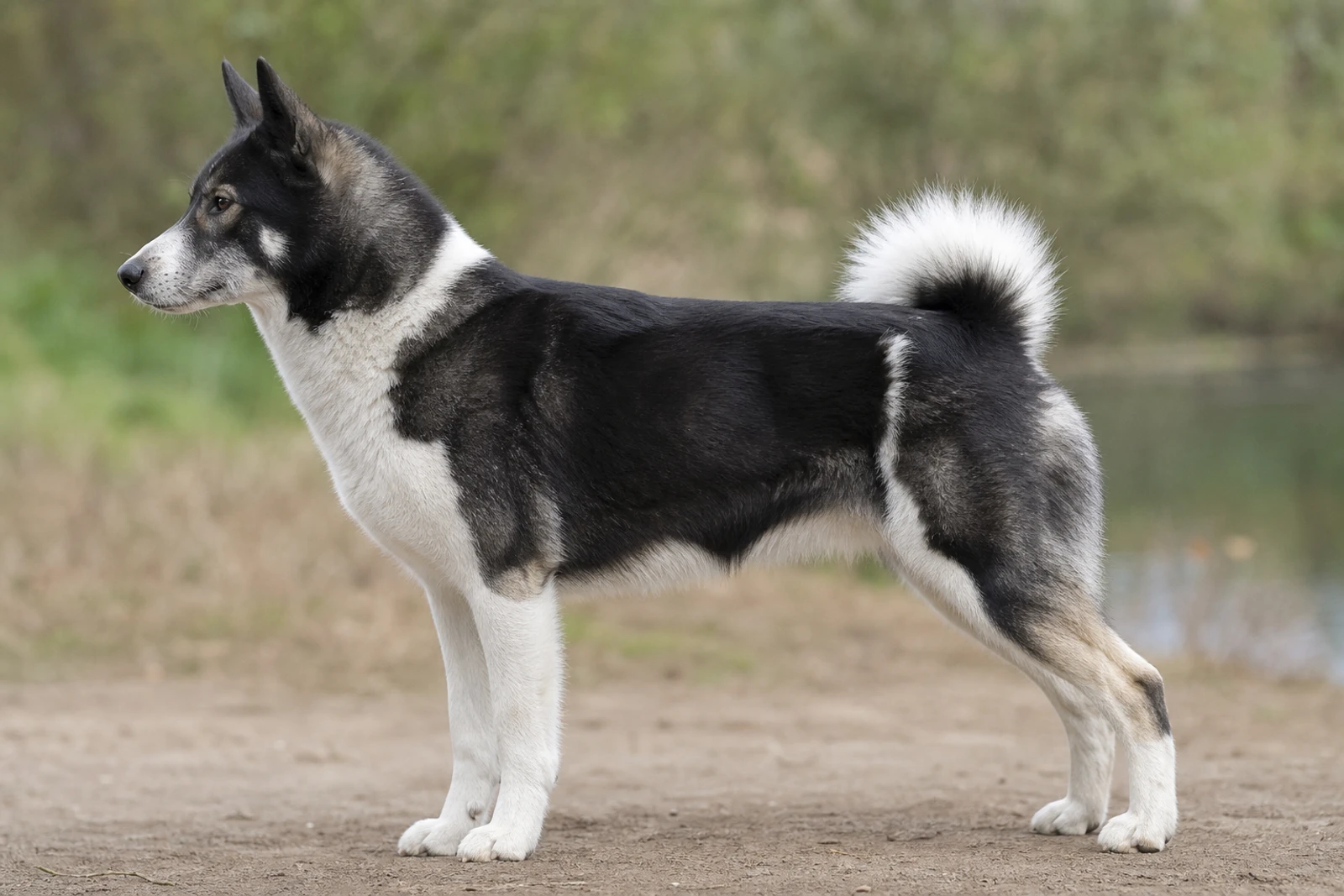
The Russian-European Laika is a rugged spitz-type hunting dog best suited for experienced, active owners who can provide ample physical and mental challenges. Bred for tracking and bay game, this breed thrives on purpose and does poorly in sedentary or apartment life. Loyal and alert, it doubles as a capable watchdog but can be independent and willful. With proper socialization, it gets along with children and other dogs, though its strong prey drive makes it unsafe around cats. Its dense double coat demands regular grooming, and early, consistent training is essential to channel its energy.
At a glance
- Size
- Large
- Height
- 19–23 in
- Weight
- 44–51 lb
- Life span
- 10–12 years
- Coat colors
- black, white, gray, black and white, gray and white, piebald
- Coat type
- double coat with harsh outer guard hairs and dense undercoat
- Group
- Spitz–Type
How much does a Russian-European Laika cost?
Adopt / rescue
$75–$400
Usually includes spay/neuter, first shots, and a microchip.
Buy from a breeder
$700–$2,000
From a reputable, health-testing breeder.
Approximate USD. Prices vary widely by region, breeder, pedigree, age, and coat colour — adopting is the lower-cost and recommended route. Avoid suspiciously cheap “breeders”; they’re often puppy mills.
Estimate the full cost of a Russian-European Laika →Want the ongoing number? Estimate the monthly food bill for a Russian-European Laika with our dog food cost calculator.
Russian-European Laika photos
Views
Front, side, rear and top — the full silhouette.Poses
How the breed sits, lies, moves and plays.Puppy to senior
The breed across its whole life.Expressions
The breed’s range of moods.Close-up details
Eyes, ears, nose, paws, tail and coat.Coat colors
The breed’s recognized colors.Click any photo to enlarge. We show the Russian-European Laika from every angle — three views, poses, life stages, expressions, close-ups, coat and colors.
Appearance & size
A Russian-European Laika is built like the no-frills woods dog it is: a squarely proportioned, large spitz-type that carries exactly the right amount of muscle for a full day on the move. You won't find exaggerated angles or bulk here — just a balanced, slightly rectangular body where the length from shoulder to rump is roughly equal to the height at the withers.
Males typically stand 21–23 inches and weigh around 50–51 pounds; females run 19–21 inches and 44–48 pounds. That puts the breed in the large camp, but it’s a dense, compact large — more of a heavy medium when you see one on the trail. The bone is substantial without being coarse, and the legs are straight and well under the body.
The coat is a true double coat built for freezing northern forests. Guard hairs are straight, harsh to the touch, and long enough to shed snow. Underneath sits a soft, woolly undercoat that thickens dramatically in cold weather. A ruff frames the neck and shoulders, and there’s slight feathering on the backs of the thighs and along the curled tail. Coat length varies, but it should never hide the dog’s outline or look soft and fluffy.
Color is almost always black or dark gray with crisp white markings, and that pattern is a breed signature. You’ll see a white chest, white muzzle (often a full blaze on the face), white on all four legs, and a white tail tip. Some dogs are white with large black or gray patches; solid colors and liver are faults. The contrast gives the Laika a sharp, piebald look that helps hunters spot them in thick cover.
From the front, the head is a moderate wedge, clean and dry. The skull is broad between the ears, the stop is distinct but not abrupt, and the muzzle tapers slightly to a black nose that stands out against any lighter hair. Eyes are dark brown, almond-shaped, and set a little obliquely — the expression is keen, watchful, and just a touch hard. Ears are prick, set high on the skull, and pointed; they’re mobile and catch every sound.
In side view, the chest is deep and reaches down to the elbows. The topline is level and firm, the loin is short, and the belly tucks up slightly. The tail curls tightly over the back — either in a complete ring that touches the spine or a sickle shape — and is never held down. That tail is one of the first things you notice, a lively plume that broadcasts the dog’s mood from a distance.
From behind, the hindquarters are strong and parallel, with well-angled stifles and thick thigh muscles that give the dog its explosive push-off in deep snow. The tail sits high and makes it easy to pick out the Laika’s silhouette even in a line of other spitz breeds. Everything about the dog’s build says ready: ready to course, tree, and bring game to bay.
History & origin
The Russian-European Laika was deliberately stitched together from tough, resourceful village dogs that had been hunting the forests of European Russia for centuries. Until the 1940s, no single “breed” existed. Instead, hunters in regions like Komi, Arkhangelsk, Karelia, and Vologda kept local spitz‑type dogs that were simply called laika — a word that means “barker.” Each pocket of forest produced dogs that looked and hunted a bit differently, but they all shared a sharp nose, an upright build, a thick double coat, and a habit of tracking game silently, then barking loudly to hold it in place until the hunter arrived.
The Soviet push to standardize hunting breeds changed everything. In 1947, the All‑Union Cynological Council (under Glavokhota, the State Hunting Department) approved the first breed standard for a “Russian‑European Laika,” drawing almost entirely on the Komi Laika and dogs from the Upper Kama River basin. Shereshevsky, a well‑known Soviet cynologist, led much of the early breeding work. The goal was ruthlessly practical: create a versatile, cold‑hardy hunter that could pursue everything from squirrels and grouse to moose and brown bear, across thousands of square miles of taiga. Breeders selected for a medium‑sized, square‑proportioned dog with a wedge‑shaped head, prick ears, harsh coat, black‑and‑white or gray‑and‑white coloring, and an almost obsessive drive to find and bay game. The revised 1952 standard locked in many of the details we see today.
- Base stock: Chiefly Komi Laikas (sometimes called Zyrian Laikas), with infusions from Archangel, Karelian, and Votyak hunting dogs to broaden the gene pool.
- Soviet reorganization: The Russian‑European Laika was officially separated from the other three emerging Laika breeds — West Siberian, East Siberian, and Karelo‑Finnish — during the 1947–1952 classification project.
- FCI recognition: After the breed reached Europe beyond the USSR, the Fédération Cynologique Internationale accepted it in 1980 under Group 5 (Spitz and primitive types), though numbers outside Russia remain modest.
Today, the Russian‑European Laika is still bred primarily as a working dog, not a casual companion. In its homeland it remains a serious hunting partner, while dedicated kennels in Finland, Estonia, and a handful of other countries preserve the lines. Expect a history that lives in the dog’s every instinct: it was never asked to be a fireside pet, but to range out ahead, make independent choices, and keep large game cornered in some of the coldest, most unforgiving terrain on Earth.
Temperament & personality
The Russian-European Laika is a working partner—not a pushover. If you want a dog that lives to please, keep looking. This is a sharp, independent mind in a sturdy Spitz body, bred to make split-second hunting decisions miles from human direction. That means you earn respect through consistency and fairness, never force.
Energy and drive
A Laika doesn’t tire out after a walk around the block. This 44–51 lb athlete needs real work: an hour or more of off-leash running, scent tracking, or vigorous play in a secure area. Without that outlet, the same intensity that makes them fearless in the woods gets channeled into destructive chewing, fence pacing, and relentless barking. They have a deep need to do something, and they’ll invent a job if you don’t give them one—often a noisy one.
Affection and household behavior
With their own family, Laikas are loyal and often surprisingly gentle, but they show affection on their terms. They’ll lean against you, follow from room to room, and curl up nearby, yet they’re unlikely to be velcro dogs. With strangers they’re reserved, not hostile; watch for calming signals like lip licking or a yawn when guests arrive. A forward-leaning stance and soft eyes mean curiosity. A stiff body, locked stare, and stillness are a clear warning—respect that immediately. Teach children never to crowd a Laika while it’s eating; even a well-mannered dog can develop food-guarding reflexes if pushed.
Watchfulness and territory
Bred to alert hunters to treed game, these dogs are vocal watchdogs. They’ll sound off at anything unusual, and their deep bark carries. Indoors, they may urine-mark if intact or if they still smell previous accidents, so clean messes with an enzymatic or vinegar-based cleaner that removes the scent cue entirely. Reward outdoor elimination instantly with a treat to cement the habit.
Quirks you’ll live with
Like many Spitz breeds, Laikas find strong smells irresistible. Don’t be surprised if your dog rolls in something foul—it’s likely an instinct to mask their own scent or broadcast an interesting find. Provide plenty of appropriate chew toys; adult Laikas gnaw to keep jaws strong, and puppies need relief for teething. Redirect with a bitter citrus or vinegar spray on off-limits items, but never punish after the fact—they won’t connect it to the chewing. Instead, manage the environment and keep expensive shoes out of reach until the dog matures. A tired Laika with a frozen Kong is a happy, quiet housemate.
Good with kids, dogs & other pets
A Russian-European Laika comes with a naturally patient, non-aggressive temperament, which gives you a strong starting point for a family dog. That said, at 44–51 pounds of muscle and a working-drive mindset, this is not a breed you turn loose with toddlers and hope for the best. Their size and intensity mean an enthusiastic greeting or an impromptu zoomie can easily send a small child flying. They do best in homes where kids are old enough to understand boundaries — and where adults supervise interactions, every time.
With other dogs, the picture depends heavily on early socialization. A Laika raised alongside another dog often forms a tight bond, especially with the opposite sex. Outside the household, their Spitz independence and hunting background can show up as aloofness, same-sex selectivity, or posturing with unfamiliar dogs. Leash reactivity is not uncommon if you skip the critical socialization window (roughly 3–16 weeks). Pile on positive, controlled exposures to friendly, well-mannered dogs during puppyhood, and keep it going through adolescence — that's what builds a dog who can handle a walk past a strange dog without drama. Don't expect a Laika to be a "dog park dog" by default; many prefer a small, known circle.
With cats and other small pets, you're dealing with generations of hunting instinct. These dogs were bred to pursue and tree game, and that drive can flip on fast around a fleeing cat, rabbit, or guinea pig. If you raise a Laika puppy with a confident adult cat using baby gates and gradual desensitization, coexistence is possible, but management never ends. Never leave them loose together when you're not home. For pocket pets like hamsters or birds, assume the dog views them as prey, period, and secure enclosures accordingly.
The common thread is early, positive exposure. The prime window slams shut around four months; use every day before then to introduce your puppy to calm children, varied dogs, the cat carrier, different handling, and the world's noises and surfaces. A Laika raised in isolation — like a puppy-mill survivor — may carry lasting timidity or over-arousal, though dedicated training can still ease their day-to-day stress. If you already have small animals running free, weigh that prey drive honestly: this breed won't simply "outgrow" it, no matter how much you hope.
Trainability & intelligence
You’re not dealing with a soft-eyed retriever who lives to please. The Russian-European Laika is lightning-quick to figure out what you want — and just as quick to decide whether it’s worth his time. That independent streak, honed over generations of solo hunting in dense forest, means intelligence and biddability are not the same thing here.
Expect a dog who can learn a new cue in three or four repetitions when the motivator is right. The challenge is keeping him interested once he’s nailed it. Drills that ask for the same sit-stay routine five times in a row will earn you a yawn and a pointed look. Keep sessions short, swap rewards (a tug toy one round, freeze-dried liver the next), and always quit before the dog does. You’ll get much further treating training as a conversation than a command chain.
The recall problem — and how to handle it
A Laika who spots a squirrel 200 yards away can’t hear you. The prey drive is that strong. Building a truly reliable recall starts at 8 weeks, not 8 months. Begin in a hallway with zero distractions, then the backyard, then a long line in a field — increasing the challenge only when the previous step is bulletproof. Use a unique recall word, reserve your highest-value jackpot (think cooked chicken or a game of chase you), and never punish a dog who finally returns to you, even if you’re fuming. A frustrated correction ruins the trust that recall lives on.
Socialization isn’t optional
Laikas tend to be reserved with strangers — not fearful, just discerning. Without early, deliberate exposure, that wariness can tip into reactivity. Aim for at least 100 new people, places, and handled surfaces before 16 weeks. Let the puppy observe from a comfortable distance at first, then reward calm curiosity. Forcing greetings on a shy Laika backfires almost every time.
Positive, relationship-based methods are the only sensible path. Harsh corrections or alpha-style intimidation fracture the clear communication this breed depends on, and a Laika who’s lost trust won’t just shut down — he’ll find his own entertainment, often at your expense. Lay the foundation early, stay more stubborn than he is, and you’ll end up with a sharp, honest partner who works with you instead of against you.
Exercise & energy needs
Plan on a bare minimum of 60 minutes of hard exercise every day, split into at least two sessions. A single walk around the block will leave a Russian-European Laika restless and looking for trouble. These are serious working dogs, bred to hunt game, pull gear, and move through deep snow for hours at a stretch. Most individuals, especially young adults, will push closer to 90 minutes before they’re truly satisfied.
This is not a breed that thrives on a few casual strolls. They need to run, pull, and problem-solve. Off-leash sprints in a securely fenced area, a long hike with steep inclines, or a job like pulling a cart or sled will drain that steady current of energy far better than a flat jog on leash. Without that outlet, expect howling concerts, crater-sized holes in the yard, and creative escape plans.
Mental exercise counts just as much as the physical stuff. Laikas are sharp, independent thinkers. Hand them a puzzle toy or a frozen stuffed kong and you’ll buy some peace, but they really light up when their nose is working. Hide a toy in the backyard, lay a simple scent trail, or join a beginner nosework class. Short tracking sessions, obedience drills that demand impulse control (like a five-minute down-stay while you toss a ball), and hide-and-seek games all put a dent in that brainpower.
- Scent work or nosework — a natural fit for a dog built to locate game
- Canicross, bikejoring, and skijoring — perfect once growth plates close (hold off until 12–18 months)
- Agility or flyball — good off-season activities that burn speed and sharpen responsiveness
- Weight pulling — taps into that deep-rooted desire to tug and haul
A few cautions. Because the Laika matures slowly, protect developing joints from repetitive pounding on pavement. Stick to soft surfaces and avoid forced pulling with young dogs. Even adults benefit from a warm-up and a gradual cooldown, especially in cold weather when muscles tighten fast.
The payoff for all this effort is real: a well-exercised Laika will settle calmly indoors, keep a quiet eye on the yard, and save the big opinions for the walk to the door. Skip the work, and you’ll hear about it nonstop.
Grooming & coat care
A Russian-European Laika wears a dense, no-nonsense double coat that’s built to shrug off snow, rain, and brush. It’s a true working spitz coat: a harsh, straight outer layer over a thick, insulating undercoat. That undercoat is the main event for grooming because it comes out in force twice a year.
Brushing and shedding
During the spring and fall blowouts, you’ll be pulling out enough fluffy undercoat to stuff a pillow. Expect daily brushing for a couple of weeks each cycle—skip a day and you’ll find tufts drifting across the floor. A slicker brush with rounded pins works well to grab loose hair and clean debris out of the outer coat, but your real workhorse is an undercoat rake with rotating teeth. Rakes reach through the top layer and pull out dead undercoat without tearing the guard hairs. On non-shedding weeks, two or three brushing sessions are enough to keep things tidy and stimulate the skin.
- Use the undercoat rake first, then go over the dog with a slicker or pin brush to smooth the outer coat and catch what the rake missed.
- A metal comb can help behind the ears and around the tail where tangles can hide, but this breed rarely mats when brushed regularly.
- Avoid bristle brushes for routine work here—they’re better for adding shine to short coats, and this isn’t one.
Bathing and coat preservation
Soap and water are rarely needed. The Laika’s coat naturally sheds dirt once it dries; mud just brushes out. Bathe only when the dog rolls in something truly foul, and use a mild dog shampoo that won’t strip the natural oils that waterproof that topcoat. Overbathing can leave the skin dry and the undercoat less insulating. Between baths, a wipe-down with a damp towel and a thorough brushing is usually plenty.
Never shave or scissor-cut the coat. You’ll ruin the protective layering that keeps the dog cool in summer and warm in winter—the undercoat regulates temperature both ways. A shaved spitz coat can grow back patchy and never regain its original texture.
Nails, ears, and teeth
All that outdoor time on hard ground may naturally wear down the nails, but still check them every few weeks. If you hear clicking on the floor, it’s time for a trim. Ears should stand erect and air out well, but a quick weekly check for wax or debris and a gentle wipe with a damp cotton ball prevents problems. Teeth benefit from a daily brush—spritz breeds can be prone to tartar buildup, and a quick scrub keeps vet cleanings off your schedule.
The seasonal reality
Plenty of off-leash movement in fresh air actually helps the coat turn over and reduces stress-related shedding indoors. A Laika that spends its days running through the woods often has a healthier, glossier coat than one who only walks the block. You’ll still have fur to deal with, but a solid routine keeps the house livable and the dog comfortable.
Shedding & allergies
If you value a clean house, the Russian-European Laika will test your commitment. This is a heavy, year-round shedder with two dramatic seasonal blowouts that can catch first-time owners off guard. The breed carries a dense double coat: a harsh, straight outer layer designed to shrug off snow and underbrush, and a thick, woolly undercoat for insulation. That combination is efficient in the taiga, but it means fur ends up on every fabric surface in your home.
Twice a year — usually in spring and fall — they “blow” that undercoat in a matter of weeks. During these periods, clumps of greyish fluff will drift across the floor no matter how often you sweep. Daily brushing with a slicker brush or undercoat rake is mandatory to keep up, and even the most diligent grooming session will leave you with a lap full of loose hair. Outside the big seasonal shifts, expect a steady, moderate rain of guard hairs. A thorough brushing two or three times a week helps contain the mess, and a high-velocity dryer after a bath can blast loose undercoat out before it hits the furniture.
On the bright side, drool is a non-issue. You might see a drip after a long drink of water, but these dogs aren’t jowly, and they won’t leave wet marks on your pants.
As for allergies, forget the word “hypoallergenic.” A dog this generous with its fur is a poor match for anyone with sensitivities. Shedding spreads dander and saliva proteins everywhere, so a Laika in the house means a constant allergen load. If someone in the family has pet allergies, spend serious time around an adult Laika before committing — and invest in a vacuum that can handle serious abuse.
Diet & nutrition
You feed a Russian-European Laika for the engine you just spent the morning running, not the couch potato it might pretend to be by evening. These 44–51 lb dogs were built to explode through deep snow after game, and their metabolism still expects a big calorie burn. When the workload drops and the bowl stays full, weight piles on fast. Obesity in a Laika isn’t just about looks — it loads joints already stressed by hard turns and can snowball into mobility trouble. That means portion control isn’t a suggestion; it’s the whole game.
How much to feed by age and activity
- Puppies (8 weeks–4 months): Four evenly spaced meals a day. Start with lightly cooked and puréed meats, fish, fruits, and vegetables, or a premium large-breed puppy food. Around 12 weeks you can introduce a raw chicken wing, but only under your direct eye so the pup doesn’t try to swallow it whole.
- 4–6 months: Drop to three meals. Growth is still intense, so keep the calorie density high without letting the ribs disappear under a puppy potbelly.
- 6 months and older: Two meals a day, just like an adult. By now a Laika youngster ought to look lean and leggy, not pudgy.
For a full-grown 50-pounder on a solid hour of off-leash hunting or trotting alongside a bike, daily needs often land between 1,200 and 1,600 calories. That can look like 2 to 3 cups of a dense performance kibble, but every food labels differently — go by the bag’s calorie-per-cup and your dog’s waistline, not a generic scoop. A dog that gets a couple of leash walks and a yard patrol might need the bottom end or even a little less. Use a puzzle bowl if your Laika inhales meals in 15 seconds flat; it slows the gulping and adds a mental pinch.
What goes in the bowl
The Laika’s spitz heritage aligns with a diet heavy in animal protein. Many owners aim for roughly 60% raw or gently cooked meat, 20–30% fruit and vegetable purées, and 10% extras like eggs, yogurt, or small amounts of digestible grains. Blending or processing meals helps a Laika unlock nutrients that a simple gulp might leave behind, because a dog’s jaw moves only up and down and saliva lacks carb-digesting enzymes. Pearl barley works as a high-fiber grain when you want a changeup; plain white rice is a bland standby for tender stomachs.
Puppies transitioning onto a new diet do best when you swap things gradually, starting with soft, puréed proteins and produce before working up to chunkier textures. Canned fish, cooked eggs, and steamed vegetables come together fast for a quick, clean meal — keep unsalted veggie cooking water on hand as a broth base.
The weight trap and how to spring it
A Laika’s food motivation is the double-edged sword here: it makes training a breeze, but it also means the dog will happily eat itself into trouble if you let it. Never feed from the table. Scraps go into the dog’s bowl, not your hand, or you’ll create a beggar that’s near impossible to reprogram. Ditto for rich holiday plates — fatty trimmings and gravy can trigger pancreatitis before you realize what happened.
Check body condition every couple of weeks. Run your thumbs down the ribcage: you want to feel a light layer of insulation with individual ribs easy to count. Can’t feel them? Cut the daily portion by a quarter-cup and up the exercise before the problem gets sticky.
Senior slowdown
Older Laikas often lose interest in all-day runs but not in dinner. Gradually scale back the calories as activity dips, and split the daily ration into three smaller meals if that suits the dog’s digestion. Despite what you might hear, there’s no strong evidence to cut protein in a healthy senior — just keep the weight off and purée the food if missing teeth or tender gums make chewing a chore.
Health & lifespan
Most Russian-European Laikas live 10–12 years — a solid working-dog lifespan, especially for a breed that often stays active well into its senior years. They tend to be hardy, but a few inherited conditions show up often enough that smart breeders screen for them hard.
The big ones are hip and elbow dysplasia. Like many medium-to-large dogs, a Laika can carry the genes for malformed joints, and that risk climbs if the dog is overweight or pushed too hard on hard surfaces as a pup. Reputable breeders X-ray hips and elbows through OFA or PennHIP before breeding. Eye problems crop up in some lines too — progressive retinal atrophy (PRA) and cataracts are the usual suspects — so you’ll want to see current CERF or OFA eye clearances from a board-certified veterinary ophthalmologist.
Hypothyroidism and certain autoimmune conditions can show up in the breed as well, though less commonly. A full thyroid panel on the parents isn’t overkill if you’re buying a puppy.
Once you have your dog, weight management matters every single day. These are sturdy, food-motivated hunters who will polish off a bowl and look at you like they haven’t eaten in a week. Even an extra 5 lbs adds serious stress to those joints and can shave time off that 10–12 year window. Keep them lean, feed measured portions, and don’t let the cold-weather “fluff” mask how their ribs feel.
That double coat is perfect for snow, but it turns into a liability in summer. Laikas overheat fast when the mercury climbs. Exercise early or late, provide shade and water, and never leave one outside without a cool retreat.
Routine care rounds out the picture:
- Yearly vet exams — by the time you notice a limp or a squint, the problem has more steam behind it.
- Heartworm prevention monthly during mosquito season and a month beyond (and tick protection in high-risk areas).
- Rabies vaccination, legally required.
- Positive, early socialization to cut stress, which is a real health protector for a breed that can tip into anxiety-driven barking if isolated or handled roughly.
Watch for small shifts — if a dog that normally tears into the woods suddenly lags or skips a meal, don’t wait. Joint pain, low thyroid, or an eye issue might be the cause. Catch it early, and you’ll usually keep the problem from stealing the dog’s favorite years.
Living environment
A Russian-European Laika in an apartment is a recipe for a stressed dog and unhappy neighbors. This is a high-octane working breed built to cover miles of forest in a single day. Give him a house with a securely fenced yard, and even then, the fence better be tall and dig-proof — his prey drive and nose will lead him right over or under anything flimsy. He’s not the kind of dog who entertains himself quietly outdoors. You’ll still need to commit to at least an hour of real exercise daily, split into two or three sessions that go far beyond a leash stroll around the block. Think off-leash running, canicross, or serious scent work.
That thick double coat tells you everything you need to know about climate. He shrugs off snow and freezing temps, but summer heat can flatten him fast. Schedule activity for early mornings or evenings when it’s hot, provide constant shade and water, and never leave him out in the midday sun. Barking is part of the package. Laikas are natural watchdogs with a piercing alarm bark they won’t hesitate to use. You can shape the behavior with training, but silence isn’t in their DNA.
If you’re gone for long workdays, this breed will struggle. Russian-European Laikas bond hard to their people and can tip into destructive chewing, howling, or escape attempts when loneliness sets in. A second well-matched dog sometimes helps, but it’s no substitute for human connection. Crate training, gradual desensitization to alone time, and puzzle toys stuffed with food buy you a few hours, not ten. The yard alone won’t solve the problem — a bored Laika left out there will just dig craters along the fence line. The real need is a lifestyle that weaves the dog into your daily movement and gives his brain a job, whether that’s finding hidden objects or learning a new tracking skill.
Who this breed suits
This is a dog built for the woods, not the couch. If your idea of a good day starts with pulling on boots and ends with mud on the floor, a Russian-European Laika might be your kind of partner. But if you’re picturing a calm house pet that settles with a puzzle toy, you’re looking at the wrong breed.
You’ll thrive together if:
- You’re an experienced owner who gets primitive breeds. A Laika isn’t a Labrador. These dogs think for themselves, problem-solve obsessively, and don’t live to please you. They need someone who reads canine body language as naturally as a book and knows how to work with, not against, an independent streak. A 44–51 lb Spitz with a hard head and a softer ego responds best to short, fair, motivated training—never repetition drills or force.
- You live for high-output outdoor adventure. A 20-minute leash stroll won’t dent this dog. Your Laika needs a solid 90 minutes to two hours of running, scent tracking, or applied work every day—ideally off-leash in secure areas where 19–23 inches of muscle and drive can really move. Hunters, serious hikers, canicross runners, and skijorers will finally meet their match. Without that outlet, you get howling, fence-climbing, and destruction that’s hard to undo.
- You either hunt or provide a job that mimics it. The breed was selected to trail and bay up large game like boar and bear, then hold it until the hunter arrives. Substitute that sequence with nosework, barn hunt, or long tracking sessions. A Laika with no outlet for its genetic program often turns that intensity on the backyard wildlife—or your neighbor’s cat.
- You have a house with a serious fence. Prey drive is absolute. A squirrel or stray cat can send a Laika over or through a 4-foot barrier without a second thought. A 6-foot wood or chain-link fence, dug in deep, is baseline.
- You can handle noise, and your neighbors can too. This breed is spectacularly vocal. They bark at interesting scents, at movement, at the sheer joy of running. You’ll never lose them in the forest—but apartment living and close-quarters suburbia are a non-starter.
- You appreciate a dog that bonds deeply but isn’t a cuddlebug. A Laika is loyal, watchful, and good with older kids who understand dog body language, but they show affection by leaning in, following you room to room, and working alongside you—not by draping themselves across your lap.
Think twice—or look elsewhere—if:
- You’re a first-time dog owner. The learning curve here is steep. This dog doesn’t forgive handler mistakes gracefully. You’ll need an in-person mentor who knows hunting Spitz types.
- You have cats, rabbits, or other small pets. Some Laikas can be raised with cats, but it’s a management-heavy gamble, and the instinct to chase and grab is never truly gone. The same goes for off-leash small dogs that might trigger a prey response.
- You want reliable off-leash control in unfenced spaces. Even with solid training, a Laika’s nose can override a recall command in a heartbeat when it lights up a fresh track.
- You need a quiet, low-shedding dog. Twice a year, these dogs blow undercoat like a snowstorm, and the rest of the year there’s a steady drizzle of hair. The 10–12 year lifespan means you’ll be sweeping up that fur through multiple life stages.
- You’re a senior or have very young children unless you’re an active, experienced handler with the stamina to manage a powerful dog that can pull on lead and bowl over a toddler without meaning to. This breed is not a gentle, slow-moving companion; they stay sharp and driven well into old age.
Cost of ownership
Buying a Russian-European Laika typically means a long search and a price tag of $1,500–$2,500 from a responsible breeder. This is a rare spitz in North America, so imports from Russia or Finland push costs higher. Expect a waitlist, a non-refundable deposit, and a breeder who questions you as hard as you question them — this is a working dog, not a casual pet.
Once home, monthly costs land in the $180–$320 range, assuming no major surprises.
- Food: A 45–50 lb dog with true endurance needs roughly 2.5–3 cups of high-quality kibble daily. That runs $50–$75/month. If you hunt hard or run long miles with them, count on the upper end. Raw-fed Laikas can easily double that figure.
- Grooming: Their dense, harsh double coat blows heavily twice a year. You’ll invest in a good slicker brush and a high-velocity dryer — or budget $30–$60 every 6–8 weeks for a pro who knows how to handle spitz coats without stripping the undercoat. Otherwise, your house will wear the fur.
- Vet and prevention: Annual checkups, vaccinations, and monthly heartworm/flea/tick prevention average $60–$80/month. Routine dentals and the occasional x-ray for a high-impact joint (hips, elbows) add intermittent but real costs.
- Insurance: A solid accident-and-illness policy for a large, active breed typically costs $40–$65/month. You’ll be glad you have it the first time a porcupine or a deer teaches the Laika a painful lesson.
- Training and gear: This isn’t beginner stuff. A tracking collar, a tough harness, and maybe a couple of sessions with a trainer versed in independent northern breeds will set you back a few hundred dollars in the first year. It’s money that prevents far more expensive problems later.
Over a 10–12 year lifespan, you’re looking at a committed sum — roughly $2,000–$3,800 per year, not counting emergencies or the initial purchase. If that surprises you, it’s worth checking whether a lower-octane companion suits your budget better.
Choosing a Russian-European Laika
The first thing to understand: you are not going to find a Russian-European Laika by accident. This is a tightly held hunting breed in North America, and a responsible breeder is your only realistic path. That scarcity can tempt people to skip due diligence — don't.
Health clearances you need to see
Responsible breeders screen for issues that can appear in active, medium-large spitz breeds. You want OFA or PennHIP documentation for hips and elbows. Ask for a current eye exam (OFA CAER or equivalent) performed by a veterinary ophthalmologist, not a vet’s casual look. Thyroid testing should be on paper, too. A breeder who can’t hand you the actual certificates — not just a verbal “they’re healthy” — is a dead end. Laikas bred hard and sound still need these checks. Anyone claiming the breed has zero health problems because it’s “primitive” is either dishonest or dangerously naive.
Red flags that should make you walk
- No working proof. A Russian-European Laika is a driven game-finding hunter. A breeder who never tests their dogs on fur or feather — or can’t describe the specific quarry their line was bred for — is producing pets, not preserving the breed’s purpose.
- Over-promising on color or coat. This breed’s value is in its nose, nerve, and cooperation in the field, not a flashy white-and-black pattern. If the chat is all about “rare” markings, you’re talking to the wrong person.
- No return or lifetime safety net clause. Ethical breeders require that if you ever can’t keep the dog, it comes back to them. Run from anyone who won’t put that in writing.
- Puppies kept in isolation. Laika pups need early exposure to household chaos, woodland smells, and varied footing. A pristine kennel run isn’t enough.
Picking the right puppy
Observe the dam — her temperament tells you a lot about what your dog might become. A Laika dam should be steady, watchful, and tolerant of visitors, not fearful or snappy. Inside the litter, look for a pup who checks you out with a bold, curious expression, then gets back to wrestling with littermates. Extreme timidity or a puppy who freezes and refuses to engage is a risk you don’t need in a sharp-working dog. Let the breeder explain which pup matches your life — a keen hunter for an active field home, a slightly softer individual for a less intense but still very active companion. Check ears (clean, no odor), eyes (bright, no discharge), and movement (no hopping or stiffness) before you commit.
Rescue: a genuine long shot
Laika-specific rescues exist but have practically zero inventory. If you’re set on rescue, get on the radar of hunting-dog and spitz-breed networks, and be ready to travel. A dog that lands in rescue may come with little background on health or working ability, so you’ll need to go in with your eyes wide open and a trainer lined up.
If a breeder cannot show you verifiable health clearances on both parents, let you meet the dam in her living space, and make you wait while they vet you just as thoroughly — keep looking. That stubby tail and confident stare are easy to fall for, but the paperwork and the commitment matter far more.
Pros & cons
Pros
- A versatile, tireless hunting partner that points, trees, and retrieves game from squirrel to bear — you’re getting a serious working dog, not a casual weekend hiker.
- Fiercely loyal to its own people without being needy; the Laika bonds tightly and reads the family’s rhythm, settling indoors when exercise needs are met.
- A natural watchdog with a deep, resonant bark that stops at the property line. Stranger confrontation is not the goal, but the alert is instant.
- Hardy and generally healthy — 10 to 12 years out of a 44–51 lb dog with a straight coat and clean habits. Minimal drool, low “doggy” odor, and a blowout shed you can schedule around.
- The dense double coat and moderate size (19–23 in) make them a four-season companion unfazed by deep cold, wet brush, or long days in the woods.
- Smart enough to problem-solve on a hunt but biddable when you earn their respect; they don’t need constant micromanaging once trained.
Cons
- Intense prey drive runs the household. Squirrels, cats, and small dogs can trigger a full-speed chase without a second thought. Off-leash reliability requires years of proofing, and secure fencing is non-negotiable.
- Daily exercise isn’t a walk around the block. Expect to provide at least 90 minutes of hard, off-leash movement — forest runs, skijoring, or canicross — or you’ll redecorate drywall.
- Independence that can look a lot like stubbornness. They were bred to make decisions 200 yards ahead of you, so a Laika will question a command that doesn’t make sense to them in that moment.
- Vocal to the point of exhaustion. The baying bark that works beautifully on a hunt is a neighborhood negotiation in the suburbs. Apartment living is a non-starter.
- Shedding is a seasonal snowstorm — they blow their dense undercoat twice a year and drop hair constantly in between. You’ll own a good vacuum and lint rollers by the case.
- Not for the novice handler. A Laika needs clear rules, calm follow-through, and someone who won’t take the independence personally when the dog ignores a “sit” because a chipmunk just moved.
Similar breeds & alternatives
If your eye is on the Russian-European Laika but you’re still sifting through other northern hunters, a handful of Spitz breeds sit in the same conversation—just with different trade-offs on size, prey focus, and how much handler they tolerate without a fight.
West Siberian Laika
Think of the West Siberian as a stretched-out cousin. It’s larger, with males routinely crossing 60 pounds, and carries a rougher, stand-off coat built for long days in snow. Historically, this one zeroes in on sable and squirrel, whereas the Russian-European Laika was shaped for close-cover boar and bear work in European forests. The West Siberian is equally vocal but leans more aloof with strangers and can be less bidable when you’re not actively hunting.
Karelian Bear Dog
You’ll see almost the same numbers—44 to 50 pounds, 19 to 23 inches tall—but a different engine under the hood. The Karelian is a single-minded bear-hound with a legendary independent streak. It holds big game with nonstop barking and little thought for your recall commands. The Russian-European Laika shares that raw drive, yet typically bonds more closely with one handler and brings slightly more day-to-day cooperation into the house.
Norwegian Elkhound
A couple inches shorter and within five pounds of the Laika, the Elkhound deploys the same bark-and-hold tactics on moose and bear. Its thick gray double coat and deeper bark come with a stubborn personality that often packs on pounds the moment exercise dips. The Laika counters with a lighter, squarer frame and a sharper, quicker-moving temperament that handlers in dense brush appreciate.
Finnish Spitz
Drop down to 15–20 inches and 20–35 pounds and you’ve traded big-game power for a bright, treed-bird specialist. The barking remains turned up to maximum, and mental stamina demands are no joke. If you only pursue birds and need a dog that can live contentedly in a smaller home—and you enjoy a constant soundtrack—this is the more practical match.
Fun facts
- Bred from native Russian Laikas and European hunting dogs to create a versatile hunter capable of working both small and large game, including bear.
- Extremely vocal on the trail; they bay and bark to alert hunters, a trait that makes them excellent watchdogs.
- Weather-resistant coat and hardy constitution allow them to thrive in harsh northern climates and dense forests.
- Despite their independence, they form strong bonds with their owners and are known for their unwavering courage in the field.
Frequently asked questions
- Do Russian-European Laikas shed a lot?
- Yes, Russian-European Laikas are heavy seasonal shedders with a thick double coat typical of Spitz-type breeds. They blow their undercoat once or twice a year, during which daily brushing is essential to manage loose fur. Outside of shedding seasons, weekly brushing helps keep shedding under control.
- How much exercise does a Russian-European Laika need?
- As an active hunting breed, the Russian-European Laika needs at least 60–90 minutes of vigorous exercise daily. Long walks, jogs, and mentally stimulating activities like scent work or retrieval games help prevent boredom-related behaviors. Without sufficient exercise, they can become restless and destructive.
- Can Russian-European Laikas live in an apartment?
- Apartment living is generally not ideal for this high-energy, vocal breed. A home with a securely fenced yard suits them best, though they can adapt to an apartment if given extensive daily outdoor exercise and mental stimulation. Even then, their tendency to bark and need for space can be challenging in close quarters.
- Are Russian-European Laikas prone to excessive barking?
- Yes, barking is a natural trait; they were bred to alert hunters to game, so they tend to be vocal. They often bark at unfamiliar sounds, sights, or when bored, making them good watchdogs but potentially problematic in noise-sensitive environments. Consistent training from an early age can help manage excessive barking.
- Are Russian-European Laikas good with kids?
- They can be good family dogs when raised with children and properly socialized, as they are typically loyal and playful. However, their strong prey drive and independent nature mean interactions with small children should always be supervised. Teaching kids respectful handling is important for a harmonious relationship.
- Is a Russian-European Laika suitable for first-time dog owners?
- This breed is usually not recommended for novice owners due to its high energy, independent thinking, and need for consistent training. They thrive with an experienced owner who understands primitive Spitz breeds and can provide firm, patient leadership. First-time owners might find their exercise demands and stubborn streak overwhelming.
Tools & calculators for Russian-European Laika owners
Quick estimates tailored to Russian-European Laikas — pre-filled with this breed’s size where it matters.
Articles & stories about the Russian-European Laika
Sources & standards
This profile follows recognized breed standards from the American Kennel Club (AKC) and the Fédération Cynologique Internationale (FCI), along with established veterinary and breed-club guidance. These describe general breed tendencies — every dog is an individual.