

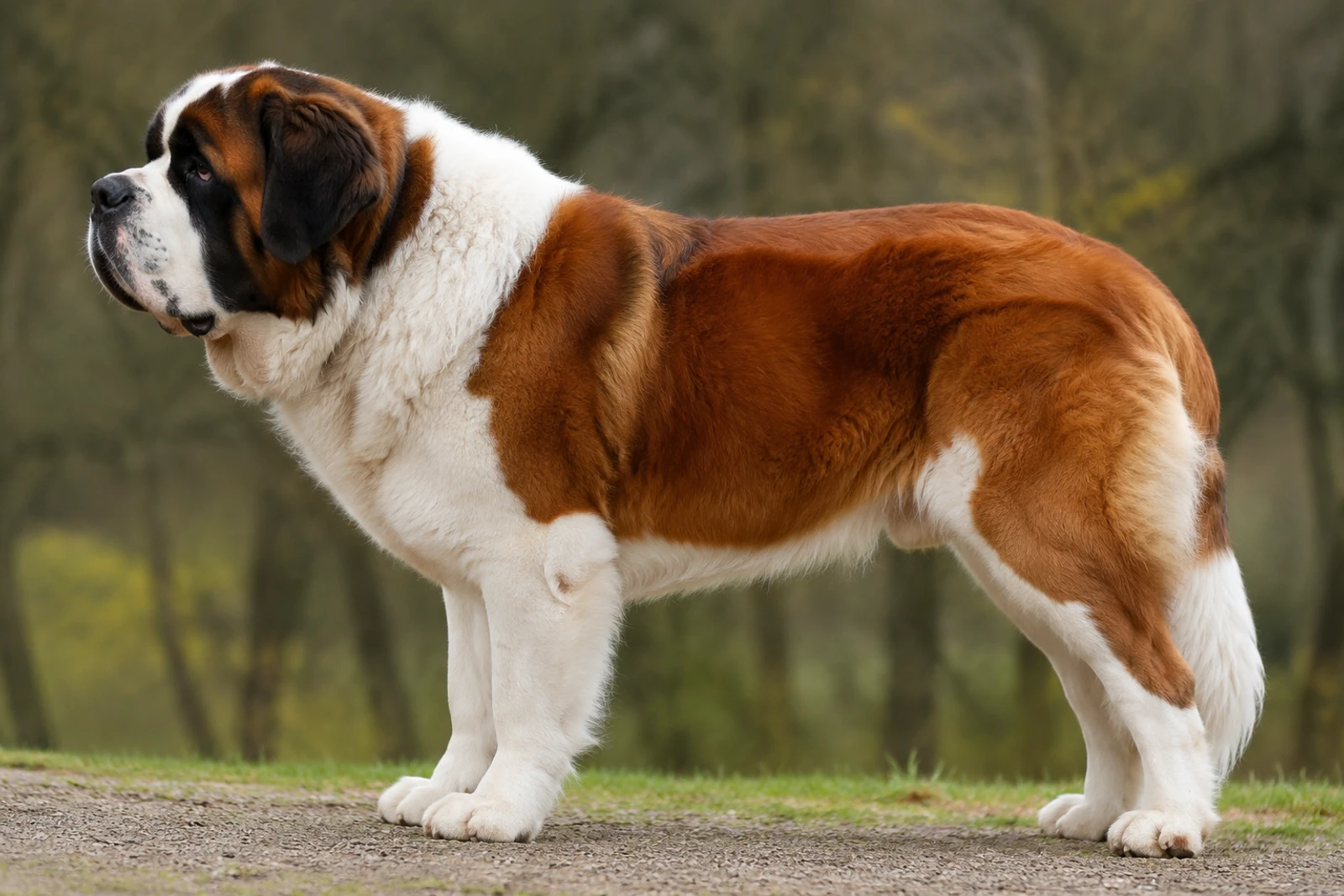
The Saint Bernard is a gentle giant, ideal for experienced owners with ample space who can manage its size, drooling, and moderate exercise needs. Known for its calm and patient nature, this breed excels as a family companion, especially with children, though supervision is necessary due to its bulk. Not suited for apartments or first-time owners, the Saint Bernard thrives in homes where it can receive consistent training and plenty of affection. Its thick coat requires regular grooming, and its legendary rescue history adds to its noble reputation.
Saint Bernard Sticker Pack
36 cartoon stickers • transparent PNG • no watermark
Pinterest-ready
Share all 36 reactions as one sticker sheet
Pinterest opens with the full pack and a fresh, tailored description. You choose the public board and publish it from your own account.
Save the full pack


Choose one reaction above to share it alone, or use the full-pack button for all 36 together.






























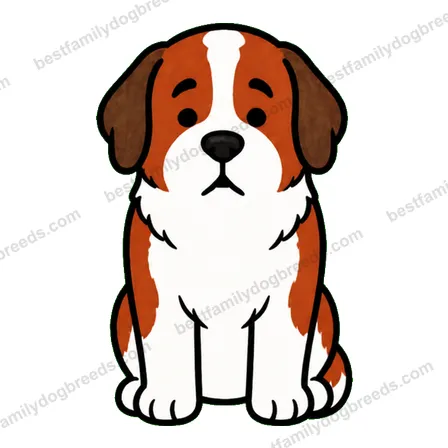

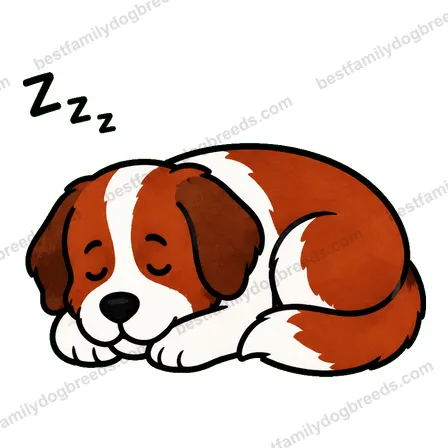
Free full-resolution download — no account, no payment, no watermark.
Includes all 36 transparent PNG stickers in one ZIP. A quick human check is required for each download.
At a glance
- Size
- Giant
- Height
- 28–30 in
- Weight
- 130–180 lb
- Life span
- 8–10 years
- Coat colors
- Red with white, White with red, Brindle with white
- Coat type
- Short or long dense double coat
- Group
- Working
How much does a Saint Bernard cost?
Adopt / rescue
$150–$500
Usually includes spay/neuter, first shots, and a microchip.
Buy from a breeder
$2,000–$4,000
From a reputable, health-testing breeder.
Approximate USD. Prices vary widely by region, breeder, pedigree, age, and coat colour — adopting is the lower-cost and recommended route. Avoid suspiciously cheap “breeders”; they’re often puppy mills.
Estimate the full cost of a Saint Bernard →Want the ongoing number? Estimate the monthly food bill for a Saint Bernard with our dog food cost calculator.
Saint Bernard photos
Views
Front, side, rear and top — the full silhouette.Poses
How the breed sits, lies, moves and plays.Puppy to senior
The breed across its whole life.Expressions
The breed’s range of moods.Close-up details
Eyes, ears, nose, paws, tail and coat.Coat colors
The breed’s recognized colors.Click any photo to enlarge. We show the Saint Bernard from every angle — three views, poses, life stages, expressions, close-ups, coat and colors.
Appearance & size
You know the sheer mass of a Saint Bernard the second you lay eyes on one — they’re built on a grand scale. This is a dog that tips the scales at 130 to 180 pounds and stands 28 to 30 inches at the shoulder, with males typically filling out the upper end of that range. Everything about their frame says power and stability, not speed. The body is slightly longer than tall, creating a rectangular silhouette that looks solid from any angle.
From the front, you see a broad, deep chest that tapers only slightly into a well-sprung ribcage. The shoulders are muscular and sloping, blending into thick, straight forelegs. Huge, round feet with arched toes carry the weight without splaying — a detail that matters when you’re supporting a dog this size.
The head is unmistakable. It’s massive, wide, and imposing, with a short, deep muzzle that seems almost square from the front. A pronounced stop and a furrowed brow give the dog its characteristic watchful, gentle expression. The skull is slightly domed, and the cheeks are well-developed but not bulging. Dark brown eyes sit moderately deep, and the ears are set high on the head — medium-sized, triangular, and carried close to the cheek, lifting just slightly when the dog is alert. A modest dewlap hangs from the neck, more noticeable in males, which adds to the overall impression of substance.
Move to the side, and you see a level topline from withers to rump, with a gently sloping croup. The tail is long, heavy, and set low, carried with a slight upward curve in motion but never curled over the back. The hindquarters are equally muscular, with broad thighs and well-angled stifles that hint at the breed’s original mountain work.
The coat comes in two varieties: rough (long-haired) and smooth (short-haired) . The rough coat is dense, medium-length, and slightly wavy, with feathering on the thighs and tail. The smooth coat lies flat and is less prone to collecting snow and debris. Both types are thick and weather-resistant, the kind of coat you’re grateful for when a Saint leans against you on a cold day.
Color is predominantly white with red, or red with white. The red ranges from deep mahogany to a paler brindle or yellow. Many dogs show a dark mask on the face and ears, and the classic white markings include a blaze up the muzzle, a white collar on the chest, white feet, and a white tail tip. No two patterns are exactly alike, but the overall effect is always a dog that looks like it belongs in a mountain pass — and carries itself with surprising dignity for all that bulk.
History & origin
The Saint Bernard’s story starts in a drafty stone hospice perched 8,000 feet up in the Swiss Alps, right on the treacherous Great St. Bernard Pass. Around 1050, an Augustine monk named Bernard of Menthon founded the hospice to shelter pilgrims and traders crossing between Italy and Switzerland. The dogs didn’t show up until the mid-1600s — probably descendants of heavy-boned mastiff-type farm dogs native to the region. The monks initially kept them as guard and draft animals, but it didn’t take long to notice a lifesaving talent: these dogs had an uncanny ability to sniff out travelers buried by avalanches or hopelessly lost in blinding snowstorms.
For nearly 200 years, the hospice dogs developed their craft in near isolation. They worked in pairs — one dog would lie on top of a stranded person to share body heat, while the other headed back to the hospice to lead monks to the spot. The dogs’ legendary internal barometer and sense of direction let them navigate in conditions that swallowed human tracks in minutes. The most famous of them, a dog named Barry, is credited with saving over 40 lives in the early 1800s.
A rough patch hit the breed around the 1830s. Avalanches, distemper outbreaks, and a limited gene pool nearly wiped out the hospice population. To save the line, the monks outcrossed some of the remaining dogs with Newfoundlands. That cross introduced the longhaired coat you still see today — but there’s a reason the monastery itself stopped breeding them. Thick, long fur collected ice and snow, turning the dogs into frozen bricks mid-rescue. The shorter-coated dogs remained the practical working choice at the pass.
The name “Saint Bernard” was officially adopted in 1880, and the first breed standard was written soon after. By then, the dogs were already trickling out of the Alps into European and American homes, shifting from 24/7 rescue work to family guardian. Fortunately, that giant 130–180 pound frame and unflappable calm made the transition a natural one.
Temperament & personality
A Saint Bernard’s defining trait is a calm, patient affection that settles over a household like a warm blanket. These 130–180-pound dogs are wired to be steady, not frantic—once past the bumbling puppy stage, they tend to move with a deliberate, almost ponderous grace indoors. Expect a dog who sprawls across your living room floor for hours, but whose head lifts instantly if a child squeals or a door opens.
The gentle-giant reality
Descriptions like “gentle” and “brave” fit the breed well, but they’re tendencies, not factory guarantees. Most Saints earn a reputation for being trustworthy with kids, yet that trust demands supervision—a 150-pound dog can accidentally knock over a toddler with a happy tail wag. Their patience runs deep, but they won’t tolerate rough handling that hurts; teach children to respect the dog’s space, especially during meals or when the dog is resting. Because they can be strong-willed, training works best when you’re consistent and respectful, not forceful. A Saint who learns that complying gets him a treat and a scratch behind the ears will cooperate willingly; try to bully him, and you’ll meet a stubborn wall.
Energy and daily rhythm
Saint Bernards are not marathoners. A couple of 20–30-minute walks plus a romp in the yard usually satisfies their exercise needs. They’re built for cold-weather endurance, but in warm months they overheat fast—plan walks for early morning or evening. Indoors, the breed defaults to “couch potato mode,” often choosing the coolest patch of tile to nap on. This low-key energy makes them decent apartment dogs if you have the square footage for a giant breed and a tolerant downstairs neighbor—their sheer weight transmits noise through floors.
Watchful, not guarded
These dogs notice new arrivals and generally announce visitors with a deep, throaty bark. That bark typically melts into a wagging, drool-flecked greeting once they see you’re welcome. They’re watchful, but outright aggression is not part of the standard Saint Bernard personality; a poorly socialized or scared individual might lean toward fearfulness, so early, positive exposure to people and situations matters. Pay attention to body language: a relaxed dog shows a loose body and soft eyes; lip licking, yawning, or turning the head away signal that the dog needs a break. A stiff stance and direct stare are a serious warning, though you’re unlikely to see that from a well-adjusted Saint.
The drool, the chew, and the cling factor
Prepare for slobber. Saints drool heavily after drinking or eating, and strands of it will appear on walls, furniture, and your clothes. It’s not a quirk you can train away—it’s just part of the anatomy. Puppies chew to explore and ease teething pain, and adults still enjoy gnawing on hard toys to keep their jaws strong; providing appropriate chews saves your furniture. A homemade citrus or vinegar spray can deter mouthing on off-limits items, but management and redirection work better.
Separation anxiety is a real downside in this people-oriented breed. Left alone for long hours, a Saint may bark, howl, or become destructive. They define their territory partly by your scent, so accidents in rarely used rooms can happen if the dog doesn’t associate that space with the family unit. Crate training from puppyhood and gradually building alone time help, but this isn’t a dog you can leave by himself for 10-hour workdays without backup. If your schedule demands that, a Saint Bernard will let you know he’s unhappy—loudly and with a floor full of shredded pillows.
Good with kids, dogs & other pets
Saint Bernards are steady, patient dogs that seem hardwired to tolerate the chaos of family life. They’ll stand calmly through clumsy hugs, accidental tail pulls, and the general noise of a house full of kids without missing a beat. That non-aggressive temperament is real — but it lives inside a dog that weighs as much as a grown adult. A friendly hip-check or an exuberant tail wag from a 150-pound Saint can flatten a toddler without any ill intent. So supervision around young children isn’t a precaution; it’s a daily requirement. Teach kids early not to grab ears or climb on the dog, and never leave them alone together without an adult in arm’s reach.
With other dogs
Most Saints are easygoing and unflappable around other dogs, especially when they’ve had steady, positive introductions from puppyhood. They’re more likely to lean on a dog buddy than start a shoving match. That said, sheer size can be intimidating. A boisterous Saint bowling toward a small or nervous dog can look like a threat even when it’s pure social clumsiness. Keep early meets calm, on neutral ground, and short. If your adult Saint didn’t get that early socialization, don’t force group play. A dog that prefers your company over a dog park is fine; forced interactions only raise stress and can backfire.
With cats and small pets
A Saint Bernard raised alongside cats or small animals usually accepts them as part of the furniture. The breed lacks a high prey drive, but instinct doesn’t vanish entirely — a fleeing cat can still spark a chase. Introduce them gradually, with the cat always having an escape route, and supervise until you’re certain the relationship is safe. Early exposure during that critical 3–14 week window makes all the difference.
None of this holds up without early and ongoing socialization. A Saint Bernard puppy needs to meet friendly strangers, walk on different surfaces, hear everyday clatter, and interact with well-behaved dogs and other pets before the 16-week mark. That window closes quickly. A poorly socialized Saint can grow into a fearful giant — and a fearful giant that outweighs you is a serious problem. If you adopt an adult who’s uneasy around animals, respect their limits rather than pushing them into stressful situations.
Trainability & intelligence
A Saint Bernard learns on his own schedule — and that schedule is rarely in a hurry. He’s genuinely smart, but his working past rewarded independent decision-making, not split-second obedience. You’re not dealing with a dog who lives to please; you’re dealing with a 150-pound partner who thinks before he acts. That means training revolves around patience, clear communication, and a sense of humor.
What works. Keep sessions short, upbeat, and loaded with high-value rewards. A dry biscuit won’t cut it — bring real chicken, cheese, or a favorite tug toy. Mark the exact moment he gets it right, then celebrate. Saint Bernards shut down fast under a harsh voice or correction. They’ll simply check out and refuse to engage. Build trust first, compliance second.
The stubborn side. These dogs can be famously unmotivated by repetition. If you drill a sit for the tenth time in a row, don’t be surprised if he gives you a long look and lies down instead. It’s not defiance for the sake of it — he’s just decided the pay isn’t worth the work. Switch things up. Train in different rooms, outside, with distractions introduced gradually.
Recall challenges. Expect a recall that borders on negotiable for the first year or two. A Saint Bernard’s sense of smell and natural curiosity can override your voice. Practice on a long line in quiet parks well into adulthood, and don’t rush off-leash freedom. A dog his size chasing a scent near a road is a genuine safety concern, not a small training slip.
Socialization is non-negotiable. A giant breed who startles easily becomes a liability. Before 16 weeks, gently expose your puppy to a variety of people, children, other animals, surfaces, and household sounds. Keep every experience positive — a single frightening encounter with a yelling stranger or a door slam can echo for months. Carry treats on walks and let strangers hand them over so he learns new people mean good things.
Where they shine. Once a Saint Bernard trusts you and knows what’s expected, he brings a calm, steady reliability that few other breeds match. Many excel at cart-pulling, draft work, and structured therapy visits, where their patience and gentle nature become assets. You just have to earn that reliability through consistent, pressure-free training — and accept that the dog who takes three full seconds to process a “down” command will still get there in his own time.
Exercise & energy needs
Exercise needs for a Saint Bernard start with a single rule: protect the joints. A 150-pound dog carries enormous strain on hips and elbows, so a gentle, consistent routine matters far more than distance or intensity. Aim for 30 to 60 minutes of total daily movement, split into two or three short sessions. A morning amble, a late-afternoon wander, and maybe a brief, playful sniff session in the yard check the box without overdoing it.
Keep the pace moderate. Leash walks on grass, dirt paths, or soft trails are perfect. Forced running, long sidewalk slogs, and anything involving jumping—think frisbee or agility—put these giants at risk for cruciate injuries and worsen dysplasia. A mature Saint Bernard can enjoy a flat, leisurely hike in cool weather; a puppy under 18–24 months needs even stricter limits. Puppy exercise should follow the “five minutes per month of age, twice daily” guideline to let growth plates close safely.
Heat is a real danger. That thick coat and heavy body cause quick overheating, so summer walks happen at sunrise or after sunset. Always bring water and watch for excessive panting. When the weather's warm, indoor mental exercise becomes a lifesaver. Puzzle toys, frozen Kongs, and short nosework games where you hide treats around the house tire out a thinking brain without stressing the skeleton. A ten-minute scent-hiding session can leave a Saint Bernard happily wiped.
Traditional jobs still suit them. With a properly conditioned adult, lightweight cart pulling or drafting on level ground provides satisfying, low-impact work. Supervised swimming with a dog life jacket is another excellent option for non-weight-bearing movement, though not every Saint Bernard takes to water naturally. The real challenge isn't finding an activity they’ll do—it’s convincing a couch-loving dog to get up. Many Saints default to extreme lounging, and you’ll need to be the one who insists on that second short walk. Skipping it leads to weight gain, which compounds every joint issue the breed already faces. If you notice limping, stiffness after rest, or sudden unwillingness to move, stop and call your vet—those are early signals that the activity needs scaling back.
Grooming & coat care
Brushing a Saint Bernard isn’t a once-in-a-while chore — it’s the difference between a decently clean house and fur tumbleweeds rolling across your floor. These are giant, double-coated dogs with a dense, insulating undercoat and a coarser outer coat. Both the smooth (short-haired) and the rough (long-haired) varieties shed heavily year-round, with two epic blowouts in spring and fall. Plan on grabbing a brush at least three times a week during normal periods and every single day when your dog is dumping coat.
Which tools actually work
- For the rough coat: A metal slicker brush with rounded pins digs through the longer outer hairs and lifts loose undercoat without scraping skin. Follow up with a wide-toothed metal comb behind the ears, under the legs, and along the belly — those spots mat quickly on a 150-pound dog who loves to lounge.
- For the smooth coat: A natural bristle brush (pig bristle is ideal) will spread the coat’s natural oils and leave a healthy shine. It won’t reach the dense undercoat, so you’ll still need a slicker or a comb to pull out dead fur, especially during shedding season.
Don’t skip the line-brushing technique: work in sections from the skin outward so you don’t just gloss over the top layer while the undercoat turns into a felted mess underneath.
Bathing and trimming
Bathe only when your Saint Bernard starts to smell like a wet mountain dog — every 6 to 8 weeks at most, or after an enthusiastic mud puddle dive. Over-bathing strips the skin’s oils and dries out the coat. Use a gentle, dog-formulated shampoo and, critically, rinse until the water runs absolutely clear; leftover soap trapped in that thick undercoat invites hot spots.
Trimming is minimal. Neaten up the feathering on a rough coat if it collects burrs, and trim the hair between the paw pads to improve traction on slick floors. Sanitary trims around the rear keep things cleaner, especially with a breed prone to loose stools after eating too fast.
Nails, ears, and teeth
Saint Bernards carry a lot of weight, so overgrown nails aren’t just annoying — they can alter the dog’s gait and stress the joints. Check nails every two weeks and trim or grind them back just short of the quick. Floppy, drop ears trap moisture; lift each ear weekly, wipe visible debris with a vet-approved cleaner, and take a sniff — any funky odor gets a vet visit, not just a cleaning. Tooth brushing two or three times a week with enzymatic dog toothpaste slows down the tartar that big breeds are infamous for.
When the coat shifts seasons
The real gauntlet is the seasonal shed. In spring your Saint Bernard ditches the thick winter undercoat; in fall he preps for a new one. During those weeks, daily brushing is non-negotiable. A 10-minute session with a slicker and comb grabs pounds of loose fur before it ends up on your sofa. Outdoor romps and regular exercise help loosen dead hair naturally, but you’ll still be filling a trash bag. Keep an eye on the skin as you brush — rashes, dry flakes, or raw spots hide easily under all that fur. Catch them early and you’ll sidestep a full-blown skin infection on a dog who already has a short enough lifespan without added stress.
Shedding & allergies
If you picture a little fur here and there, double that image about ten times — then add slobber. The Saint Bernard’s thick double coat is a full-time shedding machine. You’ll find white and red-gold hairs woven into your rugs, furniture, and probably your morning coffee no matter how often you clean.
Twice a year, usually in spring and fall, that shedding shifts into overdrive. The dense undercoat comes out in clumps — a full-on seasonal blowout that can last two or three weeks. Daily brushing during those stretches isn’t optional if you want to keep the tumbleweeds at bay. Outside of blowout season, plan on thorough brush-outs at least two or three times a week. A slicker brush and an undercoat rake will earn their keep quickly.
And then there’s the drool. Saints have large, loose jowls that produce a sticky rope of saliva after eating, drinking, or just shaking their head. You’ll wipe slobber off walls, ceilings, and your clothes with a frequency that surprises even experienced dog people. Some owners tie a drool rag to the leash or keep dedicated towels in every room.
If allergies are a concern, this breed is about as far from hypoallergenic as it gets. The combination of heavy shedding, dander-toting undercoat, and constant drool means a steady supply of proteins that trigger reactions. Even a so-called “non-shedding” Saint Bernard doesn’t exist — every one of them leaves a trail. An air purifier with a HEPA filter and a good vacuum become daily-use appliances, not just nice-to-haves.
Diet & nutrition
When you share your home with a 150-pound dog, every extra pound matters. Saint Bernards are prone to joint and spinal stress, and carrying even five extra pounds can accelerate arthritis in hips and elbows. Their lifespan already hovers around eight to ten years — obesity can whittle that down further. These dogs love food and will happily clear a bowl without stopping, so free-feeding is a fast track to trouble. Measure meals by weight, not by eye. Use the calorie guidelines on a high-quality large-breed formula, then adjust based on body condition: you should feel ribs without pressing hard and see a noticeable waistline from above.
- Puppy feeding: Four meals a day until four months old, then three meals until six months, then settle into the adult schedule of two meals daily. This pacing helps control the rapid growth that can strain developing joints.
- Adult portions: A moderately active 140–160-pound Saint might need 3,200–3,600 calories per day, split into two feedings. A less active 180-pounder may top out around 2,800. Focus on a diet built around roughly 60% meat, 20–30% fruits and vegetables, and 10% extras like eggs or pearl barley. Purée or lightly process the produce — a dog’s jaw grinds vertically and lacks the salivary enzymes to break down tough plant cell walls on its own.
- Senior adjustments: Metabolism slows and joints stiffen. Drop to smaller, more frequent meals and shave off calories as exercise tapers off. Older dogs still need quality protein; don’t gut that for no reason.
Skip rich, fatty scraps — especially after holidays — because a sudden fat load can trigger pancreatitis in deep-chested breeds. Never feed them straight from the table; that begging habit gets welded in fast. Use a puzzle bowl or slow feeder if your Saint hoovers food in seconds, which also gives that busy brain something to do.
Health & lifespan
A Saint Bernard’s giant frame comes with a shorter timeline: 8 to 10 years is the typical lifespan, and that number alone tells you that puppyhood and adolescence pass quickly. You’re signing up for a dog who will be a devoted senior by age six or seven, so proactive care from day one is how you stretch those years.
- Orthopedic issues top the list. Hip and elbow dysplasia can show up early in a fast-growing, heavy-boned pup, leading to stiffness or a reluctance to rise. Responsible breeders screen parents through OFA or PennHIP and won’t breed dogs with poor scores.
- Bloat (gastric dilatation-volvulus, or GDV) is a genuine emergency in deep-chested giants. A stomach that twists on itself cuts off blood flow, and a dog who was fine an hour ago can be in shock. Know the signs—pacing, drooling, a hard belly, unproductive retching—and have your vet’s after-hours number saved. Some owners opt for a prophylactic gastropexy during spay or neuter to tack the stomach in place.
- Heart disease, especially dilated cardiomyopathy, crops up in the breed. A yearly listen to that big chest isn’t enough; responsible breeders include a cardiac exam by a veterinary cardiologist in their health testing.
- Eye problems are common because of that loose, expressive face. Entropion (inward-rolling lids) and ectropion (droopy lower lids) can cause chronic irritation and may need surgical correction. A CERF or OFA eye exam by an ophthalmologist is a standard breeding recommendation.
- Weight management is non-negotiable. An extra 10 pounds on a 160-pound dog is like an extra 30 on a Lab—joints, breathing, and heat tolerance all suffer. You’ll measure meals, not free-feed, and keep treats functional and low-calorie.
- Heat sensitivity is real. That thick double coat built for Alpine rescues turns a summer walk into an overheating risk. Exercise in the cool of the morning or evening, provide shade and cool water, and never leave a Saint in a parked car.
General prevention is just as critical. Monthly heartworm medication runs during mosquito season and for a solid month after the first freeze. Rabies vaccination is mandatory by law—there’s no effective treatment once clinical signs appear, so you don’t skip it. Annual wellness exams catch subtle changes, and in a giant breed, you learn to act on the smallest shift in appetite, gait, or resting respiratory rate. A Saint Bernard who suddenly doesn’t finish dinner or pants without moving is telling you something. Listen, and get him to the vet early—that’s the difference between managing a condition and losing ground.
Living environment
Apartment or house? Think floor space, not just square footage.
A Saint Bernard can adapt to a house with a yard most naturally, but a roomy apartment isn’t out of the question if you plan ahead. What you really need is a home where a 150‑pound dog can turn around without clearing the coffee table every time. Because of their heavy build and joint sensitivity, avoid living situations that force them to climb multiple flights of stairs every day—ground‑floor access or an elevator is a lifesaver for aging giants.
Yard and space
A securely fenced yard gives your Saint a place for leisurely patrols and bathroom breaks, but don’t expect them to exercise themselves. They’re not high‑energy rompers; a couple of 20‑ to 30‑minute walks on soft ground, broken into morning and evening sessions, usually keeps them happy and protects their hips and elbows. Inside, they’re content to stretch out near you, though that massive, sweeping tail will claim whatever surface it reaches.
Climate: built for the snowdrift, not the sun
This breed was made for Alpine rescues, and it shows. Saint Bernards thrive in cold weather and start to struggle once the temperature climbs past mild. In a warm or humid climate, air conditioning is mandatory—overheating can hit fast and hard. Outdoor time on hot days should be limited to early morning and late evening, with plenty of shade and water. If you live where summers are brutal, factor in the cost of keeping your house cool year‑round.
Noise and barking
You’ll hear the occasional deep, resonant bark when a stranger approaches, but the breed isn’t prone to nonstop yapping. The real sound profile comes from less expected places: the rhythmic thud of a tail against drywall, the snuffling, and the unmistakable splat of drool hitting the floor. Speaking of which, plan for drool on walls, furniture, and occasionally the ceiling.
Tolerance for being left alone
Saint Bernards form tight bonds with their people and don’t do well if left solo for eight or ten hours every day. A lonely Saint can develop anxiety, digging, or destructive chewing. A better setup includes someone home part of the day, or a reliable dog walker and puzzle toys to exercise their brain. Scent games and frozen treat puzzles give them a job to do while you’re gone, which helps blunt the loneliness, but these dogs genuinely prefer to be where the family is. If your work keeps you away long, consider whether you can arrange midday company—they’ll repay you by being the household’s calm, drooly shadow.
Who this breed suits
You’re signing up for a 150-pound houseguest who drools on the ceiling, leans like a wrecking ball, and sheds enough to knit a spare dog. If that sounds like a fair trade for a patient, affectionate giant who’s gentle with kids and game for a snowy hike, the Saint Bernard might fit.
Best fits:
- Families with patient, dog-savvy kids. A Saint will tolerate clumsy hugs and accidental tail-pulls that would send smaller dogs running. Still, that bulk can topple a toddler, so supervision isn’t optional.
- Owners with serious indoor space and cool-climate access. A Saint Bernard sprawls across floor space like a throw rug, and he overheats fast. You’ll need a house with room to move and air conditioning for warm months. A big, fenced yard is ideal, but he’s a family dog — not a solo outdoor ornament.
- People who view drool as a design feature. Slobber coats walls, furniture, and your clothes. You’ll keep dedicated drool rags stationed around the house. If you’re squeamish about strings of spit in your hair, this isn’t your breed.
- Singles or couples with a relaxed lifestyle. A Saint Bernard doesn’t need marathon runs. Two or three 20- to 30-minute walks a day, plus some mental puzzles, keeps him happy. He’s more couch companion than training partner — perfect if your idea of exercise is a stroll, not a sprint.
- First-timers who understand giant-breed realities. His easygoing nature makes training straightforward, but you must commit to early leash manners and polite greetings. A full-grown Saint who pulls on lead or jumps up isn’t just rude — he’s a human bulldozer.
Think twice if:
- You live in an apartment or condo. The sheer square footage issue alone is daunting, and stair-climbing risks joint strain in a growing giant.
- You can’t lift 50 pounds in an emergency. Saints are stoic, but when they age or get sick, mobility help is non-negotiable.
- You keep a meticulously clean home. Between the shedding and the drool, you’ll lose that battle.
- You’re a senior or have limited strength. A 140-pound dog who leans on your legs for comfort can easily knock you off balance.
- High vet bills give you pause. A giant breed with a 8- to 10-year lifespan means you’re budgeting for hip screenings, bloat awareness, and possibly eye or heart issues. Responsible breeders stack the odds in your favor, but big dogs bring big medical realities.
Ultimately, the Saint Bernard suits someone who values a calm, loyal shadow over a pristine house — and who can physically and financially handle a dog that outweighs most teenagers.
Cost of ownership
Purchase price
A well-bred Saint Bernard from a responsible breeder who screens for hip dysplasia, elbow issues, and heart conditions typically costs between $1,800 and $3,500. Show-quality puppies or those from champion bloodlines can push past $4,000. Avoid “bargain” puppies at half that price — skipping health clearances often means you’ll spend the difference on vet bills in the first two years. Adoption through a breed-specific rescue usually runs $300–$800, with adult dogs already spayed/neutered and vaccinated.
The monthly tally
The real financial weight comes after you bring that big, slobbery puppy home.
Food is the single largest recurring cost. A growing Saint needs 6–10 cups of high-quality large-breed kibble a day; an adult eats roughly 6–8 cups. That puts you at $120–$200 a month for a brand that won’t turn your dog into a gas giant. If you feed raw or add joint supplements, budget higher.
Veterinary care for a giant breed is expensive by the pound. Annual exams, heartworm prevention, and flea/tick meds run $500–$800 a year on a healthy dog — double that if you’re treating chronic ear infections or skin folds. Emergency surgery for bloat (GDV) can hit $3,000–$7,000 in a single night. Many owners opt for a prophylactic gastropexy (roughly $600–$1,200) when the dog is spayed or neutered. Hip or elbow dysplasia workups, entropion repair, and osteosarcoma treatment all carry four-figure price tags.
- Pet insurance for a Saint Bernard typically lands between $80 and $150 a month for a comprehensive plan with a decent deductible, given the breed’s short lifespan and known orthopedic risks.
- Grooming is mostly a do-it-yourself job, but you’ll go through a $15 bottle of drool cleaner every few weeks. Plan on a heavy-duty dryer and an undercoat rake. One or two professional deshedding sessions a year add $80–$120 per visit.
- Everything is bigger: a crate that won’t warp costs $200–$400, an orthopedic bed runs $150–$300, and elevated feeders are another $40–$80. Don’t forget oversized poop bags and a vehicle that can actually haul a 160-pound dog.
Over an 8- to 10-year life, a Saint Bernard can easily tally $20,000–$30,000 in direct care costs, not counting the initial purchase. If you fund a gastropexy and carry solid insurance, you trade predictable monthly payments for fewer middle-of-the-night financial panic attacks.
Choosing a Saint Bernard
A Saint Bernard will likely be in your life for only 8 to 10 years. That short span makes where you get him the most consequential decision you’ll make.
Responsible breeder or rescue?
A good breeder stacks the odds in your favor for sound hips, a healthy heart, and a steady temperament. A rescue skips the puppy stage and can be a great fit, but you’ll rarely know the dog’s full health history. Both options can work — just go in with your eyes open to the demands of a 130-to-180-pound dog.
If you choose a breeder, expect to wait for a litter from parents who are at least 2 years old and have final hip and elbow clearances. You want someone who treats a Saint Bernard as a member of the family, not a kennel number, and who asks you hard questions right back.
Health clearances to ask for
Hip and elbow dysplasia, heart disease, eye problems, and bloat are real threats. Demand to see documentation:
- Hips and elbows: OFA or PennHIP. Look for fair or better on hips; normal elbows.
- Cardiac: A board-certified cardiologist’s echo, not just a vet’s stethoscope check. Dilated cardiomyopathy is a known killer in the breed.
- Eyes: A current CERF or OFA eye exam clearing for entropion, ectropion, and cataracts.
- Optional but smart: Degenerative myelopathy (DM) DNA status, so you’re not bringing home a dog who’ll lose rear-end function by middle age.
A breeder who brushes off testing with “my lines are fine” is a red flag. Test results are public; run the parents’ names on the OFA site.
Red flags that send you walking
- Breeding a female before age 2 (hip and elbow finals aren’t back yet).
- Litters always available or multiple breeds under one roof.
- No contractual health guarantee and no take-back clause — a responsible breeder will take a dog back for any reason.
- Puppies raised in isolation, not exposed to household noises, different surfaces, and gentle handling. You don’t want a 150-pound dog who startles at a dropped pan.
Choosing your puppy
A Saint Bernard puppy puts on over 100 pounds in his first year. That kind of growth punishes even minor structural flaws. Spend time watching the litter move. Look for a pup who waddles over curiously — confident, not cocky or cowering. Avoid a puppy who hangs back shivering or bullies littermates nonstop. Check for clear eyes (no redness or excessive tearing), clean ears, and a coat free of rashy patches.
Ask what the breeder feeds and why. Rapid growth from too-rich puppy food can wreck developing joints; a thoughtful breeder will explain using a large-breed formula and portion control. They’ll also walk you through early socialization steps they’ve already taken — car rides, crates, meeting calm adult dogs.
You’re not just picking a puppy. You’re picking a decade of heavy jowls, shed fur, and outsized loyalty. Start with the right genes, and those years land squarely on the good side of the breed’s 8-to-10-year average.
Pros & cons
Pros
- Unshakeably gentle and patient — a well-socialized Saint Bernard is famously steady around children, earning the “nanny dog” reputation without a hint of sharpness.
- Calm indoor demeanor when given daily exercise; a mature dog is happy to sprawl at your feet like a 150-pound throw rug.
- Deep, resonant bark acts as a natural deterrent, but the breed defaults to welcoming rather than suspicious with guests you introduce.
- Food motivation and a desire to work with you make basic obedience straightforward, provided you start while they’re still a manageable 40-pound puppy.
- Built-in winter coat means they’ll happily join you for cold-weather hikes or lounge in the snow while you’re shivering.
Cons
- The staggering size — 130 to 180 pounds — turns everyday logistics into a project: elevated food bills, a crate the size of a small car, and a tail that clears coffee tables.
- Relentless, near-comic drool. Floors, walls, and your pant legs will wear it; keeping slobber rags stationed in every room is non-negotiable.
- Heavy shedding with a hard seasonal blowout. During peak times, daily brushing is mandatory and you’ll still vacuum up drifts of fur.
- An 8-to-10-year lifespan and the giant-breed health gauntlet: bloat, hip and elbow dysplasia, and certain heart conditions. Even responsible breeders can only screen, not guarantee.
- Heat intolerance limits summer outings to cool mornings or evenings; a Saint Bernard overheats dangerously fast.
- A gangly puppy who outweighs a grown person by nine months can accidentally flatten toddlers or unsteady adults. Early “four on the floor” training isn’t optional.
Similar breeds & alternatives
If the Saint Bernard’s mountain of dog and Niagara of drool feel like a lot, a handful of other giant breeds bring a similar gentle spirit with a few meaningful twists.
Newfoundland
Think of a Newfoundland as a Saint Bernard who’d trade the snowy pass for a swimming hole. At 100–150 pounds and 26–28 inches, they’re still enormous, devoted, and famously patient with kids. Both breeds drool heavily and shed in tumbleweeds, but a Newfie’s thick, oily double coat is built for cold water, while the Saint’s dense coat is pure alpine insulation. Energy levels are comparable — a couple of calm walks a day and they’re content — though a Newfoundland won’t overheat quite as fast in warm weather. Lifespan is nearly identical (9–10 years), and both can be prone to bloat and hip dysplasia.
Great Pyrenees
A Pyrenees gives you the giant whites and a softer, thicker coat in the same 85–120-pound, 25–32-inch range, but with a guardian’s brain. Where a Saint Bernard tends to greet strangers like long-lost friends, a Pyr stays reserved and watchful, often barking at anything that moves in the night. They drool less than a Saint, though they still shed enough to knit a spare dog. Exercise needs are low, but their independence means training takes more patience. The upside: they often live 10–12 years, a bit longer than a Saint’s 8–10.
Bernese Mountain Dog
If bulk and slobber are the dealbreakers, the Bernese is the more manageable Swiss cousin. At 70–115 pounds and 23–27.5 inches, they’re still big, but noticeably lighter on the couch. Their hallmark is a striking tricolor coat and a sunny, eager-to-please attitude that makes training easier than with a sometimes-stubborn Saint. They drool minimally and need similar moderate exercise. The heartbreaking difference: cancer rates are so high that many Berners barely reach 6–8 years, while a well-bred Saint typically sees 8–10. If a longer, larger presence in your home matters, that extra year or two tips the scale.
English Mastiff
A Mastiff pushes the giant envelope even further — males can hit 230 pounds at the same 27–30-inch height. They share the Saint’s low-key indoor vibe, slobbery jowls, and short, easy-care coat, but lean more toward a protective, reserved nature with strangers. You’ll still get a devoted family shadow, just one that may need extra socialization to stay relaxed around visitors. Lifespan is similar (6–10 years), and both breeds can be heavy-boned couch potatoes. If the Saint feels almost right but you want a less “everybody’s friend” energy, the Mastiff’s quiet dignity might be your fit.
Fun facts
- Originally bred for rescue work in the Swiss Alps.
- Barry, the most famous Saint Bernard, saved over 40 lives in the early 1800s.
- Their thick coat and large paws are designed for snowy terrains.
- They have an incredible sense of direction and smell.
Frequently asked questions
- Are Saint Bernards good with children?
- Saint Bernards are generally gentle and patient with children, often earning them the nickname “nanny dog.” However, due to their giant size, they can accidentally knock over small children, so supervision is advised. Early socialization and training help ensure positive interactions.
- Do Saint Bernards shed a lot?
- Yes, Saint Bernards are heavy shedders, especially during spring and fall when they blow their coat. Regular brushing—at least two to three times per week—can help manage loose hair and keep shedding under control.
- How much exercise does a Saint Bernard need?
- They require moderate daily exercise, such as a couple of long walks or a play session in a yard. Over-exercise, especially in hot weather, should be avoided because their thick coats and large frames can lead to overheating and joint strain.
- Is a Saint Bernard a good dog for apartment living?
- A Saint Bernard can adapt to apartment living if given enough daily exercise and mental stimulation, but it is not ideal due to their size, drooling, and need for space. They are typically calm indoors, but a home with a fenced yard is preferable.
- Do Saint Bernards bark a lot?
- Saint Bernards are not excessive barkers; they tend to be quiet and only bark to alert their owners of something unusual. Proper training from puppyhood can help minimize nuisance barking.
- Are Saint Bernards good for first-time dog owners?
- They can be a challenge for first-time owners because of their giant size, strength, and potential for drooling and stubbornness. However, their affectionate and easygoing nature makes them manageable with consistent, positive training and early socialization.
Tools & calculators for Saint Bernard owners
Quick estimates tailored to Saint Bernards — pre-filled with this breed’s size where it matters.
Articles & stories about the Saint Bernard
Sources & standards
This profile follows recognized breed standards from the American Kennel Club (AKC) and the Fédération Cynologique Internationale (FCI), along with established veterinary and breed-club guidance. These describe general breed tendencies — every dog is an individual.