

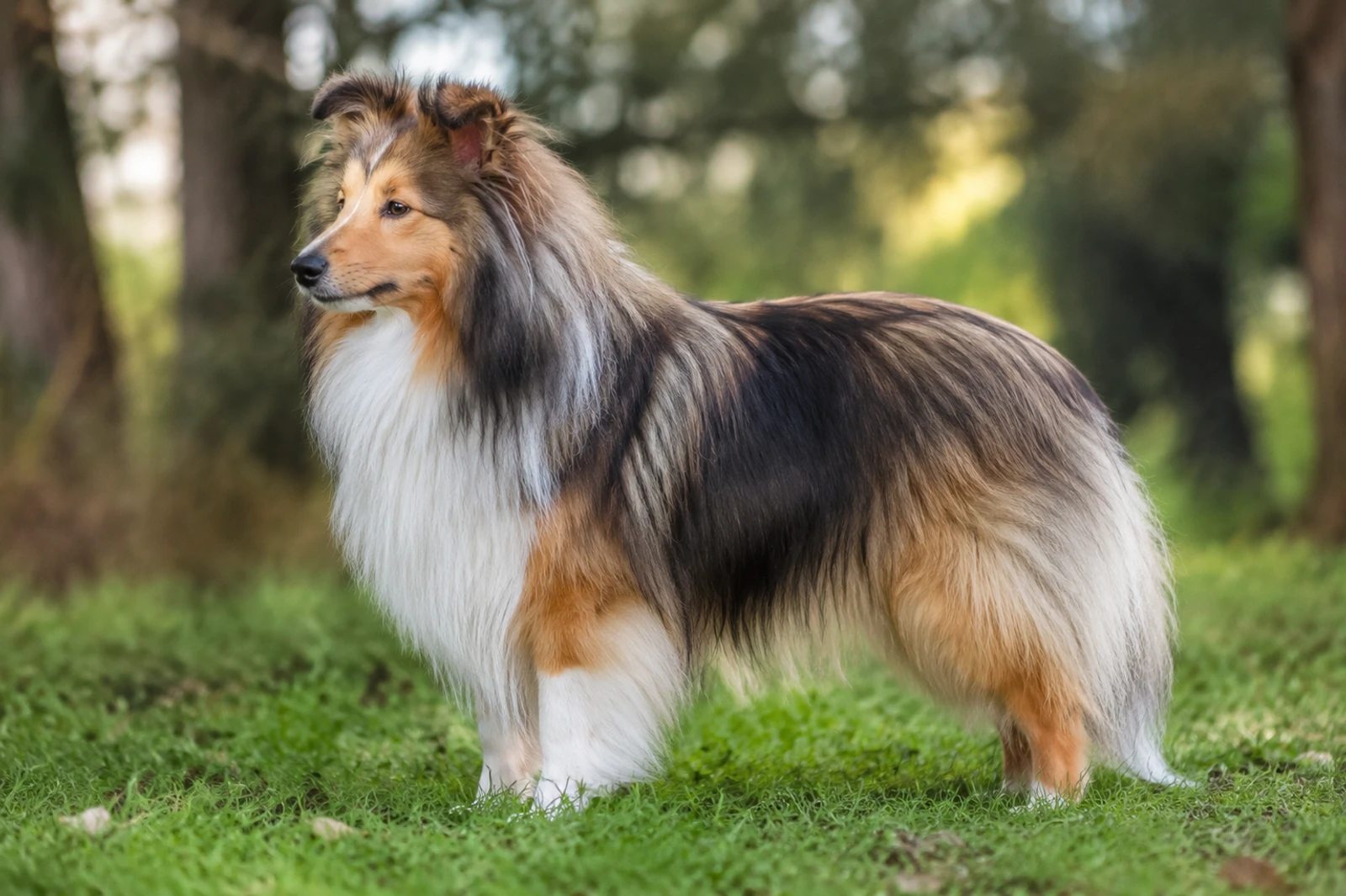
The Shetland Sheepdog, or Sheltie, is a medium-sized herding dog, standing 14–15 inches tall and weighing 13–37 pounds, with a life span of about 10 years. This intelligent and affectionate breed thrives on human companionship and is ideal for active families who can provide mental stimulation and exercise. Shelties are highly trainable and excel in dog sports like agility and obedience. Their loyal and gentle nature makes them great with children, though their herding instinct may lead to chasing smaller pets. With a long double coat that requires regular grooming, they are not suited for sedentary households or those seeking a quiet, low-maintenance pet.
At a glance
- Size
- Medium
- Height
- 14–15 in
- Weight
- 13–37 lb
- Life span
- 10 years
- Coat colors
- sable, tri-color, blue merle
- Coat type
- long double coat
How much does a Shetland Sheepdog cost?
Adopt / rescue
$75–$400
Usually includes spay/neuter, first shots, and a microchip.
Buy from a breeder
$700–$2,000
From a reputable, health-testing breeder.
Approximate USD. Prices vary widely by region, breeder, pedigree, age, and coat colour — adopting is the lower-cost and recommended route. Avoid suspiciously cheap “breeders”; they’re often puppy mills.
Estimate the full cost of a Shetland Sheepdog →Want the ongoing number? Estimate the monthly food bill for a Shetland Sheepdog with our dog food cost calculator.
Shetland Sheepdog photos
Views
Front, side, rear and top — the full silhouette.Poses
How the breed sits, lies, moves and plays.Puppy to senior
The breed across its whole life.Expressions
The breed’s range of moods.Close-up details
Eyes, ears, nose, paws, tail and coat.Coat colors
The breed’s recognized colors.Click any photo to enlarge. We show the Shetland Sheepdog from every angle — three views, poses, life stages, expressions, close-ups, coat and colors.
Appearance & size
A Sheltie looks like a pint-sized Rough Collie—but everything about its design says working herder, not toy dog. You’ll see a balanced, agile frame that stands 14 to 15 inches at the shoulder, with a weight spread that catches people off guard: 13 to 37 pounds. That range isn’t a misprint. Males often land in the 20–35 pound zone, while a fine-boned female can weigh a lean, tough 15. The bone is substantial but never heavy, and the body is slightly longer than tall, giving the dog a ground-covering stride from the side.
The coat is the headline act. A thick, straight outer coat repels weather and dirt, while the undercoat is dense and plush. It’s not a soft, silky fluff—you can feel the harsh texture when you pet a proper Sheltie. Mane and frill stand out around the neck and chest, especially in males, and the heavy feathering on the forelegs and tail adds to the silhouette. The tail itself is long, set low, and carried with a slight upward curve, never curled over the back. From the rear, you’ll notice the abundant feathering that creates a waterfall effect angling down the hocks.
Color options are a study in contrast. Rich sable (golden to mahogany with a black overlay), tricolor (black body with tan markings and white trim), and blue merle (mottled silver-blue with black patches and often tan points) are the classic triads. You’ll also see bi-black and bi-blue variants, which are the same patterns without the tan. White markings typically splash across the collar, chest, legs, and tail tip, and a white blaze up the face is common but not required.
From the front, the head is a refined wedge. The almond-shaped eyes are slightly oblique and, in a blue merle, you might see one or both eyes come out china blue or flecked—perfectly acceptable and startlingly beautiful. Ears are small, set high, and the tips fold forward just a quarter of the way down, which makes the dog look permanently alert. The muzzle tapers smoothly from the stop, never snipey. There’s nothing exaggerated here; the whole head fits the body and doesn’t scream “tiny dog.” Side view reveals a level topline and a deep chest that reaches the elbows, giving the lungs room for a full day’s work chasing sheep. You’re looking at a compact, enduring package that didn’t get the memo about being small—it moves like it still has a flock to gather.
History & origin
The Shetland Sheepdog didn’t start out as the polished show ring star you see today. It grew out of the raw, windswept Shetland Islands north of Scotland, where any dog had to earn its keep. Farmers needed a tough, thrifty little worker that could handle rocky terrain and foul weather on minimal food. The result was a small, agile herder that could nip at the heels of Shetland sheep, keep livestock off the crofts, and bark a warning when strangers approached — all without asking for much in return.
Local dogs were already a mixed lot by the 1700s. They likely drew from Scandinavian spitz-type dogs brought by Norse settlers, along with working collies imported from mainland Scotland. Because Shetland sheep are smaller than their mainland cousins, islanders didn’t need a full-sized Border Collie or Rough Collie; they deliberately bred for a compact, nimble dog around 14 to 15 inches tall that could think on its feet. The early Shetland Sheepdog was less a fixed breed and more of a landrace — a varied, practical farmhand known casually as the “toonie dog” (“toon” being the local word for farm). You’d see them trotting alongside ponies, turning cattle, and even guarding the garden from wandering poultry.
The breed’s trajectory shifted in the early 20th century when a handful of mainland enthusiasts noticed these island dogs. The original foundation stock was extremely small, often with short coats, prick ears, and a foxy look. To standardize the type for the show bench, breeders introduced Rough Collie blood, then later added a touch of other small breeds — some say even the tiny Icelandic Sheepdog or the now-extinct Greenland Yakki had a hand in shaping the modern dog. This influx gave the Sheltie its lush double coat, refined wedge-shaped head, and a more pronounced “miniature Collie” appearance. By 1909, England’s Kennel Club recognized the breed as the Shetland Collie; the name was changed to Shetland Sheepdog later to soothe Rough Collie breeders who objected to the resemblance.
Despite the cosmetic refinements, the Sheltie never fully lost its working-class roots. Today’s dog still herds with an intense, crouching stare and can pivot on a dime. What was once a scruffy island survivor now excels in agility and rally, although the underlying drive remains: a 13- to 37-pound dog that will manage your children’s playtime with the same earnestness it once reserved for keeping Shetland ewes in line. The breed’s transition from remote crofter’s companion to beloved family pet happened over barely a hundred years, yet honest Sheltie breeders still respect the dog’s original job — because a bored Sheltie with no outlet will invent herding work of its own, whether you’ve got sheep or not.
Temperament & personality
The Shetland Sheepdog is a sharp, sensitive companion that lives to work alongside you — and reads your mood with unsettling accuracy. This is not a dog to kennel in the backyard and forget. They’re wired to notice everything: your tone, your routine, the exact time the kids get off the bus. A Sheltie left isolated or ignored will often sound the alarm with relentless barking, one of the first signs that their need for mental engagement isn’t being met. That bark isn’t random noise; it’s a herding dog’s way of managing a world they desperately want to organize.
Affection comes in a polite, sometimes reserved package. Most Shelties lean toward the “velcro” end of the spectrum with their own family — following from room to room, settling at your feet — but they’re rarely indiscriminately friendly. Strangers may get a measured stare or a few alert barks before the dog eventually warms up. Watchfulness is a breed hallmark, not aggression. A Sheltie’s forward lean while checking something out signals curiosity and intent, not a threat, but paired with a stiff body and direct stare, you’d be wise to slow down and let the dog process. Learning to read those subtle cues — the soft-eyed loose-wagging greeting versus the lip lick, yawn, or head turn that whispers “I’m uncomfortable” — makes all the difference in a household with kids or visitors.
With children, Shelties often shine when everyone understands the rules. They’re patient and playful, but their herding instinct can kick in, leading to ankle-nipping chases that delight some kids and terrify others. Teach children to let the dog eat in peace, and never interrupt a meal; these dogs aren’t typically resource guarders, but any dog can develop food defensiveness if pushed. Similarly, a Sheltie puppy’s need to chew — driven by teething discomfort and a deep-seated drive to keep those jaws strong as an adult — means you’ll need a steady supply of appropriate chews and maybe a homemade citrus or vinegar spray for off-limits furniture.
Energy level is medium-high and utterly without an off switch unless you provide real outlets. A tired Sheltie is a quiet Sheltie; an under-exercised one becomes a master of obsessive pastimes, from spinning to shadow chasing to barking at leaves. They need a solid 45–60 minutes of activity daily, ideally split between brisk walks and training games that work the brain. This is a breed that remembers the exact spot in the yard where a squirrel appeared three weeks ago, and if you don’t manage that scent-based memory well, you’ll find a urine-marked bush that becomes a repeat target. Clean up indoor accidents with an enzymatic cleaner or vinegar spray to break the scent cue — otherwise, that rug smells like a bathroom to your dog, and they’ll use it again.
At heart, the Sheltie is an eager partner, not a passive pet. They respond to respectful, consistent engagement, not rough handling or harsh corrections. A strong-willed Sheltie isn’t being stubborn; they’re often telling you they don’t understand what you want, or they see a loophole and need clearer boundaries. When their person builds trust through positive reinforcement — treat immediately after the right behavior, unpredictable rewards for a job well done — this dog will offer a level of devotion that borders on psychic. Ignore their need for connection, and anxiety-driven habits will take over. That’s the honest trade-off: a Sheltie gives you every ounce of their big personality, but they expect you to show up every day, too.
Good with kids, dogs & other pets
Shelties have a well-earned reputation as gentle, patient family dogs, but their herding brain never really clocks out. Around young children, that can look like a 25-pound dog trying to “round up” a squealing toddler by circling and nipping at heels. It isn’t aggression — it’s instinct — but those sharp little teeth can startle a kid and lead to tears. Teach children to move calmly and not run shrieking away, and you’ll short-circuit the chase before it starts. Always supervise interactions, especially with kids under six. A Sheltie who’s been rushed or grabbed without warning may snap out of fear, so kids need to learn to offer a hand first, not a hug.
Start socialization early and you’ll tip the odds heavily in your favor. The window between about 3 and 16 weeks is when a puppy’s brain decides what’s normal. Use that time to introduce your Sheltie to gentle children, strange hats, vacuum cleaners, and friendly, vaccinated adult dogs in short, positive doses. Without it, the breed’s natural reserve with strangers can tip into skittishness or reactivity that’s far harder to undo later. Even after that window closes, patient counter-conditioning can help an anxious adult, but forcing a fearful dog into “play dates” is a recipe for stress, not progress.
With other dogs, most Shelties are cooperative and enjoy a good romp — provided they learned how to read canine body language as puppies. Walking into a chaotic dog park with a sensitive, inexperienced Sheltie can be overwhelming. Start one-on-one with a known calm dog instead. Same-sex aggression isn’t a hallmark of the breed, but a bossy or pushy housemate can make a Sheltie shut down, so match personalities thoughtfully. A Sheltie who’s been well-socialized often thrives in a multi-dog home where there’s a predictable routine and no bullying.
Cats and small pets are a mixed bag. A Sheltie raised with a cat usually accepts it as part of the flock, though occasional herding stares or a quick chase might still happen. Indoors, that’s manageable with a tall cat tree and a solid “leave it.” Outside, the same dog who ignores the house cat may decide the neighbor’s darting squirrel or free-range guinea pig is fair game. Use a leash and a strong recall around small animals you can’t guarantee are safe. Housemates like rabbits and ferrets need secure, dog-proof enclosures — Shelties are fast learners, but you don’t want to gamble a small pet’s safety on impulse control you haven’t yet proofed.
Trainability & intelligence
The Sheltie is scary smart — the kind of dog that learns a new cue in five or six repetitions before you’ve even put the treat bag down. That brain comes straight out of centuries of independent herding work, where a dog had to read stock, anticipate the shepherd’s next move, and make split-second decisions from half a field away. The upside is a highly tuned, willing partner. The catch is that this intelligence is paired with genuine sensitivity, so heavy-handed corrections or frustration will backfire fast.
What makes them tick Forget drilling or dominance. A Shetland Sheepdog works for a relationship. A cheerful voice, a quick game of tug, or a scatter of tiny treats builds speed and reliability faster than any number of collar pops. They notice tone shifts instantly — raise your voice in annoyance and you’ll see a dog who shuts down, avoids eye contact, or scoots under the coffee table. That’s not stubbornness. That’s a breed that cares deeply about getting it right and takes failure personally.
- Start young: real training and socialization should kick off between 3 and 14 weeks old. Shelties who miss that window often grow into reactive, barky adults who struggle to cope with normal household chaos.
- Short sessions win: three or four five-minute rounds a day beat a twenty-minute slog. They’re bright enough to get bored when things get repetitive.
- Socialization is non-negotiable: gradual, upbeat exposure to new people, kids, unusual surfaces, and friendly dogs prevents the suspicion and noise-phobia the breed can tip into.
Common sticking points Recall can get mushy if they’ve been allowed to blow you off. A Sheltie who learns that “come” means the fun stops will suddenly need to sniff that fence post for thirty seconds. Proof it early in low-distraction spots and pay like a slot machine — jackpots of real chicken, a squeaky ball, a belly rub. Make returning to you the best moment of their day.
Nuisance barking is another pain point. They were bred to bark at anything out of place, so simply yelling “quiet” reads to them as you joining in. Teach a solid “enough” cue by marking the split second of silence and rewarding generously, then layer in controlled setups where a doorbell or passing dog becomes a training opportunity instead of a meltdown.
What’s realistic Shelties pick up obedience, tricks, and even complex sequences with an ease that will spoil you for other breeds. That doesn’t mean they’re push-button robots. They need time to think, and sometimes they’ll offer a behavior you didn’t ask for because they’ve decided it’s a better solution. Work with that creativity rather than squashing it. A 13-to-37-pound dog doesn’t look fragile, but their mental wiring is: trust, once broken by punishment or erratic handling, is slow to rebuild. You’ve got roughly a decade with this breed, and that’s not a lot of years. Start early, stay soft, and you’ll get a dog who lives to read your mind.
Exercise & energy needs
A Sheltie is built to work and think all day, so a quick stroll around the block won't cut it. Plan on 60–90 minutes of real exercise every day, split into at least two sessions. A 20-minute morning walk paired with a 40-minute evening session that mixes jogging, off-leash running in a safe area, and a fast game of fetch is a solid baseline. If you run or bike, your Sheltie will gladly match your pace once fully grown — just keep hard-surface running moderate to protect growing joints.
Physical exercise alone isn't enough. These dogs are whip-smart herders, and a tired body with a bored brain still leads to barking marathons, shadow-chasing, or pacing by the back door. Mental work should be part of every day: puzzle feeders, hide-and-seek with toys, trick training, or 10-minute scent games where you scatter kibble in the grass. Shelties shine in organized activities, so consider agility, rally, obedience, or herding trials if you have access. Even a basement weave-pole setup or backyard jumps can channel that drive.
Without enough steady output, you'll see the anxiety and nuisance barking this breed is capable of when under-exercised. Watch for heat exhaustion in summer — their thick double coat makes them runners, not sunbathers. If your Sheltie is still young, avoid repetitive jumping and long stair climbs until growth plates close, typically around 12–14 months. Instead, lean on flat-ground running, swimming, and low-impact training that saves their joints while burning that trademark Sheltie energy.
Grooming & coat care
That glorious Shetland Sheepdog coat — a long, harsh outer layer over a dense, soft undercoat — is what you’ll admire and battle in equal measure. It’s a double coat that sheds dirt and light rain naturally, but it also dumps fluff by the handful twice a year and needs steady upkeep to avoid a matted mess.
During the spring and fall blow-outs, expect to brush every day for 10–15 minutes. The rest of the year, every other day keeps things tidy. Skip more than two days and you’ll find tangles starting behind the ears, under the elbows, and in the heavy feathering on the back legs. A pin brush with rounded tips is your everyday tool — it glides through the outer coat without breaking the guard hairs. Follow with a slicker brush to pull dead undercoat and small debris to the surface. Then run a metal comb through the britches, ruff, and tail to catch any hidden snarls before they turn into painful mats. During peak shedding, swap the pin brush for a wide-toothed undercoat rake first, then finish with the slicker and comb.
Bathe only when your Sheltie is truly dirty or starts to smell, maybe every 6–8 weeks. Too much shampoo strips the coat’s natural weather resistance. Use a gentle, oatmeal-based dog shampoo and rinse until the water runs absolutely clear; leftover soap in that thick undercoat is a magnet for skin irritation. Dry thoroughly with a cool-air dryer or a towel, never a hot human dryer that can mat the fur.
Trimming is minimal. Neaten the hair between the paw pads to prevent slipping and matting, and trim the longer hairs that grow on the hocks and around the ears for a cleaner line. Don’t shave the body — the double coat regulates temperature and protects the skin, and once clipped it rarely grows back correctly.
Nails need a clip every 3–4 weeks. Drop ears trap moisture, so clean them weekly with a vet-approved solution and a cotton ball to head off infections. Brush teeth a few times a week with dog-safe paste. You’ll catch early skin issues — hot spots, fleas, or dry patches — much faster if you run your hands over the coat during every grooming session. After time outdoors, especially in tall grass or mud, a quick once-over with a comb clears seeds and burrs before they work into the skin. When the undercoat starts to let loose, a brisk walk and a little time outside will help shed the loose hair naturally before you even pick up a brush. The spots that mat first are always the same: check behind the ears, the trousers, and the underbelly each time you groom.
Shedding & allergies
A Sheltie earns his nickname “Shetland glitter” honestly — this is a heavy, constant shedder. His lush double coat is built for cold northern weather: a straight, harsh outer layer and a thick, soft undercoat. That undercoat drops daily, not just seasonally. You’ll find hair on furniture, floating through sunbeams, and woven into your wool sweaters. Even a quick cuddle leaves you covered.
Twice a year he hits a full-scale blowout — typically spring and fall — and the loss becomes dramatic. During those stretches, you can literally pluck loose tufts with your fingers. If you skip a day of line brushing, dead hair mats against the skin and the tumbleweeds take over the hallway. An undercoat rake and a good slicker brush are basic equipment; many owners also use a high-velocity dryer to blast out the worst of it before it lands indoors.
Drool is nearly nonexistent. You won’t deal with slobbery jowls or wet spots on the couch, which is a small mercy.
The hypoallergenic picture, though, is bleak. No breed is truly allergen-free, but a Sheltie pumps out an enormous volume of dander-laced hair and microscopic coat dust. Everything that makes his coat so beautiful also spreads the proteins that trigger sniffles, sneezes, and itchy eyes. A mildly allergic visitor might react within minutes. If someone in your household has dog allergies, you’re rolling the dice on daily misery. For families that can tolerate the fluff, accept that your vacuum will rival your coffee maker as the hardest-working appliance, and keep a lint roller stashed in the car, the mudroom, and your desk drawer.
Diet & nutrition
One of the simplest ways to keep a Sheltie healthy is to be honest about how much they actually eat. They can be enthusiastic chow-hounds, and that food motivation — coupled with a wide weight range of 13 to 37 pounds — means a single measuring scoop matters. Free-feeding almost always backfires; these are dogs built to move, not to carry extra padding. Excess weight puts avoidable stress on their long back and joints, so portion control is non-negotiable.
How much and how often
Puppies run on a tighter clock: four evenly spaced meals a day until they’re about four months old, then three meals until six months, then the typical two-meal adult schedule. Transition a new pup’s diet slowly — start with lightly cooked, puréed meats, fish, fruits, and vegetables or a high-quality puppy kibble. Raw chicken wings can appear around twelve weeks, but only with direct supervision.
For adults, split the daily ration into two meals. Base the amount on the dog’s size, weight, and real exercise level, not the label’s highest estimate. A 15-pound Sheltie leading a moderately active life needs far less than a 30-pound dog that runs agility courses three times a week. If you’re weighing meals with a kitchen scale, you’re already ahead.
What to put in the bowl
The species hasn’t changed: a Sheltie’s digestive system is built for meat. A sound home-prepared mix aims for roughly 60% raw or cooked meat, 20–30% fruits and vegetables, and 10% extras like eggs, grains, or plain yogurt. Blending or processing the food lightly aids nutrient absorption because dogs lack salivary enzymes and their jaws only chop up and down. For kibble-fed dogs, choose a formula that fits their life stage and activity level — and resist the urge to pile on toppers just because they give you the look.
Fast eaters benefit from a puzzle bowl, which slows them down and gives a smart herding brain something to work on. Canned fish, cooked vegetables, and simple grains like pearl barley or white rice work well in quick homemade meals or as an occasional bland reset for a sensitive stomach. If you batch-cook grains and proteins, you’ll have a ready-to-use stash that makes consistent, healthy feeding easier than winging it every night.
The weight creep no one notices until it’s there
Shelties can gain weight quietly, especially as they age. Senior dogs often move less but keep the same appetite. Scale back food gradually as activity dips, and consider splitting the day’s amount into three smaller meals to keep them comfortable — there’s no solid reason to cut protein, just calories. For older dogs with missing teeth, purée the meal; it’s kinder and helps them absorb nutrients. Weigh your dog monthly and adjust portions without sentiment. That extra pound isn’t just “fluff.”
Never feed from the table. Put any leftovers into the dog’s own dish, under the counter, away from the action. Begging is exasperating and, once established, a bear to undo. Stay clear of holiday-rich scraps too — a sudden load of fat can trigger pancreatitis, which lands a Sheltie in the emergency clinic fast. Treats count as calories, so keep them tiny, and use part of the regular dinner as training rewards when you can.
Health & lifespan
A Sheltie’s lifespan averages 10 years. While many live longer with top-notch care, that 10-year mark frames how you approach health from day one. The breed has a well-known list of genetic quirks, so you want to go in with your eyes open.
This is a dog where eye problems appear often. Collie eye anomaly, progressive retinal atrophy, and cataracts all pop up in the breed. Hypothyroidism (low thyroid) can cause weight gain, skin issues, and lethargy. Von Willebrand’s disease, a bleeding disorder, means a simple cut can become serious without you knowing they carry it. Dermatomyositis—sometimes called Sheltie skin syndrome—is an inflammatory condition that attacks skin and muscle, most often in young dogs. Epilepsy and hip dysplasia also make the short list. On top of that, many Shelties inherit the MDR1 gene mutation, which makes them dangerously sensitive to common drugs like ivermectin, certain dewormers, and some sedatives. One DNA test tells you if your dog carries it.
Responsible breeders don’t hope for the best. They screen breeding stock with a veterinary ophthalmologist’s eye exam (not just a regular vet check), OFA hip x-rays, and genetic tests for von Willebrand’s, MDR1, and sometimes degenerative myelopathy. Ask to see those certificates—not a verbal promise.
Once your Sheltie is home, the basics count double. Heartworm prevention is a monthly given during mosquito season and a month past it. Rabies vaccination isn’t optional—it’s law and has no treatment once symptoms strike. Weight management is huge: a lean Sheltie puts far less strain on hips and joints. Dental disease comes on quietly in these dogs, so daily brushing and yearly cleanings keep it in check. Because they’re sensitive and smart, isolation or rough handling can trigger anxiety-driven behaviors that grind down their health—early, positive socialization is solid preventative medicine. Schedule annual wellness exams (twice a year for seniors) and pay attention to subtle changes: a drop in energy, a picky appetite, or drinking more than usual. When a breed comes with a longer predispositions list, waiting to see if something clears up rarely pays off.
Living environment
A Sheltie can thrive almost anywhere—from a city apartment to a house with acreage—as long as you meet two non-negotiable needs: real daily exercise and a job for that border-collie-style brain. Tucked under that fluff is a herding dog wired to move, think, and notice everything, and if you shortchange either half of the equation, you’ll hear about it. Loudly.
Apartment or house?
Apartments are doable, but the biggest hurdle is the breed’s famous voice. Shelties bark at the mail carrier, a squirrel’s shadow, the refrigerator kicking on—it’s a running commentary. Training can dial the volume way down, but you’ll still live with a dog that considers alerting you a sacred duty. Thin walls and noise-sensitive neighbors make this a genuine friction point, so be honest about your tolerance for daily “conversation” before signing a lease. A house with a little buffer between you and the next building is simply easier.
Yard needs
You don’t need a huge yard, but a securely fenced outdoor space is a gift. Shelties in full sprint are poetry, and a safe spot to blow off steam between walks prevents that pent-up, nippy restlessness. Because they’re light on their feet and vertically ambitious, a 4‑ to 5‑foot fence is the minimum—these dogs can clear shorter barriers when a squirrel looks at them wrong.
How much exercise? (Yes, it’s part of the living environment)
Plan on at least 60 minutes of honest movement split into two sessions daily. Not a couple of quick trips around the block—think a brisk 30‑minute morning walk plus an afternoon of fetch, off-leash running, or a long sniffy walk with a puzzle toy chaser. Mental work counts just as much: scent games, trick training, food puzzles, even learning toy names. Skip it, and a bored Sheltie will redecorate your home with shredded pillows, constant barking, or anxious shadow-chasing.
Climate comfort
That double coat is a built-in parka. Shelties do beautifully in cold, damp, and even snow; they’ll happily walk through a New England nor’easter and still wiggle at the door for more. Heat is another story. When temperatures climb past the mid‑80s, dial back outdoor exertion to early morning or late evening, provide shade and water, and watch for heavy panting. An air‑conditioned space or a cooling mat goes a long way.
Alone-time tolerance
No sugarcoating: Shelties bond ferociously and can crater when left alone for a full workday. Separation anxiety—barking, pacing, housetraining accidents—is a real risk. If your schedule means long absences, you’ll need a dog walker, daycare, or a carefully planned routine of crate training, gradual departures, and enrichment (a frozen Kong, a puzzle toy, background noise). A Sheltie whose family is mostly home, even if that’s just working in different rooms, settles into a much steadier rhythm.
Who this breed suits
The Sheltie is a brainy, tuned-in partner for someone who wants a dog that practically reads their mind — and who won’t mind a running commentary on every squirrel, leaf, and delivery truck. These are not quiet couch ornaments. If you’re looking for a sharp, agile dog to throw yourself into training, dog sports, or active family life, a Sheltie will meet you more than halfway.
The right fit
- Active singles or couples who treat training as a hobby. Shelties live to work. They’ll crush obedience, rally, agility, or trick training and genuinely need that mental burn to stay sane. A daily walk isn’t enough — plan for at least an hour of focused activity, whether that’s a fast-paced game of fetch, a run, or a training session where they have to think.
- Families with school-age kids who can follow rules. Shelties can be wonderful family dogs in a household where children understand not to chase or manhandle. Their herding instinct means they might nip at heels if little ones run wildly, so supervision and teaching the dog a solid “off” switch matter.
- First-time owners who are ready to do the work. The breed’s intelligence and eagerness to please make them forgiving for a committed beginner who enrolls in positive-reinforcement classes early. They’re sensitive — harsh corrections will shut them down — but a novice who embraces clicker training and consistency can absolutely succeed.
- Attentive seniors who want a portable, trainable companion. A Sheltie under 20 pounds fits an apartment or condo, provided the owner keeps up with daily outings and mental puzzles. The dog’s devotion is a plus, but the barking isn’t for the thin-walled building or the peace-and-quiet seeker.
Think twice if…
- You prize a silent house. Shelties bark. A lot. They’ll alert to the doorbell, a bird on the fence, the neighbor’s car, and sometimes just because they’re excited. You can train it down, but you won’t breed it out.
- You’re away from home for 10-hour stretches. Apart from the coat that needs regular brushing (that thick double coat sheds), these dogs form tight bonds and get miserable left alone routinely. A bored Sheltie turns into a neurotic, nonstop barker and may redecorate your baseboards.
- You want a dog that’s chill with chaos. Overly noisy, unpredictable households — toddlers grabbing, constant shouting — will frazzle a breed that’s sensitive and quick to react. A nervous Sheltie is a stressed, vocal mess.
- You measure exercise in a single, sedate loop around the block. A Sheltie’s brain is an engine that idles high. Without a structured outlet, that energy goes sideways into shadow-chasing, circling, and obsessive barking. Expect to budget for puzzle toys, nose work, or a backyard agility tunnel in addition to physical walks.
Cost of ownership
From a responsible breeder, a Shetland Sheepdog puppy usually lands between $800 and $2,000, with show-quality or performance-bred pups pushing toward the upper end. Rescue adoption fees run significantly lower — typically $150–$400 — and adult dogs often come spayed or neutered and with some basic vetting done. Either way, the purchase fee is just the opening act.
Ongoing monthly costs stack up fast for this medium-sized, thick-coated herder.
- Food: A 13–37 lb adult Sheltie eats high-quality kibble. Budget $30–$60 a month, more if you opt for fresh or raw diets. Treats for training add a few dollars.
- Grooming: The double coat sheds year-round and blows heavily twice a year. Expect to brush thoroughly two or three times a week. A professional groom every 6–8 weeks with a sanitary trim, nail grinding, and ear cleaning runs $50–$80 per visit, so amortize that to $25–$50 monthly. You'll also need an undercoat rake, slicker brush, and a good de-shedding tool upfront.
- Veterinary care: Annual exams, vaccinations, and monthly heartworm/flea/tick preventives average $50–$80 a month. Shelties can be prone to Collie eye anomaly, hip dysplasia, hypothyroidism, and dermatomyositis (Sheltie skin syndrome). Responsible breeders screen breeding stock, but these conditions still crop up and can mean specialist visits, meds, or surgery later in life.
- Pet insurance: Policies generally range from $25 to $60 a month depending on your deductible and reimbursement level. With the breed's hereditary risks, many owners treat insurance as a non-negotiable.
- Training: A six-week puppy obedience course ($100–$200) pays off hugely — these smart, sensitive dogs need mental engagement and clear boundaries.
Add first-year purchases like a crate, bed, leash, bowls, and toys, and your monthly routine costs land in the $150–$300+ range, not counting the purchase price. Over a 10-year lifespan, a well-maintained Sheltie can easily cost $18,000 to $36,000 before any emergency surgery. Set aside a cushion for that surprise dental or a late-night vet visit — you'll be glad you did.
Choosing a Shetland Sheepdog
You have two solid paths — a puppy from a responsible breeder or a rescued Sheltie — and the work you put in here shapes the next decade (or more) with this quick, sensitive little herder.
Breeder or Rescue?
Shelties end up in rescue for reasons that rarely have anything to do with the dog being a “bad” dog — usually it’s the barking, the shedding, or the underestimated exercise needs. A breed-specific rescue can match you with an adult whose personality is already known, which is a huge advantage if you want a dog who’s past the shark-toothed puppy months. Health records are spotty sometimes, so ask what the rescue has ruled out. If your heart is set on a puppy and you want the best shot at a predictable temperament and long-term health, a careful breeder is the way to go.
Health Clearances That Matter
A Sheltie’s average lifespan is 10 years, and several inherited conditions can cut that short. A responsible breeder screens — and shows you the results — for at least these:
- Hips: OFA or PennHIP certification. The dog’s hips should be evaluated at 2 years or older; parents without final hip clearances are a bright red flag.
- Eyes: Annual exam by a boarded veterinary ophthalmologist (OFA Eye or CERF). Collie Eye Anomaly, progressive retinal atrophy, and other eye diseases run in the breed.
- von Willebrand’s disease: A DNA test identifies clear, carrier, or affected status. Breeding two carriers risks clotting disorders.
- Thyroid: A full panel from an approved lab, because autoimmune thyroiditis is common and can mimic behavioral issues.
- MDR1 drug sensitivity: A simple DNA test so you know whether common drugs pose a danger. Many Shelties carry one or two copies of the mutation. Some breeders also test patellas and screen for dermatomyositis (Sheltie Skin Syndrome) in lines where it appears. If a breeder waves off any of the core tests with “my lines are healthy,” walk away.
Red Flags When Talking to a Breeder
The Shelties you see should fall within or close to the breed’s medium frame — roughly 14 to 15 inches at the shoulder and an adult weight that, on a fit dog, lands between about 15 and 25 pounds. The stated 13–37-pound spread on paper reflects a lot of oversized and overweight dogs outside the standard, so be skeptical of breeders who regularly produce 30-pound-plus adults. Other warning signs:
- Multiple litters available at once or puppies always on the ground. Good breeders have waitlists.
- Pricing by color — merles cost more? That’s marketing, not stewardship.
- The dam isn’t on-site or is kept “in the back.” Meet her. A shy, skittish dam often produces puppies with similar nerves.
- Puppies go home before 8 weeks. A Sheltie learns bite inhibition and early social signals in those last two weeks with littermates.
- No written contract or health guarantee, no questions about your living situation, no interest in taking the dog back if things don’t work out.
Picking Your Puppy
A well-bred Sheltie puppy is curious, quick to investigate new people, and recovers fast from a startle. Don’t confuse a shutdown, fearful puppy with a “calm” one — that dog will be a lifelong project in confidence-building. Expect some herding behavior (staring, chasing motion) but not frantic, hard-to-interrupt circling. Ask the breeder what early socialization the litter got: exposure to crate sounds, handled paws, different floor textures, and brief separations. That groundwork makes house-training and first vet visits feel routine instead of traumatic. Wait for a litter where both parents are in the house, the health paperwork is current and verifiable in public databases, and the breeder feels more like a tough counselor than a salesperson. The right puppy won’t just be cute on the day you meet — it’ll be set up to handle a busy family life without falling apart.
Pros & cons
Pros
- A razor-sharp mind combined with a deep desire to please. This is a dog that lives for training — Shetland Sheepdogs routinely dominate obedience, agility, and herding trials, and they’ll learn a new command in just a handful of repetitions.
- Compact and adaptable. At 14–15 inches tall and anywhere from 13 to 37 pounds, you get a true medium-size herder that fits in an apartment (with enough exercise) or a house with a small yard.
- Deeply devoted to their people. Shelties form tight bonds and become affectionate shadows, content to curl at your feet after a long walk or a training session.
- An instinctive watchdog who notices everything. A stray squirrel, a delivery truck, or a neighbor walking by — your Sheltie will tell you about it with a sharp bark long before you hear the doorbell.
- Striking good looks with minimal grooming charades. The lush double coat and elegant mane turn heads, and regular brushing keeps it from becoming a matted mess.
Cons
- Relentless barking. That watchdog instinct doesn’t have an off switch. Without consistent training from day one, you’ll live with a dog that reacts to every leaf that blows across the driveway.
- A heavy shedder in a medium package. The same beautiful double coat sheds year-round and “blows” profusely a couple of times a year. Black pants become a magnet for a fine layer of Sheltie glitter.
- High mental horsepower demands a job. An under-stimulated Sheltie invents her own entertainment, which often means obsessive pacing, spinning, or chewing. A quick walk isn’t enough — count on 45–60 minutes of real exercise plus puzzle toys, trick training, or a sport.
- Sensitive to tone and tension. Harsh corrections or a chaotic household cause this breed to shut down. You’ll get far more with calm, positive methods than you ever will with a raised voice.
- Reserved with strangers. Without early and ongoing socialization, a Sheltie can tip into shyness or fear-based reactivity, making guests a source of stress rather than a tail-wagging reunion.
- A shorter-than-expected lifespan. With an average of only 10 years, you’ll say goodbye sooner than with many similar-sized breeds — something to weigh carefully if you have young kids who will grow up alongside the dog.
Similar breeds & alternatives
The Sheltie’s quick mind, dense double coat, and hair-trigger alert bark don’t fit every living room. A handful of other herding breeds and clever companions mirror parts of the Sheltie package while trading off size, intensity, or lifespan in ways that might suit you better.
If you want a larger, gentler collie type
The Rough Collie gives you the same sculpted head and flowing coat in a significantly bigger frame—22 to 26 inches at the shoulder and 50 to 75 pounds. Energy is more laid-back; a couple of long walks and some yard time often satisfy an adult collie, where a Sheltie wants a real mental workout and will tell you about it loudly. Rough Collies tend to be less reactive to every passerby and generally live 12–14 years, noticeably longer than the Sheltie’s typical decade.
If you need a higher-octane working partner
A Border Collie stands 18 to 22 inches and weighs 30 to 55 pounds, putting it right between the Sheltie and the Rough Collie in size. The difference is drive. Border Collies are elite athletes bred to work all day; they need a solid hour or more of running, not just a walk around the block, plus advanced training to keep their brains from turning the sofa into a project. They bark less than a Sheltie overall but can become obsessive without a job. Well-bred Border Collies regularly reach 12–15 years, which is worth weighing against the Sheltie’s shorter lifespan.
If you’re drawn to a tiny, portable spark plug
The Papillon is a toy breed at 8 to 11 inches and 5 to 10 pounds, but it shares the Sheltie’s keen intelligence, long coat (especially the ear fringe), and agile, up-for-anything attitude. A Papillon learns tricks just as fast and excels in dog sports without the intense herding pushiness. They’re generally quieter indoors and regularly live 13–15 years. The trade-off is that they’re physically fragile and don’t give you that sturdy, medium-dog feel—even a small 13-pound Sheltie has more substance.
If a lower-to-the-ground herder fits your life
A Pembroke Welsh Corgi maxes out around 10 to 12 inches tall and 28 to 30 pounds, with a long, solid body that’s a world apart from the Sheltie’s leggy, agile silhouette. Corgis are big personalities in a low-slung package—barky, confident, and ready to herd kids and pets with a well-timed ankle nip. They shed heavily with a shorter, dense coat, and their lifespan runs 12–13 years. They can be just as vocal as a Sheltie but bring a more stubborn, independent streak instead of the Sheltie’s sensitive eagerness to please.
Fun facts
- Known as 'Sheltie', they are one of the smartest dog breeds, often ranking in the top 10 for intelligence.
- Originating from Scotland's Shetland Islands, they were bred for herding sheep and ponies.
- Their beautiful coat comes in sable, tri-color, and blue merle, often with striking white markings.
- Shelties excel in obedience, agility, and herding trials, making them versatile competitors.
Frequently asked questions
- Are Shetland Sheepdogs good with children?
- Shetland Sheepdogs tend to be gentle and affectionate with children when properly socialized. Their medium size (14–15 inches tall, 13–37 pounds) makes them sturdy enough for play but not too large for young kids. However, like any breed, interactions should be supervised, especially with small children.
- How much do Shetland Sheepdogs shed?
- Shetland Sheepdogs are moderate to heavy shedders, with a thick double coat that blows seasonally. Expect regular shedding year-round and more during spring and fall. Weekly brushing helps manage loose fur, and daily brushing may be needed during peak shedding periods.
- How much exercise does a Shetland Sheepdog require?
- This breed has moderate energy levels and needs daily exercise like walks or play sessions. They typically enjoy 30–60 minutes of activity, plus mental stimulation such as training or puzzle toys. Without sufficient exercise, they can become bored and potentially destructive.
- What grooming is needed for a Shetland Sheepdog?
- Their long, dense coat requires regular grooming to prevent mats and tangles. Plan on brushing several times a week, with extra attention behind the ears and in the feathering. Occasional baths and nail trims complete the routine, while professional grooming every few months can help maintain the coat.
- Are Shetland Sheepdogs suitable for apartment living?
- They can adapt to apartment life if given adequate exercise and mental stimulation. Their tendency to bark at noises might pose a challenge in close quarters, but training can help manage it. The breed's small to medium size is a plus in smaller spaces.
Tools & calculators for Shetland Sheepdog owners
Quick estimates tailored to Shetland Sheepdogs — pre-filled with this breed’s size where it matters.
Articles & stories about the Shetland Sheepdog
Sources & standards
This profile follows recognized breed standards from the American Kennel Club (AKC) and the Fédération Cynologique Internationale (FCI), along with established veterinary and breed-club guidance. These describe general breed tendencies — every dog is an individual.