

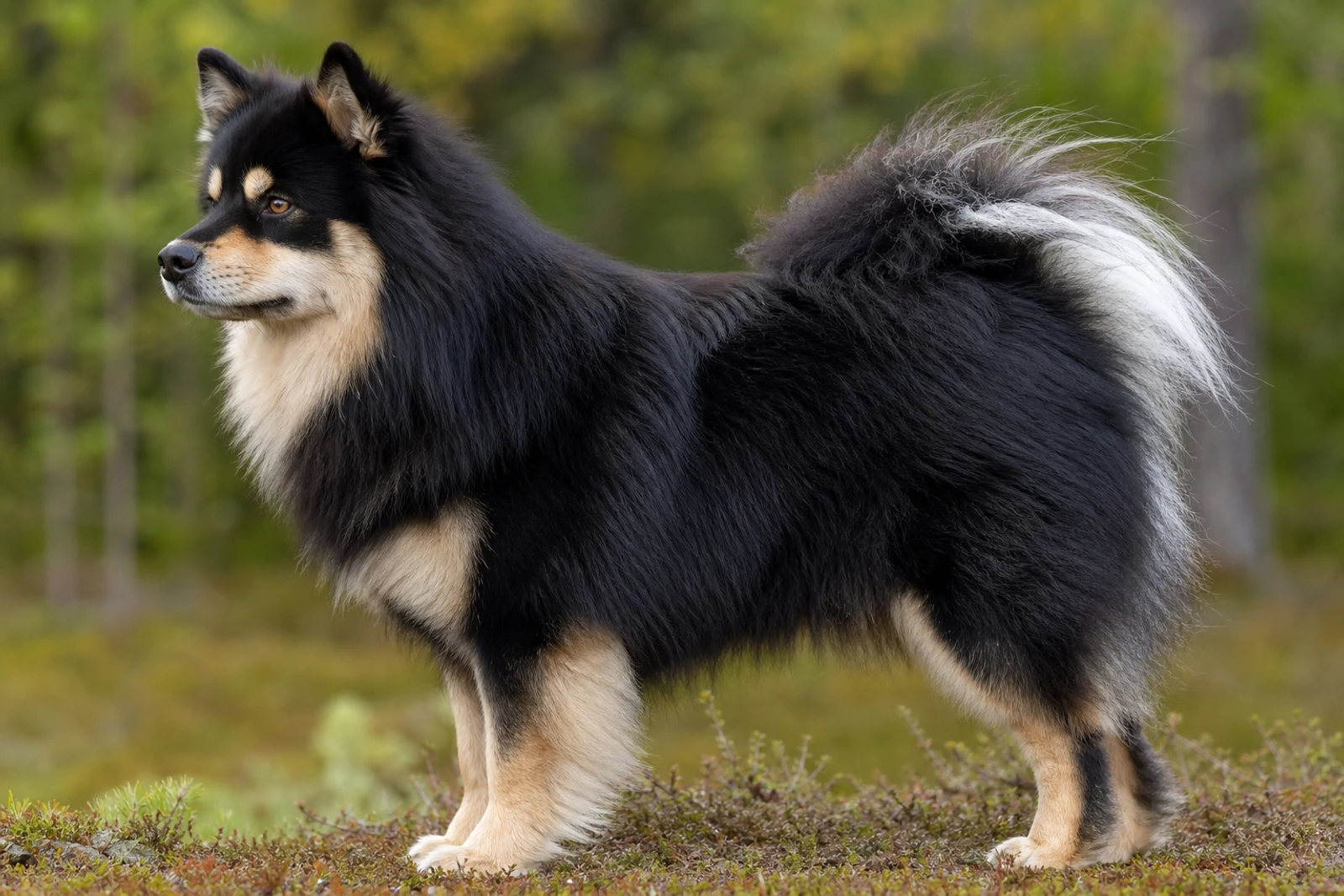
The Swedish Lapphund is a lively, intelligent herding breed that thrives in active households. Bred to work reindeer in the harsh Nordic climate, this Spitz-type dog is versatile, excelling in canine sports, herding, and as a devoted family companion. They are affectionate and playful, forming strong bonds with their families. Best suited for owners who can provide ample exercise and mental stimulation, they are a good fit for families with children and other dogs, though their herding instincts may require management around smaller pets. With their alert nature and tendency to bark, they make excellent watchdogs.
At a glance
- Size
- Large
- Height
- 16–20 in
- Weight
- 42–46 lb
- Life span
- 9–15 years
- Coat colors
- Black, Brown, Black and White, Brown and White
- Coat type
- Double-coated, thick and weather-resistant
How much does a Swedish Lapphund cost?
Adopt / rescue
$75–$400
Usually includes spay/neuter, first shots, and a microchip.
Buy from a breeder
$700–$2,000
From a reputable, health-testing breeder.
Approximate USD. Prices vary widely by region, breeder, pedigree, age, and coat colour — adopting is the lower-cost and recommended route. Avoid suspiciously cheap “breeders”; they’re often puppy mills.
Estimate the full cost of a Swedish Lapphund →Want the ongoing number? Estimate the monthly food bill for a Swedish Lapphund with our dog food cost calculator.
Swedish Lapphund photos
Views
Front, side, rear and top — the full silhouette.Poses
How the breed sits, lies, moves and plays.Puppy to senior
The breed across its whole life.Expressions
The breed’s range of moods.Close-up details
Eyes, ears, nose, paws, tail and coat.Coat colors
The breed’s recognized colors.Click any photo to enlarge. We show the Swedish Lapphund from every angle — three views, poses, life stages, expressions, close-ups, coat and colors.
Appearance & size
You’d never mistake the Swedish Lapphund for a delicate show dog. Officially classed as a large breed, he’s actually a compact powerhouse standing 16 to 20 inches at the shoulder and weighing between 42 and 46 pounds. Males fill out on the higher end, females often stay near 42, but both carry the kind of dense bone and solid muscling you’d expect from a dog that herded reindeer through northern snow for centuries.
From the front, the head is a classic spitz wedge — broad between the ears, tapering cleanly to a moderate muzzle with a well-defined stop. Dark, almond-shaped eyes are set at a slight oblique angle and always look bright and watchful, giving the dog a keen but friendly expression, never sharp. High-set triangular ears stand fully erect and swivel constantly, tracking every sound behind that luxurious ruff. The neck is thick, slightly arched, and wrapped in a pronounced mane of longer hair, especially in males, framing the face and shoulders with a proud, lion-like look. Front legs stand straight and parallel, with good bone and tight, oval feet that have thick fur sprouting between the toes — a natural snowshoe.
Step to the side and you see a body built for unflagging trotting. The chest is deep, reaching easily to the elbows, with well-sprung ribs and a noticeable but moderate tuck-up at the belly. A level, strong topline runs from the shoulders over a short, broad loin to the rump. Shoulder and rear angulation are balanced, never extreme; it’s a functional build that produces a smooth, ground-covering stride you can watch for hours. The coat stands off the body just enough to show the dog’s outline without hiding the athletic frame underneath.
From the rear, the plumed tail is one of the breed’s signatures — set high and carried tightly curled over the back when the dog is alert, sometimes draping against the hip when relaxed. Hindquarters are muscular with strong thighs and sturdy, well-let-down hocks that stand parallel when viewed from behind. The whole silhouette screams a dog born to pull, chase, and then nap contentedly in a snowdrift.
The coat is the Lapphund’s superpower. A thick, soft undercoat does the insulating, while the outer coat is straight, harsh to the touch, and weather-resistant — rain and snow bead up instead of soaking in. Fur is medium-length on the body, short on the head and fronts of the legs, and noticeably longer on the backs of the thighs and the tail. Color-wise, black is the classic, often with crisp white or cream markings on the chest, paws, or tail tip, and sometimes a small star on the forehead. Liver-brown also shows up regularly, with similar light accents. Solid colors are perfectly fine, but that bright white chest splash is so common it’s practically the breed’s visual trademark. One look at that rich coat and you’ll know why this dog doesn’t just tolerate a Scandinavian winter — he genuinely owns it.
History & origin
The Swedish Lapphund’s story starts thousands of years ago with the Sami, the indigenous people of northern Scandinavia. As the Sami shifted from hunting reindeer to following and managing vast herds, they needed a dog that could work in brutal cold, cover miles of tundra, and control half-wild animals without a bite or a bark at the wrong moment. The result was a medium-sized Spitz that looks a lot like the Lapphund you see today. Archaeological sites in Lapland contain dog remains nearly identical to the modern breed, dating back over 7,000 years, though the type we’d recognize was clearly established by the Middle Ages.
For centuries, these dogs earned their keep every day. They were nimble herders that used sharp movement and a hard stare to turn reindeer, not teeth, which made them indispensable in a culture where every animal in the herd mattered. On long migrations, Lapphunds also pulled small supply sleds, guarded camps from predators, and slept with the family in traditional turf huts, cementing a close bond with people. Their dense double coat, prick ears, and tightly curled tail over the back are direct responses to life north of the Arctic Circle, where temperatures can drop to -40°F.
The breed nearly vanished in the 20th century. Snowmobiles and modern fencing reduced the need for herding dogs, and a devastating distemper outbreak in the 1940s wiped out whole lines. By the 1950s, the Swedish Lapphund was on the edge of extinction. A handful of determined Swedish breeders, notably Countess Mary Hamilton, traveled to remote Sami villages to find the few remaining pure dogs and painstakingly rebuilt the population from a tiny genetic base. The Swedish Kennel Club had first recognized the breed in 1903, but the modern standard and the revival work really solidified in the 1940s and ’50s.
Today, the Swedish Lapphund is Sweden’s national dog and still works scattered herds in Lapland, but most live as active family companions. The breed remains rare outside Scandinavia, with careful international breeding still focused on preserving its working temperament and excellent health — a lifespan of 9 to 15 years is common, with many dogs staying sound well into their teens. If you meet one, you’re looking at a living piece of Sami history.
Temperament & personality
A Swedish Lapphund isn’t a dog who’s content to watch from the sidelines — he’s a full-fledged family member who expects to be in the thick of things. This 42–46 lb spitz thrives on inclusion. Leave him alone in the yard for hours and you’ll likely get a chorus of frustrated barking loud enough to strain the neighborhood peace. Isolation breeds anxiety in this breed, and anxiety often comes out of his mouth.
He is, by nature, a lively, intelligent dog with a deep well of affection. Most Lapphunds shadow their people from room to room, curl up on feet during movie night, and greet every homecoming like it’s the event of the year. That same people-focus makes him an alert watchdog. He’ll bark at the delivery truck, the squirrel on the fence, and the neighbor’s cat, a leftover from generations spent guarding reindeer. Early, consistent training helps you manage the volume, but you won’t make him silent — vocalizing is part of his makeup.
Energy-wise, plan for a solid hour of off-leash running, hiking, or an intense fetch session daily, not just a lap around the block. Without that outlet, a bored Lapphund becomes a creative chewer. Puppies will gnaw to explore and ease teething pain; adults still need hard, safe toys to keep their jaws strong and teeth clean. A homemade citrus spray on table legs can gently steer that gnawing instinct toward approved chews.
Around the household, he’s generally patient and playful with kids, but his herding heritage can surface in light nips at running heels. Teach children to respect his meals — a dog interrupted while eating may develop food guarding — and let them recognize the subtle signals he’s had enough. A yawn, a lip lick, or a turned head during cuddle time isn’t boredom; it’s a polite request for a little space. A stiff body, a hard stare, and a frozen tail, on the other hand, signal real discomfort that needs attention.
Housetraining requires diligence with a Lapphund’s scent-driven mind. If he has an accident, clean it with an enzymatic cleaner to erase the cue entirely, otherwise he’ll mark that spot again. In less-trafficked rooms, he might even decide the space isn’t part of the family den because it doesn’t carry enough human scent.
Quirks? Expect a dog who “talks” back with grumbles, yodels, and dramatic sighs, and don’t be surprised when he finds a vile patch of something foul to roll in. That stinky roll isn’t rebellion — it’s probably an ancient instinct to announce a great find, or just a simple doggy enjoyment of a good stench. A busy, included Swedish Lapphund is a calm, deeply rewarding companion; a neglected one will find his own entertainment, and you won’t like the playlist.
Good with kids, dogs & other pets
A Swedish Lapphund’s patient, non-aggressive temperament makes them a surprisingly steady companion for children — provided everyone plays by the rules. These dogs form deep family bonds and tend to be gentle, but at 42–46 pounds they’re solid enough to accidentally knock over a toddler if play gets wild. That’s not aggression; it’s enthusiasm. Always supervise interactions and teach kids not to climb on the dog or disturb them when they’re eating or resting.
With other dogs, Lapphunds generally do well, especially when raised together. Their herding background means they appreciate clear social structure, and most will coexist happily with a well-matched housemate. The catch: they’re a sensitive breed. Forcing adult dogs into a rowdy pack at the dog park or expecting instant friendship can backfire. Early, positive exposure during the 3–16 week window is what builds real confidence. If you miss that window, don’t try to cram in socialization later — it often adds stress instead of solving the problem.
Cats and small pets can work if the dog grows up with them. A Lapphund puppy who learns from day one that the family cat is off-limits will likely carry that respect into adulthood. Without that foundation, you’re gambling with a dog that still carries some prey drive. Introductions need to be slow, leashed, and rewarded for calm disengagement.
One reality that cuts across all these relationships: this is a companion breed through and through. They don’t tolerate being left alone for long stretches — 9 to 15 hours a day of solitude will unravel even the best socialized dog, leading to barking or stress. A second dog can provide some buffer, but only if you’re still home enough to meet the Lapphund’s deep need for human connection. If your household runs on tight schedules and empty hallways, this isn’t the right fit, no matter how many furry live-in friends you add.
Trainability & intelligence
Swedish Lapphunds are whip-smart problem-solvers, but their herding background means they think independently and won’t blindly repeat a command just because you said so. They learn fast when the task makes sense to them—and when you make it worth their while. That means relying on positive reinforcement from day one: treats, play, or an excited “yes!” the instant they get something right. Harsh corrections or a drill-sergeant tone will backfire badly. This is a sensitive breed that shuts down or gets anxious if you push too hard.
Begin training the moment your puppy comes home, because those first few months shape everything. Keep sessions short and upbeat—two or three 5-minute rounds often beat a long slog—and always end on a win. Focus on building trust and clear communication before you expect rock-solid recall or off-leash manners. Many Lapphunds have a strong chase instinct (a flash of movement outside can temporarily erase their listening ears), so a reliable recall is a project, not a given. Work it daily in low-distraction settings first, then gradually add challenges. If you turn “come” into a game with high-value rewards, you’ll get a much quicker response than you will by demanding it.
Socialization is just as critical as obedience. A Lapphund who hasn’t been exposed to a wide variety of people, noises, surfaces, and other dogs before 16 weeks can grow up wary or reactive. Introduce new experiences calmly and pair them with something good—a smear of peanut butter, some calm praise—so the pup learns novelty isn’t scary. Don’t flood them with too much at once; watch their body language and retreat if they seem overwhelmed.
You may hit a stubborn streak during adolescence, where your dog plays deaf or decides the cat is more interesting than a sit-stay. This isn’t defiance for its own sake—it’s a smart animal testing what’s negotiable. Stay calm, go back a step, and use rewards to re-engage. Consistency from everyone in the household matters hugely. If one person lets them jump up and another corrects it, you’ll just confuse a breed that reads subtle cues. Over time, a Lapphund who trusts your leadership becomes a quick, eager worker who thrives on learning new tricks, scent games, or even low-level agility. The payoff is a dog that’s tuned in to you, not just a treat pouch.
Exercise & energy needs
Plan on two solid exercise sessions each day — a quick stroll around the block won’t cut it for a Swedish Lapphund. This is a herding breed built to move and think for hours, so keeping them happy lands in the range of 60–90 total minutes of real activity, split into at least morning and afternoon outings. A single long walk can work, but you’ll get better results breaking it up: a 30-minute run or hike plus an evening sniff safari or a vigorous play session that gets them panting.
What those sessions look like matters just as much as the clock. Lapphunds want a job, so weave in plenty of mental stimulation. Scent games, hide-and-seek with treats, puzzle toys, and herding drills tire them out faster than mindless leash walking. Without that brain work, you’ll see the fallout — bored Lapphunds invent their own activities, and that often means nuisance barking, digging, or herding kids and other pets.
They’re medium-sized but surprisingly sturdy, so they can handle jogging next to a bike, canicross, and long off-lead hikes once their joints are mature (around 12–18 months). Less jarring on the body is ideal: soft trails beat pavement pounding. If you live in a warmer climate, time activity for cool mornings and evenings — that dense double coat makes them prone to overheating even when the temperature feels fine to you.
- Best activities: herding/tending sessions, nose work, agility, long-line walks in nature, fetch with a twist (ask for a sit or down before each throw).
- Puppy note: growth plates aren’t closed early on. Stick to short, free-play bursts and basic training rather than structured runs or repetitive jumping until your vet clears them.
- Senior and low-energy days: even older dogs need the mental component. Swap a run for a slow sniff walk and a puzzle feeder.
If you skip a few days, expect your Lapphund to let you know — attention-getting behaviors are their specialty. Consistency is the real key here, not intensity. Give them a daily outlet that blends movement and thinking, and you’ll have a calm, connected companion indoors.
Grooming & coat care
That lush double coat is built to shrug off snow and wind — and it sheds like it means it. Two to three brushing sessions a week keep dead hair off your furniture during normal months, but when the undercoat blows in spring and fall, you’ll be reaching for the brush every single day. It’s not subtle: clumps of gray fluff will drift across your floor, so lean into it.
Tools that actually work
Skip the bristle brush — that’s for a short, tight coat. Here you want a metal slicker brush with rounded pins to reach through the outer guard hairs and pull loose undercoat, followed by a wide-toothed comb to check for tangles behind the ears, in the trousers, and along the belly. An undercoat rake is a lifesaver during the big seasonal sheds; it lifts piles of spent coat without scratching the skin.
Bathing
A bath every 8–12 weeks is plenty. More often and you risk stripping the natural oils that keep that coat weather-resistant. Use a gentle dog shampoo, work it down to the skin, and rinse until the water runs clear — leftover soap causes itchiness faster than you’d think. On the bright side, dirt tends to dry and flake off this coat, so a quick brush often handles a dusty romp.
Trimming: less is more
Don’t shave a Swedish Lapphund. The double coat insulates against heat and cold, and once you cut it, the texture may never grow back right. You can trim the fur between paw pads for traction and a bit of neatness, but that’s it.
Nails, ears, and teeth
Monthly nail trims keep the feet tight and cat-like; if you hear clicking on the floor, you’re overdue. Check those prick ears weekly for wax buildup or debris — a damp cotton ball does the job, never a cotton swab. Brush teeth a few times a week to keep the mouth healthy, especially as this is a breed that can reach 15 years old.
The big shed events twice a year can feel like a part-time job, but regular brushing does double duty: it keeps your dog comfortable and gives you an early heads-up on hotspots, flakes, or lumps that shouldn’t be there.
Shedding & allergies
A Swedish Lapphund’s dense double coat is designed to shrug off arctic cold, which means it sheds. A lot. If you have an image of a tidy house with just a few stray hairs, this is not your breed. Expect a steady stream of fur year-round, with two massive seasonal blowouts that turn vacuuming into a daily sport.
The coat and year-round shedding
The coat consists of a soft, thick undercoat and a longer, weather-resistant top coat. Even outside of heavy shedding seasons, you’ll find hair on your furniture, clothes, and floating through the air. Running your hand down the dog once will leave you with a handful of fluff. A quick brush two or three times a week helps, but it won’t stop the deposit on your floors. During spring and fall, the undercoat comes out in chunks. For three to six weeks at a time, daily brushing becomes non-negotiable to prevent matting and to keep the fur tumbleweeds under some kind of control.
Drool
The good news: this is a dry-mouthed breed. You won’t be wiping slobber off walls or clothes. Drool is essentially a non-issue.
The hypoallergenic reality
No dog is truly hypoallergenic, but a heavy shedder like the Swedish Lapphund is about as far from that ideal as you can get. Allergens aren’t just in the hair itself—they’re in the dander and saliva that hitch a ride on that shed fur. Since this breed blankets your home in shed hair, it spreads those allergens everywhere. If someone in your household has dog allergies, spending a weekend around a Lapphund is the honest test; you’ll know quickly. There’s no special “non-shedding” version. Responsible breeders won’t make false promises here.
What you can do: invest in a high-quality pet vacuum, keep lint rollers in every room, and accept that fur will become a condiment. If allergies or a pristine home are dealbreakers, this fluffy working dog is the wrong fit.
Diet & nutrition
Daily portions at a glance
A healthy adult Swedish Lapphund weighs between 42 and 46 pounds — compact, muscular, and built for steady work. That frame typically burns through 1,300 to 1,500 calories a day when the dog gets a couple hours of herding, hiking, or long off-leash rambles. Split that into two meals, one morning and one evening. If your routine is heavier on neighborhood walks and lighter on full-throttle running, dial the calories back toward 1,100–1,200 or you’ll see the waistline disappear.
Check body condition every few weeks. Stand over the dog: you want an hourglass dip behind the ribs. Run your hands along the sides — ribs should be easy to feel under a thin layer of padding, not visible from across the room. A Lapphund who stays lean stands a much better chance of avoiding the joint stress that can come with hip or elbow issues in the breed.
Weight management starts at the bowl
Swedish Lapphunds tend to be food-motivated and will happily eat whatever lands in front of them — and then ask for more. That’s a training advantage, but it also means obesity sneaks up fast. Measure every meal with a real measuring cup or a kitchen scale. Free-feeding (leaving a full bowl out all day) almost guarantees overeating in this breed.
Use a puzzle bowl or a stuffed slow-feeder if your dog inhales meals. It stretches out a 90-second dinner into ten minutes of mental work, which matters for a smart herding dog who thrives on a job. Treats count, hard. Keep them below 10% of daily calories and swap in lean proteins — a sliver of cooked chicken breast or a piece of carrot — instead of high-fat biscuits.
Puppies to seniors
Puppies need fuel for steady growth, not a sprint. From weaning until four months, offer four small meals spread evenly through the day. Dropping to three meals from four to six months, then settling into an adult two-a-day rhythm. Start with a high-quality large-breed puppy formula or a carefully balanced home-prepared diet of lightly cooked, puréed meats and dog-safe fruits and vegetables. Raw chicken wings can be introduced around twelve weeks, but only under your direct supervision; they’re a good chew and a natural source of calcium, as long as your puppy actually crunches them rather than attempting to swallow them whole.
Switch foods gradually over a week or so — mixing a little more of the new into the old — to avoid digestive upset. A bland meal of plain boiled white rice and lean ground chicken works wonders if the transition gets bumpy.
Seniors (and Lapphunds can live nine to fifteen years) often slow down. That’s the trigger to shift to a high-quality senior formula or adjust home-cooked rations to match reduced activity. Smaller, more frequent meals can be easier on an older stomach. Don’t cut protein sharply; older dogs still need it to keep muscle mass. Instead, monitor the scale and gradually edge portions down if the daily walk turns into a gentle stroll. Purée meals for a dog with missing teeth or a tender mouth, because nutrition absorption depends on getting food into a state the body can actually use.
Building a fresh diet
If you want to skip the kibble bag and build meals yourself, treat the plate like this: roughly 60% animal protein (raw or lightly cooked muscle meat, organ meats, edible bone), 20–30% dog-friendly fruits and vegetables, and 10% extras like eggs, plain yogurt, or soaked pearl barley. Blend or process raw vegetables and fruits so the vertical-only chew of a dog’s jaw doesn’t let big chunks pass through undigested. Pearl barley adds digestible fibre, while plain cooked white rice makes a gentle, bland carbohydrate when a stomach turns sour.
Get professional help from a board-certified veterinary nutritionist, especially for a growing puppy, to nail the calcium-to-phosphorus ratio and cover trace minerals. An unbalanced homemade diet does more harm than the cheapest commercial food.
One more thing: never feed from the table. It’s the fastest way to teach a Lapphund that drooling at your elbow pays off, and once that habit sticks, it’s miserable to undo. If you want to share a bit of leftover plain meat or veg, put it in his bowl, on his mat, while you’re still eating — he learns that his own spot is the only place rewards appear.
Health & lifespan
Swedish Lapphunds typically live between 9 and 15 years, and dogs who stay lean into old age often push toward the upper end of that range. At 42–46 lb, they’re sturdy without being heavy, but even a few extra pounds grind on their joints and can steal time from you, so weight-watching isn’t optional.
What responsible breeders screen for
The breed is generally hardy, yet a handful of inherited conditions crop up often enough that solid breeders test for them. Hip dysplasia appears in plenty of active herding dogs; ask to see OFA “good” or “excellent” scores (or equivalent PennHIP numbers) for both parents. Progressive Retinal Atrophy (PRA) and other inherited eye diseases are also on the radar—a current ophthalmologist’s clearance (CAER exam) is a basic ask. Some lines may additionally screen for patellar luxation, since loose kneecaps can show up even in compact spitz frames. If a breeder sidesteps these clearances, find someone who doesn’t.
When that coat works against them
Arctic reindeer herders built the Lapphund’s dense double coat to shrug off brutal cold. That same coat makes them overheat fast once temperatures climb. On hot, humid days, the dog needs air conditioning, shade, and a cool floor—not a midday run. Move exercise to early morning or evening, and watch for heavy panting, drooling, or wobbliness. Heatstroke escalates quickly in this breed.
Weight and joint endurance
A 42–46 lb Lapphund with good muscle tone is a little athlete. Extra weight speeds up joint breakdown and can chip away at that 15-year potential. Use the knuckle-check weekly: you should feel ribs without pressing hard through the coat. Measure meals, ration calorie-dense chews, and keep working-dog portions, not couch-dog portions.
Vet visits and daily prevention
- Annual wellness exams: Even a happy, active dog can hide early eye changes or hip discomfort. A vet who knows your dog’s baseline will notice shifts—in stride, appetite, or mobility—before they blow up.
- Heartworm and parasites: Monthly prevention during mosquito season plus one month after is non-negotiable; there’s no safe way to treat advanced heartworm. Rabies vaccination is legally required.
- Skin and ears: A thick coat traps moisture and can set the stage for hot spots or ear infections, especially after a swim or a dewy morning. Regular brushing that reaches the skin helps you spot rashes, flaking, or funky smells early.
Early, calm handling isn’t just manners—it lowers stress during health checks. A dog who accepts having his ears lifted, teeth peeked at, and paws touched makes it a hundred times easier to catch a limp or a tender spot before it turns into a bigger problem. When you’re looking at a puppy, insist on parent clearances for hips and eyes. It’s not a health guarantee, but it tilts the odds sharply toward a long, sound life.
Living environment
A Swedish Lapphund is a lot of dog in a surprisingly compact 42–46 pound frame, and that means a city apartment with thin walls is rarely a good match. These dogs were bred to move all day alongside reindeer, and they carry that restless, watchful energy with them. Without a secure, fenced yard to patrol and blow off steam, you’ll see that drive redirected onto your baseboards or your neighbors’ eardrums.
Yard and space. A house with a tall, solid fence is the ideal setup. Lapphunds are quick, agile, and have a strong chase instinct; invisible fencing won’t cut it, and a rickety gate is an escape waiting to happen. Inside, they sprawl contentedly on the sofa with you at the end of the day, but that calm only comes after their needs are met. Plan on at least two daily sessions of real movement — think a brisk 30-minute jog, a long sniff walk, or a vigorous game of fetch, not just a quick loop around the block. Add a third outing for a scent game or puzzle toy session to keep that sharp mind from inventing its own entertainment (digging, barking, or dismantling the couch).
Noise. This breed is vocal by nature. They bark to alert, bark when excited, bark when bored. In a shared-wall setting, a Lapphund’s piercing, frequent bark will strain relationships fast. You can manage it with training and plenty of mental stimulation, but silencing them entirely goes against their herding heritage. If you have close neighbors, expect to work on a “quiet” cue from day one.
Climate. That dense double coat is built for sub-zero winters, not for sunbathing. They thrive in cold climates and will happily nap in the snow. Warm summers require careful management: exercise early or late, provide shade and cooling mats, and never leave them outside without a way to escape the heat. They’ll shed heavily twice a year, filling your home with drifts of undercoat.
Tolerance for being left alone. Lapphunds are deeply bonded to their people and can struggle with long absences. A dog left alone for eight hours daily is likely to develop separation anxiety — howling, destructive chewing, or indoor accidents. From puppyhood, you’ll need to practice gradual desensitization and provide a crate or safe room where they feel secure. Even adult dogs do best in homes where someone is around most of the day, or where a midday dog walker breaks up the solitude. Without that, you’re setting the stage for a miserable, noisy, stressed-out dog.
Who this breed suits
You fit a Swedish Lapphund if your idea of a good day includes muddy boots, a dog who keeps you laughing, and a partner who’d rather work than lounge. This is a spitz breed built to move reindeer across Arctic tundra — not a couch ornament. A Lapphund needs a real job, even if that job is a long off-leash hike, an hour of fetch and trick training, or a run beside your bike. You don’t have to own reindeer, but you do have to own a schedule that puts exercise and mental puzzles ahead of Netflix.
They bond hard with their people and thrive in households where someone is around a lot. The breed’s original watchdog instincts mean you’ll get an alert barker — not a yapper, but a reliable announcer for every squirrel, delivery, and suspicious leaf. That’s a plus if you want a heads-up, a dealbreaker if you’ve got thin walls or noise-sensitive neighbors.
First-time owners can succeed here, but only the ones who genuinely enjoy daily training and can laugh off an independent streak. A Lapphund figures out what you want fast; he might also decide to offer a different behavior first, just to see if it works. You need patience and a sense of humor, not drill-sergeant strictness.
Active families with older kids (elementary and up) are a natural fit. The dog’s herding heritage can surface as circling and nudging, so toddlers underfoot can get bumped. They’re usually gentle, but that intensity needs a mature handler to redirect. Singles and couples who hike, run, or do dog sports like agility, rally, or herding trials will find a tireless teammate. Seniors who still log brisk daily miles and want a walking companion who doubles as a conversation starter can absolutely make it work — as long as the exercise requirement stays non-negotiable.
Think twice if: your household is gone 8+ hours daily, you prioritize a quiet home, or you’re looking for a dog content with a couple of leash walks and a yard. Under-stimulated Lapphunds get creative, and that creativity often involves redecorating with your couch cushions or barking a full opera. You also need to embrace the fur. The dense double coat sheds heavily, especially during seasonal blows, and you’ll find it woven into sweaters you haven’t worn in months. If you can’t stand dog hair or the weekly brushing it demands, this isn’t your breed.
Cost of ownership
The cost of bringing a Swedish Lapphund into your life starts with a $1,800–$3,000 purchase price from a responsible breeder. Puppies from titled show or working lines, or from breeders who do extensive health screenings (hips, eyes, PRA), often land at the upper end. Avoid any listing under $1,200—that’s a red flag for skipped health testing.
Once your dog is home, budget roughly $150–$250 a month. Here’s where it goes:
- Food: A 42–46 lb, high-energy spitz needs a quality, protein-rich diet. Expect about $50–$70 a month for a solid kibble or a portion of raw/fresh food.
- Grooming: That thick double coat sheds heavily twice a year. You’ll spend $30–$60 on a good undercoat rake, slicker brush, and de-shedding shampoo. If you hire a pro every 6–8 weeks for a serious blow-out and tidy, budget $40–$80 per session. Doing it yourself? Set aside $10–$20 monthly for tool replacement and shampoo.
- Vet & Preventive Care: Annual checkups, vaccines, and heartworm/flea/tick meds run $400–$600 a year ($35–$50 monthly). As the dog ages into the 9–15 year lifespan, dental cleanings and joint supplements often get added.
- Pet Insurance: For a breed that can develop hip dysplasia or progressive retinal atrophy, a comprehensive plan is smart. Premiums average $35–$65 a month, depending on your deductible and location.
- Extras: Training classes ($100–$200 for a multi-week course), a sturdy harness, winter gear, and puzzle toys to keep that sharp mind busy. Stash a $500–$1,000 emergency fund for unexpected surgery or bloat—this breed’s deep chest can be a risk even with mindful feeding.
The early costs are steep, but a well-bred Lapphund from health-screened lines often means fewer major vet bills down the road. Don't skimp on the breeder; that upfront investment pays off in temperament and soundness.
Choosing a Swedish Lapphund
The Swedish Lapphund is a rare breed in the US, so finding a puppy almost always means getting on a waitlist with a responsible breeder, or occasionally finding an adult through a dedicated rescue. Both paths are valid, but the routes look different.
Responsible breeder or rescue?
A reputable breeder puts just as much effort into screening you as you should into screening them. They’ll want to know about your experience with spitz breeds, your fenced yard, and how you plan to handle a dog that was built to think and move all day. In return, they’ll be an open book about their dogs’ health, temperaments, and living conditions.
Rescue is less common because numbers are small, but breed-specific groups and all-breed herding-dog rescues occasionally place Lapphunds. An adult dog lets you skip the velociraptor puppy stage, yet you may not know the full genetic or socialization history. Ask pointed questions about any known quirks and, if possible, do a trial period.
Health clearances that matter
The breed is generally sturdy, but a few problems show up in lines that aren’t screened thoroughly. Demand paperwork—not just a vet check—on these three areas before you commit:
- Hips: An OFA evaluation (good, fair, or excellent) or a PennHIP score. Dysplasia is less common than in giant breeds but still a real concern.
- Eyes: A current CERF or OFA eye clearance from a veterinary ophthalmologist, repeated annually for breeding dogs. This screens for progressive retinal atrophy (PRA) and other heritable eye issues.
- DNA testing: Many good breeders now test for the prcd-PRA gene and share the results, so you’ll know whether a pup is clear, a carrier, or affected.
A breeder who dismisses these as unnecessary or who talks only about “vet-checked” puppies is a red flag. Walk away.
Red flags when talking to a breeder
- Can’t produce original health clearance certificates on the spot.
- Runs multiple litters simultaneously or mixes several breeds as a side gig.
- Won’t let you meet the mother (and preferably the father) in person or via video if distance is an issue.
- Ships a puppy to you without ever having a real conversation about your lifestyle.
- Lets puppies go before 8 weeks or fails to provide a written contract.
Picking your puppy
A good breeder will help you choose, rather than letting you grab the fluffiest one. They’ve watched these pups for weeks and know which one thrives in a busy family and which might do better with a quiet, experienced owner. Look for a curious, middle-of-the-pack temperament—neither the boldest pup that barrels over littermates nor the one hiding under the chair. Eyes should be clear, coats clean, and movements steady. Ask about early socialization: the litter should have been exposed to household sounds, different surfaces, and gentle handling.
Expect to receive a health record with dates of deworming and vaccinations, a microchip, a spay/neuter or limited registration agreement, and a take-back clause in the contract. A breeder who does all this right will likely charge $2,000–$3,000 and will make you feel like you’ve earned the puppy by the time you take it home.
Pros & cons
Pros
- Affectionate and people-oriented. These dogs form tight bonds with their families and actively want to be part of whatever you’re doing — whether that’s hiking, doing chores, or just lounging on the couch.
- Eager to please, yet clever. They pick up on training quickly when you use positive reinforcement. Their herding background means they’re wired to work with you, not just for you.
- Moderate, manageable size. At 42–46 lb and 16–20 inches at the shoulder, a Swedish Lapphund is robust without being overwhelming. They’re sturdy enough for adventure but won’t knock over grandma.
- Long lifespan for a larger dog. With a range of 9–15 years, many individuals stay active and healthy well into their teens if responsibly bred and kept lean.
- Excellent watchdogs. Alert and territorial without aggression, they’ll give a sharp bark when someone approaches — then typically settle once you acknowledge the visitor.
- Surprisingly adaptable. They can thrive in suburban or rural settings as long as exercise and mental engagement are met. They’re not a high-octane, relentless herder; off-duty, they’ve got an off switch.
Cons
- Intense seasonal shedding. The dense double coat blows heavily a couple of times a year, and you’ll find tumbleweeds of fluff everywhere. Weekly brushing isn’t optional during those periods; daily brushing is closer to reality.
- Barking is a feature, not a bug. As a herding breed and alert watchdog, they vocalize. Without training, excitement, boredom, or a leaf blowing past can trigger a symphony. Apartment living is often a poor fit.
- Needs a real job — not just a backyard. A bored Lapphund invents his own entertainment, which usually involves digging, chewing, or excessive barking. Figure on a solid hour of focused exercise plus brain games daily.
- Independent streak that can frustrate first-time owners. Their smarts come with a side of “what’s in it for me?” Consistent, patient training is non-negotiable, or you’ll be outsmarted.
- Reserved with strangers and can develop wariness if under-socialized. Puppy socialization must be thorough and ongoing to prevent standoffishness from hardening into fearfulness.
- Prey drive is baked in. Those herding instincts mean squirrels, rabbits, and even moving cars can trigger a chase response. A securely fenced yard and leash awareness are musts.
Similar breeds & alternatives
If you’re drawn to the Swedish Lapphund’s ancient spitz look and working heritage but are sizing up other options, your list will naturally lean toward Nordic herders and watchdogs. The closest relative is the Finnish Lapphund, followed by a few other barking spitz breeds with very different energy levels or temperaments.
-
Finnish Lapphund — This is the most direct alternative and the one you’ll find more often in North America. It shares the same reindeer-herding ancestry but was developed into a slightly lighter, more compact dog (33–53 lb, 16–21 inches). Finnish Lapphunds tend to be more openly friendly with strangers and a notch easier to train for typical obedience work, while the Swedish Lapphund is often more reserved and independent, with a deeper, more forceful bark. Both need serious grooming and a job to do, but the Finn generally asks for a little less handler experience to manage off-leash impulse control.
-
Icelandic Sheepdog — Smaller (20–30 lb, 12–16 inches) and one of the most outgoing spitz breeds you’ll meet. If you want the watchful, barky nature of a Nordic herder but crave a dog that greets everyone like a long-lost friend, the Icelandic is a solid pick. Just be ready for more noise indoors and a dog that can’t handle being left alone as stoically as a Swedish Lapphund often can.
-
Norwegian Buhund — Closer in size (26–40 lb, 16–18.5 inches) but sharper-edged in temperament. Buhunds are intense herders and vigilant watchdogs with a higher daily drive for physical work. They tend to be more mouthy during play and less inclined to snuggle on the couch after exercise. Coats are easier than the Lapphund’s thick mane, but you’ll still have a double-coated shedder that needs regular brushing.
-
Samoyed — A bigger, all-white cousin (50–60 lb) that swaps the Lapphund’s natural wariness for a famously sunny, everybody’s-best-friend attitude. The trade-off is coat labor: Samoyeds blow truly epic amounts of undercoat and need near-constant grooming during shedding season to prevent mats. They also come with a higher risk of hip dysplasia and heart issues, so responsible breeder screening matters even more.
Each of these breeds shares a hard-wired need to sound off at anything unusual and a low tolerance for a sedentary life. If the Swedish Lapphund’s combination of calm dignity at home and vocal vigilance outside appeals, but you want a slightly softer, more trainable package, the Finnish Lapphund is the natural place to benchmark your choice.
Fun facts
- The Swedish Lapphund is one of Sweden's oldest breeds, dating back thousands of years.
- They were originally bred by the Sami people to herd reindeer.
- Their thick double coat protects them from extreme cold, with a dense undercoat and weather-resistant outer coat.
- They are known for their impressive vocalizations and can be taught to 'sing' on cue.
Frequently asked questions
- Are Swedish Lapphunds good with children?
- Swedish Lapphunds are typically gentle and patient, making them good family dogs. They tend to form strong bonds with all family members, including children. However, as with any breed, interactions with young kids should always be supervised to ensure safe play.
- How much do Swedish Lapphunds shed?
- They have a thick double coat that sheds heavily, especially during seasonal changes. Regular brushing a few times a week can help manage the shedding and keep the coat healthy. Expect to find hair around the home year-round.
- How much exercise does a Swedish Lapphund require?
- These energetic dogs need at least an hour of exercise daily, including walks and playtime. They thrive with mental stimulation from activities like herding trials or obedience training. Without enough activity, they may become restless or develop unwanted behaviors.
- Is a Swedish Lapphund a good choice for first-time dog owners?
- They are intelligent but can be independent and strong-willed, which might challenge novice owners. Consistent, positive reinforcement training works best, and early socialization is important. With patience, they can be rewarding companions, but they may not be the easiest first breed.
- Do Swedish Lapphunds bark a lot?
- As alert herding dogs, they tend to be vocal and may bark to alert you to strangers or unusual sounds. Training can help curb excessive barking, but they are naturally watchful. Providing enough mental and physical exercise can also reduce boredom-related barking.
- What is the typical size and lifespan of a Swedish Lapphund?
- A full-grown Swedish Lapphund usually stands 16 to 20 inches tall and weighs between 42 and 46 pounds. With proper care, they often live 9 to 15 years. Regular veterinary check-ups and a healthy lifestyle can help maximize their lifespan.
Tools & calculators for Swedish Lapphund owners
Quick estimates tailored to Swedish Lapphunds — pre-filled with this breed’s size where it matters.
Articles & stories about the Swedish Lapphund
Sources & standards
This profile follows recognized breed standards from the American Kennel Club (AKC) and the Fédération Cynologique Internationale (FCI), along with established veterinary and breed-club guidance. These describe general breed tendencies — every dog is an individual.