The 8–16 Week Magic (and Why It's Brutally Short)
Puppies go through a prime socialization period from roughly eight to sixteen weeks. During this stretch, their brains are like wet cement: every new person, sound, surface, and situation leaves a permanent imprint. After sixteen weeks, that cement hardens. You can still chip away at fears or suspicion, but you'll never pour a new foundation.
This window is especially narrow for a Rottweiler because their natural wariness of strangers — a trait that makes them excellent guardians — can curdle into territorial aggression if they don't meet a wide enough sample of humanity early on. A Rottweiler who missed the window doesn't just bark at the mailman; he may decide the mailman is a threat that requires a 100-pound response. That's a liability no family should carry.
Rottweiler — View full breed profile →
What a Rottweiler Puppy Actually Needs to Meet
The checklist isn't just "let them see people." It's about building a catalogue of normal. You want your puppy to encounter:
- People of every stripe: tall, short, old, young, deep voices, high voices, beards, hats, sunglasses, limps, uniforms, people carrying umbrellas or pushing strollers. Pay special attention to children — a Rottweiler's size and strength mean even a playful jump can flatten a toddler. The dog needs to see kids not as squeaky, unpredictable creatures but as unremarkable parts of daily life.
- Dogs of all shapes and play styles: Not just the neighbor's mellow Lab. Puppies need to meet small dogs that yap, big dogs that roughhouse, and aloof dogs that give the cold shoulder. They need to learn how to read canine body language and disengage politely. A Rottweiler who only plays with dogs his own size often becomes a bully or a target.
- Environments that rattle: Slick floors, automatic doors, staircases, bus stops, crowded streets, vet clinic waiting rooms. A calm, confident adult Rottweiler should walk into a echoing hardware store like he owns the place, not pancake to the floor in fear. That confidence is born from dozens of short, positive exposures in the early weeks.
- Handling without drama: Ears, paws, mouth, tail — a dog who might one day need a stranger to examine an injury cannot panic when touched. Practice lifting lips, pressing gently on pads, and holding still for a mock "exam." Pair it all with high-value treats.
Socialization vs. Flooding: The Line You Can't Cross
Here's where well-meaning owners wreck their dogs. They hear "socialization" and think "exposure at all costs." They drag a scared puppy into a noisy street fair, force interactions, and call it a day. That's not socialization. That's flooding.
Flooding means overwhelming the dog with a stimulus he can't escape or process, hoping he'll "just get used to it." What actually happens: the puppy shuts down or panics, and the amygdala logs a permanent file marked TERROR. Flooded puppies become adult dogs who are reactive, unpredictable, and dangerous. With a Rottweiler's size and power, you cannot afford that file.
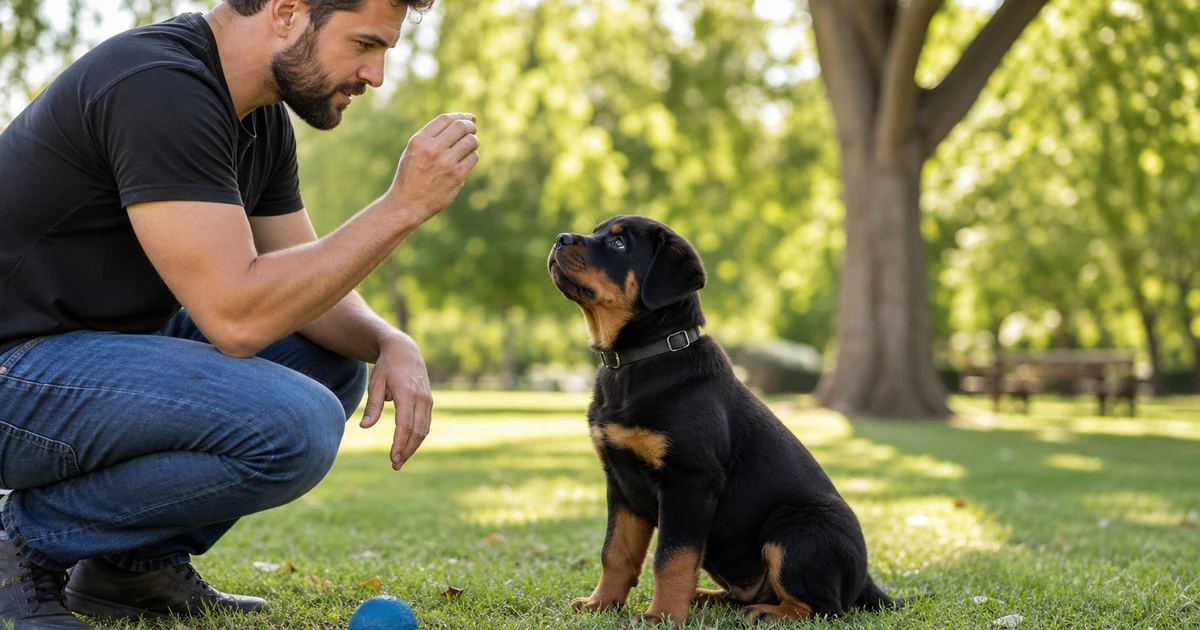
Real socialization is a controlled, positive introduction. It works at the puppy's pace, not yours. You watch for the first flicker of concern — a pause, a hard stare, a tucked tail — and you increase distance or lower intensity until the puppy takes a breath and looks back at you. Then you reward the heck out of that moment. The puppy learns: "That scary thing wasn't so bad, and when I check in with my human, good stuff happens."
A stiff, frozen body and direct stare are your red-alert signals with this breed. The Rottweiler temperament section describes it plainly: "Stiff, direct staring combined with a frozen body is your warning sign that something is escalating." If you see that, you've pushed too far. Back off immediately and debrief the experience with something the puppy loves — a scatter of treats on the ground, a brief game of tug.
How to Do It Safely, Day by Day
The logistics feel daunting, but you don't need a traveling circus. You need a plan:
- Carry them. Until vaccinations are complete, carry your puppy through novel environments. Let him observe from the safety of your arms. A 15-pound puppy peering down at a skateboard from shoulder height is curious; a dog forced to navigate it on a leash might be terrified.
- Use food like a scalpel. Tiny, stinky treats (think freeze-dried liver) delivered at the exact moment something new appears create a conditioned emotional response: "New thing = cheese." Feed before the puppy reacts negatively, not after.
- Schedule play dates with known, vaccinated dogs. Adult dogs with solid temperaments can teach a puppy more about canine etiquette in ten minutes than you can in a month. Watch for appropriate corrections and ensure the puppy can retreat.
- Invite guests on purpose. Make a list: a friend in a hoodie, another in a uniform, someone with a walker. Have them ignore the puppy initially, then offer treats once he approaches. No looming, no direct stares, no grabbing.
- Hit the hardware store. Many home improvement stores allow leashed dogs. The symphony of beeping scanners, clattering carts, and strangers in orange vests is perfect low-stakes chaos. Keep visits to five minutes and leave before the puppy gets overtired.
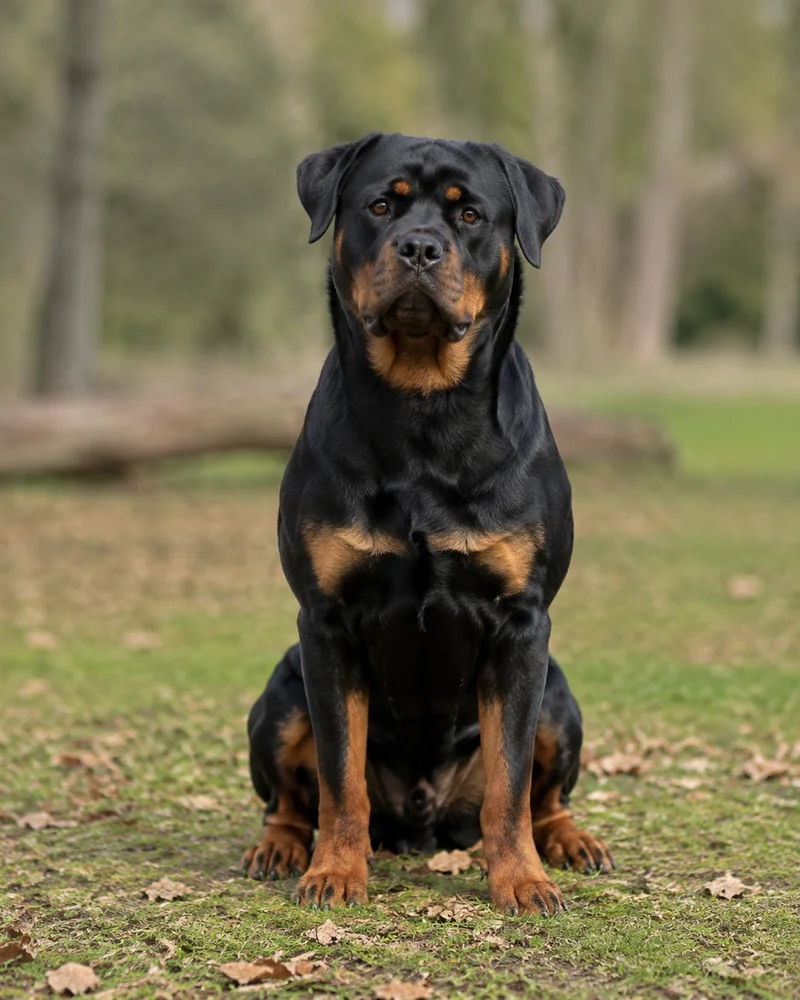
A well-socialized Rottweiler is a calm, affectionate shadow who leans against you like a 100-pound lap dog (affection level: 4 out of 5, according to the breed data). Without this work, you're gambling on a dog who has the physical power to do real damage and the protective instinct to use it. That's not a gamble you want to lose.
The Family Angle
If you're raising this puppy around children, the stakes double. A Rottweiler's "good with kids" rating is true only when the dog has been systematically taught that small humans are sources of pleasant predictability, not chaos. Young children move erratically, squeal, and grab — all triggers for a dog who hasn't built a deep file of positive kid encounters. Supervised, structured interactions where the dog associates kids with treats and gentle play are non-negotiable. Many families find that a properly socialized Rottweiler becomes one of the best dog breeds for families, precisely because that protective instinct channels into loyal guardianship rather than suspicion.
But I'll be blunt: this is not a breed for a first-time owner. The strength, intelligence, and willfulness that make a Rottweiler extraordinary also demand a handler who can read subtle body language, set consistent boundaries, and stay calm when a 130-pound adolescent tests the rules. If you're new to dogs, a Rottweiler puppy's socialization will feel like a full-time job with high consequences for mistakes.
The Payoff
Put in the work during those short eight weeks, and you'll get a dog who can settle under a café table, issue only a low grumble if someone sketchy approaches, and melt into a wiggly puddle when your kids come home. You'll have a dog who walks through the world with steady eyes, not a hair trigger. You'll have a protector who discriminates — a dog who knows the difference between the delivery guy and a genuine threat — because his brain, molded in that critical window, tells him that most things are just part of the landscape.
Miss the window, and you'll spend the next decade managing a dog who acts first and asks questions later. There's no shortcut. There's no "making it up later." The clock is ticking the moment you bring that puppy home. Use every second.