

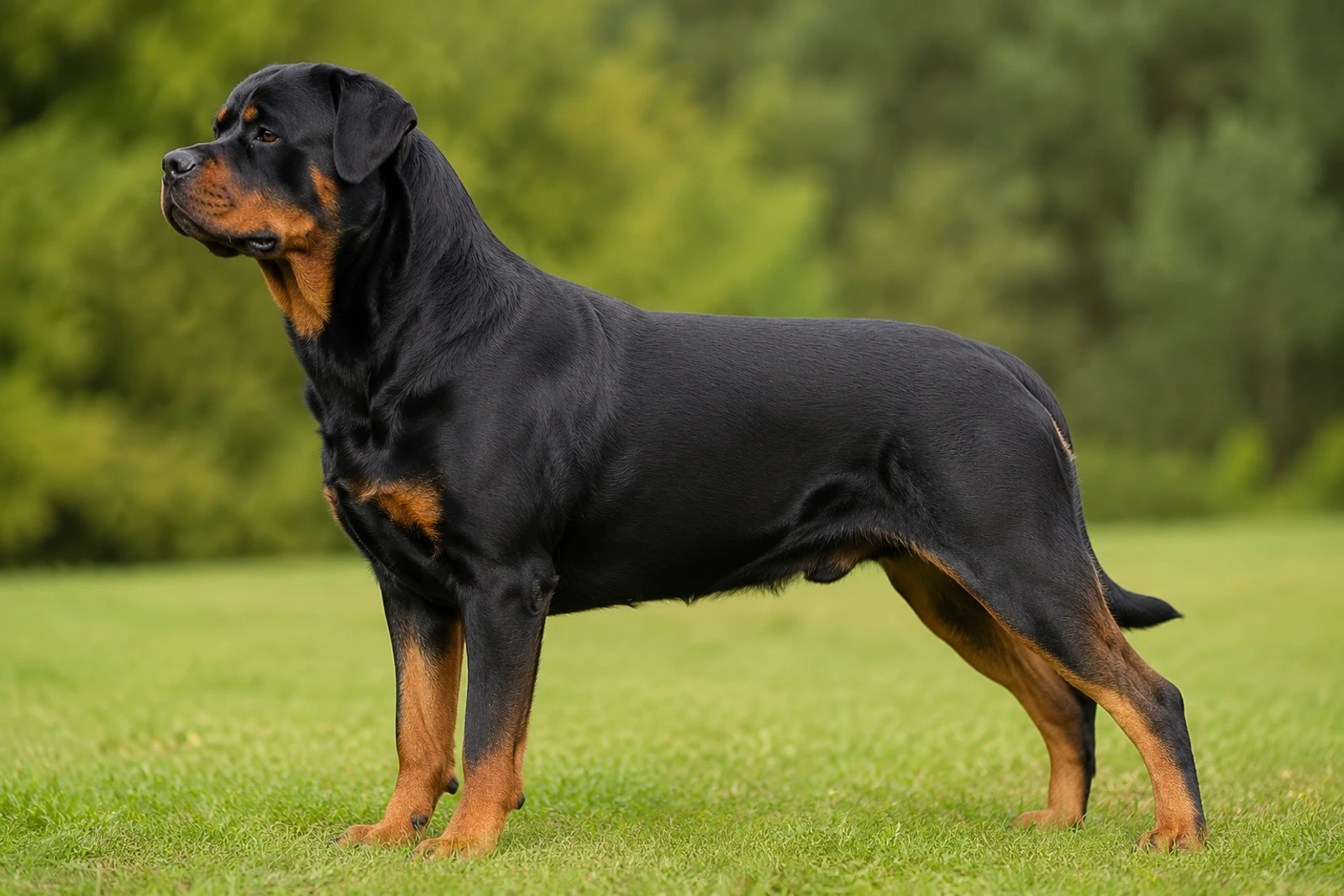
The Rottweiler is a robust working dog originally from Germany, where it was used to drive cattle and pull carts for butchers. Today, this confident and loyal guardian excels in many roles, from family protector to service dog. The breed is best suited to experienced owners who can provide consistent training, ample exercise, and strong leadership. With early socialization, Rottweilers can be affectionate companions, but their size and protective instincts require a dedicated handler. They thrive in homes with space and a job to do.
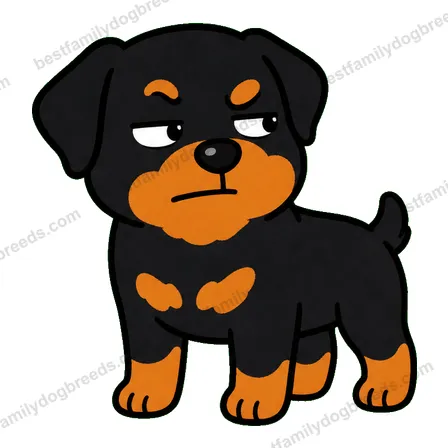
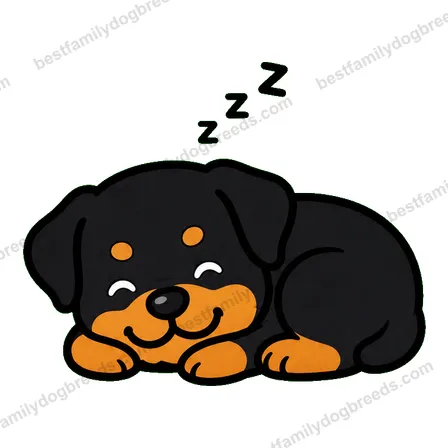
Rottweiler Sticker Pack
36 cartoon stickers • transparent PNG • no watermark
Pinterest-ready
Share all 36 reactions as one sticker sheet
Pinterest opens with the full pack and a fresh, tailored description. You choose the public board and publish it from your own account.
Save the full pack


Choose one reaction above to share it alone, or use the full-pack button for all 36 together.



























Free full-resolution download — no account, no payment, no watermark.
Includes all 36 transparent PNG stickers in one ZIP. A quick human check is required for each download.
At a glance
- Size
- Giant
- Height
- 23–27 in
- Weight
- 84–130 lb
- Life span
- 10–11 years
- Coat colors
- Black and Tan, Black and Mahogany
- Coat type
- Short, dense double coat
- Origin
- Germany
How much does a Rottweiler cost?
Adopt / rescue
$150–$500
Usually includes spay/neuter, first shots, and a microchip.
Buy from a breeder
$2,000–$4,000
From a reputable, health-testing breeder.
Approximate USD. Prices vary widely by region, breeder, pedigree, age, and coat colour — adopting is the lower-cost and recommended route. Avoid suspiciously cheap “breeders”; they’re often puppy mills.
Estimate the full cost of a Rottweiler →Want the ongoing number? Estimate the monthly food bill for a Rottweiler with our dog food cost calculator.
Rottweiler photos
Views
Front, side, rear and top — the full silhouette.Poses
How the breed sits, lies, moves and plays.Puppy to senior
The breed across its whole life.Expressions
The breed’s range of moods.Close-up details
Eyes, ears, nose, paws, tail and coat.Coat colors
The breed’s recognized colors.Click any photo to enlarge. We show the Rottweiler from every angle — three views, poses, life stages, expressions, close-ups, coat and colors.
Appearance & size
A Rottweiler at rest still looks like he’s ready to go to work — thick-necked, deep-chested, and planted on the ground like he’s bolted there. The build says “working dog” before anything else. You see it in the solid bone, the broad muscling, and the way the body sits in a compact, slightly rectangular frame. The topline is level, the loin is short and strong, and the chest drops to at least the elbows, giving the whole dog a grounded, stable silhouette from the side.
Height and weight numbers only tell part of the story. A male stands 24 to 27 inches at the shoulder and can weigh anywhere from 95 to 130 pounds; a female runs 22 to 25 inches and 84 to 106 pounds. Those are big ranges, but even a smaller female carries dense bone and substantial muscle that make her feel like a lot of dog in a modest package. Males push the scale toward the upper end and develop a noticeably heavier head and thicker neck as they mature — around three to four years for some lines.
The coat is short, straight, and coarse to the touch, with a dense undercoat that flattens the outer hair against the body. It’s a practical, weather-resistant coat that sheds moderately but never looks fluffy. Color is always the same in a purebred: glossy black with sharply defined rich tan or mahogany markings. Those markings follow a predictable map — dots over the eyes, a small patch on each cheek, a strip on either side of the muzzle, and clearly outlined tan on the chest, legs, and under the tail. Puppies are born with these markings, though they deepen and crisp up as the adult coat comes in.
From the front, the head is broad between the ears and shortens slightly toward the muzzle, with a distinct stop and well-developed cheeks. The ears are triangular, set high, and lie close to the skull, while the eyes are medium-sized, almond-shaped, and a dark, intelligent brown. The expression isn’t hostile; it’s steady and watchful, the kind of gaze that sizes up a situation without a lot of wasted fuss. What you don’t see is a dog that’s wired to look permanently snarling — the lips are tight, not pulled up at the corners, and the jaw is strong but relaxed at rest.
From the side, the neck arches slightly into well-laid-back shoulders, and the back stays straight and firm all the way to the croup. The tail has changed depending on where you live: historically it was docked very short, but in many countries natural tails are now the norm, carried in a gentle upward curve when the dog is alert, never curled tightly over the back. The rear view shows equally powerful thighs, straight hocks, and round, compact feet that look capable of driving a cow all day or holding a long down-stay in the yard.
The overall picture, from any angle, is a dog built for endurance power rather than quick sprints — compact, balanced, and honest in structure, with no exaggerations.
History & origin
The Rottweiler’s story starts with the Roman legions marching north across the Alps. They needed tough, level-headed dogs to herd the massive cattle herds that fed the army, so they brought along drover dogs — direct ancestors of today’s Rottweiler. As some legions settled in what is now southern Germany, those dogs mixed with local stock and put down roots.
The town that gave the breed its name, Rottweil, was built on the site of a Roman settlement. For centuries, it was a major cattle market, and the dogs earned their keep driving stock to and from the surrounding countryside. Butchers relied on them to move stubborn, half-wild animals and — just as important — to guard the cash proceeds. After a successful sale, a butcher would tie his money pouch around the dog’s neck for the walk home, a detail that highlights how much trust people placed in these dogs. That’s where the old nickname Rottweiler Metzgerhund (butcher’s dog) comes from.
By the late 1800s, railroads replaced traditional cattle drives. The breed nearly vanished; at one point, only a single Rottweiler was recorded in Rottweil itself. A handful of dedicated breeders saw the dog’s potential beyond herding and worked to re-establish it. In 1901, the first breed standard was drawn up, and Rottweilers started landing jobs as police dogs, military dogs, and guard dogs. Their strength, intelligence, and unwavering nerve made them naturals. Through two world wars, they carried messages, pulled small carts, and stood watch.
The American Kennel Club recognized the breed in 1931. Over the decades that followed, the Rottweiler became one of the most requested working and protection breeds in the United States. Today, you’ll still see them in police K-9 units and search-and-rescue teams, but millions live as family guardians — dogs whose deepest instinct is to keep a watchful eye on their people and their property. That 2,000-year thread from Roman drover to modern protector runs right through the breed’s bone and brain.
Temperament & personality
The Rottweiler you bring home is a calm, confident dog who reads every situation before he decides what to do. He’s not a frantic greeter or a tail-wagging social butterfly with strangers. Instead, he hangs back, watches, and leans his weight forward just slightly — a tell that he’s assessing, ready to move if needed. With his own family, the switch flips: you get an affectionate, often goofy shadow who leans against your legs, groans contentedly when scratched, and follows you from room to room. That loyalty runs deep, but it’s loyalty earned through clear, fair leadership, not handed out automatically.
This is a thinking breed, bred to drive cattle and guard property, and the brain needs a job just as much as the body does. A bored Rottweiler left alone in the yard will invent his own work — often digging, marathon chewing sessions, or barking that the neighbors won’t appreciate. Anxiety-driven behaviors crop up fast when these dogs are isolated from household life, because they define their territory by your scent and presence, not by the fence line. If you stick him in a spare room or the garage, expect destruction and a deeply unhappy dog.
His watchfulness is an asset, not a liability, when you give it an outlet. A Rottweiler naturally positions himself between you and the front door, and he’ll mark the edge of his world with urine if you don’t supervise and redirect that instinct. House training takes vigilance precisely because scent memories are powerful; a single accident indoors can become a repeat spot if the odor isn’t neutralized thoroughly with an enzymatic cleaner or a vinegar spray. The same scent-driven brain means he might roll in something dead on a walk — it’s not rebellion, it’s a leftover strategy to mask his own odor, and it’s just part of the package.
Around the house, his personality can be pushy. A young Rottweiler often tests boundaries by jumping up — not to be friendly, but to see where he ranks. Correct that with calm, immediate consistency, not force. Stiff, direct staring combined with a frozen body is your warning sign that something is escalating; a relaxed, wiggly dog with soft eyes is in a good headspace. Teach children early to let the dog eat in peace: food guarding is a real risk if a kid reaches into the bowl, and the “leave him alone while eating” rule never expires with a giant, powerful dog.
With guests, he’s aloof but not hostile when properly socialized. He won’t plaster himself across strangers like a Labrador; he’ll hang back until you signal that everything’s fine. That steady nerve is what makes him an exceptional protector, but it also means this is not a breed for a casual first-time owner. He needs a handler who enjoys the daily negotiation of working with a strong-willed dog — someone who’ll spend ten minutes on a down-stay as the delivery truck passes, who’ll reward the right choice with a treat or a calm word at exactly the right moment. The payoff is a dog who can go anywhere with you, settle under the café table, and issue only a low grumble if someone sketchy approaches. That adult composure is built through years of respectful, consistent engagement; skip that work and you get a 100-pound liability with a grudge.
Good with kids, dogs & other pets
A well-socialized Rottweiler is a steady, affectionate family dog, but the 84–130 lb reality means “good with kids” hinges on training and supervision. These dogs are naturally patient with their own family’s children, often leaning into a toddler’s hug rather than pulling away. That same cuddly devotion, however, can send a wobbly two-year-old flying with an accidental hip check. Never leave a Rottweiler unsupervised with young kids — not because of temperament, but because sheer mass turns a happy tail-wag into a knockdown. Teach children to respect the dog’s space around food and resting spots, and you build the trust-based relationship this breed was wired for.
With other dogs
Puppies who get steady, positive exposure to friendly dogs during the critical 3-to-14-week window often grow into adults who coexist peacefully. Skip that early work, and you can end up with a dog who is leash-reactive or picks fights at the dog park — especially with dogs of the same sex. Even a well-socialized Rottweiler tends toward a confident, guarded play style; not every dog appreciates that. Supervised, short introductions on neutral ground are non-negotiable. After the socialization window closes around 16 weeks, forcing an adult Rottweiler who is already comfortable at home into chaotic dog-dog scenarios can backfire badly, triggering stress and real fights.
With cats and small pets
Raised together from puppyhood with gradual, supervised exposure, many Rottweilers learn to ignore the family cat. The caveat: a cat that bolts can still light up a chase instinct in a split second. Small pocket pets like rabbits or guinea pigs read as prey to most Rottweilers. Never trust a giant working breed alone with a small animal. Use solid management — baby gates, separate feeding zones, and crates — not wishful thinking.
This is not a dog you can banish to the backyard. Rottweilers need to live inside with their people, and long periods of isolation can unravel any amount of socialization work, turning a confident dog into a stressed, barking mess. If you put in the daily handling, exposure to new sounds, surfaces, and visitors early on, you get a calm, unflappable housemate who takes kids tumbling around in stride. Skip the months of gentle, consistent socializing, and you inherit a 100 lb liability.
Trainability & intelligence
A Rottweiler won’t struggle to understand what you’re asking — this is a sharp, thinking breed with a work ethic bred in the bone. The real question is whether you’ve earned their trust. Rottweilers are highly trainable, but they’re also sensitive to mixed signals and inconsistent handling. If you change the rules day to day, you’ll get a dog who hesitates or makes their own decisions. That’s a problem in an 84–130 lb body.
Start early, ideally before 16 weeks. Puppies need gradual, positive exposure to all kinds of people, sounds, surfaces, and situations. A well-socialized Rottweiler is confident and level-headed; one that missed those weeks can tip into wariness or reactivity, and you don’t get a do-over with a giant breed. Parallel to socialization, begin reward-based obedience training right away. Use food, praise, or a quick tug session to mark the behavior you want. Punishment doesn’t just sour the relationship — it actively undermines the reliability you need for things like a solid recall. When a Rottweiler blows off a “come” command, it’s rarely because they didn’t hear you. It’s often because the payoff for checking in isn’t as compelling as whatever they’re focused on, or the history around that cue feels pressure-filled.
This is not a breed you force into compliance. They learn fast when the training is fair, clear, and consistent, but they’ll shut down (or push back) under heavy-handed methods. Teach a rock-solid recall with high-value rewards and zero punishment when they finally arrive, even if you had to wait. Same for leash manners, settling in the house, or ignoring distractions — reward the right choice, and keep the communication calm. The common challenge is that their intelligence and independence mean they’ll test boundaries periodically. Stay patient, keep the same rules in place, and you’ll end up with an attentive partner who wants to work with you, not against you.
Exercise & energy needs
A Rottweiler doesn’t do well with a casual stroll around the block. Expect to commit to two 60-minute exercise sessions every day for a healthy adult — think of that as the baseline, not an aspiration. This is a giant working breed with a deep tank of stamina, and shortchanging that need reliably leads to a restless, destructive dog who’ll redecorate your couch.
Intensity matters as much as the clock. Your Rottweiler needs workouts that tap into the breed’s original job: driving cattle, pulling carts, and guarding. That means brisk off-leash hikes, hill work, and sustained trotting, not a stop-and-sniff meander. Because they’re built heavy and powerful, avoid pounding on concrete or high jumps — especially with a puppy whose growth plates stay open until 18–24 months. Swimming, pulling a properly fitted cart, and long walks on soft trails are excellent ways to burn energy while respecting those joints.
Physical output alone won’t settle a Rottweiler’s busy brain. Pair every day’s exercise with genuine mental work:
- Scent games and tracking (hide a smelly treat and send them to find it)
- Advanced obedience or rally — these dogs thrive on precise, challenging commands
- Puzzle toys that dispense meals, turning dinner into 30 minutes of problem-solving
A bored Rottweiler left in a yard will invent his own job, often barking at everything that moves or digging to China. Splitting the two hours into a morning and evening session helps, especially in warm weather — that black-and-tan double coat makes them prone to overheating. If you can’t offer at least this level of daily commitment, a different breed will fit your life a whole lot better.
Grooming & coat care
A Rottweiler’s short, dense double coat is the ultimate sleeper agent of shedding. It looks low-maintenance—and in many ways it is—but that glossy black with rich mahogany points pumps out a steady supply of loose hair year-round. A quick weekly once-over with a bristle brush or a rubber curry comb will catch most of it, spread natural oils, and keep the coat gleaming. When the undercoat blows (usually spring and fall), you’ll step it up to daily brushing. During those few weeks, an undercoat rake or a slicker brush with rounded pins is your go-to for pulling out fistfuls of dead fluff before it blankets the furniture.
Baths are an occasional need, not a constant one. Every 4–6 weeks, or whenever he’s rolled in something memorable, a gentle dog shampoo does the job. Rinse thoroughly—double coats hold soap residue against the skin, and a giant breed means a lot of dog to work through. A detachable shower head or a trip to a self-wash station saves your back.
Don’t let the short coat fool you into skipping the rest of the routine:
- Nails: Clip or grind every 3–4 weeks. If you can hear them clicking on hard floors, they’re too long. Giant paws carry serious weight, and overgrown nails alter gait and stress the joints.
- Ears: Those pendant ears trap moisture and need a weekly wipe with a damp cloth or a vet-approved cleaner. Stick to the parts you can see—no cotton swabs down the canal.
- Teeth: Brush 2–3 times a week to stay ahead of tartar. Rottweilers can be prone to gum issues, and dental chews alone aren’t enough.
When the seasonal shed hits full force, a deshedding tool with rotating teeth can strip the loose undercoat in minutes. Use a light hand—over-grooming irritates the skin and damages the topcoat. Beyond that, it’s a quick 10-minute commitment each week. Keep a bristle brush by the door and a lint roller in the car, and you’ll both get along just fine.
Shedding & allergies
A Rottweiler will leave hair on your clothes, couch, and floors — it’s a year-round reality, not an occasional nuisance. The breed sheds moderately, but the dark, coarse guard hairs show up plainly on light fabrics, so it often feels heavier than it is.
What fuels the shedding
These dogs have a short, dense double coat: a straight outer layer over a softer undercoat. That undercoat is the main culprit during seasonal shifts. Twice a year — typically spring and fall — a Rottweiler blows coat with enthusiasm. For a few weeks, you’ll pull tufts the size of cotton balls off the dog daily, and your vacuum gets a serious workout. Between blowouts, expect a steady, low-grade shower of hair that sticks to everything.
The drool factor
Don’t overlook the slobber. Many Rottweilers have loose flews (the jowly lips), so after a long drink of water or while waiting for a treat, you’ll get wet splashes and dangling strands. Some individuals are drier than others, but keeping a drool rag near the food and water bowls is the norm, not the exception.
The realistic allergy picture
There’s no such thing as a hypoallergenic dog, and Rottweilers land far from that ideal. They produce dander and spread allergen-laden saliva through shedding and drooling. If anyone in the house has dog allergies, this breed is a poor match — no amount of grooming will eliminate the proteins that trigger reactions.
A rubber curry brush or a shedding tool used thoroughly once a week, upped to daily during coat-blowing season, keeps loose hair from taking over the house. Bathe only when needed. Still, you’ll live with dog hair on your things. If a pristine, hair-free home is non-negotiable, the Rottweiler will frustrate you.
Diet & nutrition
The weight risk is real
A Rottweiler can pack on pounds silently, and every extra pound hammers hips, elbows, and that powerful spine. This is a working dog built with a hearty appetite — often highly food motivated — so free-feeding or eyeballing portions usually ends at the vet’s scale. Keep him lean, and you’ll add life to those 10–11 years and miles to his joints.
Puppies: build them slow
Rapid growth is the enemy of a giant-breed puppy. From weaning until 4 months, split the daily ration into four small, evenly spaced meals. At 4 months, drop to three meals; by 6 months, two meals a day works like an adult. Feed a high-quality large-breed puppy formula — the controlled calcium and calorie levels help prevent too-fast bone growth that sets the stage for dysplasia. Transition him gradually from breeder’s food by introducing lightly cooked, puréed meats, fish, fruits, and vegetables. Around 12 weeks, raw chicken wings (under your watch) make a natural chew and toothbrush, but don’t leave a pup unsupervised with anything hard.
Adult portions and what’s on the menu
Once he’s full-grown at 84–130 lb, portion size depends on build and daily burn, not the pleading stare. A typical active Rottweiler eats 3½ to 5 cups of high-calorie, meat-first dry food per day, split into two meals. If you home-prepare, target roughly 60% animal protein (raw or lightly cooked meat and fish), 20–30% fruits and vegetables, and the rest from eggs, plain yogurt, or digestible grains like pearl barley or white rice for sensitive stomachs. Canned fish, cooked vegetables, and grains make a quick, balanced meal. Blend or purée meals when a dog wolfs his food or has missing teeth — the vertical-only jaw motion means less pre-digestion, so smaller particles improve nutrient absorption.
Use a puzzle bowl or slow-feeder not just for mental engagement, but to reduce the gulping that can trigger bloat in a deep-chested breed. Skip vegetarian or vegan diets entirely; a dog’s digestive physiology is wired for meat.
Seniors: lighter and more frequent
Activity naturally tapers off with age, so monitor that waistline monthly. Switch to smaller, more frequent meals if a senior seems hungry or struggles to keep condition. There’s no strong reason to drop protein sharply — just reduce overall calories in small increments as weight creeps up. Purée meals for an old Rottweiler with worn or missing teeth to keep nutrition absorption high.
Avoid rich, fatty scraps, especially after holidays. One greasy splurge can land a Rottweiler in a pancreatitis crisis. Measure every scoop with a proper cup — not a coffee mug — and let your vet’s hands-on exam, not the empty-bowl theatrics, guide the next little adjustment.
Health & lifespan
A Rottweiler’s lifespan typically lands between 10 and 11 years. That’s right on the edge of what you’d expect for a giant breed, and every extra year usually comes down to two things: genetics and keeping excess weight off their frame.
Hip and elbow dysplasia sit near the top of the worry list. These joints develop abnormally, grinding down cartilage and leading to painful arthritis as the dog ages. You won’t always see a puppy limping early on — sometimes the first sign is just a dog that’s slower to get up after a nap at age five or six. Responsible breeders screen breeding stock through OFA or PennHIP and should be able to show you those clearances. Osteosarcoma, an aggressive bone cancer, also shows up in Rottweilers more than in many other breeds. A sudden limp that doesn’t resolve warrants a vet visit, not a wait-and-see approach.
This is a breed that lives to eat, and carrying extra pounds destroys joints, taxes the heart, and can cut that already-short lifespan even shorter. You control the food — keep a Rottweiler lean with measured meals and a real exercise routine, not just roaming the backyard. A solid hour of movement daily helps, though on hard surfaces you want to ease up on repetitive pounding with a growing puppy.
Heart issues, including aortic stenosis, can be inherited, so a cardiologist check is common in well-bred litters. Bloat (gastric dilatation-volvulus) is a life-threatening emergency in deep-chested dogs. Splitting meals into two a day and avoiding heavy exercise right after eating lowers the risk — learn the signs of a distended belly and unproductive retching because you’re racing the clock if it happens.
Some lines can be prone to hypothyroidism or eye disorders like entropion. Yearly bloodwork and an eye exam catch things before they spiral.
Preventive care here isn’t optional. Keep current on heartworm prevention, stay on your vet’s vaccine schedule — rabies is non-negotiable — and don’t skip the early handling work. A puppy taught to accept paw touching and mouth exams calmly will let you spot problems early without a wrestling match.
Living environment
A Rottweiler is a lot of dog in every sense, and your living situation has to match that reality. This is not an apartment breed. Their size alone — 85 to 130 pounds of muscle — makes tight hallways and shared stairwells a daily struggle. More importantly, a bored or under-exercised Rottweiler in a small apartment can quickly become destructive and vocal, which neighbors rarely appreciate.
A house with a securely fenced yard is the realistic baseline. The fence needs to be at least six feet tall and dug in or reinforced at ground level; Rottweilers can be escape artists when something interesting is on the other side. The yard gives them a safe place to patrol, sniff, and burn off energy between walks, but it’s not a substitute for structured exercise. They’ll still need at least 90 minutes to two hours of vigorous daily activity, split into at least two sessions — a morning run, an evening long walk, or a mix of play and training that works both body and brain.
Indoors, a well-exercised Rottweiler tends to be calm and surprisingly quiet. They’ll bark when someone approaches the door — that protective instinct runs deep — but you won’t get nonstop noise unless the dog is anxious or neglected. Climate-wise, their double coat provides good insulation. They handle cold and even snow readily, but hot, humid weather hits them hard. During warmer months, shift exercise to early morning or late evening, provide plenty of shade and water, and never leave them outside without a cool place to retreat.
These dogs bond intensely with their people, so being left alone for a full workday is a problem. Separation anxiety can show up as barking, chewing, or digging, especially in young dogs. Gradual alone-time training, a midday break, and giving them a job — puzzle feeders, frozen Kongs, scent games — help, but a home where someone is around more often than not is ideal.
Be mindful of puppy joints. Avoid forced running on hard surfaces until growth plates close around 18–24 months, and in any multi-story home, go easy on stairs. A Rottweiler who gets the space, the work, and the company it needs is a steady, devoted housemate. Skimp on those, and a 100-pound dog with unmet drives creates problems that are tough to ignore.
Who this breed suits
A Rottweiler isn't a casual companion; you're signing up for 84–130 pounds of muscle, sharp intelligence, and an instinct to protect. This breed clicks with owners who genuinely enjoy the daily work of training and aren't intimidated by a dog that can out-power most adults.
You're a good match if you want a confident, project-oriented partner. Rottweilers thrive with active singles or families who treat training as a long-term conversation, not a six-week class. They need a securely fenced yard and at least an hour of vigorous, off-leash exercise plus a job — obedience, tracking, cart-pulling, or advanced trick work. Experienced dog people who appreciate a breed that's calm indoors after exercise but always watching the room will feel right at home. With kids they're often affectionate and steady, but only if raised together and supervised; a tail-wagging Rottie can accidentally floor a toddler.
Think twice if you're a first-time owner without a mentor, live in an apartment, or are away 10 hours a day. A bored, under-exercised Rottweiler becomes destructive, and the guarding instinct doesn't switch off — you'll need to manage a dog who naturally assesses strangers as potential problems. Seniors or anyone unsteady on their feet will struggle with a dog that can lunge at a squirrel and pull you off balance. Also consider the financial side: hip and elbow dysplasia are common in giant breeds, and a 10–11 year lifespan means the time commitment is intense but shorter than you'd get with smaller dogs. Some insurance companies and municipalities restrict ownership, so check local regulations before you fall in love.
Ultimately, this is a home guardian who needs a leader, not a buddy. If you aren't ready to be that person every single day, a Rottweiler will run the house for you.
Cost of ownership
Bringing home a Rottweiler is a serious financial commitment — these are giant, powerful dogs with appetites and health needs to match.
Purchase price
A responsibly bred Rottweiler from parents with OFA hip, elbow, and cardiac clearances will cost $1,500 to $3,000 in most parts of the country. Puppies from proven working lines or champion bloodlines can push $4,000 or more. Bargains under $1,000 almost always come from breeders who skip health testing, and those savings vanish the first time you face a $5,000 orthopedic surgery. Rescue adoption fees typically range from $150 to $400, often including spay/neuter and initial vaccines.
Monthly expenses you can count on
- Food: A 100-pound dog eats a lot. A high-quality large-breed kibble runs $80–$120 a month. Treats, dental chews, and a joint supplement like glucosamine add another $20–$30.
- Grooming: The short double coat is low-maintenance, but heavy shedding hits twice a year. Home care with a good deshedding tool and nail trims every few weeks is cheap, but if you delegate baths and brush-outs, budget $30–$50 per session, roughly every 6–8 weeks.
- Routine vet care & prevention: Annual exams, core vaccines, and monthly heartworm, flea, and tick preventives average $50–$80 a month. Giant breeds require larger, pricier doses. Rottweilers can be prone to hip dysplasia, elbow dysplasia, and bloat, so responsible owners often add a wellness plan or set aside an emergency fund.
- Insurance: A comprehensive accident-and-illness plan for a giant breed with known orthopedic risks typically runs $60–$100 monthly, depending on deductible and location. Pre-existing condition clauses mean early enrollment pays off.
- Training: Untrained power is a liability. Group obedience classes run $150–$300 for a 6-week course. If you need private sessions for leash reactivity or guard-dog tendencies, expect $60–$100 per hour. Budget at least a couple hundred dollars in the first year.
Realistically, you’re looking at $250–$400 a month to keep a Rottweiler healthy, fed, and well-mannered — and that’s before you buy the XXL dog bed or replace a chewed couch cushion.
Choosing a Rottweiler
Rescue or Responsible Breeder?
Adopting a Rottweiler from a breed-specific rescue gives you a real-world read on an adult dog’s temperament and any existing health problems. That upfront knowledge can be gold, especially with a 100-plus-pound dog. The trade-off: you rarely know the dog’s early socialization or genetic background. A responsible breeder flips that — you get a clean health history, exposure to sound parents, and a puppy you can shape from eight weeks. For a giant working breed that can reach 130 lb, that predictability matters. Either route, expect to answer tough questions about your fencing, kids, and experience. Good breeders and rescues both screen hard.
Health Clearances That Matter
Rottweilers can be prone to hip and elbow dysplasia, inherited heart conditions (aortic stenosis is the big one), and eye diseases. A breeder who takes this seriously will hand you paperwork, not promises. Insist on:
- Hip dysplasia: OFA rating of Fair or better, or a PennHIP score below the breed’s median.
- Elbow dysplasia: OFA elbow evaluation.
- Cardiac: An echocardiogram and exam by a board-certified cardiologist within the last year.
- Eyes: Annual exam by a veterinary ophthalmologist, registered through OFA or CERF.
If a breeder waves off these tests or claims “my vet checked them out” without documentation, walk away. Don’t forget the parents’ temperaments — a Rottweiler’s stable nerves aren’t a given.
Red Flags That Should Send You Running
- “Bigger is better” talk. A breeder pushing 150-lb Rotties or protection-bred dogs without calm, clear-headed parents is asking for a structurally unsound, nervy dog.
- No health contract. You need a written guarantee covering genetic defects for at least two years.
- Always has puppies. Multiple litters, no waitlist, or a website with a “buy now” button signals a high-volume operation, not thoughtful breeding.
- Won’t let you meet the mother. The dam should be on-site and approachable. A fearful, aggressive, or missing mother is a dealbreaker.
- Zero screening of you. If they don’t ask about your life with a powerful breed, they’re not protecting their puppies.
Picking a Puppy in Person
Puppies raised in a busy household, not a distant kennel, learn the sounds and rhythms of family life early. At 7–8 weeks, a sound Rottweiler pup is curious and chunky — not fat — and will approach you after a short, thoughtful pause. Steer clear of the one cowering in the corner and the one launching at you without an off-switch. Middle-of-the-road confidence is the goal. Check for bright eyes, clean ears, no limping or coughing, and a puppy that bounces back quickly after a mild startle. A good breeder will guide you to the puppy whose temperament fits your plans, whether you want a family sidekick or a working prospect. They’ve watched these pups for weeks — trust that insight.
Pros & cons
-
Pros
- A properly socialized Rottweiler is calm, confident, and fiercely devoted to its family — this is a dog that will put itself between you and a threat without hesitation.
- Sharp intelligence paired with a strong work ethic makes training straightforward when you’re consistent; they thrive on jobs, whether it’s advanced obedience, cart-pulling, or learning complex routines with the kids.
- Despite the imposing 84–130 lb frame and giant classification, well-bred Rotties often have an unexpectedly goofy, affectionate side at home, leaning against you like a 100-pound lap dog.
- They’re naturally watchful but discriminating — not a frantic barker — giving you a clear-headed guardian who assesses situations before reacting.
- Short, straight double coat is low-maintenance on the grooming front; a quick weekly brush handles most shedding, with heavier blowouts a couple times a year.
-
Cons
- This is not a “beginner” breed. A Rottweiler’s physical power and protective instincts demand an owner who will invest heavily in early socialization, firm boundaries, and ongoing leadership.
- The same guarding drive that makes them exceptional protectors can tip into territorial aggression or suspicion of strangers if left unchecked, creating real liability in a 27-inch-tall dog.
- Their size and strength shorten the lifespan to roughly 10–11 years, and the breed carries a heavy genetic load — responsible breeders screen for hip and elbow dysplasia, heart conditions like subaortic stenosis, and certain cancers, but issues still surface.
- You’ll need to budget for daily exertion that goes beyond a leisurely stroll. A young adult Rottweiler often needs a solid hour of running, strength work, or focused mental games to stay level-headed indoors.
- Bloat is a genuine concern with deep-chested giants; learning the signs and managing meal timing is non-negotiable.
- Some municipalities and insurance companies restrict or deny coverage for Rottweilers, so you’ll need to check local laws and your homeowner’s policy before bringing one home.
Similar breeds & alternatives
If you’re drawn to the Rottweiler’s steady nerve and physical presence but something doesn’t quite click — maybe you want a lighter build, a sharper edge, or a lower-key guardian — these breeds sit in the same conversation yet pull in different directions.
Doberman Pinscher
The Doberman is a leaner, hotter-burning athlete. Where a Rottweiler weighs 84–130 lb and hits 23–27 inches, a Doberman typically runs 60–100 lb and 24–28 inches — tall and streamlined. They share a deep loyalty and natural protectiveness, but the Doberman’s energy demand is a full gear higher. Expect a solid hour of running, not just a walk, plus mental work. Dobes tend to operate at a sharper frequency: quicker to alert, more Velcro-like indoors, and often more sensitive to handler moods. Healthwise, diligent screening for DCM and von Willebrand’s disease matters. The Doberman can be a good fit if you want a tuned-up protector that doesn’t carry the sheer bulk of a Rottie.
German Shepherd Dog
The German Shepherd is lighter on the scale (usually 50–90 lb, 22–26 inches) but packs a similar working-drive punch. Both breeds have aloofness toward strangers and a brain that craves a job, yet they express it differently. The GSD tends toward higher reactivity and can be more vocal — a sharp contrast to the Rottweiler’s often quieter, watch-and-wait style. Shepherds frequently need more direction to settle indoors, while many Rottweilers possess an off switch once exercised. Hip and elbow dysplasia are shared worries; degenerative myelopathy is a Shepherd-specific concern. If you value versatility in dog sports and don’t mind a dog that wants to manage the household schedule, the Shepherd might edge out the Rottweiler.
Bullmastiff
Think of the Bullmastiff as the Rottweiler with the intensity dial turned down. They’re similarly massive (100–130 lb, 24–27 inches) but built with a thicker, broader frame and a shorter muzzle. Where a Rottweiler can be a thinking guardian, the Bullmastiff tends to rely more on presence than chase or bark — they’re famously quiet and less driven. Exercise needs are noticeably lower; a couple of daily walks usually suffice, and they’re champion loungers indoors. The trade-off is a shorter lifespan (7–9 years) and a breed that can overheat quickly. Early socialization is non-negotiable for both, but the Bullmastiff’s handler sensitivity is often softer than the Rottweiler’s confident independence.
Cane Corso
Cane Corsos push the protection instinct even further. They overlap in weight (88–110 lb or more) and height (23–28 inches), yet carry a more imposing head and a tighter, athletic coat. The Corso’s guarding behavior is frequently more overt and intense — they require a handler who can manage a serious, assertive dog without creating conflict. While a well-bred Rottweiler typically shows steady discernment, a Corso can default to suspicion faster. Both breeds need early, extensive socialization, but the Corso’s margin for error is slimmer. Lifespan runs 9–12 years; bloat and hip dysplasia are common concerns. Pick a Corso if you need a hardcore property guardian and have the experience to match it; stick with a Rottweiler for a slightly more forgiving family protector that still brings big-dog authority.
Fun facts
- Rottweilers are descendants of ancient Roman drover dogs.
- They were historically used to herd cattle and pull butcher's carts.
- The breed almost disappeared in the 1800s but was revived by German enthusiasts.
- Ranked 9th in canine intelligence by psychologist Stanley Coren.
Frequently asked questions
- Are Rottweilers good with children?
- Rottweilers can be good with children when properly socialized from a young age. Their size and strength mean supervision around small kids is essential. They are protective and loyal, often bonding closely with family members.
- How much exercise does a Rottweiler need?
- Rottweilers need regular daily exercise, typically a long walk and playtime. They are large, energetic dogs that benefit from mental stimulation too. Without enough activity, they may become bored and potentially destructive.
- Do Rottweilers shed a lot?
- Rottweilers have a short, dense double coat that sheds moderately year-round, with heavier shedding during seasonal changes. Weekly brushing helps manage loose fur. They are not considered hypoallergenic.
- Can a Rottweiler live in an apartment?
- Rottweilers can adapt to apartment living if given ample daily exercise outdoors. However, their large size and protective nature mean they thrive best in homes with space and a yard. Adequate mental and physical stimulation is key to prevent restlessness.
- Are Rottweilers suitable for first-time dog owners?
- Rottweilers are best suited for experienced owners who can provide firm, consistent training and socialization. Their size and strong guarding instincts can be challenging for novices. However, with dedication, a first-time owner can succeed with professional guidance.
- How long do Rottweilers typically live?
- The typical life span of a Rottweiler is 10 to 11 years. Larger breeds tend to have shorter life spans, but some Rottweilers live longer with excellent care. Regular health screenings and a healthy diet support longevity.
Tools & calculators for Rottweiler owners
Quick estimates tailored to Rottweilers — pre-filled with this breed’s size where it matters.
Articles & stories about the Rottweiler
Dog Liability Insurance: What It Costs and How to Get It
Dog-related liability often lives in a homeowners or renters policy. Learn what to check when an insurer excludes a dog, why quotes vary, and how to compare coverage.
Does Renters Insurance Cover Dog Bites?
Renters insurance may cover dog-bite liability, but limits and exclusions vary. Learn the policy questions to ask before relying on coverage.
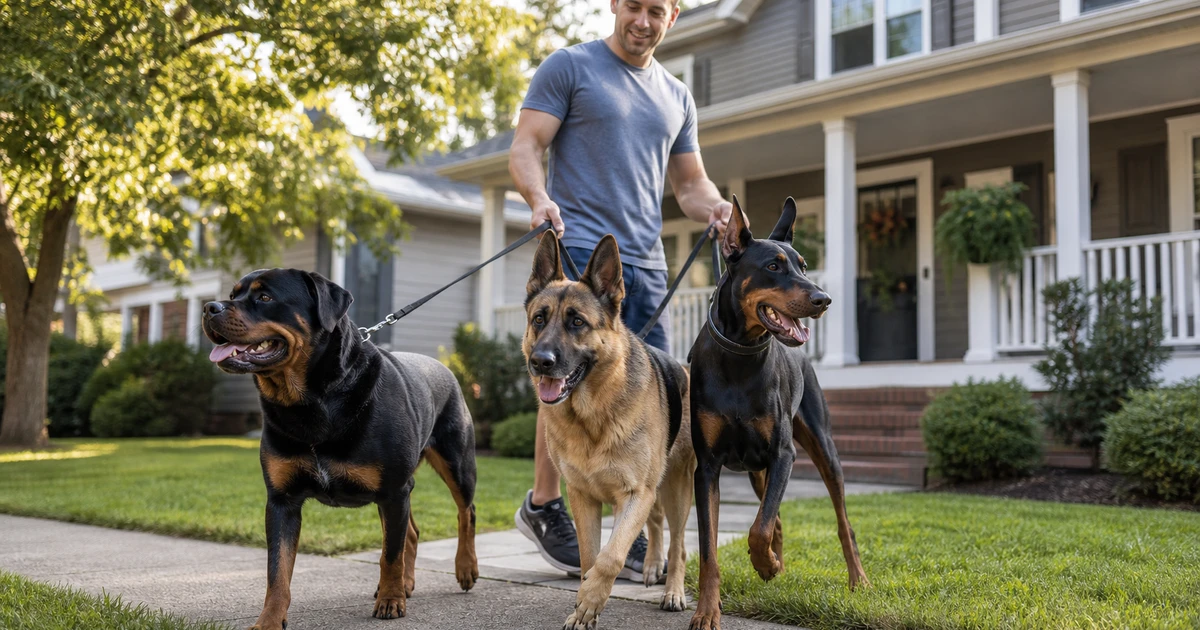
How Dogs Affect Home Insurance (and the Breeds That Raise It)
A dog can add to your home insurance premium through liability risk — and some breeds get restricted or excluded outright. Here's how much it costs and how to stay covered.
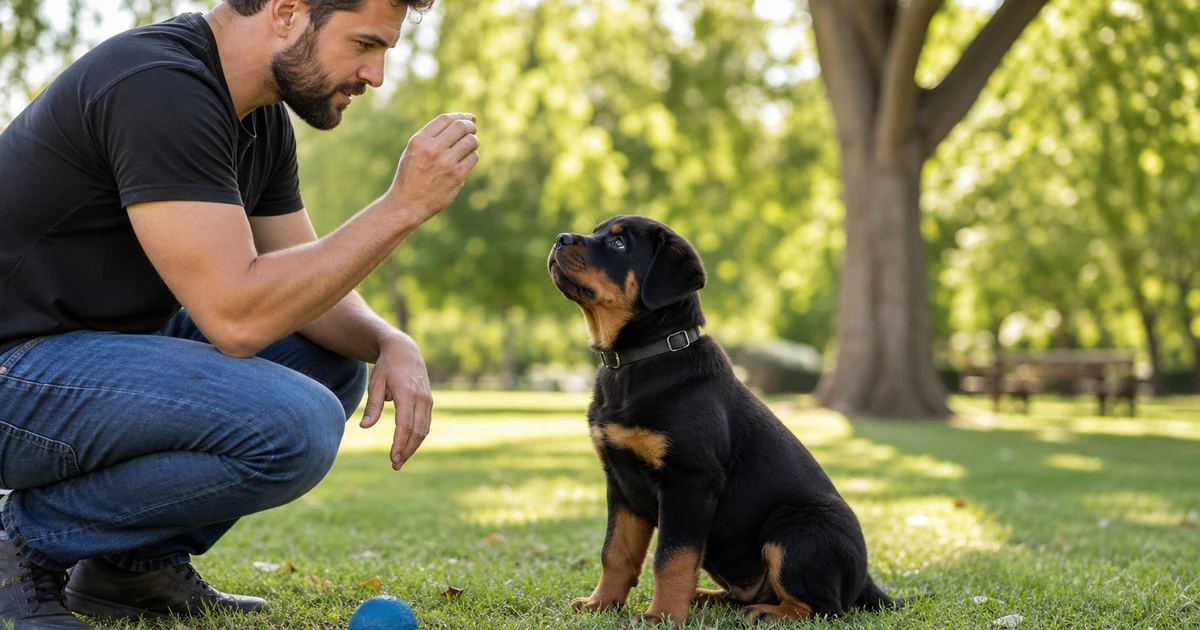
Socializing a Rottweiler Puppy: The Window You Can't Miss
Miss the 8-16 week socialization window with a Rottweiler and you'll spend years managing a 100-pound liability. Here's how to hit it right.
Sources & standards
This profile follows recognized breed standards from the American Kennel Club (AKC) and the Fédération Cynologique Internationale (FCI), along with established veterinary and breed-club guidance. These describe general breed tendencies — every dog is an individual.