

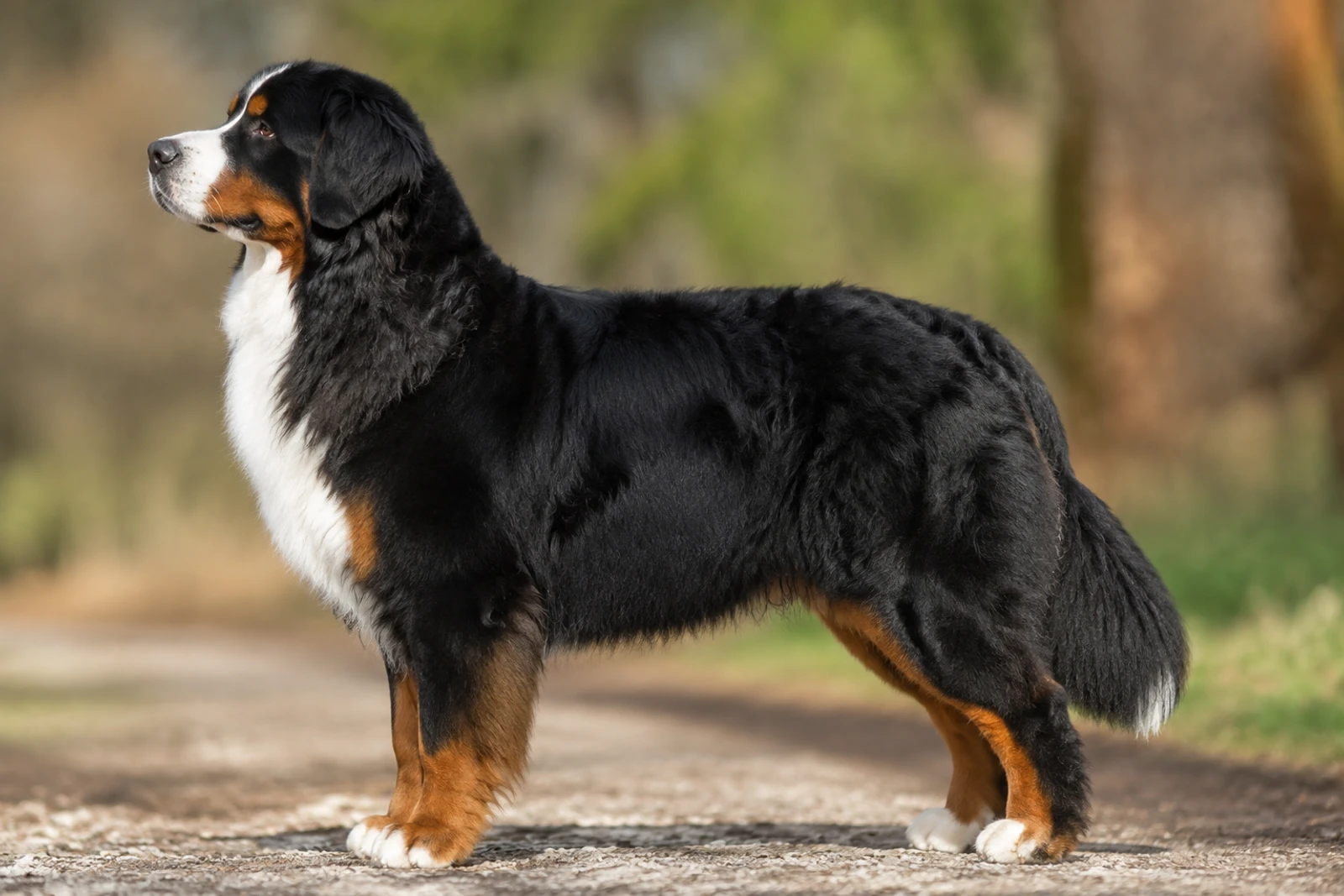
The Bernese Mountain Dog is a majestic giant breed known for its gentle, affectionate nature and striking tricolor coat. Originally from Switzerland, these dogs were versatile farm workers, excelling at drafting and guarding. Today, they thrive as beloved family companions, especially suited to active owners with ample space. Their calm demeanor and patience make them excellent with children, but they require regular grooming and exercise. This breed forms deep bonds and prefers to be close to their people, though they may face health challenges typical of giant breeds, with a lifespan around 10 years.
Family fit
Is the Bernese Mountain Dog a good family dog?
A gentle giant that bonds to the whole family.
- Children
- Family shortlist
- Energy
- Moderate
- First-time owners
- More experience helps
- Grooming
- Higher
Breed tendencies are only a starting point. Supervise children, meet the individual dog, and make sure the exercise, training, grooming, space, and cost fit your household.
Bernese Mountain Dog Sticker Pack
36 cartoon stickers • transparent PNG • no watermark
Pinterest-ready
Share all 36 reactions as one sticker sheet
Pinterest opens with the full pack and a fresh, tailored description. You choose the public board and publish it from your own account.
Save the full pack


Choose one reaction above to share it alone, or use the full-pack button for all 36 together.




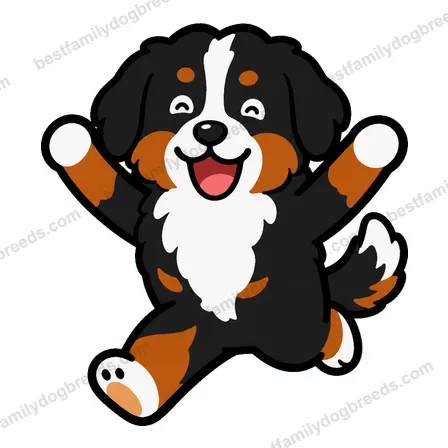
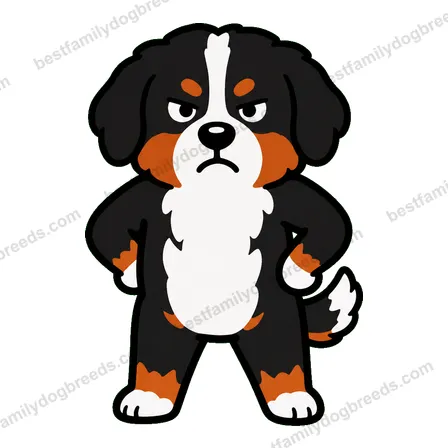
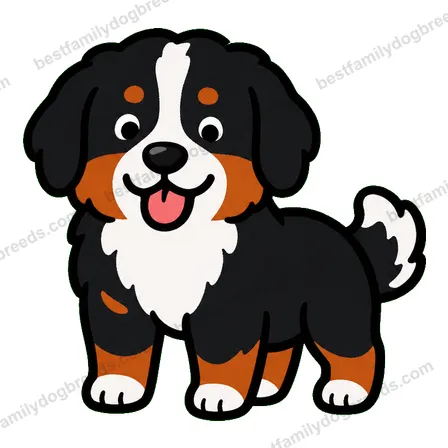
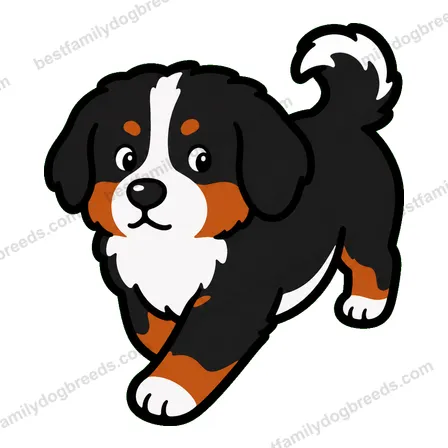









Free full-resolution download — no account, no payment, no watermark.
Includes all 36 transparent PNG stickers in one ZIP. A quick human check is required for each download.
At a glance
- Size
- Giant
- Height
- 23–28 in
- Weight
- 71–120 lb
- Life span
- 10 years
- Coat colors
- Black, Rust, White
- Coat type
- Thick, moderately long double coat
- Origin
- Switzerland
How much does a Bernese Mountain Dog cost?
Adopt / rescue
$100–$450
Usually includes spay/neuter, first shots, and a microchip.
Buy from a breeder
$1,200–$3,000
From a reputable, health-testing breeder.
Approximate USD. Prices vary widely by region, breeder, pedigree, age, and coat colour — adopting is the lower-cost and recommended route. Avoid suspiciously cheap “breeders”; they’re often puppy mills.
Estimate the full cost of a Bernese Mountain Dog →Want the ongoing number? Estimate the monthly food bill for a Bernese Mountain Dog with our dog food cost calculator.
Bernese Mountain Dog photos
Views
Front, side, rear and top — the full silhouette.Poses
How the breed sits, lies, moves and plays.Puppy to senior
The breed across its whole life.Expressions
The breed’s range of moods.Close-up details
Eyes, ears, nose, paws, tail and coat.Coat colors
The breed’s recognized colors.Click any photo to enlarge. We show the Bernese Mountain Dog from every angle — three views, poses, life stages, expressions, close-ups, coat and colors.
Appearance & size
You see a Bernese Mountain Dog from across the park and the first thing that lands is the sheer substance of the animal — a broad, deep chest, heavy bone, and a calm, ground-covering presence. This isn’t a tall-and-lanky giant; it’s a draft dog built low to the ground for pulling and all-day farm work.
Males stand 25 to 28 inches at the shoulder and carry 85 to 120 pounds. Females come in at 23 to 26 inches and tip the scale between 71 and 110 pounds. The weight sits squarely inside a rectangular frame: the body is slightly longer than tall, with a strong, level topline and a deep, capacious ribcage that reaches at least to the elbows. From the side, the chest runs well back into a moderate tuck-up, and the tail hangs down heavily when the dog is still but lifts with a gentle upward sweep on the move. From the rear, the hindquarters show solid, broad muscling through the thighs, with straight, well-let-down hocks that give the dog its characteristic steady, driving push.
The coat is a thick double layer built for Swiss winters — a moderately long, straight or slightly wavy outer coat over a woolly undercoat. It’s always a jet-black base broken by crisp white and rust markings that follow a predictable, almost heraldic pattern. A white blaze runs up the center of the face, often spilling into a narrow snip on the muzzle. The chest carries a distinct white cross or inverted-chevron marking; white also covers all four paws. Rich, rust-colored points appear above the eyes, on the cheeks reaching to at least the corner of the mouth, on the front of the forelegs, and inside the hind legs, often bleeding slightly into the black on the pasterns.
From the front, the dog’s expression is soft but not sleepy — medium-sized, dark-brown eyes and a gentle, triangular ear set that hangs close to the head. The muzzle is strong and blunt, never snipey, and the stop is well defined but not abrupt. It all reads as sturdy, balanced, and honest, exactly what you’d expect from a dog bred to pull a cart through a mountain village and then curl up by the fire.
History & origin
The Bernese Mountain Dog comes from the farm country around Bern, Switzerland, where these big, tricolor dogs pulled carts, drove cattle, and stood watch over the family homestead. Their roots likely run deep into the Swiss Alps, tied to the sturdy mastiff-type dogs that Roman legions brought into the region two millennia ago. For centuries, farmers in the canton of Bern needed a versatile, cold-tolerant worker that could handle the steep pastures, haul milk cans to the village, and still settle calmly by the hearth at night. The Bernese fit that life exactly.
By the late 1800s, that life was disappearing. Railroads and machines replaced draft animals, and other breeds moved into the farmyard. The Bernese Mountain Dog nearly vanished. Without a small group of determined Swiss enthusiasts, the breed would have been lost entirely. Starting around 1892, breeders like Franz Schertenleib and Professor Albert Heim combed remote valleys to find the last remaining dogs that still looked and worked like the old farm stock. They gathered what they could—mostly from the Dürrbach area—and began a careful breeding program to stabilize the type. Those dogs became the foundation of every Bernese alive today.
The breed grew slowly in Switzerland and then across Europe in the early 20th century. World War II slowed progress, but after the war, exports to the United States and other countries picked up. American breeders took the Bernese in a slightly larger, showier direction while trying to keep its steady working character. Today, the dog is prized as a gentle family companion, though you can still find Bernese competing in carting and drafting events—a direct link to the farm dogs of old Bern.
Temperament & personality
A well-bred Berner is about as steady as a dog gets. These giants carry themselves with a calm, patient temperament that holds up around noisy kids, other pets, and the everyday commotion of a busy household. They’re not pushovers — there’s a strong-willed streak in there — but respectful, consistent handling gets you far more than force ever will. Expect a dog that watches the room with quiet confidence, leaning softly against your leg rather than ricocheting off the walls.
Affection shows up as gentle nudges and a constant need to be near you. This is not a breed you can park in the backyard. Neglect or long periods of isolation often trigger anxiety-driven behaviors: excessive barking, destructive chewing, or indoor urine marking. Those aren’t acts of spite — they’re a deep-rooted drive to be part of the family. If you’re away from home most of the day, a Berner is a poor fit.
Puppy energy is real and can catch new owners off guard. Young Berners chew to explore and soothe sore gums, so redirect that mouthiness early. A homemade citrus spray on off-limits items can save your furniture. By age two or three, the goofy exuberance settles into a dignified, gentle disposition. Even then, they keep a playful spark — just with more thought behind the action.
With strangers, they’re watchful without being suspicious. A deep bark will announce a visitor, but aggression rarely follows. They read people well, and you’ll notice it in their body language: a relaxed, loose frame and soft eyes mean all is calm; a forward lean paired with a stiff posture and direct stare signals discomfort and deserves your attention. Respect those signals, and you earn a dog that trusts you to handle the situation.
Around children, their patience is legendary, though sheer mass (71–120 lb) means toddlers can get accidentally toppled. Never interrupt any dog while eating, and teach kids to let the dog have peaceful meals — it heads off any hint of food guarding. Early socialization and training keep the gentle nature you’re counting on, because temperament is a pattern, not a promise. Put in that foundation, and you get a loyal, warm-hearted companion who’d rather share your couch than patrol a fence line.
Good with kids, dogs & other pets
A well-socialized Bernese Mountain Dog is one of the most patient, non-aggressive giants you can bring around children. They genuinely want to be part of the family’s daily life — not tucked away in the yard — and that attachment makes them watchful, forgiving companions for kids. At 71–120 pounds, though, a happy Berner can accidentally knock over a toddler with an enthusiastic tail wag or a well-meaning lean, so you’ll need to supervise interactions with small children just as you would with any large dog.
With other dogs, they’re typically easygoing, even-tempered housemates. Early socialization locks in that default. Puppies need deliberate, positive introductions to friendly adult dogs, different breeds, and calm public spaces well before 16 weeks. Without that, a Berner can grow into a more cautious, reserved adult who feels uneasy around unfamiliar dogs — but even then, forced meet-and-greets aren’t the answer. A well-adjusted adult Berner that’s content with its own pack doesn’t have to be best friends with every dog at the park.
The same early exposure works for cats and small pets. Berners have low chase instincts compared to many working breeds, so a puppy raised with a household cat usually learns to respect that boundary. Still, never leave a dog of this size alone with a free-roaming rabbit or a skittish cat — a playful paw swipe from a 100-pound dog can injure a tiny animal even without aggression. Calm, supervised introductions over several days, with the small pet in a carrier or behind a gate at first, let both sides adjust safely.
The critical socialization window slams shut around 12–16 weeks. During that time, introduce your puppy daily to new people — children of all ages, men with beards, people in hats — plus different surfaces, city sounds, and calm animal companions. Keep experiences brief and positive, not overwhelming. If you miss that window, a dedicated counter-conditioning plan can still build confidence, but you’ll be working uphill. A fearful adult Berner forced into crowded situations may become more stressed, not less.
Their deep need for companionship means they don’t do well with long stretches of isolation. A Berner left alone while kids are at school and parents are at work can develop barking, chewing, or depression. If your household is gone eight-plus hours a day, this isn’t the breed for you — or you’ll need to arrange midday company. In families where someone is often home, their calm, affectionate nature makes them a steady, kid-tolerant addition. Teach children to give the dog space while eating or resting, and the bond will be safer for everyone.
Trainability & intelligence
A Berner learns fastest when you make training feel like a conversation, not a command. They’re sharp enough to pick up patterns quickly, but they won’t blindly follow something that doesn’t make sense to them. The key is tapping into their natural desire to work with you — a trait bred into them from generations of cart-pulling, herding, and all-around farm partnership.
Positive reinforcement is non-negotiable, and not just because it’s the popular choice. At 80 or 100 pounds, a dog who gets hand-shy or sulky from harsh corrections becomes a genuine safety risk. Praise, a quick game of tug, or a scratch behind the ear often motivates a Berner more than a pocket full of treats, though food rewards work fine when you’re shaping something new. The real reinforcer is your clear, happy approval. When they nail a behavior, they’ll glance at you looking for exactly that.
Because they’re sensitive and physically slow to mature, consistency from puppyhood matters even more than with many breeds. Start leash walking early so pulling doesn’t become a lifelong battle with a 110-pound dog who doesn’t know his own strength. Keep sessions short and upbeat — five to ten minutes, not thirty. They’ll tune out if it gets repetitive, but they’ll happily revisit the same cue six times in a row if you keep it fun and end on a win.
Socialization is equally critical, and the window for the biggest payoff is roughly 3 to 14 weeks. Expose a puppy gradually to different people, calm dogs, new surfaces, and everyday sounds before that window closes, then keep it going through adolescence. An under-socialized Berner often defaults to fear-based barking or avoidance, and at this size that’s hard to undo. The goal is a dog who’s confident but not pushy, curious but not reckless.
Common challenges include occasional selective deafness (especially when a scent or another dog is more interesting than you) and a tendency to lean on you or jump up in greeting. Both get dangerous as they grow. Redirect the jumping early by ignoring it and rewarding four-on-the-floor, and use a long-line for recall training until it’s bombproof. Harsh corrections damage the trust you’ve built, and without trust this breed will check out. Build the relationship, prove you’re fair, and you’ll end up with a calm, cooperative partner who’s just as happy trotting beside you on a trail as he is pulling a cart at a parade.
Exercise & energy needs
A Bernese Mountain Dog needs a steady, moderate rhythm — not a sprint, but a genuine commitment of time. Plan on two daily sessions totaling around 90–120 minutes of movement. A long morning walk of 45–60 minutes, then a second 30–45-minute outing later in the day, keeps muscle tone and mind in balance.
A giant breed with a deep chest and heavy bone does not bounce back from pounding the way a Border Collie does. Low-impact, sustained exercise matters far more than intensity. Long, sniffy walks at your side, gentle hikes on soft trails, or pulling a cart with a properly fitted harness are all perfectly suited. Steer clear of repetitive jumping, sudden sprints, or play with hard-stopping twists — especially during the first 18 months when growth plates are still closing. Joint vulnerabilities show up in the breed, so you’re protecting hips and elbows every time you choose grass over asphalt and moderate pace over all-out zoomies.
The mind needs as much work as the legs. A bored Berner left alone in the yard may dig for entertainment or bark at everything. Scent work, puzzle toys, and short training sessions woven through the day tap into the breed’s farm-dog origin. Teach them to find hidden treats, practice nosework in the house, or let them carry a small pack on a calm walk — a task flips a switch from restless to focused.
Hot weather demands early-morning or late-evening walks; this coat was built for alpine meadows, not summer sun. Stick to the cool parts of the day, offer water, and watch for heavy panting. On icy or sweltering days, swap a walk for a 20-minute scent game indoors — the dog stays tired without the toll on joints.
Grooming & coat care
Brush often to stay ahead of the fluff
A Berner’s gorgeous tri-color coat is a thick double layer — a woolly, insulating undercoat and a longer, weather-resistant outer coat. That combination sheds constantly, and twice a year it “blows out” with enough fur to knit a second dog. Without regular brushing, the undercoat quickly clumps into painful mats.
Grab a metal slicker brush with rounded pins and a metal greyhound comb. Two or three solid sessions a week keep loose hair off your furniture and catch tangles before they lock up. During spring and fall shedding peaks, plan on brushing daily — even a 10-minute session makes a huge dent. Work from the skin outward, section by section, and follow with the comb around the ears, behind the legs, and under the tail, where mats love to hide.
Bathing and coat upkeep
Bathe only when he’s genuinely dirty or starting to smell doggy — every two to three months is plenty. Over-washing strips the natural oils that protect that dense coat. Use a gentle dog shampoo, rinse until the water runs clear, and double-check that the undercoat dries fully. A damp undercoat near the skin invites hot spots.
Trimming? You don’t need a haircut, but you can tidy the feathering on the backs of the legs and the tail if mud and burrs are a constant battle. A pair of thinning shears works well. Keep the hair between paw pads snipped short for traction and cleanliness.
Ears, nails, and teeth
Those floppy, triangular ears trap moisture and wax. Check and clean them once a week with a vet-approved ear cleaner and a cotton ball — never dig deep into the canal. Nails grow fast on a giant breed and will click on your floors if neglected. Trim them every three to four weeks, or more often if you hear tapping. Dental care matters too: daily brushing with a dog toothpaste prevents tartar and gum disease that can shorten a large dog’s life. If daily feels like a reach, aim for three times a week at minimum.
Seasonal reality check
When a Berner blows his coat, you’ll find fur drifting across baseboards, stuck to couch cushions, and floating into your coffee mug. Up your grooming game to daily sessions, ideally outside, where the breeze can do some of the cleanup. A high-velocity dryer (set to cool) after a bath will blow out enough loose undercoat to reduce the tsunami indoors. Raking out dead hair with a long-toothed undercoat rake just before a blowout hits can also lessen the mess.
Pay attention as you groom — catching a hot spot, a scratch, or an ear that smells off early can save a vet visit. A Berner’s size makes every skin issue more expensive, so a few extra minutes with the comb pays off. And yes, invest in a vacuum that’s up for a daily fight — your sanity depends on it.
Shedding & allergies
If your image of a clean, hair-free house is non-negotiable, a Bernese Mountain Dog will break your heart. These dogs shed — heavily, constantly, and with a seasonal vengeance.
- Year-round moderate shedding: A Berner’s thick double coat drops hair every single day. You’ll find strands on your sofa, your clothes, and floating into your coffee.
- Twice-a-year blowout: In spring and fall, the woolly undercoat comes out in clumps that seem to multiply overnight. For a few weeks, daily brushing becomes a survival strategy, and your vacuum will earn its keep.
That majestic, silky black-and-tan coat is designed for Swiss alpine winters, so it’s dense down to the skin. The outer hairs are long and slightly wavy, while the undercoat is short and fuzzy — a perfect recipe for shedding.
Drool is part of the package, too. Not every Berner is a nonstop dripper like some mastiffs, but many will leave strings of slobber after drinking water or when they’re staring at a piece of cheese. If you’re squeamish about wiping jowls, this is the wrong giant breed for you.
No, they are not hypoallergenic. Far from it. The combination of profuse shedding and skin dander means Berners frequently trigger allergies. Even people who say they’re “fine with most dogs” have been known to react. Spend real time in a home with an adult Berner before you commit — the sheer volume of airborne hair catches many first-time owners off guard.
Diet & nutrition
Keeping a Berner lean is the single best thing you can do for those hips and elbows. This is a giant breed that can tip the scales anywhere from 71 to 120 pounds, and every extra ounce pounds already-vulnerable joints. Combine that with a legendary love of food, and you’ve got a dog who will happily eat himself into trouble if you let him.
-
Portion control, not guesswork. An adult Bernese Mountain Dog typically needs 4–5 cups of high-quality dry food per day, split into two meals. That number shifts with age, metabolism, and exercise — a working farm dog burns more fuel than a suburban couch potato. Weigh the food, don’t eyeball it. If you can’t feel the ribs easily under a thin layer of flesh, dial back.
-
Puppy feeding is a growth tightrope. You’re building a big frame fast. From 8 to 16 weeks, feed four small meals a day; drop to three meals by six months, then settle into twice daily. Use a large-breed puppy formula designed to slow growth just slightly — rapid sprints in bodyweight invite joint malformations. If you start on a home-prepared or raw path, transition with lightly cooked, puréed meats and vegetables, then introduce raw meaty bones like chicken wings around 12 weeks, under supervision.
-
What goes in the bowl. A solid diet hangs on animal protein — roughly 60% high-quality meat, with the rest made up of digestible fruits, vegetables, and the occasional grain (pearl barley or white rice if his stomach is touchy). Many Berner owners swear by raw or home-cooked plans; if you go that route, blend or process the mix to aid absorption since dog jaws don’t do the grinding that releases nutrients. If he wolfs it down, a puzzle bowl turns mealtime into a five-minute brain game instead of a 30-second vacuum session.
-
Senior shifts. After age 7 or 8, activity often tapers off. Keep protein levels up — there’s no solid reason to cut them — but shrink portions or move to three smaller meals to fend off weight creep. A dog with tender gums or missing teeth will do better with puréed meals.
-
The dirty truth. A Berner will work those eyes for table scraps. Feed leftovers in his own bowl to stop the begging, and never drop rich holiday trimmings into it. Fatty binges can trigger pancreatitis faster than you’d think. Stock your fridge with canned fish, cooked eggs, and batch-cooked grains and veggies so you can throw together a healthy meal without reaching for the treat jar.
Health & lifespan
A Bernese Mountain Dog typically lives about 10 years. That’s the hard truth behind this giant breed’s sweet, steady temperament. You can’t stretch the number much, but you can make sure those years count by knowing what you’re guarding against.
Inherited health concerns
Berners are prone to a handful of serious conditions. Hip dysplasia and elbow dysplasia are common in big dogs, causing early arthritis and lameness. Bloat (gastric dilatation-volvulus) is a deep-chested giant’s emergency that can kill within hours. Eye diseases such as progressive retinal atrophy and cataracts show up in the breed, too. Most heartbreaking, certain cancers — especially histiocytic sarcoma — appear far more often here than in most other breeds.
Responsible breeders don’t guess. They screen parent dogs with hip and elbow X-rays (OFA or PennHIP), cardiac exams, and eye clearances. They’ll share the results openly and talk honestly about what’s shown up in their lines. No one can eliminate risk, but a transparent breeder dramatically shifts the odds in your puppy’s favor.
Everyday habits that add up
Weight management is your single biggest lever. A lean Bernese — you can feel ribs without pressing hard — puts less strain on growing joints and aging cartilage. Use a measuring cup for every meal, ration treats, and ignore the big brown eyes that say otherwise.
Heartworm prevention gets given monthly during mosquito season and for one month after it ends. Rabies vaccination is legally required; your vet will build the rest of the schedule around your dog’s lifestyle. Because of the breed’s cancer risk, twice-yearly vet checkups once a Berner hits middle age can catch subtle changes — a limp that doesn’t quit, unexplained weight loss, a sudden reluctance to climb stairs — before they spiral.
That dense double coat is built for snow, not summer. Heat stroke can hit fast. Exercise during cool mornings or evenings, keep shade and water always available, and plan on air conditioning if you live where it’s warm.
Early socialization and gentle handling matter for health, too. A dog raised with consistent, positive experiences faces fewer stress-related flare-ups and is easier to examine and treat when problems do pop up. A Bernese who trusts you will let you find that odd lump or sensitive spot early — and early detection is the best weapon you have with this breed.
Living environment
Berners are built for snow, not sticky summers. They thrive in cool climates and can overheat shockingly fast — a 71–120 pound dog with a dense black coat absorbs heat like a brick oven. If you live somewhere hot and humid, be prepared to run the air conditioning from spring through fall, walk them only at dawn or dusk, and provide constant shade and water outside. A backyard kiddie pool will get more use than you’d think.
A cramped apartment is a rough fit for a dog this size. They need room to stretch out, lean against your legs, and follow you from room to room without knocking over a coffee table. A single-family home with a securely fenced yard is ideal — it gives them a safe spot to patrol, roll in the grass, and burn off the morning zoomies without you fumbling for a leash every time. You can make a suburban house without a huge yard work, but you’ll be trading that convenience for multiple daily walks and regular trips to a sniff-friendly open field. A quick potty break and a lap around the block won’t scratch the surface.
Noise-wise, they aren’t serial barkers, but they do have an impressive, deep-chested woof reserved for delivery trucks and strange squirrels. Once the perceived threat passes, they usually settle. The bigger concern is loneliness. Berners bond hard with their people and can develop serious separation anxiety when left alone for long stretches. This isn’t a dog you leave for a nine-hour workday and expect a wagging tail. Gradual desensitization, crate training, and frozen puzzle toys help build some independence, but ideally someone is home most of the day. Plan for a close companion, not a backyard ornament — and keep the AC humming.
Who this breed suits
The Bernese Mountain Dog is a calm, affectionate giant best suited to someone who wants a velcro companion — a dog that shadows you room to room and leans against your legs. That sweetness comes with trade-offs: a heartbreakingly short lifespan of about 10 years, heavy shedding, and the potential for steep vet bills. If you accept those realities, a Berner can be the family dog that lets kids dress him in superhero capes without complaint.
Families with children
Berners are famously patient and gentle with kids. They rarely snarl or snap, even when toddlers climb on them. But at 71–120 pounds, an enthusiastic tail wag or a clumsy turn can knock a small child flat. Supervise play, teach kids not to ride or tug, and you’ll have a snowy-day playmate who thinks nothing of romping for hours in the cold.
First-time owners
A motivated first-timer can succeed because these dogs are biddable, food-driven, and eager to please. The real test is physical: an untrained adolescent can drag a grown adult off their feet. Start leash manners and basic obedience early, and you’ll have a polite 100-pound shadow. Skip training, and you’ll end up with an affectionate but unmanageable powerhouse who still tries to sit in your lap.
Active singles and couples
Berners need a solid hour of daily exercise — walking, hiking, or pulling a cart — but they’re not running partners. They’re steady draft dogs, not sprinters. They bond deeply and suffer from separation anxiety if left alone for long workdays. This breed thrives with a remote worker, a stay-at-home parent, or someone who can take the dog along. If your social life keeps you out every evening, a Berner will pine and may become destructive.
Seniors
Only consider a Berner if you’re steady on your feet and strong enough to handle a sudden lunge after a squirrel. Even a well-trained dog can pull you off-balance. The short lifespan also hits hard: a 10-year-old Berner is ancient, and every year after eight feels borrowed. A calmer adult rescue could work, but a puppy’s rambunctious energy poses a real fall risk.
Who should think twice
- Apartment dwellers — this giant needs room to sprawl and will set off alarm barking in shared spaces.
- Neat freaks — the double coat sheds year-round, blows heavily twice a year, and drool ends up on walls and furniture.
- Hot-climate residents — the thick black coat can cause dangerous overheating.
- Budget-constrained homes — responsible breeders screen for hip and elbow dysplasia, but cancer is so common in the breed that many owners consider it a matter of when, not if. Joint surgery, premium food, and supplements add up quickly.
- Anyone set on a long-lived dog — you may lose your Berner before your kids finish middle school. The decade they give is packed with devotion, but you must be emotionally ready for a shorter journey.
Cost of ownership
A well-bred Bernese Mountain Dog puppy from a responsible breeder costs $1,500 to $3,000. That’s just the start — keeping a 100-pound dog healthy demands a budget that matches its size.
Monthly food for an adult Berner (4–6 cups of high-quality kibble) runs $80–$120. The plush double coat sheds nonstop and blows twice a year — professional grooming every 6–8 weeks adds $80–$120 a session unless you invest in a high-velocity dryer, good brushes, and a heavy-duty vacuum.
Routine veterinary care and giant-sized preventatives average $500–$800 annually. The breed’s elevated risk for histiocytic sarcoma, hip dysplasia, and bloat makes pet insurance (roughly $50–$100 a month) a practical safeguard, even if you still carry a deductible when a $6,000 emergency arises.
First-year supplies — giant crate, orthopedic bed, heavy leash, and a training course — add $500–$800.
All told, plan on $250–$400 a month in routine costs. Couple that with a $5,000–$10,000 emergency fund for the serious health problems this breed faces, and you’ll be equipped to give a Berner the full decade it deserves.
Choosing a Bernese Mountain Dog
A Bernese Mountain Dog will share your life for about a decade, and often less. That makes how and where you find one the single biggest decision you’ll make. Start with a clear picture: a puppy you raise from day one, or an adult who already needs a home. Both paths are valid, but they demand different homework.
Puppy from a breeder or adult rescue?
If you go the puppy route, you’re looking for a breeder who treats the breed’s terrifying cancer rate as a personal enemy. A responsible breeder runs health clearances on every parent, not as a formality but because she tracks causes of death back several generations and only breeds dogs from lines that routinely live past 10. An adult from a Berner-specific rescue can be a wonderful shortcut: you skip house training and teething, and you know the dog’s true adult temperament. Good rescues won’t place a 100-pound dog in a home that isn’t prepared for drool, shedding, and a short time together.
Health clearances that matter
When you talk to a breeder, ask for these, and verify them yourself in the OFA database:
- Hip evaluation: OFA Good or Excellent, or a PennHIP score well away from the borderline
- Elbow evaluation: OFA normal
- Cardiac exam by a board-certified veterinary cardiologist (not just a stethoscope listen)
- Eye clearance (CERF or OFA Eye) within the last year
- DNA test for von Willebrand’s Disease Type II — many Berners are carriers; two carriers shouldn’t be bred together
- Degenerative myelopathy (DM) DNA test, though less common
- Thyroid panel (not always required, but a green flag)
Even with all clearances, cancer still stalks the breed. So ask: “How old were the grandparents when they died, and what of? Is there a 10-year-old dog in the pedigree you can tell me about?” A breeder who can’t answer that doesn’t track what matters.
Red flags to walk away from
- No health testing you can check online. “Vet checked” doesn’t count.
- Puppies always available, multiple litters on the ground.
- Puppies leave before 8 weeks (10 weeks is better for giant breeds).
- Breeder insists on a “rare” color (like silver or white) or sells “teacup” sizes.
- No questions asked about your lifestyle, fence, or experience with giants.
- You can’t meet the mother — or the dogs are kept in a separate kennel building you don’t see.
Picking your puppy
A good breeder will match you, not let you pick from a pile of squirming fluff like a candy jar. Visit and watch the litter interact. You want a puppy who comes up to investigate, recovers quickly from a startling sound, and plays with littermates without being the relentless bully or the one hiding under a chair. The boldest pup may be too much for a quiet home; the shyest needs an experienced hand. Look for clear eyes, a clean bottom, and a coat that smells like cedar chips, not ammonia. Ask how they’ve been socialized: puppies that have heard vacuums, met polite adult dogs, and been handled by kids have a huge head start. That early exposure, combined with a pedigree stacked for longevity, gives you the best shot at 10 good years with a dog who leans against your legs like a woolly boulder.
Pros & cons
A Bernese Mountain Dog will give you unwavering, gentle devotion — and you’ll likely say goodbye far sooner than you ever expected.
Pros
- A born family companion that’s patient and steady with children, leaning in for contact whenever you’re close.
- Eager to please and responsive to positive training — much easier to live with than many giants.
- Calm indoors after moderate exercise; happy to snooze at your feet while you work.
- Thrives in cold weather and snow; the tri-color coat is drop-dead gorgeous.
Cons
- A heartbreakingly short lifespan — 6 to 8 years is typical, though a few live to 10; cancer, especially histiocytic sarcoma, is the leading killer.
- Heavy shedding year-round with dramatic seasonal blow-outs; grooming is a frequent chore.
- Heat intolerance, bloat risk, hip/elbow dysplasia, and eye problems all demand vigilant management and a vet budget that bites.
- Without careful, early socialization, a Berner can become timid or skittish instead of the steady dog you’re hoping for.
- They’ll drool, lean their full weight on you, and eat like the giant they are — every expense scales up.
Similar breeds & alternatives
If the Berner’s beauty tugs at you but the famously short lifespan gives you pause, or you need a dog with the same gentle presence but a slightly different energy level, there are solid alternatives in the giant working-dog family.
-
Greater Swiss Mountain Dog
Think of this as the Berner’s short-haired cousin. Same Swiss farm heritage, same tri-color pattern, and very close in size (females 85–110 lb, males 115–140 lb). The big difference is the coat: a dense, double layer that’s easy to maintain but still sheds heavily. They tend to be a touch more alert and watchful than the famously friendly Berner, so they can make better property guardians without leaning into aggression. Their lifespan is often 10–12 years, slightly longer on average. Exercise needs are similar—a good daily workout plus a job to do—but the Swissy is even more driven to pull carts or haul packs. -
Newfoundland
If what you love is the Berner’s sweet, patient nature and you can handle the drool, a Newfoundland might be your match. They’re heavier (100–150 lb) and taller at the shoulder, with a thick, water-resistant coat that requires serious grooming and dries out easily in hot climates. Newfies are famously calm indoors and brilliant with children, but they’re true water dogs, not mountain dogs—expect a dog that wants to swim, not just nap in the snow. Lifespan is similar, around 9–10 years, and they share the same heartbreaking risk of cancer and orthopedic issues. -
Saint Bernard
Another Swiss giant, the Saint Bernard is heavier-boned and can exceed 180 lb, making the Berner look almost moderate. They share the calm, gentle temperament, but Saints are even lower-energy as adults and can be happy with shorter walks. Their coat can be smooth or rough, but both types shed constantly and drool is a fact of life. The Saint’s shorter snout means heat intolerance is a bigger concern. If you don’t mind the size and slobber, you get a similar devotion for roughly the same 8–10 year lifespan. -
Leonberger
Less common but worth a look if you specifically want a big, shaggy family dog with a longer lifespan. Leos are 90–170 lb, with a lion-like mane and a personality that’s a blend of clown and gentle giant. They’re bred from Newfies, Saints, and Pyrs, so they have the same biddable, loving nature. Their lifespan of 12–15 years is a notable jump, and they’re less prone to the cancers that plague Berners, though they do need careful screening for hip dysplasia and heart issues. Expect more grooming and a dog that’s often more playful and goofy into old age.
All these dogs share the large-breed risks—bloat, joint problems, and often shorter lifespans—so a responsible breeder who screens for health is non-negotiable no matter which direction you go.
Fun facts
- Originally used as all-purpose farm dogs in Switzerland, pulling carts and driving cattle.
- Their name comes from the Canton of Bern, where the breed was developed.
- They are one of four Swiss Mountain Dog breeds, distinguished by their long, silky coat.
- Bernese Mountain Dogs have a life expectancy of around 10 years, which is typical for giant breeds.
Frequently asked questions
- Are Bernese Mountain Dogs good with children?
- Yes, their gentle and affectionate temperament tends to make them excellent family companions. They are generally patient and calm around kids, but supervision is always recommended due to their large size. Early socialization can help ensure positive interactions.
- How much do Bernese Mountain Dogs shed?
- Bernese Mountain Dogs are heavy shedders, especially during seasonal changes. Their thick double coat requires frequent brushing to manage loose hair. Regular vacuuming is often a necessity for owners.
- How much exercise does a Bernese Mountain Dog need?
- They have moderate energy levels and typically enjoy daily walks and playtime. However, their giant size means they can be prone to joint issues, so avoid over-exercising puppies. A couple of short to moderate sessions per day usually suffice.
- Are Bernese Mountain Dogs easy to groom?
- Their long, thick coat requires regular grooming, ideally brushing a few times a week to prevent matting and remove dirt. Bathing is needed occasionally, and extra attention should be given to cleanliness after outdoor activities. Overall, grooming is a significant commitment.
- Can a Bernese Mountain Dog live in an apartment?
- While they are calm indoors, their large size can make apartment living challenging. They do best in homes with ample space and access to a yard. If exercised sufficiently, they might adapt, but close quarters are not ideal.
- Is the Bernese Mountain Dog a good choice for first-time dog owners?
- Their eager-to-please and loyal nature can make them manageable for attentive first-timers. However, the breed’s grooming needs, large size, and potential health issues require a dedicated owner. They respond well to positive training and consistency.
Tools & calculators for Bernese Mountain Dog owners
Quick estimates tailored to Bernese Mountain Dogs — pre-filled with this breed’s size where it matters.
Articles & stories about the Bernese Mountain Dog
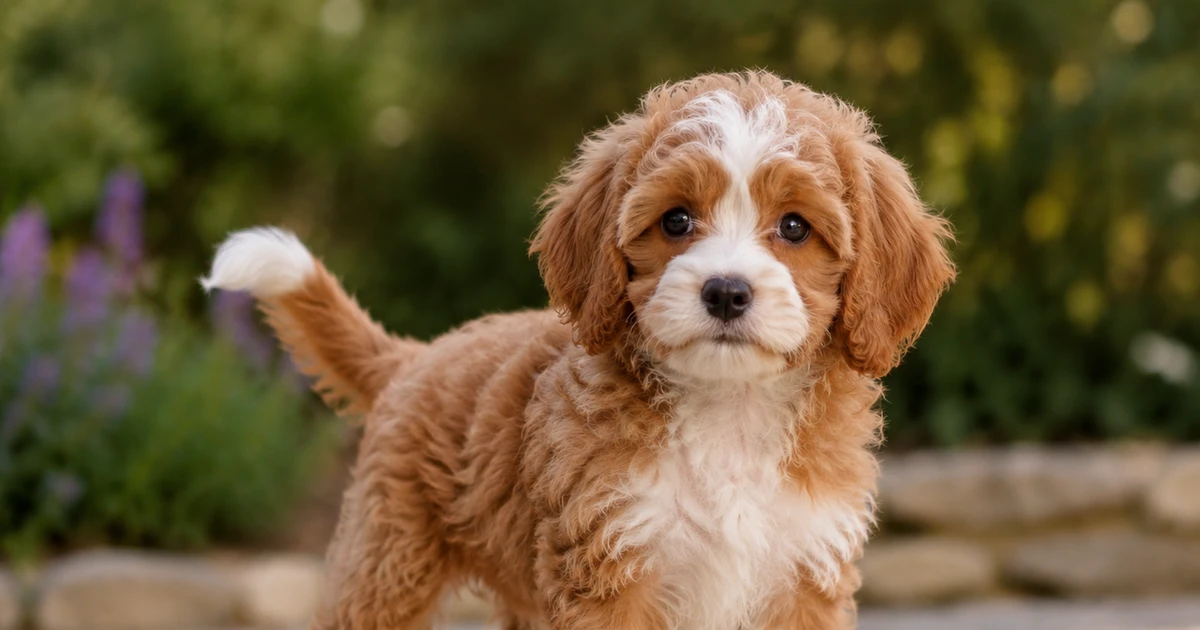
Best Poodle Mixes for Families: Cavapoo, Maltipoo, Bernedoodle and More
Poodle mixes dominate the highest-demand mixed-breed terms on the site, but the best family fit depends on the other parent, not the Poodle label alone.
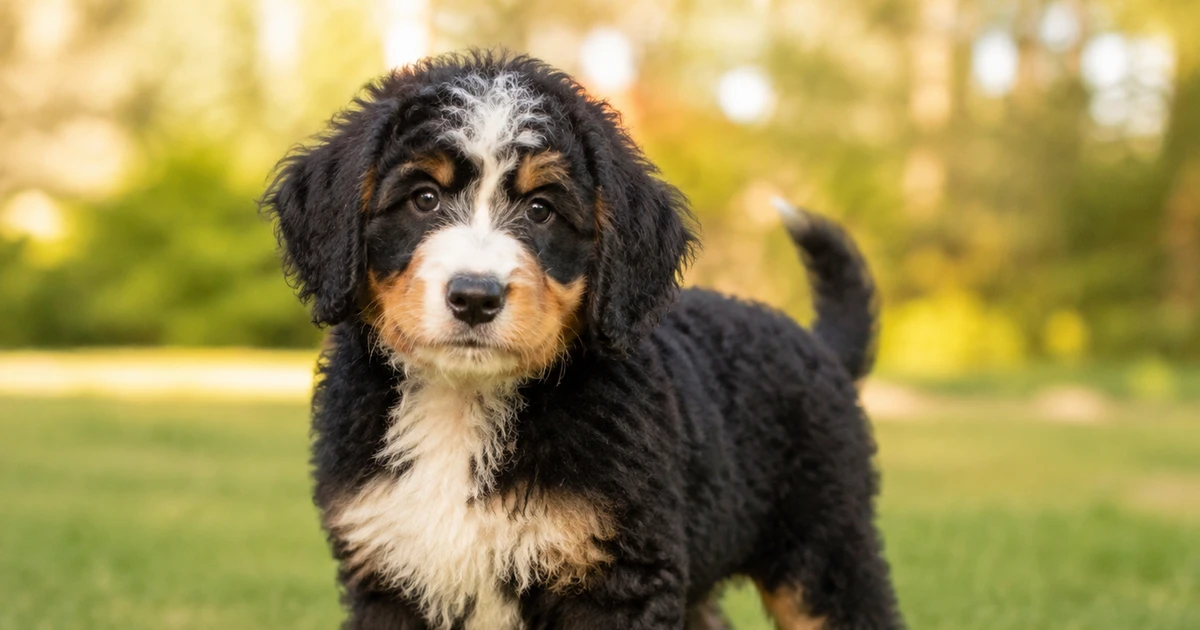
Bernedoodle vs Goldendoodle: Size, Coat, and Family Fit Compared
Bernedoodles and Goldendoodles both draw huge search demand, but one starts from a giant mountain-dog parent while the other starts from a retriever parent.
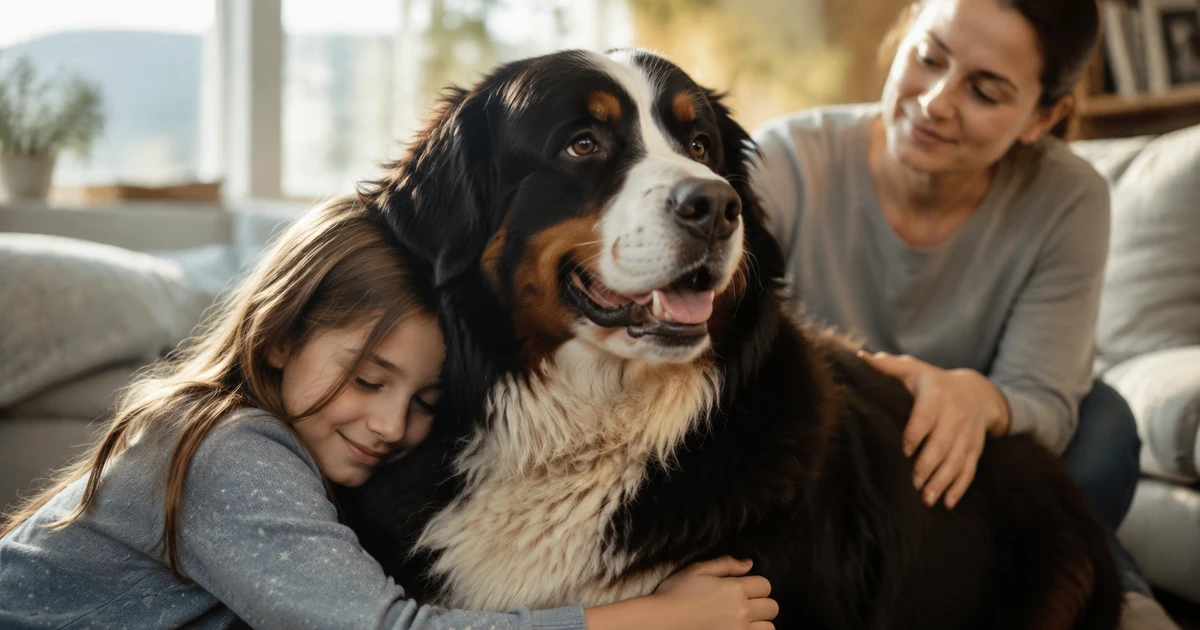
Loving a Bernese Mountain Dog Knowing They Won't Live Long
You adopt a Bernese Mountain Dog for the leaning hugs and snowy snouts, not the decades. Their 10-year lifespan breaks your heart, but the love they pack in makes every day count.
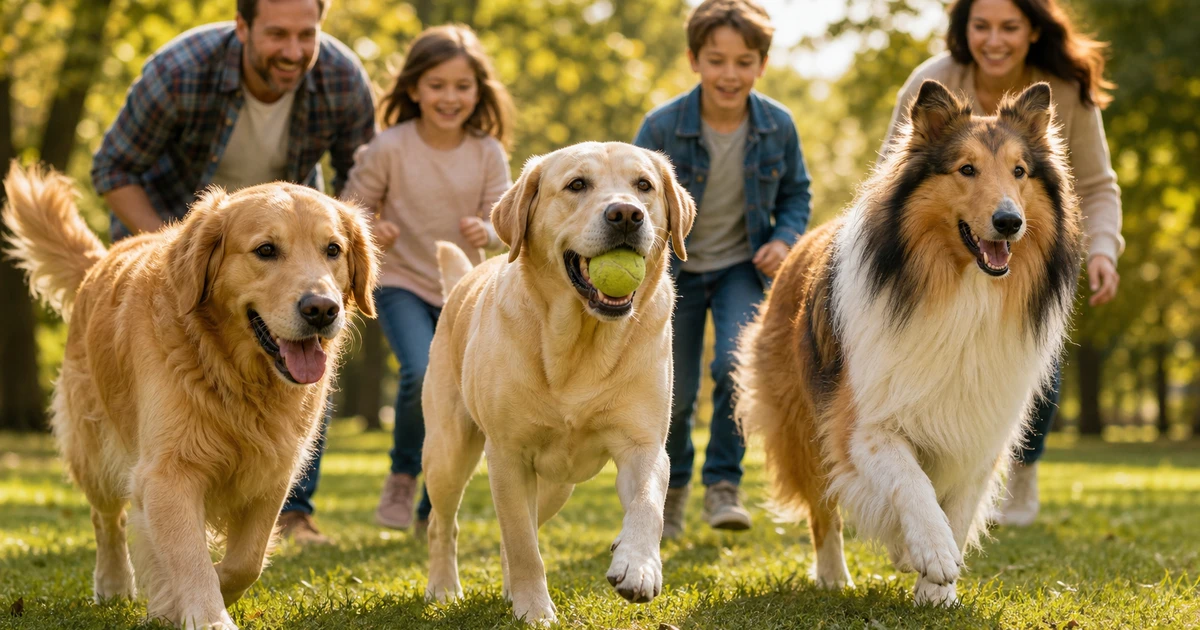
Best Large Dog Breeds for Kids: Gentle Dogs With Big Footprints
Looking for a big, kid-friendly dog? These gentle giants bring love and loyalty — but they also need space, training, and a good vacuum. Find your match.
Sources & standards
This profile follows recognized breed standards from the American Kennel Club (AKC) and the Fédération Cynologique Internationale (FCI), along with established veterinary and breed-club guidance. These describe general breed tendencies — every dog is an individual.