

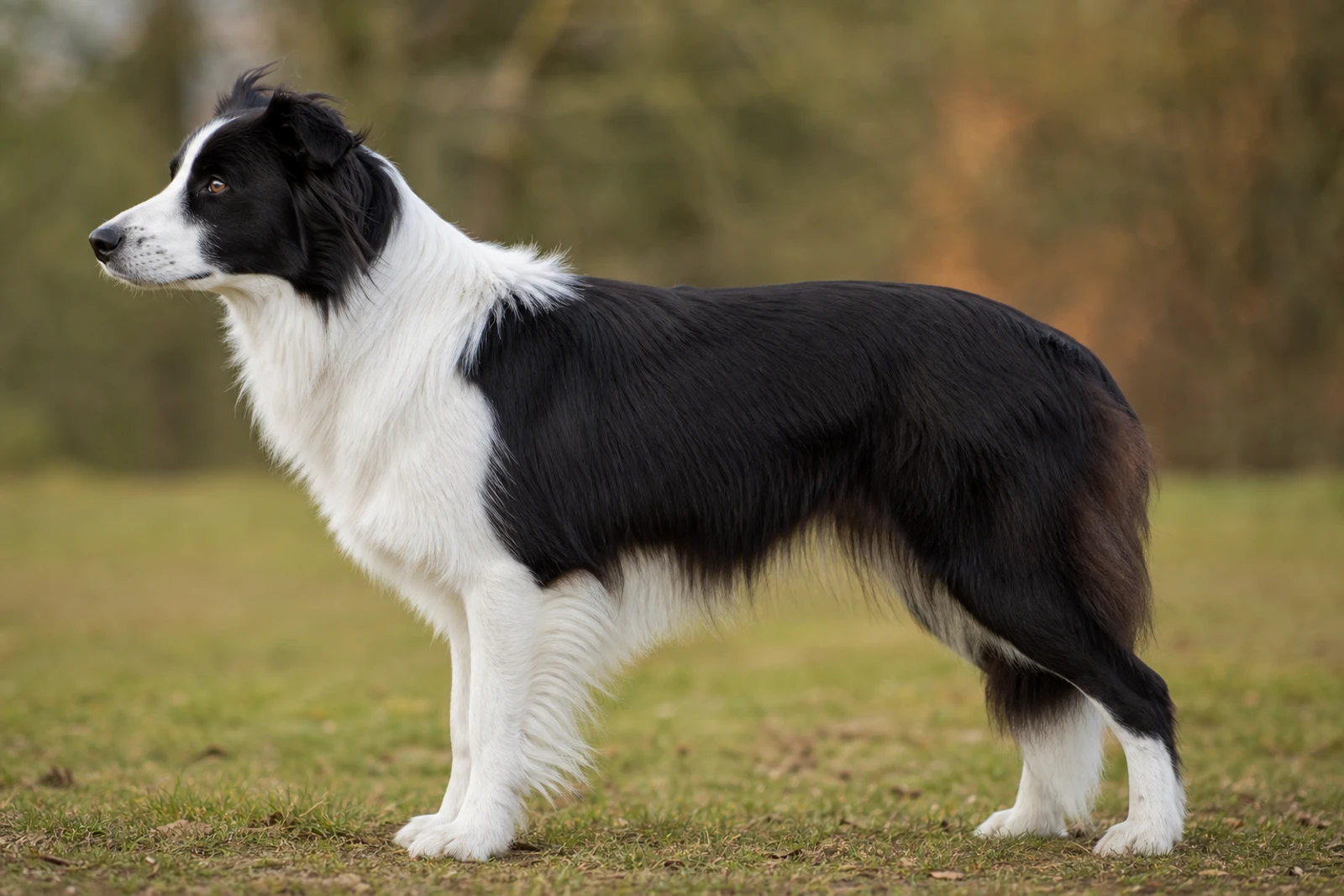
The Border Collie is a highly intelligent, energetic herding breed originating from the Scotland-England border. Renowned for exceptional work ethic and trainability, they demand extensive daily mental and physical exercise to stay content. Ideal owners provide advanced activities like agility, herding, or obedience trials. These dogs form intense bonds with their families but can be reserved with strangers. Without sufficient stimulation, they may develop undesirable habits. Border Collies are not recommended for first-time owners or apartment living, thriving instead in active, rural, or sport-oriented environments.
Border Collie Sticker Pack
36 cartoon stickers • transparent PNG • no watermark
Pinterest-ready
Share all 36 reactions as one sticker sheet
Pinterest opens with the full pack and a fresh, tailored description. You choose the public board and publish it from your own account.
Save the full pack


Choose one reaction above to share it alone, or use the full-pack button for all 36 together.








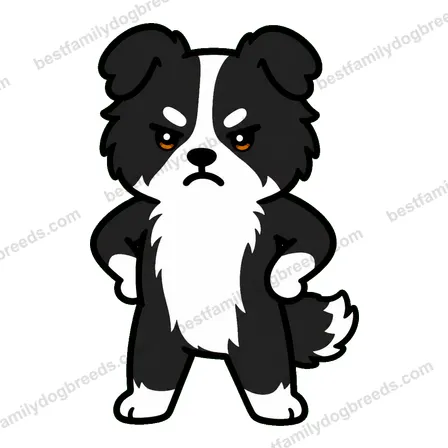
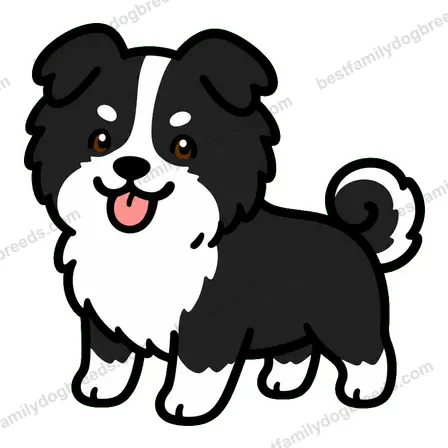
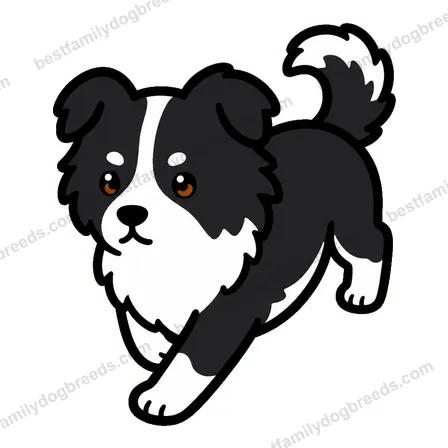





















Free full-resolution download — no account, no payment, no watermark.
Includes all 36 transparent PNG stickers in one ZIP. A quick human check is required for each download.
At a glance
- Size
- Large
- Height
- 20–21 in
- Weight
- 26–44 lb
- Life span
- 10 years
- Coat colors
- black and white, blue merle and white, chocolate and white, tricolor (black/blue/chocolate base), red merle
- Coat type
- Medium-length double coat
- Origin
- Scotland/England border region
How much does a Border Collie cost?
Adopt / rescue
$75–$400
Usually includes spay/neuter, first shots, and a microchip.
Buy from a breeder
$700–$2,000
From a reputable, health-testing breeder.
Approximate USD. Prices vary widely by region, breeder, pedigree, age, and coat colour — adopting is the lower-cost and recommended route. Avoid suspiciously cheap “breeders”; they’re often puppy mills.
Estimate the full cost of a Border Collie →Want the ongoing number? Estimate the monthly food bill for a Border Collie with our dog food cost calculator.
Border Collie photos
Views
Front, side, rear and top — the full silhouette.Poses
How the breed sits, lies, moves and plays.Puppy to senior
The breed across its whole life.Expressions
The breed’s range of moods.Close-up details
Eyes, ears, nose, paws, tail and coat.Coat colors
The breed’s recognized colors.Click any photo to enlarge. We show the Border Collie from every angle — three views, poses, life stages, expressions, close-ups, coat and colors.
Appearance & size
Border Collies stand 20 to 21 inches at the shoulder and weigh between 26 and 44 pounds, with females settling at the lighter end of that range. What you notice first isn’t bulk—this is a dog shaped by endless miles and hairpin turns, lean and athletic from every angle.
From the front, the chest is deep and moderately wide, never so broad that it would get in the way of a fluid stride. Forelegs are straight and parallel, ending in compact, oval feet with thick pads built for gripping uneven ground. Move to the side and you see the mechanics that let them go from a flat-out sprint to a crouch in one motion. The pasterns slope just enough to absorb shock, and the broad, muscular hindquarters are driven by a well-angulated stifle. From behind, those rear legs are powerful, and you may spot a slight cow-hock—acceptable in the breed as long as it doesn’t compromise agility.
The head is broad and clean, with a muzzle equal in length to the skull. Medium, oval eyes sit well apart; brown is the norm, though merle dogs occasionally have blue eyes. The ears are medium-sized, held erect or semi-erect, and almost never still—they swivel at the slightest sound, giving the dog an alert, constantly assessing expression.
A double coat handles all-day work in rough weather. A dense undercoat sits beneath either a rough or smooth outer coat. In the rough variety, you’ll see abundant, thick hair forming a mane around the neck, rump, and tail, while the face, ears, and front of the legs stay smooth. Smooth-coated dogs carry shorter hair all over but still have that same dense underlayer.
Coat colors go well beyond the familiar black-and-white. Common patterns include:
- Black and white
- Blue merle and white
- Chocolate and white
- Red merle
- Tricolor (a black, blue, or chocolate base with tan points and white markings)
No two dogs wear their white patches the same way, so the face, collar, and leg markings become a built-in ID. Even at rest, a Border Collie looks like a coiled spring—balanced, ready, and completely focused on what comes next.
History & origin
The Border Collie’s ancestry begins with dogs that early Irish settlers brought to the border country between Scotland and England — hardy, quick-thinking herders that adapted to the region’s hilly, often unforgiving sheep farms. Those early imports weren’t yet the breed we know, but they were the raw stock from which shepherds shaped a dog that could outwork anything else on four legs. Over generations, selective breeding focused on two things: an uncanny ability to anticipate a sheep’s next move and a mesmerizing fixed stare — the “eye” — that lets a dog control livestock with precision and minimal bark.
The name itself pins the breed to that border region, and by the late 19th century the dogs were already turning heads at sheepdog trials. In 1873, a dog named Old Hemp emerged on the trial circuit in Northumberland, sired by a quiet, intense worker. Hemp’s style — steady eye, fluid crouch, and a silent, hypnotic power over sheep — became the gold standard. He sired over 200 pups, and virtually every modern Border Collie lines back to him. That’s how a regional landrace working type became a breed with a written standard and an international following.
Bred to cover 50 miles a day on rough ground, the Border Collie learned to work independently, read pressure, and never waste motion. That intelligence, now backed by research naming them the world’s most cognitively gifted dog, wasn’t an accident; it was a job requirement. By the mid-20th century, the breed had gained recognition through the International Sheep Dog Society in the UK and later the AKC’s Herding Group, though many working-dog purists still prioritize performance over appearance. Today, you’ll find Border Collies on farms, in flyball lanes, on agility courses, and curled up on sofas — but the driving engine remains the same: a century-old instinct to control movement with a stare and a stride.
Temperament & personality
You don’t so much own a Border Collie as negotiate a partnership with a thirty-pound genius who already has a plan for the day. These dogs carry an almost unsettling amount of work ethic. If you don’t give them a real job—sustained, demanding, thought-intensive—they’ll invent one, and their taste in projects tends toward the expensive and loud.
The same brain that commands a flock of sheep across a hillside with a two-inch shift of the head will figure out how to unlatch the gate, hide your shoes, or trim the sofa to a more aerodynamic shape. It’s not naughtiness; it’s a mind that needs to burn through a specific amount of complexity every single day. A forty-minute stroll won’t cut it. Expect to deliver at least 60–90 minutes of hard running, plus training sessions, puzzle feeders, or a sport like agility. Tired muscles are nice; a genuinely tired brain is what keeps the peace.
With their own people, Border Collies are affectionate and fiercely loyal—often attaching deeply to one person while remaining polite with the whole family. With strangers, they’re reserved, not hostile. They watch, evaluate, and don’t warm up on someone else’s schedule. Gradual, positive exposure to new faces and places from puppyhood matters enormously. Without it, that wariness hardens into anxiety, and you’ll see calming signals like lip licking, yawning, or turning the head away before things escalate. A Border Collie’s sensitivity is real; they mirror your tension and get rattled by a chaotic household.
The herding drive is the undercurrent beneath everything. They’ll stalk and round up moving targets—children, cats, skateboards, the neighbor’s bicycle—unless you redirect that instinct into structured work. You’ll spot the intent in the body language: weight forward, a low, gliding crouch, and a fixed, measuring stare that can unnerve people who don’t speak dog. It’s not aggression, but it’s intense. Teaching kids to stand still rather than run when the collie locks on can break the chase-trigger loop.
Expect a dog that argues back with a look and then executes the command with a tiny flourish of opinion. They don’t respond well to force; they’ll simply opt out. But consistent, respectful training, with zero guesswork about the rules, builds a teammate who notices what you want almost before you do. Leave this dog alone for long hours or ignore its need for connection, and you’ll pay in the form of relentless barking, obsessive circling, or redecorated drywall. The Border Collie is not a low-maintenance companion. It’s a high-reciprocity relationship that delivers exactly the dog you deserve—sharp, watchful, and utterly bonded to the person who shows up for that partnership every day.
Good with kids, dogs & other pets
Border Collies can be terrific with kids, but they’re not a low-key lap dog for a preschooler. A 40-pound athlete who lives to work will knock over a toddler without meaning to, and a bored Border Collie may start herding children — circling, staring, even nipping at heels. When the household is active, the dog is mentally and physically tired, and early socialization has been solid, the relationship flips. These dogs are patient and non-aggressive with family, often protective and watchful in a quiet way. They bond deeply with every person in the house, so a child who learns to toss a frisbee or run through a backyard agility course gets a devoted sidekick.
Supervision is non-negotiable with young children. Teach kids not to run screaming away from the dog, because that triggers the chase instinct. The same dog who snuggles calmly after a long hike can become a frantic, nipping herder if play spirals out of control. Match the dog to a family where someone is around most of the day — this breed can’t be left alone for long stretches or housed outdoors. They are sensitive and crave companionship, so a house where everyone’s gone 10 hours a day is a recipe for anxiety and destructive habits.
With other dogs
Early, careful socialization makes the difference. Border Collies aren’t naturally aggressive, but their intensity can rub other dogs wrong. A pup that meets dozens of friendly, calm adult dogs between 3 and 16 weeks usually grows into an adult who plays well and reads social cues. Miss that window, and you may end up with a dog who is skittish or reactive around unfamiliar dogs. Fixing it later is possible, but forcing an adult Border Collie into busy dog parks adds stress, not progress. Start small: quiet, one-on-one walks with a known, steady dog.
With cats and small pets
This is where the herding brain runs the show. A cat that bolts triggers an almost automatic chase-and-stalk sequence. Some Border Collies learn to live peacefully with an indoor cat, especially if raised together from puppyhood with structured, positive introductions. But expect to manage the environment for a long time: baby gates, designated safe zones, and never leaving them loose together unattended. Small animals like rabbits or guinea pigs are a high-stakes gamble. The dog may never see them as anything but something to gather and control, and even a playful paw can do real damage. If you keep pocket pets, plan on secure, completely separate housing.
Trainability & intelligence
Born to learn
If you want a dog that learns a new cue in five repetitions and reads your slightest shift in body language, look no further. The Border Collie sits at the very top of working and obedience intelligence rankings — no other breed matches its ability to understand subtle commands and string together complex chains of behavior. A 30-pound dog that masters a formal retrieve by 10 weeks old isn’t showing off; that’s just an average Tuesday.
But that high-voltage brain needs an outlet every single day. Without regular mental challenges — advanced trick training, scent work, herding, or fast-paced dog sports — a bored Border Collie will invent its own job. You’re not going to like the job description. Chewed drywall, obsessive shadow chasing, and full-time squirrel patrol around the living room are all symptoms of an underutilized mind.
Training that sticks
Positive, reward-based methods are the only way to build trust with a dog this sensitive. Food, a favorite tug toy, or a well-timed game of fetch will get you more reliability than a year of harsh corrections. They’re so attuned to your voice and movement that a sharp tone lands like a slap; punishment erodes the partnership you need for a solid recall, and a damaged recall in a herding breed that can cover 50 yards in three seconds is a serious liability.
- Keep sessions short and unpredictable. Five-minute bursts of clicker work beat an hour of drilling the same down-stay. Change locations, add tricks, or mix in impulse-control games so the dog never runs on autopilot.
- Recall is everything. Start it in the house at 8 weeks, then move to quiet yards, then to fenced fields with distractions. A Border Collie who learns that coming when called is always a party will come off a deer.
- Use what they love. Many Collies are more motivated by a thrown ball than a treat pouch. Use that to your advantage as a jackpot reward for precision work.
The challenges you’ll face
For all their brilliance, Border Collies can tip into over-arousal around motion — bikes, kids running, reflections, even the cat’s tail. You’ll need to train calmness as deliberately as you train a sit. Teach a solid “watch me” and a mat settle from the first month home. In high-stimulation environments, a young Collie can go from zero to frantic herding mode in a heartbeat, so practice impulse control early and often.
Their sensitivity also means they can shut down if a trainer is unfair or inconsistent. If you’re the type who raises your voice when frustrated, this breed will absorb that stress and either become hesitant or start offering frantic, unfocused behaviors just to make something happen. Leadership here means quiet, clear, and relentlessly consistent.
Right out of the gate
Socialization isn’t optional — it’s the fence that keeps your Collie’s caution from turning into reactivity. Expose a puppy to different people, floors, sounds, and calm dogs between 3 and 14 weeks of age. Don’t flood him; let him investigate at his own speed. A single bad scare at 12 weeks can take months to untangle, so guard those early experiences like gold.
By 16 weeks, a well-socialized Collie is already walking politely on lead, holding a down-stay with minor distractions, and racing toward you when you whistle. That’s not hype — it’s what the breed was built to do. Just remember that the engine never stops. Plan on a lifetime of advanced classes, puzzle toys, and a daily “thinking” workout that actually makes your dog tired. Anything less, and you’ll be outsmarted before breakfast.
Exercise & energy needs
A tired Border Collie is a happy one—but we’re not talking about a long walk around the block. This is a dog who needs at least 90 minutes to 2 hours of hard, purposeful exercise every day, and skipping it turns a brilliant partner into an anxious, destructive whirlwind.
Plan on splitting that time into two or three sessions. A single hour-long jog does what a 10-minute sprint cannot—very little. Your Border Collie needs to hit full speed repeatedly, make hairpin turns, and work their brain just as hard as their legs. A morning off-leash run combined with fetch that sends them chasing a ball downhill, a midday session drilling a new trick or practicing impulse control, and an evening walk with hidden treat puzzles can all add up.
What counts as real exercise?
- Sprinting, not strolling. Leisurely sidewalk walks are barely a warm-up. Think all-out running, whether you’re throwing a disc across a field, taking them to an agility course, or letting them race around a safe, fenced area.
- A job. Border Collies were bred to gather sheep across rugged terrain using intense focus and independent decision-making. If you don’t have livestock, give them work that mimics that mental load. Teach them to recognize a dozen toys by name and fetch specific ones, set up a herding ball (treibball) course in the yard, or work on advanced obedience commands from a distance.
- Sports that lean into instinct. Sheepdog trials are the obvious match, but disc dog, flyball, and agility all reward the same explosive speed and quick thinking. What matters is that the activity requires sustained concentration—running a sequence of obstacles correctly is more draining than aimless running.
Don’t forget the brain
Physical exercise alone won’t satisfy a Border Collie. A 15-minute session of scent work where they have to find hidden treats under cups can tire them out faster than a 30-minute walk. Puzzle feeders, trick training, and even learning to put their toys away turn off the restless anxiety that comes when a brilliant mind goes unengaged. Without daily mental work, you’ll see the fallout: shadow-chasing, nipping at moving feet, or barking at every passing car.
Insufficient exercise doesn’t just lead to a hyper dog—it can create a reactive, obsessive one. Breeders and owners who’ve lived with Border Collies will tell you straight: if you can’t commit to that 1–2 hours of full-throttle, brain-and-body engagement each day, this is not the breed for you. They’ll invent their own job, and you won’t like what they choose.
Grooming & coat care
Your Border Collie’s coat is a working tool—built to shed rain, shrug off dirt, and insulate through weather. Most have a dense, medium-length double coat (a soft undercoat beneath a coarser outer layer), though you’ll see smooth-coated individuals with shorter, sleeker fur. Both shed, and both need a straightforward weekly routine that keeps the hair on the brush, not your couch.
Brushing and shedding management
Brush once or twice a week with a metal slicker brush or a pin brush to pull out loose undercoat and stop tangles before they start. During the big seasonal sheds—usually spring and fall—you’ll be reaching for that brush every day or two. A fine-toothed comb run through the longer feathering on the legs, chest, and tail catches stubborn knots. If yours has a smooth coat, a natural bristle brush once a week adds a nice polish and spreads skin oils. Regular brushing also cuts down on the hair tumbleweeds drifting through your home, and an active Border Collie who’s outdoors a lot naturally turns over coat faster, which can make sheds a bit more manageable.
Bathing and coat oils
Bathe only when your dog is truly grimy—maybe a few times a year. Over-washing strips the natural oils that keep the weather-resistant outer coat working. When you must, use a gentle dog shampoo, rinse until the water runs completely clear, and expect a damp dog to shed like crazy for a day or two afterward. A thorough brush-out right before the bath reduces the mess.
Nails, ears, and teeth
A Border Collie who logs real miles on pavement or hard-packed trails may wear nails down on their own, but don’t assume that handles everything. Check every couple of weeks: if you hear clicking on the floor, it’s trimmer time. Ears get a quick look weekly—wipe out any visible dirt or wax with a damp cotton ball, staying away from the canal. Teeth need attention, too. A few times a week, work a dog-specific toothpaste onto the gums and back molars to keep tartar in check.
Seasonal blowouts
Twice a year, that undercoat comes out in literal handfuls. Increase brushing to daily sessions with the slicker or an undercoat rake, and work in small sections so you don’t miss the dense fur behind the ears and under the belly. A high-velocity dryer at a self-service wash can blast out loose fluff without a bath, saving you an hour of brushing. The heavy shed typically lasts a few intense weeks, then levels off. Stay on top of it, and you’ll prevent the mats that form when dead coat gets trapped against the skin.
Shedding & allergies
Border Collies shed more than their sleek, athletic look suggests — you’ll deal with loose hair every single day, and twice a year it gets serious.
- Year-round shedding: Moderate, steady fur drop that shows up on floors, furniture, and dark clothing. Their double coat (a dense undercoat under a weather-resistant outer coat) is always cycling a few hairs. A quick daily brush with a slicker or pin brush keeps most of it off the sofa, but you’ll still vacuum often.
- Seasonal blowouts: In spring and autumn, they shed their undercoat in clumps. This isn’t a little extra fluff — it’s a full-on molt that can last several weeks. During those periods, daily brushing might not be enough; a rake-style deshedding tool and line-combing down to the skin help pull out the dead fuzz before it snowdrifts in the corners.
- Drool: Almost nonexistent. Border Collies are a dry-mouthed breed. You might see a tiny drip after drinking, but slobber on walls or clothes isn’t part of the deal.
- Allergies and the “hypoallergenic” myth: No dog is truly hypoallergenic, and a Border Collie is far from it. They produce dander (skin flakes) and shed hair that carries it everywhere. If you or a family member has dog allergies, this breed can be a constant trigger. The seasonal blowout makes it worse, sending clouds of allergen-covered fluff into the air. Some people assume a short coat means less allergen — not true; the source is skin proteins and saliva, which dry on the hair.
If allergies are a concern, meet adult Border Collies in person before bringing a puppy home. Spending an hour in a household with one tells you more than any coat description can.
Diet & nutrition
A Border Collie’s diet has to work as hard as he does. This is a 26–44 lb dog built for all-day movement, so the moment his exercise drops—bad weather, an injury, a busy week at home—the calorie intake needs to drop with it. Even a couple of extra pounds put stress on hips and joints that herding breeds can ill afford. Use your hands more than the scale: you want to feel ribs with a light fat cover, not see them, and the waist should tuck up clearly from above.
How much and how often
- Puppies (weaning to 4 months): Four evenly spaced meals a day. Start with a high-quality commercial puppy food or lightly cooked, puréed meats, fish, fruits, and vegetables introduced gradually.
- 4–6 months: Drop to three meals a day.
- 6 months and older: Twice-daily feeding suits most dogs and avoids the long empty stomach that once-a-day routines can create. Some Border Collies do fine on one meal from about 8 months on, but if you go that route, feed only to about 80% fullness—a Border Collie will often keep eating long after he’s satisfied.
- Seniors: As the pace slows, switch to two or three smaller meals, keep protein levels normal, and cut total daily calories gradually to match declining activity.
Portion sizes depend on the dog you’re looking at, not the bag chart. A 35 lb adult who runs agility five days a week may need nearly double the calories of a 35 lb adult who walks a mile and a half. Let stool quality be your early-warning system: soft, loose stools often mean overfeeding; very hard, dry stools can signal underfeeding. Feed about 40 minutes after a walk—never right before heavy exercise.
What to put in the bowl
Border Collies thrive on a diet built around animal protein. A nutrient-dense, meat-first kibble or a balanced raw/home-cooked plan is a good fit. If you go the raw route, boneless meats and puréed produce work well; you can introduce something like a raw chicken wing under supervision around 12 weeks. Aim for a mix that’s roughly 60% meat, 20–30% dog-safe fruits and vegetables, and the rest from things like eggs, plain yogurt, or digestible grains like pearl barley or white rice. Avoid rich, fatty extras—a holiday table scrap binge can trigger pancreatitis, especially in a smaller-framed dog like this.
- Blending or puréeing meals helps a Border Collie absorb more nutrients, since his jaw moves vertically and he lacks salivary digestive enzymes.
- A puzzle bowl or slow-feeder is a two-for-one: it stops a gulper from downing his dinner in 30 seconds and gives that busy brain something to solve.
- Never leave a Border Collie on a vegetarian or vegan diet. His teeth, digestive tract, and whole physiology evolved for meat-based nutrition.
Fresh water always available—no exceptions. And because this breed can be so food-driven, use daily training treats wisely. Subtract them from the day’s total calories, not in addition to them. A lean, well-muscled Border Collie is a healthier one.
Health & lifespan
A Border Collie typically lives about 10 years. That number can shift upward with careful breeding, attentive lifelong care, and a bit of luck, but 10 is a realistic baseline to plan around.
If you’re getting a puppy, what the breeder screens for matters enormously. Collies have several inherited conditions worth knowing ahead of time.
Eye disorders are the big one. Collie Eye Anomaly (CEA) and Progressive Retinal Atrophy (PRA) can both quietly steal a dog’s sight. CEA is present from birth; PRA shows up later and gets worse over time. A reputable breeder has the parents’ eyes checked by a veterinary ophthalmologist and registers the results with OFA or CERF.
Hip dysplasia shows up in active lines just like it does in more sedentary breeds. X-rays scored through OFA or PennHIP help rule out parents with bad hips. Some dogs manage fine with weight control and joint supplements, but severe cases may need surgery.
Epilepsy crops up in the breed fairly often. Seizures can start between one and five years old. There’s no screening test yet, so you won’t get a guarantee — just a breeder who’s honest about family history.
The MDR1 gene mutation affects how a Border Collie processes over a dozen common drugs, including ivermectin (found in some heartworm preventives), certain anesthetics, and anti-diarrhea medications. A simple cheek swab tells you if a dog is affected. If he is, your vet simply avoids those drugs or adjusts doses. Many responsible breeders test all puppies before they leave.
Deafness is a concern in merle-pattern dogs. A single merle parent usually produces safe litters, but breeding two merle dogs together (double merle) dramatically increases the risk of puppies born deaf, blind, or both. Good breeders don’t make that cross, period.
Beyond inherited risks, a Border Collie’s brain and body need daily tending. Weight management is deceptively important. These dogs burn fuel like a furnace when they’re working, but a pet collie who gets two walks and two meals a day can slide into obesity if you eyeball portions instead of measuring them. Keep ribs easily felt but not visible.
Heartworm prevention is non-negotiable in mosquito country. Give the monthly medication on schedule from the start of mosquito season through one month after it ends. Rabies vaccination is legally required everywhere in the U.S. and, frankly, the one shot you never want to test — once symptoms appear, there is no treatment.
A Border Collie who isn’t properly socialized early on often channels that genetic intensity into nervous habits: shadow chasing, pacing, barking at nothing. That chronic stress wears on a dog physically. Make vet visits, handling, and meeting strange people boringly routine from puppyhood, and you lower the odds of anxiety-driven health fallout later.
Schedule an annual wellness exam even when your dog seems perfectly sound. For a senior collie, bump that to every six months. Subtle changes — drinking more water, hesitating on stairs, a drop in appetite — are easy to miss day to day but catchable with bloodwork and a good hands-on exam. Most inherited conditions a Border Collie faces can be managed or worked around if you spot them early.
Living environment
A Border Collie isn’t a dog you can simply walk around the block and leave on the couch. This is a 26–44 lb herding machine built to cover miles daily, and that reality drives every piece of their living situation.
Apartment vs. house
An apartment is a poor fit unless you’re genuinely delivering 60–90 minutes of hard, off-leash running twice a day—plus daily brain work like advanced trick training, scent discrimination, or herding lessons. Without that, the dog’s pent-up drive spills into destructive chewing, obsessive pacing, and barking. A single-family home with direct outdoor access works much better. Suburban or rural settings let you step outside into a yard without navigating elevators and hallways.
Yard needs
A securely fenced yard is nonnegotiable—these dogs will scale or dig under anything flimsy. But a big yard alone isn’t enough. A Border Collie doesn’t self-exercise; it needs a job in that space, whether it’s chasing a regulation-sized soccer ball, working on agility equipment, or actually herding. Plan on games and structured tasks, not just letting the dog wander.
Climate tolerance
That dense double coat handles cold, wind, and damp remarkably well—this breed originated on the Scottish/English border and prefers cooler climates. You can exercise them in winter comfortably. Heat is a different story. Their drive makes them keep going past the point of safety, so in warm weather limit midday sessions, provide shade and water, and watch for overheating.
Noise and barking
Border Collies can be vocal. Barking often comes from boredom, excitement, or the urge to control movement (cars, kids, squirrels). You’ll hear it more in a confined space with too little stimulation. In an active, engaged household, excessive barking usually drops off, but a quiet, apartment-friendly breed this is not.
Being left alone
This is a breed that bonds tightly. Many develop separation anxiety if left alone for full workdays without careful, gradual training. They’re sometimes called “velcro dogs” for good reason. A home where someone is around for a good chunk of the day, or where a dog-savvy neighbor can break up the day with a run, will set you both up for success. Short absences built up slowly, coupled with puzzle toys and long-lasting chews, help, but a Border Collie left alone eight hours daily from day one is a recipe for a neurotic dog. If your household can’t commit to that level of daily involvement, this isn’t the right breed right now.
Who this breed suits
A Border Collie doesn’t just need a yard — it needs a real job. This breed thrives with an owner who can commit to at least 2 hours of intense, off-leash movement every single day, paired with 20–30 minutes of focused mental work like advanced training, puzzles, or sport drills. A walk around the block barely registers. The right home is one where the dog is a full-time hobby: agility courses, herding trials, disc dog, or long, rugged hikes where the Border Collie can run, stalk, and problem-solve.
You’ll be a strong match if you’re an experienced dog owner who enjoys being out in all weather and wants a shadow that learns commands in two repetitions. Active singles and couples with flexible schedules do well here. Families can work, but best with older kids (10+) who won’t trigger the herding instinct by running and shrieking. Younger children often get nipped at the heels as the dog tries to “gather” them, and that predictably ends in tears.
Think twice if:
- You’re a first-time dog owner. Border Collies are brilliant and demanding; their smarts easily outpace a novice handler, leading to bossy, neurotic behavior.
- Your household is mostly sedentary. Without an exhausting daily outlet, this breed invents its own work — digging, chewing drywall, chasing shadows obsessively.
- You live in an apartment or have no access to large, safe open spaces. The 26–44 lb size doesn’t make them apartment dogs; their brain needs room to run.
- You work long hours away. Alone time with nothing to do turns into anxiety, barking, and destruction.
- You have toddlers or expect this to be a gentle backyard companion. The herding drive is hardwired and doesn’t switch off just because you ask nicely.
Seniors might find a Border Collie manageable only if they’re exceptionally fit and committed to daily, high-energy activities — otherwise, a high-drive herder will quickly overwhelm them. The lifespan of around 10 years means a decade of intense, daily engagement.
If your idea of dog ownership is a calm evening on the couch and a couple of 15-minute strolls, look elsewhere. This dog needs a partner who treats daily training and exercise as the highlight of the day, not a chore.
Cost of ownership
A well-bred Border Collie puppy from health-tested parents usually costs $1,200 to $2,500. Working-line dogs with proven stock can top $3,000, while show-quality pups from titled parents sometimes fetch more. Adoption through a breed-specific rescue runs $250 to $400, often for young adults already past the destructive puppy phase. Steer clear of $400 backyard-bred pups — skimping here almost guarantees higher medical and behavioral bills later.
Monthly expenses stack up fast for a dog this smart and driven.
- Food: A lean 30–44 lb adult eats 2–2½ cups of high-quality kibble per day. That lands around $50–$80 a month; a raw or fresh-food diet pushes closer to $120.
- Vet and prevention: Annual exams, vaccines, and year-round heartworm/flea/tick preventatives average $40–$80 monthly. The breed can be prone to hip dysplasia, progressive retinal atrophy, and epilepsy, so responsible owners often carry pet insurance ($30–$60 a month) to offset specialist care.
- Grooming: The double coat sheds dirt and hair year-round, with two heavy blowouts. Brush several times a week and either pay a pro $40–$70 every 6–8 weeks for a deshedding bath or stock up on tools for $15–$30 a month in supplies.
- Training and gear: Count on at least one group obedience or agility course ($100–$250 per class series) just to channel that brain. Puzzle feeders, indestructible chews, and replacement frisbees chew up another $20–$40 monthly — this dog will dismantle anything flimsy in under five minutes.
Realistically, budget $150–$300 a month after the initial purchase, with the first year hitting the high end as you crate-train, puppy-proof your house, and buy gear. Over a 10-year lifespan, that totals well past $20,000, not counting an emergency vet visit or the six-foot fence upgrade an escape artist might demand.
Choosing a Border Collie
You have two solid paths: a responsible breeder or a Border Collie rescue. Both demand honest answers—especially with a dog this intense and perceptive.
Starting with a breeder
Insist on verifiable health clearances, not just a vet’s nod. For this breed, the non-negotiables are:
- Hips – OFA or PennHIP evaluation (both parents)
- Elbows – OFA clearance
- Eyes – Exam by a board-certified veterinary ophthalmologist, registered with OFA or CERF, done within the last year
- BAER hearing test if either parent is merle
Responsible breeders also routinely DNA-test for Collie Eye Anomaly (CEA), Trapped Neutrophil Syndrome (TNS), and sometimes MDR1 drug sensitivity. Ask to see the actual OFA numbers or certificates. If a breeder shrugs and says “my dogs are vet-checked,” walk away.
Red flags: a kennel that always has puppies, never asks about your lifestyle or why you want a Border Collie, and breeds strictly for color (especially rare merle combinations). Good breeders raise pups with early neurological stimulation, expose them to controlled household sounds and surfaces, and choose which puppy goes to which home based on a temperament evaluation—you don’t just grab the one with the cute face.
Going through a rescue
Many Border Collies land in rescue because their first home couldn’t handle the mental and physical engine. A reputable rescue does behavioral assessments and can tell you whether a dog is a high-drive fetch maniac or more of a mellow hiking partner. Ask specifically about reactions to bicycles, kids, and small animals; that herding stare and chase instinct can be hardwired. Be brutally realistic about your own activity level—this breed is 20–21 inches and 26–44 pounds of coiled muscle that typically lives about 10 years, and under-exercise churns it into a destructive misery.
Picking a puppy
When you visit a litter, watch for a puppy that investigates you, recovers quickly from a loud clap or dropped keys, and doesn’t cower behind the couch. Avoid the one that’s a relentless steamroller—that’s often the dog that will eat your drywall later. Meet the mother; she gives you a read on what adult temperament might look like. If the breeder can’t show you video of the sire or dodges questions about working ability and nerve, keep looking.
A health-tested parent pair doesn’t erase risk, but it stacks the deck for a partner sound enough to do the job you give it—and that’s the only kind worth bringing home.
Pros & cons
Pros
- Smartest dog on the planet, and it’s not close. A Border Collie learns new commands in under five repetitions and thrives on complex sequences. If you want a dog that can practically read your mind during agility, herding, or advanced obedience, this is it.
- Handles hard work without complaint. Built to move sheep all day over rough terrain, they have a compact 26–44 lb frame, plenty of stamina, and a low-maintenance, weather-resistant double coat that sheds seasonally.
- Forms a deep, almost spooky bond with one person. They’re not aloof — they’re tuned in. That intense eye contact and the way they anticipate your next move makes training a two-way conversation.
- Excels in dog sports and real jobs. Flyball, disc, treibball, search-and-rescue — if it demands speed, precision, and independent thinking, a Border Collie will make you look like a pro.
- Relatively tidy indoors when properly exercised. They’re fastidious and rarely have that heavy doggy odor, plus coat care is a quick brush a few times a week outside of shedding season.
Cons
- This is not a pet — it’s a lifestyle. A bored Border Collie will dismantle your house, chase shadows, or start herding the neighbor kids by the heels. You need to provide 90+ minutes of hard running, training, or problem-solving every day, rain or shine.
- Turns ordinary life into work. They notice everything: bicycles, ceiling fans, squirrels. Without a job, they invent one — often a neurotic habit like light-chasing or obsessive circling. Not a breed you can just “walk around the block” and call it done.
- The herding instinct has a sharp edge. Nipping at running children, lunging at cars, or staring down the cat until it snaps are all default factory settings. You’ll spend significant time redirecting those impulses.
- A 10-year lifespan is brutal for a dog this interactive. Responsible breeders screen for hip dysplasia, collie eye anomaly, and epilepsy, but you’ll likely say goodbye sooner than you’re ready.
- Too smart for their own good — and yours. They outthink lazy training, manipulate routines, and remember exactly which pocket holds the treats. First-time owners often end up with a dog that runs the household through sheer mental horsepower.
Similar breeds & alternatives
If the Border Collie’s laser focus and relentless need for a job make you think twice, a few other herding breeds might land closer to the life you actually live.
Australian Shepherd
The Aussie packs the same high-octane brain and body into a slightly larger frame (40–65 lb, 18–23 in). Bred as an all-purpose ranch hand, they often settle into family life with a bit more off-switch—you’ll still need a solid hour of running plus mental work daily, but they’re less likely to invent OCD rituals when bored. Their coat is medium-length, sheds heavily, and appears in blue merle, red merle, black, or red, often with copper and white trim. Compared to the Border Collie’s stalking crouch and “eye,” Aussies work stock more upright and can be less motion-sensitive indoors. They’re a top pick for active homes that want a smart, velcro dog without the full edge of a Border Collie.
Australian Cattle Dog
Smaller and sturdier (35–50 lb, 17–20 in), the ACD trades the Border Collie’s mesmerizing stare for tenacious, heel-nipping drive. They’re independent thinkers—often called “Diesel” in a compact package—and tend to bond intensely with one person. Early socialization is non-negotiable to prevent suspicion of strangers. Their short, blue or red speckled double coat is low-maintenance but sheds tremendously. Exercise needs are similar, but Cattle Dogs lean harder into physical challenges than puzzle games; if you want a running partner who will out-stubborn you, this is it.
Shetland Sheepdog
For those drawn to the Border Collie’s looks and trainability but needing a gentler entry to herding, the Sheltie (15–25 lb, 13–16 in) scales things down. They’re sensitive, eager to please, and excel in sports like rally or agility, but they shut down under the kind of intense pressure a Border Collie shrugs off. A few brisk walks plus trick training or fetch usually meet their exercise budget—far less than the Border Collie’s hour or more of all-out running. Be prepared for a vocal dog that sheds in clouds, and plan on weekly brushing. Shelties fit well in small yards or active homes that want a shadow without the full-time job expectations.
Fun facts
- Border Collies are widely regarded as the most intelligent dog breed, capable of learning complex commands.
- Their intense 'herding eye' stare is a distinctive trait used to control livestock with precision.
- A famous Border Collie named Chaser recognized over 1,000 words, demonstrating advanced cognitive abilities.
- They dominate dog sports like agility, flyball, and sheepdog trials due to their speed and intelligence.
Frequently asked questions
- How much exercise does a Border Collie need?
- Because of their high energy and working heritage, Border Collies typically require well over an hour of vigorous daily exercise, including both physical activity and mental stimulation. Without sufficient outlets, they can become restless or develop nuisance behaviors. They tend to excel in dog sports like agility or herding trials.
- Do Border Collies shed a lot?
- They have a moderate shedding level with a double coat that blows seasonally, leading to heavier shedding during spring and fall. Weekly brushing can help manage loose hair, though more frequent brushing may be needed during peak periods. Overall, they are not considered heavy shedders compared to some breeds.
- Are Border Collies good with children?
- With proper socialization, Border Collies can be good family dogs, but their strong herding instinct may cause them to nip at running children. They are typically best suited to households with older kids who understand how to interact calmly. Supervision is advised to ensure positive interactions.
- Can a Border Collie live in an apartment?
- Apartment living is generally not ideal for this highly active breed, as they need plenty of space to run and burn energy. Without a yard and sufficient daily exercise, they can become frustrated and destructive. They usually do best in homes with large, securely fenced outdoor areas.
- Do Border Collies bark a lot?
- They tend to be alert and vocal, often barking to communicate or when excited during play. With consistent training, you can manage excessive barking, but they are naturally inclined to use their voice. Their watchdog nature means they may bark at unfamiliar sounds or visitors.
- Are Border Collies suitable for first-time dog owners?
- Due to their intense energy, high intelligence, and need for mental stimulation, they can be challenging for novice owners. Without experienced handling, they may outsmart their owners or develop behavioral issues. They tend to thrive with owners who can provide firm, consistent training and an active lifestyle.
Tools & calculators for Border Collie owners
Quick estimates tailored to Border Collies — pre-filled with this breed’s size where it matters.
Articles & stories about the Border Collie
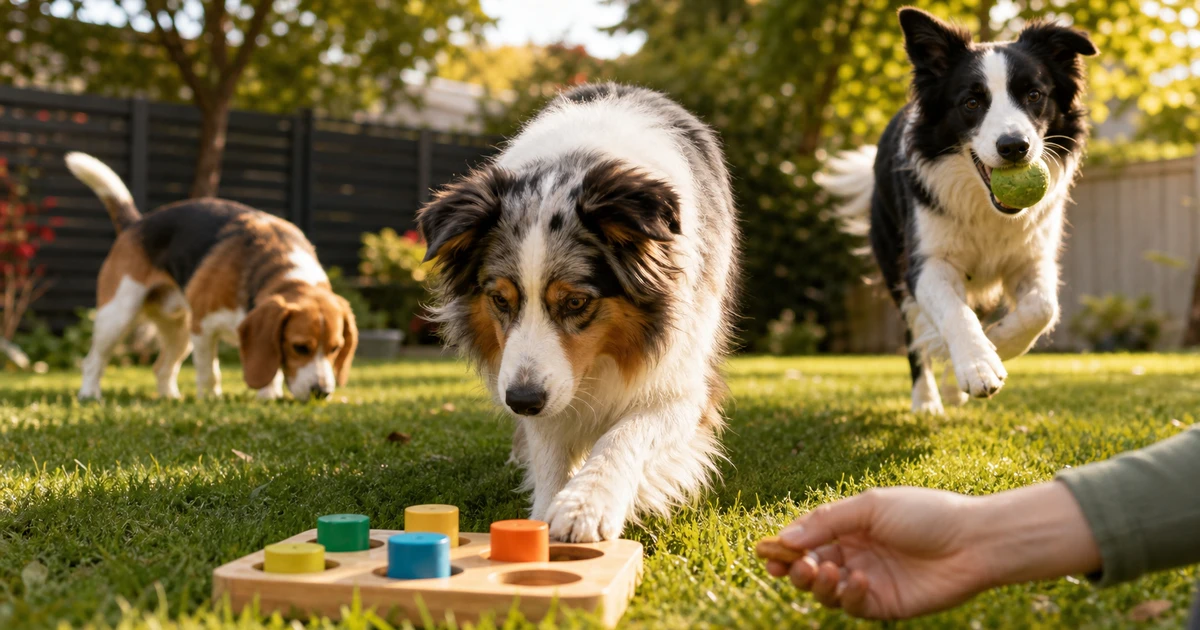
Dog Enrichment Ideas for Bored Family Dogs
Physical exercise isn’t enough for a restless dog—mental enrichment is the missing piece. From scent games to puzzle feeders, these ideas tire out your dog’s brain, not just his legs.
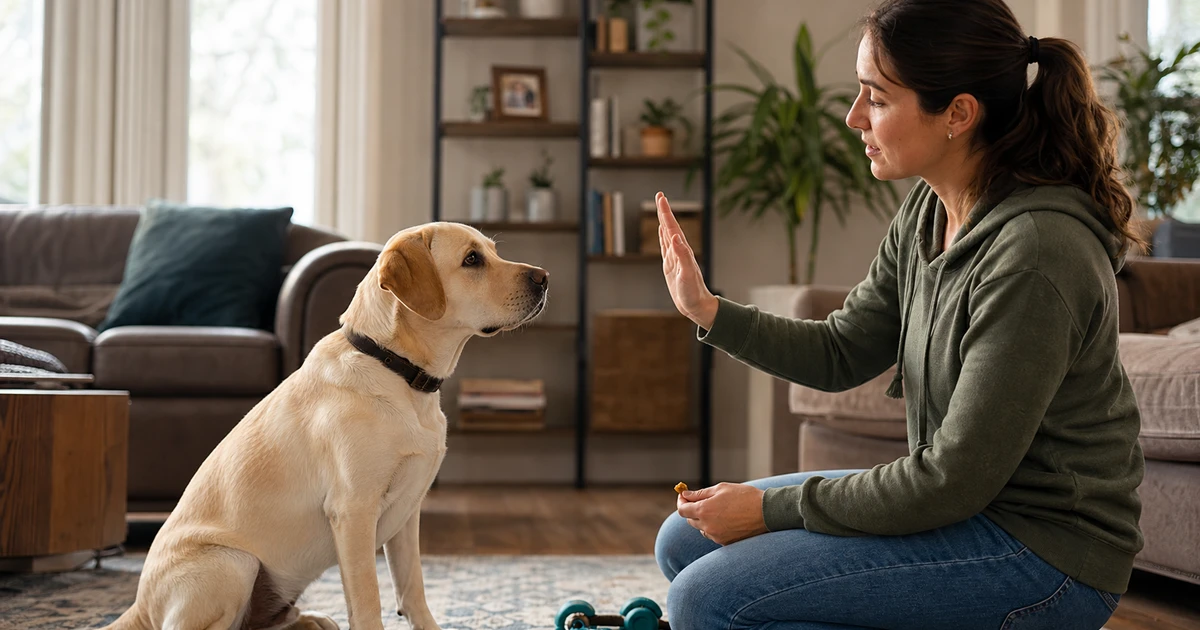
'Leave It' Saved My Dog's Life Twice. Here's How We Trained It.
The 'leave it' command stopped my Labrador from eating a rotting fishhook carcass and later a chocolate bar. Here's the step-by-step training that worked.

I Got a Border Collie Thinking It Was Just a Smart Dog. I Was Wrong.
I brought home a Border Collie expecting a clever companion. Instead I got a furry tornado that dismantled my couch, herded my cat, and demanded a full-time job. Here’s how we survived.
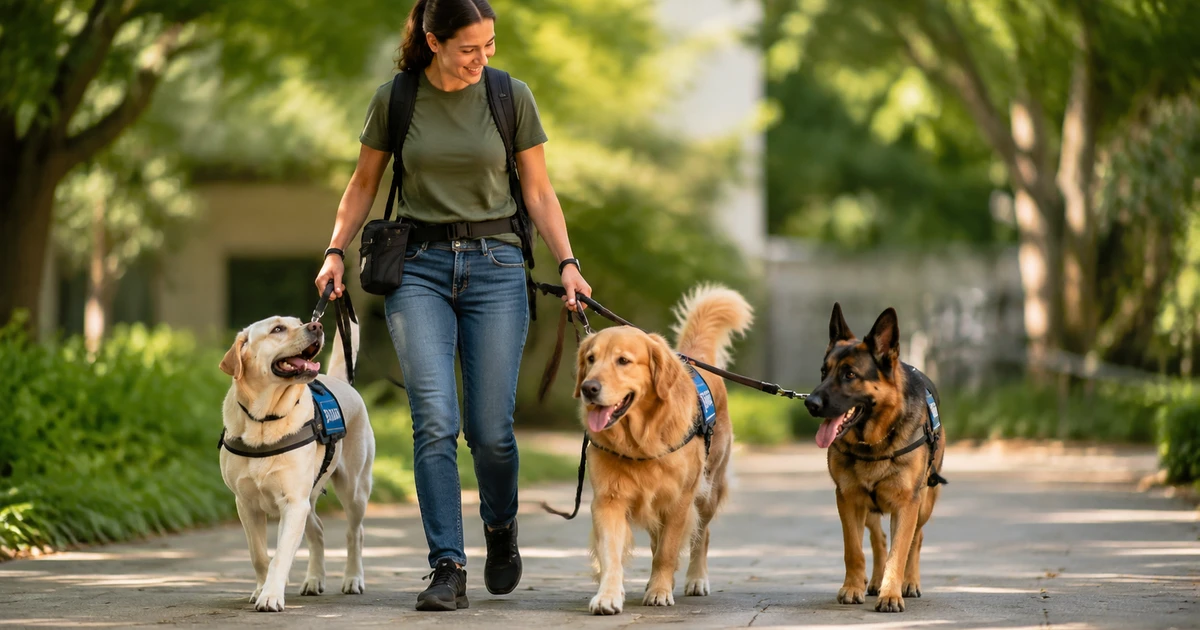
Which Dog Breeds Actually Make the Best Service Dogs — And Why
Trainability beats brawn every time. These six breeds dominate service work for reasons you can measure, not just guess.
Sources & standards
This profile follows recognized breed standards from the American Kennel Club (AKC) and the Fédération Cynologique Internationale (FCI), along with established veterinary and breed-club guidance. These describe general breed tendencies — every dog is an individual.