

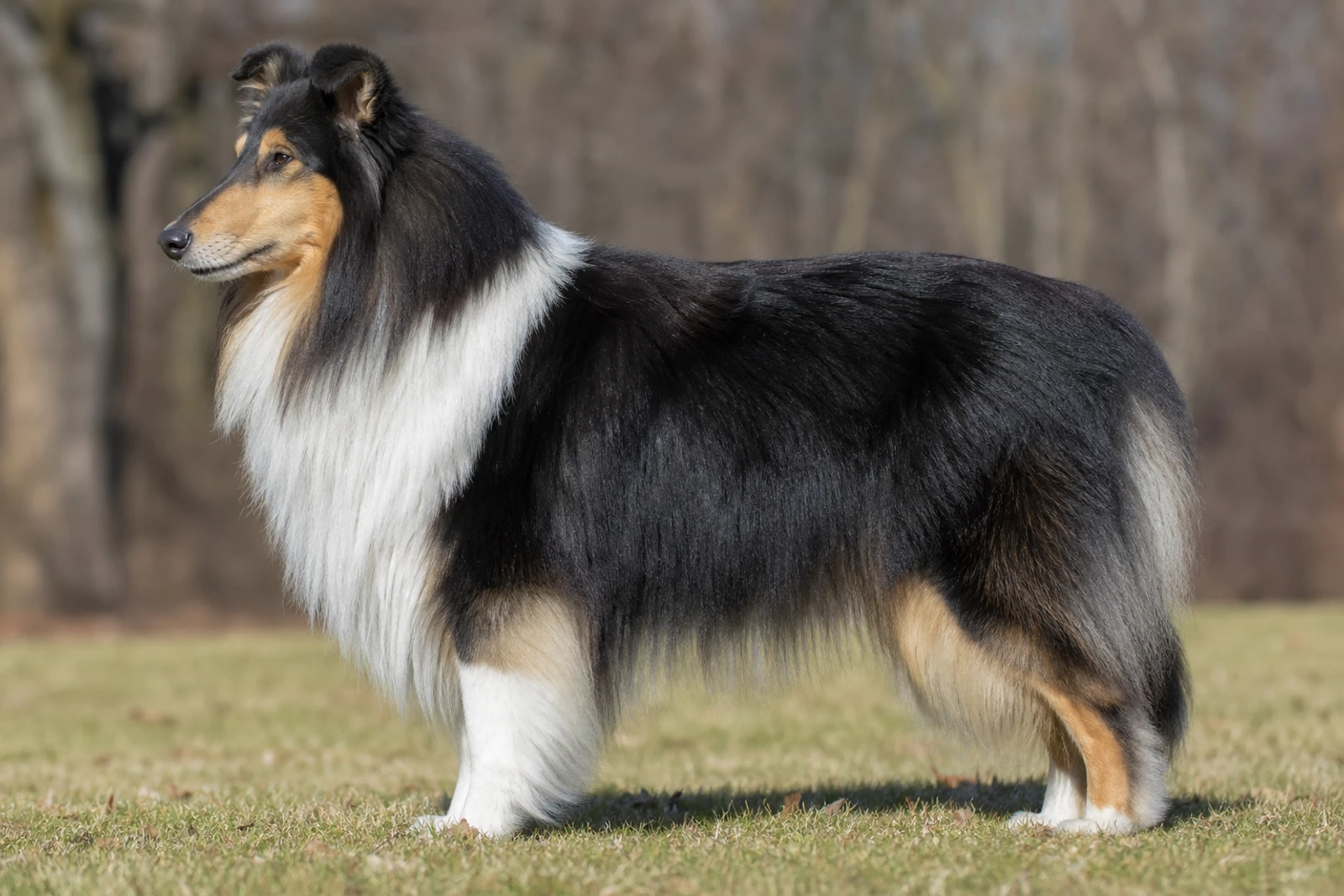
The Collie is a graceful, intelligent herding dog renowned for its gentle, loyal nature. Ideal for active families, they thrive on companionship and enjoy being part of daily life. Collies are patient with children and get along well with other pets, making them excellent family dogs. While they need regular exercise, they are calm indoors and adapt to various living situations if given daily walks. Their sensitivity calls for positive training, and they form strong bonds with their owners. This devoted, trainable breed suits those seeking a loving, elegant companion who is both a vigilant watchdog and a affectionate friend.
Family fit
Is the Collie a good family dog?
Smart, sensitive, and watchful over children.
- Children
- Family shortlist
- Energy
- Moderate
- First-time owners
- More approachable
- Grooming
- Moderate
Breed tendencies are only a starting point. Supervise children, meet the individual dog, and make sure the exercise, training, grooming, space, and cost fit your household.
At a glance
- Size
- Large
- Height
- 20–24 in
- Weight
- 51–75 lb
- Life span
- 12–14 years
- Coat colors
- Sable and white, Tricolor, Blue merle, White
- Coat type
- Double coat, rough or smooth
- Group
- Working
How much does a Collie cost?
Adopt / rescue
$75–$400
Usually includes spay/neuter, first shots, and a microchip.
Buy from a breeder
$700–$2,000
From a reputable, health-testing breeder.
Approximate USD. Prices vary widely by region, breeder, pedigree, age, and coat colour — adopting is the lower-cost and recommended route. Avoid suspiciously cheap “breeders”; they’re often puppy mills.
Estimate the full cost of a Collie →Want the ongoing number? Estimate the monthly food bill for a Collie with our dog food cost calculator.
Collie photos
Views
Front, side, rear and top — the full silhouette.Poses
How the breed sits, lies, moves and plays.Puppy to senior
The breed across its whole life.Expressions
The breed’s range of moods.Close-up details
Eyes, ears, nose, paws, tail and coat.Coat colors
The breed’s recognized colors.Click any photo to enlarge. We show the Collie from every angle — three views, poses, life stages, expressions, close-ups, coat and colors.
Appearance & size
If you close your eyes and picture a Collie, you’re probably seeing a sable-and-white dog with a long, flowing coat — but that’s only half the story. The breed actually comes in two coat varieties, and both blend athleticism with an elegant, balanced outline that makes sense for a herding dog who covered miles of rolling pasture.
The Collie is a large, light-footed dog. Males stand 22 to 24 inches at the shoulder and weigh 60 to 75 pounds; females are 20 to 22 inches and 51 to 65 pounds. Those numbers are a range, not a guarantee — a well-built Collie feels solid without being heavy, and you should be able to trace the ribs under a thin layer of flesh. The body length slightly exceeds the height, giving the dog a long, lean profile.
Coat: Rough and Smooth
The Rough Collie’s coat is what grabs attention. The outer coat is straight, harsh to the touch, and forms a heavy mane around the neck and chest. The undercoat is soft and dense. The forelegs carry feathering, the hindquarters are heavily fringed, and the tail is a plume. The Smooth Collie has the same dense undercoat but a short, flat, hard outer coat — no mane, no feathering. Both types are double-coated and shed seasonally, though the Smooth dries faster and tracks in less mud.
Colors
Collies come in four accepted colors, and all can show white markings on the legs, chest, neck, and tail tip, plus a white collar and blaze. The classic sable and white ranges from light gold to deep mahogany. Tricolor is predominantly black with tan points above the eyes, on the cheeks, and on the legs. Blue merle is a marbled gray-blue with black patches; blue merles often have striking blue or partly blue eyes. White is a predominantly white body with colored markings on the head and sometimes body patches — not a separate breed, just a color pattern that happens when two merle parents are bred (responsible breeders avoid merle-to-merle matings to prevent deafness and eye defects).
Distinctive features from every angle
From the front, the Collie’s head is the first thing you notice. It’s a clean wedge shape, not blocky or snipey, with a flat skull and a well-defined stop. The muzzle is rounded and never pointed. The eyes are medium, almond-shaped, and set slightly obliquely — in all but merles, they’re dark brown. The ears are small and carried partway erect: the lower third or so is upright, while the top flips forward naturally. That ear carriage gives the breed its perpetually alert, attentive expression.
In profile, the neck is long and well arched, flowing into a level topline with a slight arch over the loin. The chest is deep and reaches the elbows, but it’s not barrel-shaped — you want enough room for heart and lungs without sacrificing agility. The tail reaches at least to the hock and is carried low when the dog is at ease, rising in a slight curve when the dog is animated, but never curled over the back.
From behind, the hindquarters are muscular and well let down, with straight, parallel hocks and strong, oval bone. A Collie should stand and move like a capable, enduring trotter — not a heavy draft dog or a fragile show piece.
Overall, this is a breed that looks like it can do a day’s work without coming apart. The coat is a big commitment in the rough variety, but both types share the same graceful, clean-cut silhouette and intelligent expression. When you see a Collie standing in the field or trotting toward you, the picture is one of poise and purpose — a dog built to think and move, not just pose.
History & origin
A Shepherd’s Dog from the Borders
For centuries, the rocky pastures and rolling hills of Scotland and northern England shaped a dog that could handle anything a shepherd threw at him. The Collie’s ancestors were all-purpose farm dogs, toiling quietly as herders of black-faced sheep, cattle drovers, and watchful guardians of the home place. They didn’t come with a recorded start date—they were simply there, indispensable and bred for soundness, stamina, and a brain that could outthink a stubborn ewe. The name “Collie” likely traces back to the old Scots word for the local black-faced sheep (colley) or to a Gaelic term meaning useful. Either way, the name stuck because it fit the job.
By the early 1800s, these dogs had developed a recognizable type. Queen Victoria fell hard for the breed’s intelligence and grace during a visit to the Scottish Highlands and brought a few back to Windsor. That royal nod shoved the Collie into the spotlight, and suddenly polite society wanted one. Breeders moved fast to refine the elegant silhouette you see today—long, lean head, tipped ears, flowing tail—but they kept the sharp working mind firmly in place. The first breed club formed in England in 1881, and the American Kennel Club recognized the Collie in 1885. Right from the start, the long-coated Rough Collie and the short-coated Smooth Collie were considered the same breed with a single standard. The only real difference? Coat length.
From Royal Favor to Hollywood Fame
The Collie’s next big boost came through fiction. Eric Knight’s 1938 story Lassie Come Home and the 1943 film turned the Rough Collie into the world’s most famous family dog. That star power cemented the breed’s reputation as a gentle, loyal companion, but it also sparked a demand bubble that responsible breeders had to work hard to manage—proving that fame isn’t always kind to a dog’s long-term health. Today’s Collie is still that same watchful, level-headed partner who trotted beside a shepherd for generations. If you meet one, you meet a dog that earned its keep century after century and never traded its quiet dignity for flash.
Temperament & personality
A Collie slips into family life like they’ve been reading the room for years — perceptive, steady, and quietly tuned to every mood. Descriptors like “gentle,” “loyal,” and “sensitive” crop up for a reason, but they’re tendencies, not factory settings. A Collie raised with rough handling or isolation can become anxious, and that anxiety often pours out as nonstop barking or shadow-chasing. With everyday kindness and clear, consistent training, though, you get a dog who genuinely wants to cooperate.
Energy lives in two gears. Outdoors, this is a working breed that thrives on a solid hour of movement — a brisk walk, a long line session in a field, or a backyard agility game. Inside, a well-exercised Collie defaults to calm. Skip that outlet and the restlessness flips into vigilance: staring out the window, barking at every leaf, pacing. Mental exercise counts just as much. Puzzle toys, hide-and-seek with a favorite person, or learning a new trick all burn that quick mind.
Affection runs deep without being pushy. A Collie will follow you from room to room, nudge your hand for a scratch, and plop down by your feet during dinner. This closeness means separation doesn’t come easily. Long stretches alone can trigger howling or destruction, so if your household is gone most of the day, start early with crate training and short departures that build tolerance.
With children and other pets, a stable Collie is typically a safe, watchful companion. They’ll often position themselves between a toddler and a perceived hazard — a barbecue grill, the street — without any command. That herding instinct can surface as heel-nipping at running kids, so redirect with a “find it” game instead of punishment. Teach children never to hover near the food bowl or disturb the dog during a nap. Even the mildest dog can learn to guard resources if meals feel threatened.
Watchfulness is baked in. A Collie will announce the mail carrier, the squirrel on the fence, and the neighbor’s new car. This is a barking breed, not a silent shadow, and the vocal repertoire includes grumbles, whines, and a “talking” murmur that’s more conversational than alarmed. Appreciate the heads-up, then give a quiet “thank you” cue so it doesn’t spiral into a marathon.
House behavior often reflects their tidiness instincts. Collies that have been solidly potty trained may still backtrack if urine odors linger in a forgotten corner. Enzymatic cleaners (or a white vinegar and water spray) break down those scent cues, preventing repeat marking. Treat-based praise the instant they eliminate outside cements the right habit far better than scolding an accident. Pay attention to rooms the family rarely uses — a dog may not consider them “home” because familiar human scent is weak there.
Quirks worth knowing: a Collie might roll in something foul with pure delight. The drive likely traces back to scavenger ancestry — some researchers see it as scent-camouflage, others as a canine version of “look what I found.” Whatever the reason, keep shampoo handy. Chewing, especially in puppyhood, isn’t a vendetta; it’s exploration and teething relief. Supply safe, hard chew items for adult jaw health, and deter off-limits gnawing with a citrus peel spray (boil peels, cool, spritz) instead of leaving it to chance. Learn to read the subtle signs of unease — lip licking, head turns, a yawn out of context — and you’ll catch tension early, long before a growl ever happens.
Good with kids, dogs & other pets
A Rough Collie’s default setting is a soft, patient companion — which is why you’ll hear families say the breed treats toddlers like brand-new lambs. That’s not far off. These dogs tend to read the room, dialing down their intensity around little ones. Still, that herding instinct doesn’t disappear. Expect a Collie to shadow, circle, and occasionally nose-nudge a child who wanders too far from the picnic table. With kids under five, you’ll want to supervise and redirect any ankle-nipping before it becomes a habit, but the behavior comes from a place of management, not aggression.
With other dogs, Collies are typically unruffled. They’re not the type to start a scuffle at the dog park, and many enjoy a multidog household. The catch is that their early socialization window slams shut around 12–16 weeks. If a Collie puppy misses out on meeting a dozen calm, well-vaccinated dogs during that stretch, you may end up with an adult who’s skittish or snappy around unfamiliar canines. Do the work up front: puppy classes, playdates, and short walks through noisy neighborhoods.
Cats and small pets are a more careful equation. Collies lack the hair-trigger prey drive of a terrier, but they were bred to gather movement. A fleeing rabbit or a cat who panics can easily ignite a chase. If you’re bringing a Collie into a home with cats, raise the puppy alongside them using baby gates and leash supervision so the cat never becomes a bolting target. With pocket pets like guinea pigs, secure cages set up high are non-negotiable.
One of the biggest missteps is leaving a Collie alone in the backyard for hours. These dogs are wired for companionship and can tip into yappy, obsessive boredom when isolated. If you have young children you’re home with most of the day, you’re already giving the dog what it needs most: your presence and a predictable routine. Separate early, low-stakes exposures to strollers, screaming playmates, and clumsy handling sessions will build a Collie that’s steady through any chaos a family can throw at it.
Trainability & intelligence
A Collie picks up new cues fast, but muscle memory doesn’t happen without a steady, positive teacher. This is a big, sensitive herding dog who reads your mood more closely than your hand signals. Harsh corrections or a raised voice can shut him down in seconds. You’ll get the most out of a Collie by using praise, a quick tug session, or high-value treats — and by keeping sessions short enough that he still wants more.
Start deliberately between 3 and 14 weeks. Expose a puppy to different people, calm dogs, city sounds, and odd surfaces like grates or wobble boards well before 16 weeks of age. Without that early effort, natural reserve can tip into fearful reactivity that dogs this size don’t grow out of on their own. A properly socialized adult Collie is politely aloof with strangers, not a trembling liability.
Off-leash reliability takes specific work because herding instinct wants to chase motion. Practice recall around bicycles, joggers, and playing children only after you’ve nailed it indoors and in a fenced yard. Reward every check-in generously, and never punish a slow return — a Collie who thinks coming back gets him yelled at will start keeping his distance. The aim is to be more interesting than whatever just moved.
- Keep sessions short and varied. Drilling the same sit-stay for ten minutes makes a smart dog tune out. Switch between obedience, a quick trick, and a food puzzle.
- Watch your tone. A Collie can detect disappointment in a sigh or a tensed shoulder. Corrections damage trust and increase anxiety — a problem in a breed that already worries about getting things right.
- Mental exercise counts as much as physical. Boredom fuels nuisance barking and creative mischief like herding the cat. Hide treats around the house, teach toy names, or run through a handful of two-minute shaping games each day.
The biggest training challenge isn’t stubbornness — it’s sensitivity. If a skill falls apart, check your mechanics and your emotional temperature before assuming the dog is blowing you off. Stay patient, stay consistent, and the Collie will work hard just to see you smile.
Exercise & energy needs
A Collie isn’t a dog you can tire out with a quick lap around the block. These are thinking, moving dogs — built to cover miles while reading livestock and making split-second decisions. Expect to give a healthy adult at least 90 minutes of exercise a day, split into two sessions. One long walk or a leashed jog in the morning, and an off-leash run, vigorous fetch, or training game in the afternoon works well. A fenced yard helps, but it’s not a substitute for intentional time with you.
Intensity matters. A leisurely sniffy walk won’t cut it by itself. Collies thrive on steady trotting, playing, and the kind of movement that engages their mind at the same time. They’re not as frantic as a Border Collie, but they’ll still turn to nuisance barking, pacing, or herding the kids if they’re under-exercised. Puppies and adolescents can be especially busy; just avoid repetitive, high-impact pounding on pavement until growth plates close (usually around 12–14 months).
The mental half of the equation
Physical exercise without mental work leaves a Collie restless. These dogs need a job. Puzzle toys, hide-and-seek with treats, and scent games indoors can take the edge off on rainy days. But they really shine when you tap their heritage: obedience, rally, agility, or herding trials give them a structured outlet. Even teaching a long chain of tricks — like putting toys away by name — satisfies that clever brain.
Good activities for Collies
- Herding instinct games: Treibball (herding large exercise balls) or controlled sheep herding if available.
- Canine sports: Agility, rally, and competitive obedience are natural fits — they excel without the over-the-top intensity of some other herding breeds.
- Outdoor adventures: Hiking, trail running, and swimming (with a life vest if needed) keep them fit without joint strain.
- Nose work: Scent detection classes or hide-a-treat games at home burn mental energy fast.
Older Collies slow down, but a 12-year-old still needs daily walks and brain games to stay happy. Pay attention to weight and joint comfort, and swap high-impact landings for softer surfaces or swimming. A Collie that gets the right mix of movement and mental work settles beautifully indoors — calm, watchful, and content. Skip the mental part, and even a physically tired Collie will invent its own job, like managing the cat’s every move or alerting you to every squirrel within 200 yards.
Grooming & coat care
Your everyday reality with a Collie includes loose fur drifting across the floor like tumbleweed. That iconic long, double coat is a shedding machine—light year-round, with two seasonal explosions you’ll never forget. A consistent routine keeps it from taking over the house.
Brushing is your main tool. Plan on a thorough session two to three times a week under normal conditions, and every single day during spring and fall blowouts. Start with a pin brush or a metal slicker brush with rounded pins to work through the topcoat and remove surface debris. Then switch to an undercoat rake—that’s what pulls out the dead, fluffy undercoat before it mats against the skin. Finish with a steel greyhound comb to check problem zones: behind the ears, the armpits, the britches, and the feathering on the backs of the legs. Mats in those spots can silently tighten and cause skin irritation.
Bathe your Collie every six to eight weeks, or when they’ve rolled in something unmentionable. Use a mild dog shampoo that won’t strip the coat’s natural oils; follow with a light conditioner to keep the feathering from turning brittle. Always dry thoroughly—damp undercoat invites hot spots. Never shave a Collie down to “keep them cool.” That double coat insulates against both heat and cold, and once you buzz it, the guard hairs may never grow back correctly, leaving the skin exposed and the dog hotter.
Beyond the coat, ear checks happen weekly. Wipe out wax and gunk with a vet-approved cleaner, especially since those upright or semi-prick ears can trap moisture. Nails get a trim every three to four weeks—the sharp click on hard floors is your reminder. Teeth need brushing several times a week with dog toothpaste to keep that long muzzle free of tartar. During heavy shedding weeks, a high-velocity dryer after a bath can blast loose undercoat into the yard instead of onto your furniture. Stick to a 10-minute daily line-brush when the coat is blowing, and you’ll prevent mats that otherwise take an hour to cut out.
Shedding & allergies
If you bring a Collie home, you’re signing up for a steady snowfall of fur. This double-coated breed sheds all year, but twice a year—usually in spring and fall—it goes into overdrive. During a seasonal blowout, undercoat comes out in literal fistfuls, drifting across hard floors and embedding itself into every fabric surface. Even outside those peak weeks, you’ll find white wisps on dark pants the moment your dog leans in for a scratch.
Drool, at least, isn’t part of the picture. Collies have tight, dry lips, so you won’t be wiping slobber off walls and knees the way you’ll be lint-rolling your sweater.
As for allergies: no dog is truly hypoallergenic, but a Collie is a particularly rough pick for anyone with sensitivities. Their sheer volume of shedding spreads dander and the proteins that trigger reactions all over the house. Daily brushing helps trap some of the loose fluff before it becomes airborne, but it won’t stop the invisible allergens that settle into carpets and couch cushions. If a noticeably hair-free home or a sneeze-free companion is a must, a Collie will fight you on those goals every single day.
Diet & nutrition
A Collie will work for food as happily as he works sheep — and that food motivation can backfire if you’re not careful with portions. Even a few extra pounds strain the breed’s long back and hips, so keeping a lean frame matters more than with many other large dogs. You should feel ribs under a thin layer of fat, and there should be a visible waist tuck right behind the ribcage.
Puppy feeding timeline
Puppies need fuel to grow evenly. From weaning to four months, split the day’s ration into four evenly spaced meals. Then drop to three meals until six months. After that, two meals a day like an adult is plenty. Whether you choose a high-quality commercial puppy food or a gently cooked, puréed mix of meats, fish, and vegetables, make the switch gradually over a week to spare his gut.
Feeding an adult Collie
Most adults do well on 2¼ to 3 cups of high-quality dry kibble per day, split into breakfast and dinner. A 60-pound male who runs with you for an hour might need the top end of that range; a 55-pound female with a quieter routine may need closer to 2 cups. Adjust by feel, not just by the bag’s chart. If your Collie inhales meals, use a food puzzle bowl — it slows him down and gives his busy brain a job to do at the same time.
Seniors and weight watch
Older Collies slow down, but their appetite usually doesn’t. Gradually trim daily calories as his zip fades; you don’t want extra weight on aging joints. There’s no solid evidence to cut protein in seniors, so keep it at maintenance levels. If teeth start to go, lightly blend or moisten meals so nutrients aren’t wasted.
What’s in the bowl
Collies thrive on a meat-rich diet — a vegetarian or vegan menu shortchanges their digestive machinery. A base of quality kibble or a mix of raw/cooked meat (about 60%), vegetables and fruit (20–30%), and extras like eggs, grains, or plain yogurt builds a solid foundation. Pearl barley makes a gentle, high-fiber grain option; plain white rice works if his stomach gets upset. Avoid dumping holiday ham or fatty trimmings into his dish — rich foods can trigger a painful bout of pancreatitis. Canned fish in water, cooked veggies, or unsalted vegetable cooking water are easy, healthy toppers. Treats should stay below 10% of his daily calories, and never feed him from the table. That once-in-a-while scrap creates a beggar that’s tough to undo, and a Collie remembers every hand that’s ever fed him.
Health & lifespan
A well-bred Collie typically lives 12 to 14 years. To get there, you need to understand a handful of inherited quirks that pop up in the breed—and what responsible breeders do to sidestep them.
- MDR1 drug sensitivity. Roughly 70% of Collies carry this gene mutation. In practical terms, it means common medications—including ivermectin in some heartworm pills and certain anesthesia drugs—can cause seizures or worse. A simple DNA test tells you your dog’s status, so you never gamble with dewormers or pre-surgery sedatives. Good breeders test every potential parent.
- Collie Eye Anomaly (CEA) and Progressive Retinal Atrophy (PRA). CEA is present at birth and ranges from mild to vision-threatening. PRA causes gradual, painless blindness, often starting in adulthood. A board-certified veterinary ophthalmologist checks puppy eyes before they go home; ask for that certificate. Annual eye exams catch late-onset changes early.
- Hip dysplasia. Not as widespread as in heavier breeds, but it’s here. The Orthopedic Foundation for Animals (OFA) or PennHIP evaluation on both parents lets you know a puppy’s odds. Keep a growing pup lean and skip slippery floors—rapid growth on hard surfaces stresses forming joints.
- Bloat (gastric dilatation-volvulus). That deep chest makes Collies vulnerable. The stomach flips, cutting off blood flow, and minutes matter. Feed two or three smaller meals a day, keep exercise quiet for an hour after eating, and memorize the red flags: pacing, drooling, unproductive retching, and a firm, swollen belly. It’s a surgical emergency.
- Dermatomyositis (“Collie skin”). This immune-mediated condition typically shows up before six months—crusty sores, hair loss, and scabbing on the face, ears, front legs, or tail tip. Severity varies wildly. Some pups outgrow the worst of it; others need lifelong management. Sunscreen on pink noses and avoiding environmental triggers (like strong cleansers on bedding) helps.
Weight management cuts across all of this. An extra 8 pounds on a 55-pound dog shortens life and worsens joint strain. Feed a high-quality food, measure meals, and use thin slices of carrot or apple for training instead of calorie-dense treats. Their double coat gives decent cold protection, but that same insulation can cause overheating in humid summers—schedule walks in the early morning or evening, and always carry water.
Monthly heartworm prevention during mosquito season (and one month after it ends) is non-negotiable; just pick a brand labeled safe for MDR1 dogs. Rabies vaccination is legally required. Annual bloodwork and a physical exam—more often for seniors—catch subtle shifts before they become obvious. A Collie who suddenly lags behind on walks, refuses meals, or loses interest in being with you is telling you something. Listen early.
Living environment
Collies are a large, active working breed that do best with space to stretch out, but they’re surprisingly adaptable if you meet their daily needs. A house with a securely fenced yard is the ideal setup. That yard isn’t just for potty breaks — it’s a place for a Collie to trot a perimeter, chase a ball, or simply survey the neighborhood from a favorite lookout spot. Apartment living isn’t impossible, but it demands real commitment: you’ll need to provide a solid 60 to 90 minutes of daily exercise split into at least two sessions, not just a quick leash walk. Think a long morning jog, an off-leash romp in a safe area, or a vigorous game of fetch followed by an evening walk that engages their brain as much as their legs.
This is not a throw-them-in-the-backyard-and-forget-them breed. Collies are profoundly people-oriented. Without daily interaction and mental stimulation — puzzle toys, scent games, obedience drills — a bored Collie will find their own entertainment, usually involving barking. They’re naturally vocal guardians and will announce every delivery truck and passing dog. Early training helps keep it manageable, but you’ll never get a silent dog. If you live with shared walls, that’s a real consideration.
Climate-wise, that thick double coat is built for harsh Scottish weather. Collies tolerate cold and snow remarkably well, often preferring a chilly day to a warm one. Heat is the bigger issue. In summer, schedule exercise for early morning or late evening, provide plenty of shade and water, and watch for signs of overheating. Inside, air conditioning or a cool tile floor is a big help.
The most critical piece of the living environment puzzle is time alone. A Collie bonds deeply with their family and can be prone to separation anxiety if left for long workdays. They’re not a dog you can crate for eight hours and then expect to settle quietly. If your household is gone all day, you’ll need a solid plan: a midday dog walker, gradual desensitization from puppyhood, and plenty of exercise before you leave. Homes where someone works from home or is around often will see the happiest, most relaxed version of this devoted breed.
Who this breed suits
A natural with families and a calm, steady friend for first-time owners
A Collie fits into a household with children like it was born for the job. These dogs genuinely enjoy kids — they’ll trail toddlers in the yard, gently nudge a dropped toy toward a small hand, and park themselves next to the couch during story time. At 51–75 pounds and 20–24 inches tall, they’re large enough to be sturdy playmates without being so heavy they knock over a running three-year-old. First-time owners often find the breed’s biddable nature a relief. Collies read your mood with an almost uncomfortable accuracy and want to get things right. Raise your voice in frustration and the dog doesn’t brace for conflict — it gets softer and tries harder. That sensitivity means you train them with a light, encouraging tone, not a drill-sergeant one. Seniors who still enjoy a daily walk are another strong match, as long as “walk” means more than a lap around the block. A Collie needs a solid hour of exercise most days — a brisk walk, a long fetch session, or time to sniff and explore in a safe area. Once that need is met, they transform into calm house companions who happily doze at your feet for the rest of the afternoon.
Who should think twice
The double coat — whether rough or smooth — is a dealbreaker for some. Collies shed year-round and blow their undercoat so heavily twice a year that you’ll wonder if you’ve somehow acquired a second dog. Brushing several times a week, and daily during those seasonal blows, is the minimum to keep your home from disappearing under a layer of fluff. They’re also enthusiastic talkers. A Collie will announce the mail carrier, a squirrel, and sometimes just the wind, with a sharp, persistent bark. Apartment living or noise-sensitive neighbors can make this a real friction point unless you’re committed to training a reliable “quiet” cue early on. Smart and deeply attached to their people, Collies do poorly when left alone for long hours. A single person working a typical 9-to-5 away from home should budget for a dog walker or daycare — without it, the dog often slides into anxious chewing or wall-shaking barking. Harsh handling or a chaotic, loud household can also rattle a breed this sensitive. And if you picture a guard dog that makes strangers step back, a Collie will disappoint: they’ll bark an alarm, then offer a wagging tail and maybe a favorite toy. With a lifespan of 12–14 years, a Collie is a long-term commitment to companionship that comes with fur, noise, and an almost clingy loyalty. If living with a constant, gentle shadow doesn’t sound like your thing, a more independent breed will be a better fit.
Cost of ownership
A well-bred Collie puppy from a breeder who screens for Collie Eye Anomaly, hip dysplasia, and the MDR1 drug sensitivity typically costs $1,000 to $2,500. Show-prospect pups or those from nationally recognized lines can top that range. Adopting through a Collie rescue usually runs $200 to $500 — often with spay/neuter and initial vaccinations included — and is a solid way to bring home an adult dog.
Monthly food
An adult Collie weighing 55–65 lb eats about 2.5 to 3 cups of quality kibble per day. Budget $50 to $80 a month for food, plus another $10 to $20 for treats, joint supplements, or omega-3 oils to support that thick coat and active joints.
Grooming
Collies shed year-round and blow their undercoat heavily twice a year. Home grooming requires a good slicker brush, an undercoat rake, and a pin brush — an upfront investment of $50 to $100. Professional grooming every 6–8 weeks (full deshedding, sanitary trim) runs $60 to $90 per session. Learning to line-brush at home can stretch appointments to every three months, but don’t skip it: mats behind the ears and in the ruff can quietly turn into skin problems.
Vet and medical
Annual exams, core vaccines, and bloodwork average $200 to $300. Monthly heartworm, flea, and tick preventatives run $30 to $50. A one-time MDR1 genetic test ($60 to $80) is worth doing early — it tells you whether your Collie will have a potentially life-threatening reaction to common drugs like ivermectin, loperamide, or certain sedatives. Collie Eye Anomaly and hip dysplasia are less common in well-bred lines but can still surface, so keep a reserve fund for specialist visits.
Pet insurance
Given the breed’s potential for hereditary eye disease, joint issues, and drug sensitivities, a comprehensive insurance plan with a $500 deductible typically costs $35 to $60 per month. An emergency gastric dilatation-volvulus (bloat) surgery without insurance can hit $3,000 to $5,000.
What to expect month to month
Routine monthly expenses — food, preventatives, and insurance — land around $150 to $300, not counting grooming or training. One-time start-up supplies (crate, bed, bowls, leash, collar) add another $200 to $500.
Choosing a Collie
You’ve got two solid paths to a Collie: a responsible breeder who’s fanatical about health testing, or a breed-specific rescue. Both can deliver a great dog, but the homework you do now sticks with you for the next 12–14 years.
If you go the breeder route, don’t settle for someone who just “loves the breed.” You want documentation you can verify online. The non-negotiables for Collie parents:
- OFA hip evaluation (look for an “Excellent,” “Good,” or “Fair” rating, scores done after 24 months)
- Annual eye exam by a boarded veterinary ophthalmologist (clears for Collie Eye Anomaly, progressive retinal atrophy, and other hereditary eye diseases)
- MDR1 genetic test (Collies commonly carry a mutation causing life-threatening drug sensitivity; a responsible breeder tests all breeding stock and will show you the results)
- Cardiac screening is increasingly common and a green flag
- Dermatomyositis screening, especially in rough-coated lines, if the breeder is proactive
Anyone who waves this off with “my vet says they’re healthy” or can’t produce the numbers isn’t doing their job. True health clearances mean the breeder willingly shows you the OFA or CHIC database entries for each parent. Other red flags: multiple unrelated litters clamoring for your credit card, no questions about your lifestyle or fencing, puppies leaving before 8 weeks, a dam that’s nervous or snarly (shyness in a Collie is a serious fault, not a quirk), and any breeder pushing a rare color as a selling point. Merle-to-merle matings create puppies with risk of deafness and blindness — run if you see that.
When you visit the litter, watch how pups act. A sound Collie puppy will investigate you, maybe with a short bark, then settle into sniffing or tugging a shoelace. Steer clear of the one hiding in the corner or the puppy that bullies littermates relentlessly. The breeder should already have them used to household clatter, gentle handling, and a crate. Ask what early neurological stimulation they’ve done.
A rescue Collie can be the smart shortcut, especially if you want to skip teething and midnight potty runs. Breed rescues often have purebred young adults or seniors, many already housebroken and evaluated in a foster home. Some come with medical records. You give up the puppy window, but you gain a known temperament and a dog that’s thoroughly vetted. If you need a calm buddy for a quieter household, a rescue that’s been in foster for a few weeks knows a lot more about that dog than any 8-week-old can show you. Just ask about any herding nippiness or noise sensitivity, two traits that land Collies in rescue in the first place.
Regardless of where your Collie comes from, every minute you spend verifying health and temperament now is a deal you make with your future self. A Collie with clean eyes, sturdy hips, and early handling will walk into family life without the vet bills and heartache that rushed choices buy.
Pros & cons
Pros
- Remarkably gentle with children — they have a built-in awareness that makes them patient, steady companions for kids who know how to treat a dog.
- Highly trainable brain — eager to please and quick to pick up routines, from basic obedience to advanced tricks, without you needing to drill the same thing a hundred times.
- Loyal watchdog, not a guard dog — they’ll alert-bark when a stranger approaches, but aggression isn’t in their nature; they’d rather make friends once you say it’s okay.
- Striking coat, manageable with routine — both rough and smooth varieties shed moderately year-round and blow coat heavily twice a year. During blowouts, daily brushing with a pin brush and undercoat rake keeps the fur from taking over your house.
- Adaptable energy — they settle indoors nicely but still need a real outlet: a solid hour of daily exercise (a couple of long walks plus a chance to run or a focused play session) keeps them happy.
- Good lifespan — 12 to 14 years means a long stretch of steady, affectionate companionship.
Cons
- They bark. A lot. — herding breeds communicate with their voice, and a Collie will announce everything: the mail carrier, a squirrel, the wind. That can wear thin in apartments or tight neighborhoods.
- Herding instinct runs deep — young Collies especially may heel-nip at running children or try to corral other dogs. It’s not aggression, but it does take consistent redirecting and management.
- Heavy seasonal shedding — you’ll find tumbleweeds of fur if you skip grooming during spring and fall coat blows. Invest in a good vacuum.
- Mental stagnation breeds trouble — a bored Collie left in the yard without a job will invent one, often involving barking, digging, or chewing on the porch furniture.
- Health screenings matter — responsible breeders test for Collie eye anomaly and the MDR1 drug sensitivity mutation. You’ll need to avoid certain common medications (like ivermectin) and watch for potential eye issues as the dog ages.
- Shuts down under harsh treatment — they’re sensitive souls. Raised voices or heavy-handed corrections backfire; training works best with a light, positive touch, which demands patience from you.
Similar breeds & alternatives
-
Shetland Sheepdog
Don’t let the matching coat fool you — a Sheltie isn’t just a scaled-down Collie. At 13–16 inches and 15–25 pounds, they pack a fiery, high-alert personality into a smaller frame. You’ll get more barking, more stranger wariness, and a brain that spirals without a daily puzzle to solve. A Collie eases into family life with a quieter, steadier presence. If you prefer a dog that alerts to the mail carrier but doesn’t run border patrol every time a leaf blows, the Collie is the calmer pick. -
Border Collie
Think of the Collie as the gentle manager and the Border Collie as a workaholic who can’t clock out. Both herd, but the Border Collie’s intensity, eye-stalk stare, and need for constant motion run circles around a typical Collie’s moderate energy. A Collie thrives on a solid daily walk and yard play; a Border Collie often requires hours of focused exercise plus a sport like agility to keep its mind from inventing chaos. For a family that wants a devoted companion without a second job managing that drive, the Collie fits with less friction. -
Australian Shepherd
Similar in size (40–65 pounds) but usually tighter-wound and more protective, the Aussie demands a lot more mental and physical output. You’ll see stronger herding impulses, heightened suspicion of strangers, and a real need for advanced training. A Collie typically brings a softer, more biddable temperament that forgives an evening on the couch after a walk, whereas an Aussie may still be nudging you to play fetch at 10 p.m. -
Smooth Collie
Sometimes the best alternative is the same dog with a wash-and-wear coat. The Smooth Collie shares the Rough Collie’s height, weight, gentle nature, and 12–14 year lifespan, but trades the flowing mane for a short, dense coat that needs a weekly brushing instead of daily detangling. Shedding remains substantial — just easier to vacuum up. If you adore the Collie’s sweet, kid-friendly temperament and only hesitate over grooming, this is your shortcut.
Fun facts
- The Rough Collie was immortalized by the TV series 'Lassie'.
- Collies are highly attuned to human emotions and excel as therapy dogs.
- Originally bred in Scotland for herding sheep, their name may derive from the black-faced ‘colley’ sheep.
Frequently asked questions
- Are Collies good with children?
- Collies are known for their gentle and affectionate nature, making them excellent companions for families with children. They tend to be patient and protective, but supervision around very young children is still recommended. Early socialization helps ensure they grow into well-mannered dogs around kids.
- How much do Collies shed?
- Collies are moderate to heavy shedders, especially during seasonal changes. Their thick double coat sheds year-round and requires regular brushing to manage loose fur. Smooth Collies shed less noticeably than Rough Collies, but both can produce dander that affects allergy sufferers.
- How much exercise does a Collie need?
- Collies need daily exercise to stay happy and healthy, typically around an hour of physical activity. They enjoy walks, play sessions, and mental stimulation like obedience training or puzzle toys. Without enough exercise, they can become restless and may develop unwanted behaviors.
- Are Collies easy to groom?
- Rough Collies require regular grooming to maintain their long coat, including brushing several times a week to prevent mats. Smooth Collies have a short, dense coat that only needs weekly brushing. Both types benefit from occasional baths and routine nail trims.
- Do Collies bark a lot?
- Collies can be vocal dogs and may bark to alert owners of something unusual, due to their herding and guarding instincts. Consistent training can help manage excessive barking, but they are not typically nuisance barkers without reason. Prospective owners should be prepared for some vocalization.
Tools & calculators for Collie owners
Quick estimates tailored to Collies — pre-filled with this breed’s size where it matters.
Articles & stories about the Collie
Best Dog Breeds for Cats: How to Choose a Dog That Can Share the House
Some breeds are easier to manage around cats, but no breed is automatic. Start with temperament, trainability, energy, and the individual dog.
Best Large Dog Breeds for Kids: Gentle Dogs With Big Footprints
Looking for a big, kid-friendly dog? These gentle giants bring love and loyalty — but they also need space, training, and a good vacuum. Find your match.

Best Dog Breeds for Kids: 10 Family Dogs Ranked by Real Fit
A parent's honest guide to the 10 best breeds for children, ranked by real-world kid compatibility — not kennel-club clips. Real caveats included.
The 8 Best Dog Breeds for Families With Toddlers (Ranked by Temperament)
Any parent who’s seen a toddler grab a dog’s ear knows the cold sweat. Our honest, parent-tested ranking of the 8 best breeds for toddlers weighs patience, size, and real-world chaos.
Sources & standards
This profile follows recognized breed standards from the American Kennel Club (AKC) and the Fédération Cynologique Internationale (FCI), along with established veterinary and breed-club guidance. These describe general breed tendencies — every dog is an individual.