

Our beagle mix, Scout, arrived with a crate vendetta. Thirty seconds after the door clicked shut, the howling started—a sound more suited to a concert hall than our one-bedroom apartment. If you’ve ever felt like a monster for putting a dog in a crate, only to find shredded baseboards during your ten-minute shower, you’re not alone. Crate training a stubborn dog isn’t about winning a battle of wills; it’s about teaching your dog that the crate is the safest, most rewarding spot in the house. Here’s how we did it.
Training & BehaviorBy Best Family Dog Breeds Editorial Team
Crate Training Done Right: The Method That Worked for Our Stubborn Rescue
Our rescue Beagle screamed in his crate for weeks. Here’s the exact method that turned his crate into a sanctuary, no force needed.

Beagle — running — View full breed profile →
Why the Crate Matters (or: Your Dog’s Bedroom)
Scout came from a hoarding situation, so confinement felt like punishment to him. For many dogs—especially rescues—a crate can trigger panic. But used correctly, it becomes a den, not a jail. A crate gives your dog a predictable, secure space where nothing bad happens. It prevents destructive chewing (saving your shoes and your sanity), aids in housetraining, and creates a calm-off switch that’s priceless in busy family homes. Crate training is essential for many of the best dog breeds for families, ensuring they have a safe retreat when the chaos of kids and visitors gets overwhelming.


Getting the Size Right
A crate that’s too big invites accidents because the dog can soil one end and sleep in the other. One that’s too small is cruel. Scout, at 22 pounds and 15 inches at the shoulder (classic Beagle dimensions), fit perfectly in a 24-inch crate with a divider panel we adjusted as he grew. Your dog should be able to stand, turn around, and lie down with legs stretched out. If you have a puppy, buy an adult-sized crate with a divider so you can expand the space gradually.




Phase 1: The Open-Door Buffet
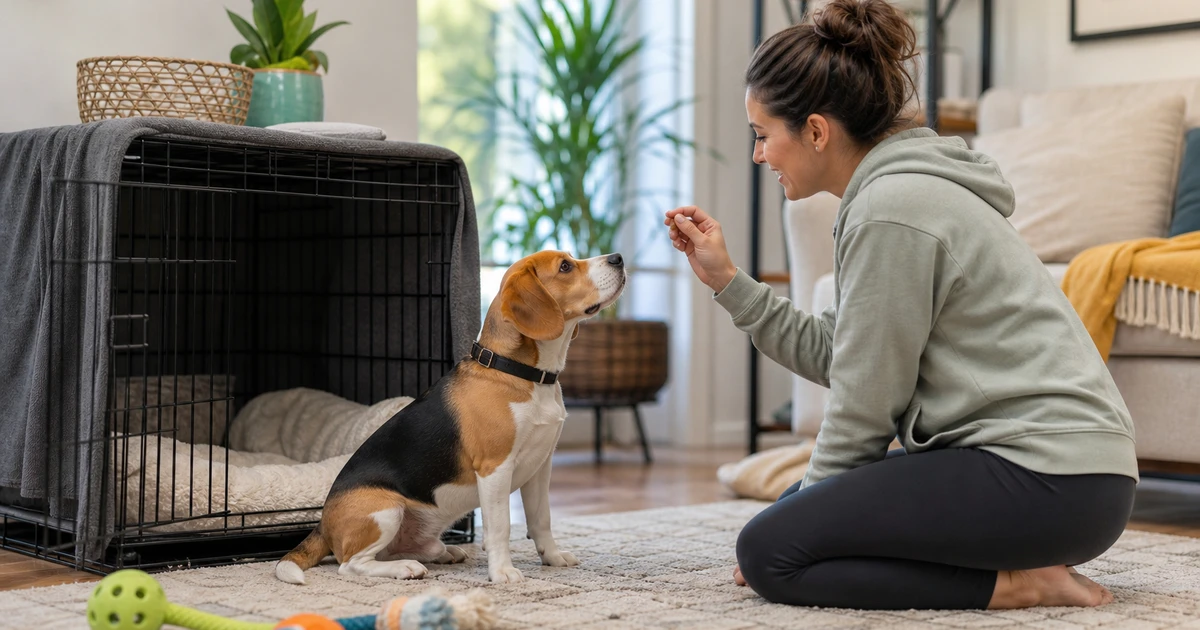
For the first three days, the crate door stayed open. Every meal happened inside, with Scout’s bowl pushed to the very back. We scattered high-value treats—freeze-dried liver, tiny cheese bits—on his crate mat when he wasn’t looking, so he’d wander in and discover treasure. We never forced him. If he hesitated, the treat just sat there until curiosity won. Within two days, he was ducking inside to check for snacks every time he walked by.

Beagle — puppy (~4 mo) — View full breed profile →
Phase 2: Closed for Business (Briefly)
Once Scout ate happily inside, we started closing the door while he was still eating, then opening it the second he finished. No fanfare, no dramatic “good boy”—just a quiet routine. We extended the time by a few seconds each meal, always opening before he panicked. After a week, we could latch the door for a full minute after he finished. The key was never letting him practice screaming; we wanted to build a record of calm, not distress.
Phase 3: Gradual Alone Time
Now came the stuffed Kong. We filled it with kibble mush and a dab of peanut butter, then sat next to the crate while he worked on it with the door closed. When he was absorbed, we’d stand up, walk to the sink, come back. Then leave the room for ten seconds, thirty seconds, two minutes. If he stopped eating to whine, we’d wait for a pause in the noise (even a split second), then reappear—rewarding quiet, not crying. For a dog with a Beagle’s stubborn streak (trainability score 3 out of 5), this phase took two full weeks. Breeds with higher trainability, like the Labrador Retriever or Golden Retriever (both rated 5), often sail through in days, but the method still works—it just asks for more patience.
The Crying Phase (and How Not to Lose Your Mind)
Ignore the cry-it-out advice that says to let your dog scream for hours. There’s a difference between protest whining and true distress. Scout’s initial thirty-minute meltdowns were pure protest: he’d pause to listen for footsteps, then ramp up again. We always made sure he’d pottied, had water, wasn’t too hot or cold. Then we let him fuss for up to ten minutes. If he hit the ten-minute mark still wailing, we’d take him out for a boring potty break (leash on, no play, straight back), then reset. We used a ticking clock wrapped in a towel (mimics a heartbeat) and a shirt I’d worn stuffed near the crate to bring my scent. For the truly stubborn sessions, a sheet over the crate blocked visual stimulation and helped him settle. After three weeks, the crying dropped to a few minutes, then silence.
Feeding All Meals in the Crate
For the first month, Scout ate every single meal inside his crate. No exceptions. This isn’t just about positive association; it’s about creating a predictable, rewarding ritual. Over time, we incorporated puzzle feeders and snuffle mats to engage that hound nose. The combination of a full belly and mental work often sent him into a contented nap right after breakfast.
A Timeline by Age
Puppies and adults have different crate capacities, but the introduction method stays the same. Here’s a rough guide:
- 8–10 weeks: Bladder control lasts 2–3 hours max. Crate for naps and overnight with potty breaks every 3 hours. Short, positive sessions during the day.
- 10–16 weeks: 3–4 hours during the day, overnight with one middle-of-the-night break.
- 4–6 months: 4–5 hours, overnight often without a break.
- 6–12 months: Up to 6 hours, but never more than 8 even as an adult.
- Adult rescues: Start just like a puppy. Scout was 2 years old but hadn’t been crate trained, so we followed the puppy timeline for the first month. He progressed faster physically, but his emotional adjustment dictated the pace.
When the Stubborn Streak Loses Its Edge
Trainability scores give you a heads-up, not a verdict. A Beagle’s 3 means you’ll repeat steps, not that you’ll fail. Scout now trots to his crate on cue, and if we’re late with his evening Kong, he sits inside and gives us a pointed stare. The crate that once triggered howls is now where he retreats when the toddler gets too handsy or the vacuum emerges. We won’t pretend it was magic—it was a month of consistent, boring, treat-infused routine. But watching a rescue dog finally sleep deeply, sprawled on his back with paws twitching, is worth every excruciating minute of that first week’s concert.
Breeds mentioned in this article
 Beagle
Free dog tools
Useful calculators for dog owners
🎂Dog Age CalculatorConvert your dog’s age to human years using the modern, size-adjusted formula.🦴Dog Treat Calorie CalculatorUse the 10% treat rule to calculate a safe daily treat budget and food adjustment.🍖Dog Food CalculatorEstimate dry-food cups, wet-food containers, or fresh-food grams from daily calorie needs and your label.📦Dog Crate Size CalculatorFind the right crate dimensions from your dog’s height and length, with crate recommendations.💧Dog Water Intake CalculatorHow much water your dog should drink per day, by weight, activity and food type.💰Dog Cost CalculatorWhat a dog really costs — upfront, monthly, and lifetime — adjusted for your country and dog size.
Dog Diary
More articles you might like

Health
Hypoallergenic Dog Grooming: A Practical Guide for Allergy-Aware Homes
Low-shedding dogs still need thoughtful coat care. Learn what grooming can—and cannot—do in an allergy-aware home.

Tips
Best Large Dogs for Apartments: Calm Big-Breed Options and Real Constraints
Large dogs can fit apartment life when their energy, barking, grooming, and household fit align. Compare six database profiles.

Tips
Low-Maintenance Dogs for First-Time Owners: What “Easy” Really Means
“Low maintenance” is a fit between a dog’s scorecard and your routine—not permission to ignore a dog. Compare six first-time-friendly profiles.

Tips
Big Hypoallergenic Dogs: Large Low-Shedding Breeds and Their Trade-Offs
A larger low-shedding dog can still demand grooming, activity, and thoughtful household planning. Compare six profiles before choosing one.
Find your perfect dog
Browse our in-depth breed guides:
Share