

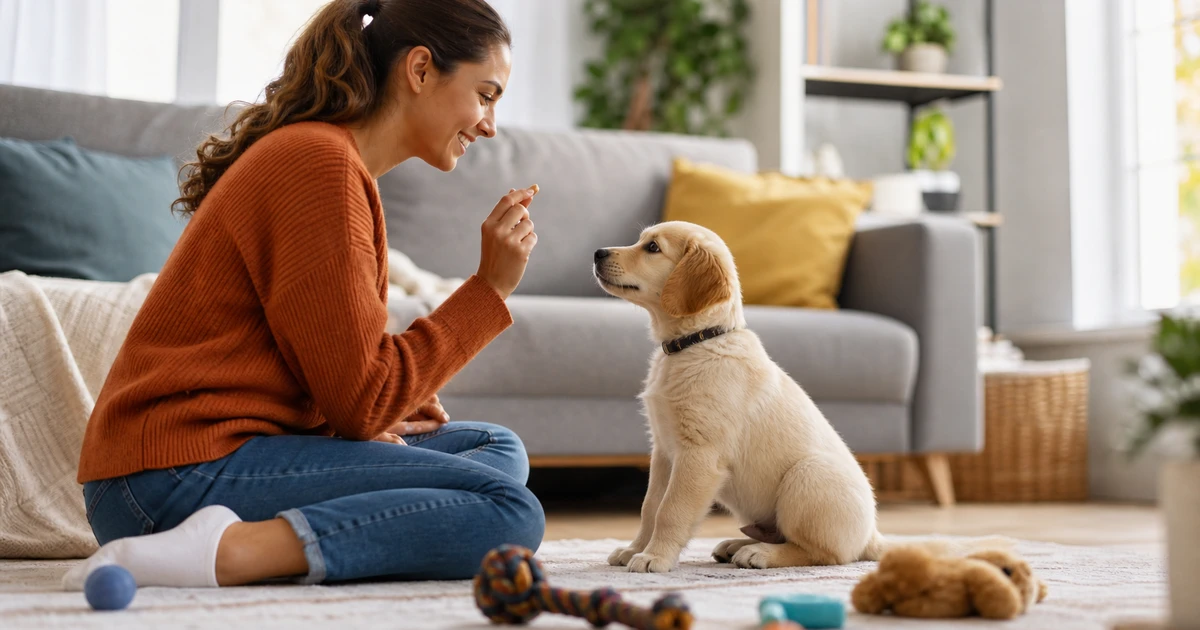
That first month with your puppy is a blend of joy and mild chaos. Between the puddles and the tiny tail wags, you have a unique window to shape who your dog becomes. A thoughtful socialization plan now helps your puppy grow into a steady, friendly adult—without overwhelming either of you. This checklist walks you through what to practice, all grounded in gentle, reward-based methods that build trust.
Training & BehaviorBy Best Family Dog Breeds Editorial Team
Puppy Socialization Checklist: What to Practice in the First Month
Bringing home a new puppy? Use this practical checklist to guide your first month of socialization. Build confidence with sights, sounds, handling, and calm recovery—without stress or scare tactics.
Sights: Introduce New Visuals Gently
Your home is already a gallery of strange sights to a puppy. Ceiling fans, umbrellas, people in hats or sunglasses, the neighbor’s Halloween skeleton still on the porch—each can be confronting. Start with low-key exposure. Carry your pup to different rooms, let him watch you open a garbage bag or pick up a broom from a comfortable distance. Pair each new sight with a quiet “good dog” and a treat. Don’t push him forward; let curiosity lead. If he flinches or hides, dial back. Over the first month, gradually include people in different clothes, wheelchairs, bicycles, and even colourful balloons. Positive early experiences with varied visuals prevent overreaction later in life.
Sounds: Build Confidence with Everyday Noises
Vacuum cleaners, doorbells, garbage trucks, and thunder are part of life. Your puppy’s sensitive hearing makes these startling, but you can turn them into neural shrugs. Start with low-volume recordings of common sounds on your phone. Play the ping of the microwave finish, distant traffic, or a doorbell chime while your puppy is eating or playing a favourite game. Gradually raise the volume across several days. Always pair the sound with something positive—toss a treat immediately when the noise starts. Real-life practice follows: sit on the porch and listen to passing cars while you stroke her back. The goal is calm, not forced tolerance. A puppy who learns early that odd sounds predict good things grows into a dog who recovers quickly from surprises.
Surfaces: Let Paws Explore Textures
Wobbly little legs need to feel sand, grass, tile, carpet, vinyl, and even metal grates. Start indoors, then expand to the yard and quiet streets. Scatter a few pieces of kibble on the kitchen floor so your puppy learns that slippery tile pays off. Place a low board on the rug and coax him to walk across it—later, do the same on a patch of grass. Pause at every new surface; reward even one paw touching it. Don’t pull the leash or carry him over something he avoids; patience here builds problem-solving confidence. The fire grate or the wobble of a plywood sheet under his nails can feel unsettling, but with tiny, rewarded steps, he’ll navigate the world like a champ.
Handling: A Cooperative Pup for Life
Ear checks, nail trims, tooth brushing—a dog who accepts touch calmly makes everyone’s life easier. In your first month, make handling a daily habit. Start when your puppy is sleepy or relaxed. Run your fingers over her ears, lift her lips to peek at gums, touch each toe and nail, hold her tail gently, and stroke her belly. Each touch earns a soft treat and a kind word. Keep sessions brief, maybe thirty seconds, and always end on a positive note. If she squirms, lighten the pressure; never pin her down. The same gentle handling that prepares a puppy for vet exams also builds the foundation for future service work, a quality seen in many best service dog breeds. Early cooperation around touch prevents fear at the groomer or during medical checks down the road.
Visitors and Children: Set Up Positive Greetings
A stream of new faces can empty a puppy’s confidence bucket fast, so manage the guest list. Invite one calm friend at a time. Ask them to sit and ignore the puppy until he approaches. This lets your pup decide when to engage, and it prevents the habit of jumping for attention. When the puppy does check in, the guest can offer a treat from a flat hand. With children, model gentle interactions: show them how to pet with an open palm on the chest or side, not hovering over the head. Supervise every encounter. A baby crawling on the floor looks odd to a puppy; create distance and reward calm observation before ever moving closer. If you’re still researching which pup might fit your family best, take a look at best dog breeds for families that tend to be naturally patient with kids. Regardless of breed, these early, low-pressure introductions shape a dog who feels safe around people of all ages.
Car Rides: Turn Travel into a Treat
A smooth first month in the car prevents the howling, drooling drama so many owners dread. Begin with the engine off. Place your puppy in a secured crate or a harness seatbelt on the back seat, then sit with him, offering a stuffed chew or a game of tug. Once he settles, turn on the engine without moving. Next session, back out of the driveway and return. Gradually build to short trips ending somewhere fun: a quiet park, a friend’s yard. While your puppy is still physically developing, lift him in and out of the vehicle rather than letting him jump from a high seat. That protects growing joints—and avoids a leap to freedom in a parking lot. Keep the destination positive and the driving calm; motion sickness often fades as positive associations build.
Vet-Prep: Fear-Free Checkups from the Start
You don’t need an appointment to build a happy clinic reputation. During the first month, drive to your veterinary office just to weigh your puppy and give treats in the lobby. Let the receptionist offer a biscuit. Practice standing your puppy on a non-slip mat at home and touching his paws, mouth, and abdomen the way a vet would—always with a high-value reward. If he leans in, great; if he pulls back, slow down. Veterinary handling should never feel like a wrestling match. Consistent positive reinforcement during these dress rehearsals makes real exams go smoothly far into adulthood.
Calm Recovery: Build an Off-Switch
A tired puppy isn’t always a well-behaved puppy. Overstimulation can turn into biting, zoomies, and anxiety. Teach your puppy to settle on a mat or in a crate with a long-lasting chew after each outing. Reward moments of quiet lying down by dropping a treat between her paws. Provide a predictable rhythm of activity followed by calm: a brief exploration of the yard, then thirty minutes of supervised chew time. This balance teaches the nervous system to shift gears, a skill that pays off every time visitors arrive or you need to work from home. Puppies who learn to switch on and off early become dogs who can relax while life hums around them.
Above all, move at your puppy’s pace. The sensitive window for socialization is brief, but pressure and punishment only damage trust. Celebrate tiny wins: the first unflappable vacuum run, the casual sniff of a skateboard, the relaxed sigh during a nail touch. Reward-based, patient guidance in this first month lays down a reserve of confidence your dog will draw on for years.
Free dog tools
Useful calculators for dog owners
🎂Dog Age CalculatorConvert your dog’s age to human years using the modern, size-adjusted formula.🦴Dog Treat Calorie CalculatorUse the 10% treat rule to calculate a safe daily treat budget and food adjustment.🍖Dog Food CalculatorEstimate dry-food cups, wet-food containers, or fresh-food grams from daily calorie needs and your label.📦Dog Crate Size CalculatorFind the right crate dimensions from your dog’s height and length, with crate recommendations.💧Dog Water Intake CalculatorHow much water your dog should drink per day, by weight, activity and food type.💰Dog Cost CalculatorWhat a dog really costs — upfront, monthly, and lifetime — adjusted for your country and dog size.
Dog Diary
More articles you might like
Health
Hypoallergenic Dog Grooming: A Practical Guide for Allergy-Aware Homes
Low-shedding dogs still need thoughtful coat care. Learn what grooming can—and cannot—do in an allergy-aware home.
Tips
Best Large Dogs for Apartments: Calm Big-Breed Options and Real Constraints
Large dogs can fit apartment life when their energy, barking, grooming, and household fit align. Compare six database profiles.
Tips
Low-Maintenance Dogs for First-Time Owners: What “Easy” Really Means
“Low maintenance” is a fit between a dog’s scorecard and your routine—not permission to ignore a dog. Compare six first-time-friendly profiles.
Tips
Big Hypoallergenic Dogs: Large Low-Shedding Breeds and Their Trade-Offs
A larger low-shedding dog can still demand grooming, activity, and thoughtful household planning. Compare six profiles before choosing one.
Find your perfect dog
Browse our in-depth breed guides:
Share