

Calm small dog breeds are better understood as dogs that can settle into a lower-intensity household, not dogs that require no walks, training, attention, or planning. A calm dog may be quiet indoors and still need regular companionship, coat care, and a predictable routine.
This shortlist favors smaller companion breeds with lower energy or barking scores in our comparison data. It also calls out the differences that matter once the novelty wears off: a calm dog may have a high-grooming coat, a tiny body that needs careful handling, or an independent streak that asks for patient training.
What does calm actually mean in a small dog?
"Calm" is a useful starting word, but it is not a personality guarantee. In a breed comparison, it usually points to lower indoor intensity, lower exercise needs, or less vocal behavior than high-drive working and herding breeds. The individual dog, its age, socialization, health, environment, and daily routine still matter.
Look at the full routine, not one score
English Toy Spaniels, Shih Tzus, Pugs, and Japanese Chins carry 2/5 energy scores in this data. That can make a gentler household rhythm easier, but none is a no-care option. They still need regular walks, handling practice, play, training, and safe social contact. A dog that lacks those basics may become unsettled regardless of breed label.
Quiet is different from inactive
Several picks have a 2/5 barking score, while Bichons, Havanese, and Tibetan Spaniels sit at 3/5. Those figures can help an apartment household ask better questions, but they do not replace early training around visitors, doors, and household noise. A quiet dog is built through both temperament and routine.
Coat care may replace exercise time
The Shih Tzu has 2/5 energy and 1/5 shedding, but 5/5 grooming. Bichons and Havanese also shed little with 4/5 grooming needs. A short-coated Pug has a 2/5 grooming score and 3/5 shedding. Calm is one part of the workload; the coat creates another.
Match the dog to the people in the home
For a home with young children, calm should include physical safety and respectful handling. The Japanese Chin is exceptionally small at 5–7 pounds and is not flagged as good with kids in this data, so it belongs in a quieter adult-oriented conversation rather than a rough-and-tumble family shortlist.
Compare at a glance
Tap any breed name to jump to its full write-up.
| Breed | Size | Weight | Energy | Barking | Grooming | Trainable | Apartment | Kids |
|---|---|---|---|---|---|---|---|---|
| Small | 9–13 lb | ✓ | ✓ | |||||
| Medium | 11–18 lb | ✓ | ✓ | |||||
| Small | 11–18 lb | ✓ | ✓ | |||||
P Pug | Small | 13–18 lb | ✓ | ✓ | ||||
| Small | 5–7 lb | ✓ | — | |||||
| Small | 11–15 lb | ✓ | ✓ | |||||
| Small | 7–13 lb | ✓ | ✓ | |||||
| Small | 9–15 lb | ✓ | ✓ |
The 8 best calm small dog breeds
English Toy Spaniel
A soft-mannered toy spaniel for owners looking for companionship rather than a high-drive project.
Small · 9–13 lb · 12 yr
The English Toy Spaniel is a genuinely small companion at 9–13 pounds, with 2/5 energy and 2/5 barking scores in this comparison. Its temperament is listed as affectionate, gentle, playful, calm, and reserved, making it a relevant option for someone who wants a smaller dog that can share a quieter home rather than lead a high-drive routine.
The long, silky single coat still requires attention: shedding and grooming both sit at 3/5. Trainability is also 3/5, so a calm style should not be confused with an automatic ability to learn household manners. Consistent, gentle practice remains important.
This breed can suit an owner who values close companionship and can give regular grooming and social contact. It is not the most practical answer for a family that wants a rugged, highly active dog for constant outdoor play.
Cavalier King Charles Spaniel
An affectionate lap-sized companion that still needs routine walks, coat care, and company.
Medium · 11–18 lb · 12 yr
The Cavalier King Charles Spaniel brings 5/5 affection, a moderate 3/5 energy score, and a low 2/5 barking score to a compact 11–18-pound body. That combination makes it a sensible candidate for a home that wants a dog to participate in family life without expecting constant high-intensity activity.
It still needs care that a calm-breed label can hide. The long, slightly wavy coat has 3/5 shedding and 3/5 grooming needs. Trainability is 4/5, which helps with routine and polite behavior when adults keep rules consistent. It is flagged as good with kids and apartment-friendly, but children still need to be taught calm, respectful handling.
The Cavalier fits best where people want a social companion and can offer regular walks, brushing, and company. It is less suitable for a home that wants the dog to be low-contact or left alone for long stretches.
Shih Tzu
A low-exercise companion whose long coat replaces high activity with significant grooming work.
Small · 11–18 lb · 10 yr
A Shih Tzu is a classic small companion at 11–18 pounds with a low 2/5 energy score, 5/5 affection, and a 3/5 barking score. Those traits can work well for a household that wants a dog comfortable with a gentler pace, short walks, and time near its people.
The main trade-off is coat work. Shedding is low at 1/5, but grooming is the maximum 5/5. The long, silky double coat needs an honest commitment to brushing and professional maintenance. Trainability sits at 3/5, so a calm dog still needs patient house rules and reward-based lessons.
Choose a Shih Tzu for the kind of companion routine it offers, not because it appears to be a low-work lap dog. It can be a good fit for a family or apartment home that can protect its small size and keep grooming on schedule.
Pug
A sociable, lower-energy dog with a short coat and practical care considerations to research carefully.
Small · 13–18 lb · 10 yr
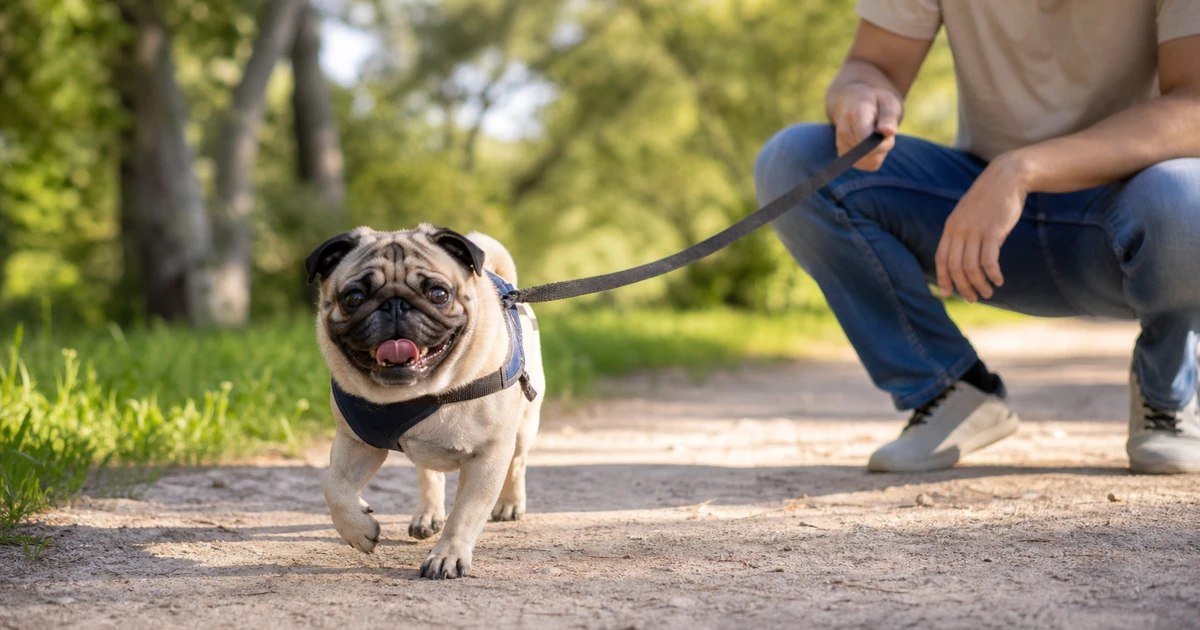
The Pug combines a compact 13–18-pound body with 2/5 energy, 2/5 barking, and 5/5 affection. For a household looking for a sociable dog that is less likely to demand a high-mileage exercise schedule, that profile can be appealing. Its short, smooth coat has a low 2/5 grooming score.
The short coat does not mean no hair around the home: shedding is 3/5. Trainability is 2/5, so clear routines and patient reinforcement matter more than assuming a sweet temperament will produce easy manners. The breed is flagged as good with kids, apartment-friendly, and first-time-owner-friendly, but those flags do not replace meeting the individual dog.
Before choosing any Pug, ask a reputable breeder or rescue detailed questions about the actual dog's care needs and discuss ownership with a veterinarian. A calm first impression is only one part of a responsible lifetime match.
Japanese Chin
A quiet, catlike toy companion that tends to fit calmer adult homes better than rough-and-tumble settings.
Small · 5–7 lb · 10 yr
At just 5–7 pounds, the Japanese Chin is the smallest dog in this calm shortlist. It has 2/5 energy, 2/5 barking, and 5/5 affection, with an alert, gentle, intelligent temperament. Those traits can make it appealing for a quiet adult home or a person seeking a small companion that does not need an intense outdoor routine.
Its tiny size changes the decision. The Japanese Chin is not flagged as good with kids in this data, so it should not be chosen for a rough-and-tumble household simply because it is calm. The long, silky coat has 3/5 shedding and 3/5 grooming needs, while trainability is 3/5.
This is a better match for a home where people can protect a very small dog from falls, crowding, and unwanted handling. It is a poor match if the family expects a pet that young children can carry or play with freely.
Bichon Frise
A cheerful rather than intense companion, with low shedding and a dependable grooming commitment.
Small · 11–15 lb · 12 yr
The Bichon Frise is not a sleepy dog; its 3/5 energy score is better described as moderate. What it adds to a calmer small-dog conversation is a cheerful, affectionate temperament, 4/5 trainability, and an apartment-friendly, good-with-kids profile in an 11–15-pound body.
The coat creates the central trade-off. Shedding is low at 1/5, but grooming is 4/5. A household that wants less loose hair needs a plan for brushing and grooming visits. Barking is 3/5, so early practice around arrivals and neighborhood sounds still matters.
The Bichon can be a good option for families or adults who want a sociable companion with a manageable activity level, not a dog that will be inactive. It works best where people enjoy interaction and can stay ahead of coat care.
Havanese
A people-focused small dog that can adapt well indoors when it gets attention and regular coat care.
Small · 7–13 lb · 14–16 yr
The Havanese is a 7–13-pound companion with 3/5 energy, 3/5 barking, 4/5 trainability, and 5/5 affection. Its outgoing, funny, affectionate temperament can fit a home that wants a lively but not high-drive small dog, provided the dog gets daily interaction and clear routines.
Low shedding at 1/5 is paired with 4/5 grooming needs. That is a meaningful distinction for an owner choosing between a curly or silky coat and a short coat that sheds more. The breed is flagged as good with kids, apartment-friendly, and first-time-owner-friendly, but its small size still calls for supervision around young children.
Choose a Havanese if the household wants a social dog and can make brushing, training, and companionship part of daily life. A quieter home is fine; a home that wants an independent dog left to itself is not.
Tibetan Spaniel
A compact, watchful companion with a moderate routine and an independent streak worth respecting.
Small · 9–15 lb · 12 yr
The Tibetan Spaniel gives this list a slightly more independent option. At 9–15 pounds, it carries 3/5 energy, 3/5 barking, 3/5 grooming, and 3/5 trainability scores, along with an intelligent, alert, affectionate temperament. That middle-of-the-road profile can suit an owner who wants a dog with a calmer rhythm but not a completely passive lap companion.
The silky double coat with mane and feathering sheds at 3/5, so regular brushing is part of ownership. It is flagged as good with kids, apartment-friendly, and first-time-owner-friendly, but its independent streak means clear boundaries and patient training are more realistic than expecting automatic obedience.
This is a considered choice for a household that appreciates a watchful small dog and can give it steady social contact. It is less ideal if the goal is a dog that will always be silent, highly compliant, or content without engagement.
How to choose a calmer small companion
First decide what you mean by calm. Do you need a dog that can settle after a walk in a city apartment? A dog with a lower exercise requirement? A quieter companion for a home office? Or a dog that will be handled carefully in a low-key adult home? Those are related needs, but they are not the same search.
Put your non-negotiables first
If grooming time is limited, avoid assuming a low-shedding long coat is simple. If children are very young, avoid treating a five-pound dog as a safe starter pet. If neighbors are close, ask how you will practice calm greetings and manage alert barking. A clear constraint helps you reject a charming but impractical match quickly.
Meet a dog when it can settle
When visiting a breeder or rescue, do not judge only the first excited minute. Spend time after a short walk or after the dog has had a chance to investigate the room. Ask how it behaves with visitors, during grooming, around food, and when left with a trusted person. For a rescue dog, an adult temperament can be easier to assess than a puppy's future traits.
Build a calm home, not just a calm-breed list
Use predictable feeding, walking, rest, and training times. Give the dog a quiet place where children and guests do not disturb it. Reward settling, teach a simple place cue, and make adults responsible for preventing overcrowding or unwanted handling. Those habits help any dog live more quietly.
Before you decide
A lower-energy dog can be a good fit for a quieter home, but it should never be selected as a substitute for care. Every dog needs regular movement, mental engagement, social contact, veterinary care, and training. If the household cannot provide those basics, a lower energy score will not solve the mismatch.
Pay attention to size. The Japanese Chin is 5–7 pounds; an English Toy Spaniel is 9–13 pounds; a Shih Tzu or Pug is 11–18 pounds. Those differences change how a dog is lifted, protected around children, carried on stairs, and managed underfoot. The smallest option is not automatically the easiest one.
Finally, decide whether the time cost is exercise, coat care, or both. A Shih Tzu, Bichon, or Havanese can have a calmer indoor rhythm but needs regular grooming. A short coat can simplify brushing while still leaving shedding or other care to manage. Choose the workload you can sustain without resentment.
Related reading
Dog-owner tools & calculators
Free calculators to help you plan, budget, and care for your dog — here's what each one does:
AI Tools
Compare & choose
Health & breeding
- Dog Heat Cycle CalculatorEstimate the four stages of your dog's heat, her fertile window, and when the next cycle is likely.
- Dog Age CalculatorConvert your dog’s age to human years using the modern, size-adjusted formula.
- Dog Lifespan CalculatorEstimate life expectancy from breed size and weight, with tips to add healthy years.
- Dog Quality of Life CalculatorScore comfort, mobility, appetite and good days vs. bad to support hard end-of-life decisions.
- Puppy Weight CalculatorPredict your puppy’s adult weight from its current age and weight.
- Dog Pregnancy CalculatorEstimate the whelping (due) date and key milestones from the breeding date.
- Dog Vaccination Schedule CalculatorSee your puppy’s DA2PP and rabies dates from birth, and what’s due now and coming up.
- Dog Body Condition Score CalculatorIs your dog a healthy weight? A guided 9-point body check with an ideal-weight range by size.
- Dog Skin Symptom CheckerUpload a skin photo and symptoms for cautious AI triage, red flags, and vet-visit guidance.
- Dog Spay & Neuter Timing CalculatorWhen is the right age to spay or neuter? Get a window by size and sex, with the trade-offs.
Care & feeding
- Dog Water Intake CalculatorHow much water your dog should drink per day, by weight, activity and food type.
- Dog Walking CalculatorHow much daily walking your dog needs by breed and age — and the calories you both burn.
- Dog Food CalculatorEstimate dry-food cups, wet-food containers, or fresh-food grams from daily calorie needs and your label.
- Homemade Dog Food CalculatorEstimate cooked homemade dog food portions, meals, ingredient split, and batch prep by calories.
- Dog Treat Calorie CalculatorUse the 10% treat rule to calculate a safe daily treat budget and food adjustment.
- Dog Veggie Prep CalculatorConvert raw dog-friendly vegetables into cooked yield, freezer bags, and plain cooking notes.
Cost & planning
- Dog Cost CalculatorWhat a dog really costs — upfront, monthly, and lifetime — adjusted for your country and dog size.
- Dog Insurance Cost CalculatorHow much is pet insurance? Estimate a monthly and yearly premium range by size, age, and region.
- Dog Food Cost CalculatorEstimate daily and monthly food cost from calorie needs, package price, and total package calories.
Sizing
Safety
- Onion Toxicity for Dogs CalculatorEstimate whether the amount of onion your dog ate is a toxic dose for their weight.
- Raisin & Grape Toxicity CalculatorGauge the risk after your dog eats grapes or raisins, and when to call the vet.
- Chocolate Toxicity CalculatorEstimate the risk from the type and amount of chocolate your dog ate, by weight.
- Can Dogs Eat It? Food Safety CheckerSearch any human food — chocolate, grapes, xylitol — to see if it’s safe or toxic for your dog.
Frequently asked questions
- What is the calmest small dog breed?
- There is no single calmest breed for every home. English Toy Spaniels, Cavaliers, Shih Tzus, Pugs, Japanese Chins, Bichons, Havanese, and Tibetan Spaniels are useful starting points because their profiles show lower to moderate energy or barking, with different care trade-offs.
- What small dog is quiet for an apartment?
- A low barking score can be helpful, but apartment success also depends on exercise, visitor training, and the dog's ability to settle. English Toy Spaniels, Cavaliers, Pugs, and Japanese Chins score 2/5 for barking in this comparison; meet the individual dog and plan a routine.
- Do calm small dogs need daily walks?
- Yes. Lower energy changes the intensity and duration a dog may need, but it does not remove the need for daily movement, training, sniffing, play, and contact with people. A calm indoor dog still needs a complete routine.
- Are calm small dogs good for seniors?
- They can be, when size, grooming, handling, and ongoing care fit the person's routine. An adult dog with a known temperament may be easier to assess than a puppy. Make a plan for walks, grooming, veterinary visits, and backup care before committing.
- What is a low-shedding calm small dog?
- Shih Tzus, Bichon Frises, and Havanese have low shedding scores in this comparison. Their grooming scores are high, so they are best for owners who prefer brushing and scheduled grooming to loose hair around the home.
- Are calm small dogs good with children?
- Some are, but calm does not override size or individual comfort. The smallest dogs can be fragile, and children need active adult supervision with every breed. In this data, the Japanese Chin is not flagged as good with kids, which makes it a better fit for a quieter setting.
- Why is my calm dog suddenly noisy or restless?
- Behavior can change with routine, exercise, stress, age, environment, or discomfort. First check whether the dog's daily needs have changed, then contact a qualified veterinary or behavior professional if the change is sudden, persistent, or concerning.
- Should I choose a puppy if I want a calm dog?
- A puppy is not calm by default, even in a lower-energy breed. An adult dog can make energy, size, and routine easier to evaluate. If you choose a puppy, expect house training, socialization, chewing, and a demanding adolescent stage.
Sources & methodology
This guide is published by the Best Family Dog Breeds Editorial Team. Rankings reflect an editorial assessment of temperament, trainability, and suitability for this use, informed by recognized breed standards and reference materials. They describe general breed tendencies — every dog is an individual, so meet the dog, not just the breed.
- American Kennel Club (AKC) breed standards
- Fédération Cynologique Internationale (FCI) breed standards
- The Kennel Club (UK) Breed Information Centre
Keep exploring
- Best Dog Breeds for FamiliesCompare family-dog profiles by child fit, size, care, and the daily trade-offs behind the label.
- Small Fluffy Dog BreedsPint-sized, soft-coated companions that are all floof.
- Best Service Dog BreedsIntelligent, steady, highly trainable breeds suited to assistance work.
- Browse all dog breeds →
- Try the Dog Heat Cycle Calculator →