

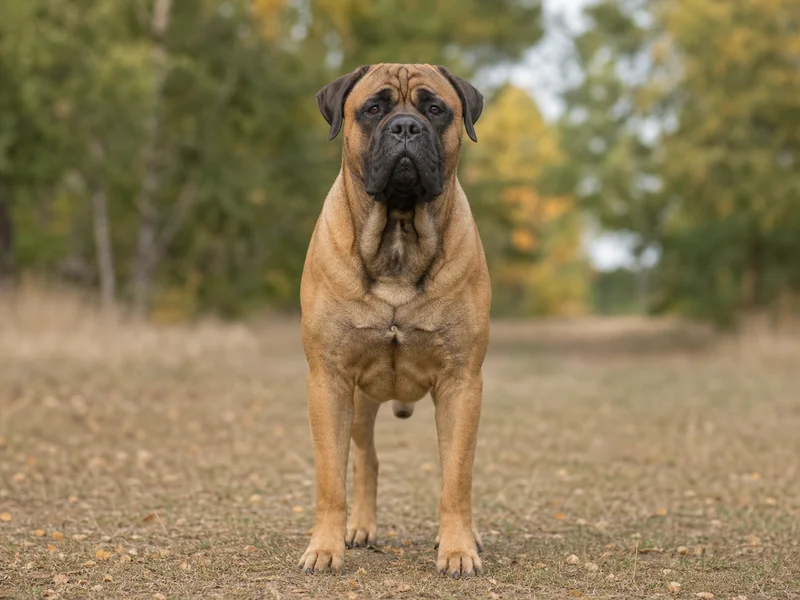
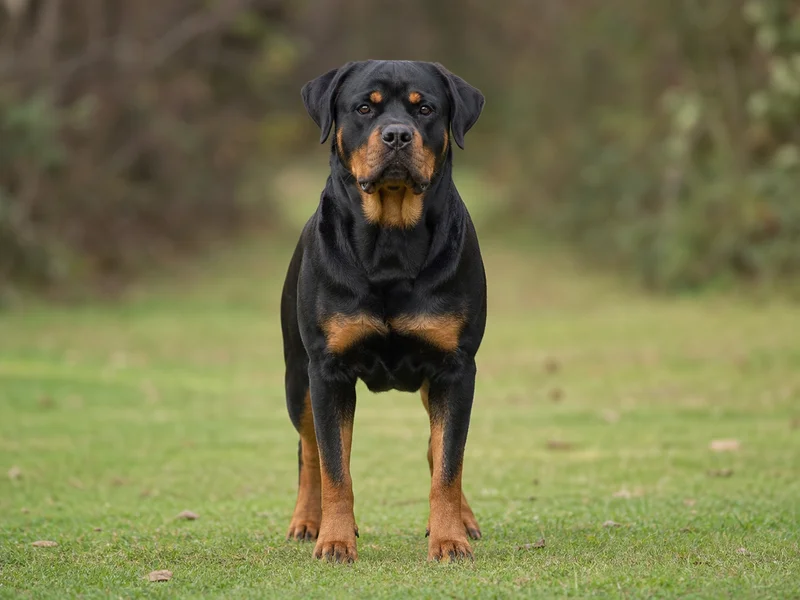
Make the choice from your real routine
These two breeds may share a look, size category, or reputation, but the useful question is where their daily commitments diverge. Start with the option that fits the life you can repeat on a normal week.
Choose the Bullmastiff if…
- your normal weekday has less room for a high-activity dog (energy 3/5 versus 4/5).
- you value the higher listed affection score (5/5 versus 4/5) while still meeting the individual dog first.
Choose the Rottweiler if…
- you want a more active dog and can consistently meet the higher activity profile (energy 4/5 versus 3/5).
- you value the higher trainability rating (4/5 versus 3/5) and will still train consistently.
- the longer listed lifespan range matters to your family (10–11 years, versus 10 years); it is still a broad breed range, not a promise.
Size, handling, and home setup
The listed adult ranges are Bullmastiff: 90–130 lb and 24–27 in (Giant); Rottweiler: 84–130 lb and 23–27 in (Giant).
The listed adult weight ranges overlap or meet at a boundary, so weight alone does not create a clean handling winner. Compare the individual dog’s build, height, strength, and behavior in person.
Exercise and settling at home
Bullmastiff is rated 3/5 for energy and Rottweiler is rated 4/5. Bullmastiff is the lower-activity starting point in this pair.
Use the rating to compare the direction of the commitment, not to promise an exact number of walk minutes. Test your choice against an ordinary weekday, including weather, work, school runs, and the time you can spend on training or enrichment.
Coat work, cleaning, and grooming budget
Bullmastiff is rated shedding 3/5 and grooming 2/5; Rottweiler is rated shedding 3/5 and grooming 2/5. The listed coat requirements are the same.
A lower rating is not a promise of a no-work coat, and a higher rating is not a reason to reject a breed you can care for well. Before choosing, decide who will brush the dog, who will pay for professional grooming if needed, and how much shedding your home can realistically absorb.
Training, noise, and household fit
Bullmastiff is rated 3/5 for trainability and Rottweiler is rated 4/5. A higher score is an edge for structured learning, not a guarantee that a specific puppy or rescue dog will be easy.
For barking, the listed ratings are Bullmastiff 2/5 and Rottweiler 2/5. In shared-wall housing, discuss the individual dog’s alerting behavior and separation history before deciding. The profile flags list Bullmastiff for families with children; Rottweiler is listed for families with children. These are breed-level screening signals, not a substitute for supervised introductions or an individual temperament assessment.
Shared profile signals and gaps
The stored profiles match on shedding (3/5), grooming (2/5), barking (2/5), and child-friendly flag. Do not use those equal data points as a reason to force a winner.
Neither profile carries the dog-friendly flag, cat-friendly flag, apartment-friendly flag, and first-time-owner flag. That is not proof that either breed cannot suit that situation; it means this data does not give either one a positive fit signal, so individual behavior and a more careful assessment matter more.
Use the actual differences above and then compare the individual Bullmastiff or Rottweiler you may bring home: behavior in your setting, current care needs, and the records available from the breeder or rescue.
Plan for the whole commitment
Bullmastiff is listed with an expected lifespan of 10 years; Rottweiler is listed at 10–11 years. These are broad breed ranges, not a forecast for an individual dog.
Ask about breed-appropriate health testing, veterinary records, and the individual dog’s current needs before you commit. A comparison page can narrow the shortlist; it cannot replace those checks.
Five final checks before you decide
- Can your ordinary weekday support the higher activity rating in this pair (Bullmastiff 3/5, Rottweiler 4/5)?
- Can you safely handle the listed adult weights (Bullmastiff 90–130 lb, Rottweiler 84–130 lb) in your vehicle, home, and on leash?
- Have you budgeted for the coat commitment for both options (Bullmastiff: shedding 3/5 and grooming 2/5; Rottweiler: shedding 3/5 and grooming 2/5)?
- Have you met the individual dog or its parents where appropriate, and asked about behavior around children, visitors, other pets, and time alone?
- Have you reviewed breed-appropriate health testing and current veterinary records rather than relying on a scorecard alone?
How to use this comparison responsibly
The ranges, ratings, and fit flags above are breed-level planning signals. They help you form a shortlist, but they cannot predict an individual dog's health, behavior, or compatibility with your household.
Before you commit, read the full Bullmastiff profile and Rottweiler profile, then check the relevant standards and guidance from the American Kennel Club and Fédération Cynologique Internationale. Meet the individual dog, review appropriate records, and ask a qualified professional when your situation needs expert advice.
Last reviewed: July 23, 2026.
Learn more
Frequently asked questions
- Which is easier to handle, a Bullmastiff or Rottweiler?
- Bullmastiff is listed at 90–130 lb and Rottweiler at 84–130 lb, but the ranges overlap or meet at a boundary. Weight alone does not settle handling; compare height, strength, and the individual dog.
- Which needs more activity, a Bullmastiff or Rottweiler?
- Bullmastiff is rated 3/5 for energy and Rottweiler 4/5. Treat the higher score as the higher-activity starting point, then plan from your ordinary weekday rather than an ideal weekend.
- Which has the lower coat-care commitment?
- Both profiles have the same listed coat ratings: shedding 3/5 and grooming 2/5. Coat workload does not break this tie, so compare the individual dog’s condition and the grooming routine you can maintain.
- Which is easier to train, a Bullmastiff or Rottweiler?
- Bullmastiff is rated 3/5 for trainability and Rottweiler 4/5. A higher rating suggests an advantage for structured training, but neither score predicts the behavior of a specific dog.