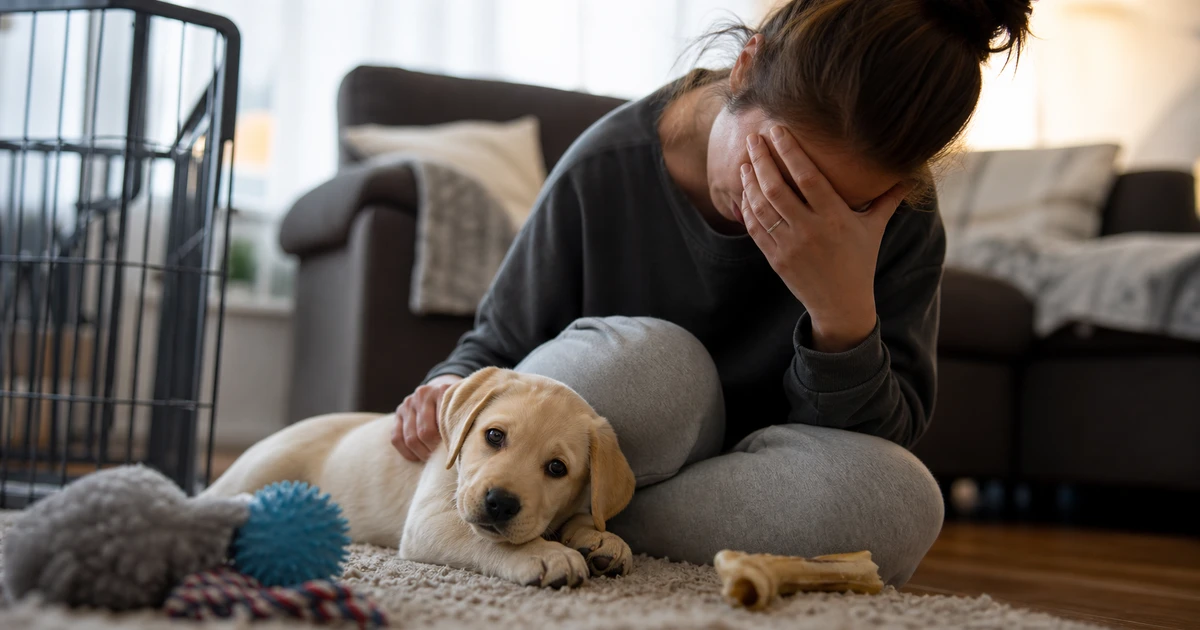
Day 1: The Honeymoon Crashes Hard We imagined tail wags and cuddles. Instead, we got a trembling pup who peed on the rug within minutes. The first night was a symphony of whines—our puppy, alone in a crate for the first time, howled with a grief that cut through walls. We took turns sitting by the crate, fingers poking through the wire, until exhaustion won and we all passed out in a heap on the floor. That first night, sleep was a distant memory. We’d joined the club nobody warns you about: the puppy blues had arrived before we even finished assembling the crate.
Day 2: Constant Vigilance Every waking minute demanded supervision. Puppies explore with their mouths, and those needle-sharp teeth found ankles, fingers, and the corner of the coffee table. Redirecting her to a chew toy became a full-time job; we’d celebrate like it was New Year’s Eve whenever she chose a nylabone over our skin. The potty log already had more accidents than successes. My partner and I staggered shifts just to shower or eat. The constant whining and nipping wore down our patience. I learned why they call it the puppy blues: this tiny creature had upended our lives and left no room for basic self-care. We reminded ourselves that young puppies aren’t malicious—they simply don’t know that human hands aren’t litter-mate playthings. Teaching bite inhibition takes weeks, and force only makes it worse.
Day 3: The Regret Sets In I sat on the bathroom floor and cried. The constant noise, the disrupted sleep, the loss of freedom—it felt like we’d made a colossal mistake. My partner and I snapped at each other over whose turn it was to take the puppy out, over who’d done the last load of enzyme-sprayed laundry. I googled “returning a puppy” at 3 a.m. This is the low point, and it’s exactly where the puppy blues tighten their grip. It’s not a reflection of your dog or your love; it’s a physiological reaction to sleep deprivation and steep learning curves. Your brain is fried, your emotions are raw, and you’re grieving your old life while trying to bond with a creature who sees you as a chew toy.
Day 4: A Fragile Routine We built a schedule, not by the clock, but by the pup’s rhythm: wake, potty, play, eat, potty, crate nap. Enforced naps in the crate gave us tiny windows of sanity. We used a frozen Kong stuffed with kibble to make crate time a treat—positive reinforcement in action. She still cried for the first few minutes, but then a miracle: silence. Twenty minutes of it. We could breathe. The household exhaled. We reminded ourselves that puppies need enormous amounts of rest to grow, and a tired, overstimulated puppy is a bitey demon. Quiet time was a gift, not a punishment. Even that brief respite recharged our patience.
Day 5: Small Victories She sat on cue for a piece of kibble. She chose a chew toy over my shoelace. We caught her sniffing at the back door and rushed her outside just in time. The accidents still happened, but we celebrated each outdoor success with an impromptu party—treat, praise, dance. That’s the core of reward-based training: mark and reward the behavior you want, immediately. It felt silly, but her tail wagged and she started seeking out the grass. Progress, not perfection. We learned that punishing accidents only teaches a puppy to hide them, while rewarding the right spot builds trust and understanding.
Day 6: The First Glimpse of Good She napped for a solid hour while I drank a hot coffee. She wobbled over and licked my face without biting. We took her on a careful sniff-walk—no puppy classes yet, but she got to see a leaf rustle and meet a calm adult dog at a distance. The constant dread started to lift, replaced by a stubborn hope. I realized the puppy blues are less about the dog and more about the sudden, seismic shift in identity. You stop being a person with flexible time and become a round-the-clock caregiver. That transition is brutal, but it’s temporary. And in the quiet moments—the deep puppy sighs, the clumsy pounce on a toy—a genuine affection started to bloom.
Day 7: A Week In We’re not out of the woods. She still nips, still cries, still wakes us at dawn. But we’ve learned a few things: our puppy isn’t broken, and neither are we. The early weeks demand consistency and positive reinforcement—methods that research shows build trust far more effectively than force or intimidation. We know we must socialize her gently between now and about four months of age, exposing her to new sounds and surfaces without overwhelming her. We also know that adolescence will bring its own challenges, so our calm, patient approach must continue. One good day doesn’t erase the hard ones, but the ratio is starting to shift.
Decision Frame: When Is It More Than the Puppy Blues? Acute first-week stress is universal. It’s the shock of a new rhythm, not a character flaw. The puppy blues are a normal reaction to a monumental life change. But if after several weeks the exhaustion, resentment, or anxiety remain debilitating, it’s worth an honest assessment. Maybe your lifestyle can’t accommodate the exercise needs of a high-energy pup. Maybe your living situation—like an apartment with thin walls—clashes with a breed known for barking. If you selected a Labrador Retriever or a Golden Retriever, you probably researched their family-friendly reputations; even so, every puppy pushes you to the edge. An independent Beagle may follow its nose into trouble, while a German Shepherd Dog demands intensive mental engagement. All can be great matches, but only if you have the bandwidth.
If you suspect the breed isn’t right for your home, revisit our guide to best dog breeds for families. If you’re in a quieter stage of life, consider best dog breeds for seniors. Sometimes, rehoming is the compassionate choice when a puppy’s needs and your reality don’t align. More often, the puppy blues pass. Give yourself permission to struggle, ask for help, and remember: the hyperactive landshark phase doesn’t last. The dog you imagined is still in there, and she’s worth the sleepless nights.