

Every time I see someone swoon over a tiny white fluffball in an elevator, I mentally add up the daily brushing minutes, the bark-counter-barks, and the inevitable potty pad tucked behind the couch. Small white dogs look like apartment perfection—compact, cute, and often pitched as hypoallergenic. But “white and small” is not a personality, and it definitely isn’t a maintenance plan. If you want a dog that actually works in an apartment, not just one that fits on your lap, you have to look past the cotton-ball exterior.

Choosing & ComparingBy Best Family Dog Breeds Editorial Team
Small White Dogs That Actually Work in Apartments
White and small doesn’t mean easy. Here’s which fluffy apartment candidates actually handle close quarters—and which ones will drive your neighbors crazy.
The White-Dog Reality Check
Plenty of small white dog breeds tick the “apartment-friendly” box on a breed profile, but that label only means they can live in small spaces—it says nothing about the trade-offs. The dogs I see genuinely thriving in condos and rentals are the ones whose owners accepted the loud parts, the hairy parts, and the breakable parts before they ever brought a puppy home. So let’s skip the fluff and talk about what actually makes an apartment dog work.
Noise: Your Neighbors Will Have Opinions
The number one complaint I hear about apartment dogs isn’t shedding—it’s barking. In a building with shared walls, a dog who sounds the alarm at every hallway footstep can turn you into the floor pariah. Some white-coated breeds are naturally more vocal than others.
The Maltese, with a barking level of 3 out of 5, will announce visitors with a high-pitched yap that carries. A Bichon Frise is similarly talkative. Both breeds are affectionate and cuddly, but they were bred to be alert companions, not silent shadows. On the quieter end, the Coton de Tulear clocks in at a 2—still awake, but far less likely to narrate every passing delivery truck.
Then there’s the West Highland White Terrier. Barking level 4. This is a terrier through and through, and he will let you—and the entire building—know when someone’s at the door, when a squirrel glances at the window, or when a leaf moves suspiciously. Training a quiet command is non-negotiable, but even with work, a Westie is not a discreet dog.
For true apartment stealth, consider the Japanese Chin. Barking level 2, and many owners report their dogs rarely bark at all. This breed is cat-like in demeanor, perfectly content to perch on the back of a sofa and watch the world silently. The trade-off? They’re delicate, not particularly playful, and a trip outside might be more of a negotiation than a walk.


Exercise: More Than a Lap Around the Block
Small white dogs often get marketed as low-energy, but that label misleads. The ones that truly fit apartment life aren’t sedate—they’re adaptable. A Havanese (energy 3) will follow you around the apartment all day, happy with a couple of 20-minute walks and some indoor fetch. Miss a day, and they’ll just snuggle harder. A Japanese Spitz (energy 3) needs more—two solid 30-minute sessions, in my experience, and a puzzle toy to keep his fox-sharp brain busy. Skip the outdoor time, and you’ll hear about it.
The Papillon, despite its tiny stature, packs a surprising amount of athleticism (energy 4). These dogs excel in agility and need more than a short leash loop around the block. A flirt pole or a hallway fetch session can work, but they’ll be bouncing off the walls if under-exercised. Meanwhile, the Westie (energy 4) would prefer a yard to dig in, but will accept a long walk plus a vigorous game of tug. Without it, that bright white coat will be seen burying a hole in your throw pillows.


Coat Upkeep: That Pristine White Comes at a Price
White coats hide nothing. Any dust, drool, or tear stain is immediately visible. And the breeds that look like walking cotton balls—the small fluffy dog breeds like Bichon, Coton, and Maltese—require daily grooming to prevent matting. A Maltese coat, with a grooming level of 5 out of 5, is a floor-length single silk layer that tangles if you look away too long. Professional grooming every 4 to 6 weeks is standard, and daily brushing at home isn’t optional.
The Bichon Frise and Coton de Tulear are similarly high-maintenance (grooming 4). Their curls trap dead hair instead of shedding it, which is great for allergies but means you’re brushing down to the skin every day. The Japanese Spitz sheds differently—grooming level 3, but shedding level 3, with a heavy seasonal blowout that will coat your apartment in white fluff. If you like wearing dark colors, rethink.
On the lower-effort side, the Japanese Chin and Papillon have sleek, silky coats that need brushing a few times a week, not daily. But they’re not hypoallergenic, and they still drop hair. None of these dogs are truly no-maintenance.
Fragility: They’re Not Stuffed Animals
Small size means fragility. A 5-to-7-pound Maltese can break a leg leaping off a couch. A Coton at 8 pounds is light-boned enough that a clumsy drop by a toddler spells disaster. This is not hypothetical—I’ve seen it. If you have young children or boisterous visitors, the tinier breeds are a constant supervision burden.
The Westie (15–22 pounds) and Japanese Spitz (11–20 pounds) are sturdier, more able to handle a bump. But even they shouldn’t be roughhoused. And all of these breeds are companion animals first; leaving them alone for 9-hour workdays is a recipe for anxious destruction. The velcro-breed reality means a midday dog walker or a work-from-home schedule is often the difference between a content dog and a stressed one.
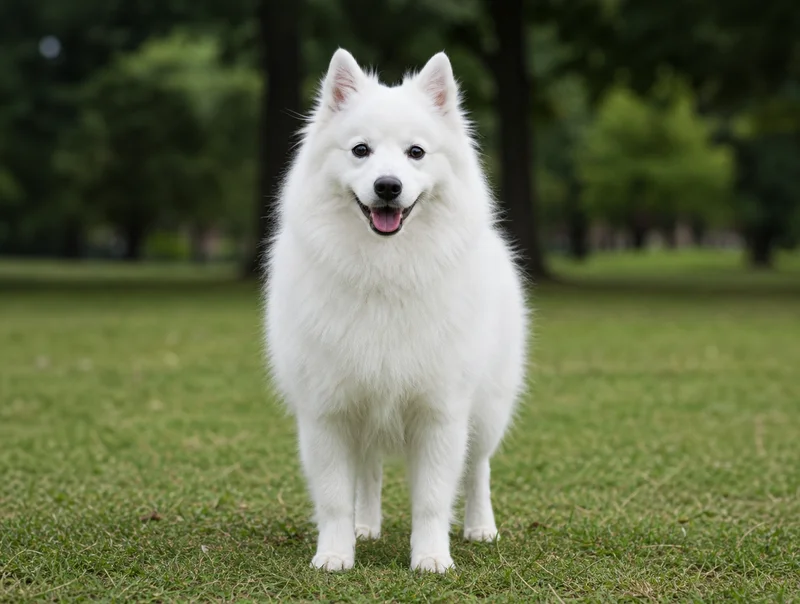

The Practical Stuff You’ll Deal With Daily
Beyond breed traits, there’s the day-to-day reality of living with a white dog in close quarters.
Tear stains and face wipes: Maltese, Bichons, and similar white-faced breeds develop reddish-brown tear stains. Daily wiping with a damp cloth or vet-recommended wipe helps, but they’ll still appear. Keep the hair around the eyes trimmed short.
White coat dirt: A quick walk on a rainy sidewalk turns white paws gray. Keep unscented dog wipes by the door for a post-walk wipe-down. A whitening shampoo bath every month helps, but don’t overdo it.
Elevator and hallway noise: In buildings with thin walls, train a “quiet” command from day one. A white noise machine near the door can muffle hallway sounds that trigger barking. When the elevator dings, reward your dog for staying quiet before he has a chance to react.
Grooming budget: Professional grooming for these breeds isn’t cheap. Based on data from breed clubs, a full groom every 4 to 8 weeks typically costs $50–$100 a pop. For a Maltese or Bichon that needs frequent trims, that’s $600–$1,200 a year. Factor that in before you fall for the fluff.
The right small white dog can absolutely thrive in an apartment. But the ones that do are the ones whose owners didn’t buy the fairy tale. They bought a comb, a noise machine, and a really good pair of dog wipes. And they understood that a white coat means a lot of looking, but also a lot of upkeep.





Breeds mentioned in this article
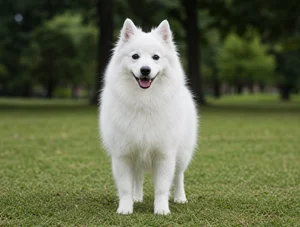 Japanese Spitz
 Maltese
 Papillon
 West Highland White Terrier
Free dog tools
Useful calculators for dog owners
🍫Chocolate Toxicity CalculatorEstimate the risk from the type and amount of chocolate your dog ate, by weight.🍖Dog Food CalculatorEstimate dry-food cups, wet-food containers, or fresh-food grams from daily calorie needs and your label.💧Dog Water Intake CalculatorHow much water your dog should drink per day, by weight, activity and food type.🦴Dog Treat Calorie CalculatorUse the 10% treat rule to calculate a safe daily treat budget and food adjustment.🎂Dog Age CalculatorConvert your dog’s age to human years using the modern, size-adjusted formula.⏳Dog Lifespan CalculatorEstimate life expectancy from breed size and weight, with tips to add healthy years.
Dog Diary
More articles you might like
Health
Hypoallergenic Dog Grooming: A Practical Guide for Allergy-Aware Homes
Low-shedding dogs still need thoughtful coat care. Learn what grooming can—and cannot—do in an allergy-aware home.
Tips
Best Large Dogs for Apartments: Calm Big-Breed Options and Real Constraints
Large dogs can fit apartment life when their energy, barking, grooming, and household fit align. Compare six database profiles.

Tips
Low-Maintenance Dogs for First-Time Owners: What “Easy” Really Means
“Low maintenance” is a fit between a dog’s scorecard and your routine—not permission to ignore a dog. Compare six first-time-friendly profiles.

Tips
Big Hypoallergenic Dogs: Large Low-Shedding Breeds and Their Trade-Offs
A larger low-shedding dog can still demand grooming, activity, and thoughtful household planning. Compare six profiles before choosing one.
Find your perfect dog
Browse our in-depth breed guides:
Share