

You hear the thump of little feet chasing through the hallway, and your neighbor’s ceiling fan wobbles. Add an excited kid and a barking dog, and suddenly apartment living feels like a pressure cooker. But a dog who fits your space—not just physically, but in noise, energy, and flexibility—can turn that chaos into a cuddle puddle. The best dog breeds for families don’t always need a yard; they need the right match for your walls.

Choosing & ComparingBy Best Family Dog Breeds Editorial Team
Best Apartment Dog Breeds for Kids: Family Dogs for Smaller Homes
Searching for an apartment-friendly dog that's great with kids? These breeds combine low barking, gentle temperaments, and compact size for happy family living in smaller spaces.
Family decision guide
Choosing a family dog for an apartment?
Best for: Smaller-space households comparing barking, exercise, size, and indoor adaptability.
Watch out: A small body does not guarantee quiet behavior or low exercise needs.
This page answers the narrower question best apartment dog breeds for kids and families. For the full shortlist across sizes and lifestyles, start with our best dog breeds for families guide, or use the Family Dog Fit Matrix.
What Makes an Apartment Dog Kid-Friendly?
Before arguing over breeds, figure out what “small-home friendly” actually means. Size alone doesn’t cut it. A barking, high-energy dog can feel like a bull in a china shop, even if they weigh ten pounds. The ideal apartment dog for a family with kids is one who:
- keeps the volume down when the neighbor’s baby naps
- has moderate energy that doesn’t require backyard sprints
- doesn’t spook easily when a toddler shrieks with joy
- genuinely enjoys (or at least tolerates) being part of kid chaos
Loud, reactive barking is the fastest way to sour a landlord or provoke a noise complaint. High-energy dogs who pace and pant because they can’t run laps will chew furniture and doorframes. And a dog who panics at sudden noise or rough handling? That’s a bite waiting to happen. So we filtered for breeds that score low to moderate on barking and energy, rank high in affection, and are famously patient with children.
Top Apartment Dog Breeds for Families
Basset Hound
Don’t let the sad eyes fool you—this 40–60 lb low-rider is a champion couch potato. With an energy level of just 2 out of 5 and a barking level of 3, the Basset is more likely to snore than to yap. They adore kids; they’ll lumber alongside a toddler at a snail’s pace, and that long, sturdy body can handle an accidental trip or two. Supervision is still non-negotiable, because their long back is easily injured by rough play or jumping. Their short, dense coat needs minimal grooming (level 2), but it does shed a moderate amount. Bassets thrive on scent games and a couple of slow, sniff-filled walks a day—no sprinting required.
Bichon Frise
If you love small fluffy dog breeds, the Bichon lands high on the list. At 11–15 lb, this cotton-ball dog is a cheerful, playful shadow who adapts easily to apartment life. They shed very little (level 1), making them a solid pick for allergy-conscious families, but that tight white coat demands daily brushing and a pro groom every 4–6 weeks (grooming needs 4). Bichons are gentle and patient with respectful children, and their moderate energy (3) means a few short play sessions and a walk usually satisfy them. Their barking is a solid 3—enough to announce the mail carrier, but trainable.
Boston Terrier
For families after low maintenance dogs, the “American Gentleman” shines. Weighing 11–24 lb, with a grooming need of just 1 and shedding level 2, the Boston is practically wash-and-wear. They’re apartment-friendly and connect deeply with kids, though their energy is a 4—higher than most on this list. So plan for two brisk 10- to 15-minute sessions of tug or fetch, plus daily walks. Boston Terriers are famously affectionate (5) and surprisingly quiet (barking 2). Their short coat and flat face mean they overheat fast, so keep indoor play cool.
Cavalier King Charles Spaniel
Cavaliers melt into family life like butter on toast. This 11–18 lb spaniel is so gentle and patient that they’re regularly called “love sponges.” With barking at just 2, energy at a moderate 3, and affection maxed at 5, they’re tailor-made for apartment living with children. Their silky coat does shed (level 3) and needs regular grooming (3), but they don’t require a yard or marathon walks. Cavaliers bond intensely and dislike being left alone, so they do best with a stay-at-home parent or a midday visitor.
Coton de Tulear
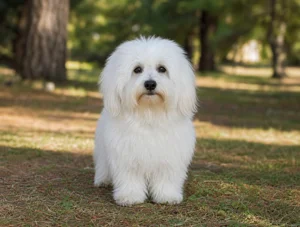
Another fluffy charmer, the Coton weighs 8–15 lb and sports a cottony coat that’s nearly non-shedding (level 1). Their bright, clownish personality entertains kids for hours, and their barking is low (2). They adapt wonderfully to apartments, needing just a couple of short daily walks and indoor puzzle games. Be warned: that glorious coat mats quickly, so daily combing and regular trims are non-negotiable (grooming 4). Cotons thrive on companionship and can live 15–19 years, so you’re making a very long-term friend.
French Bulldog
Frenchies are the ultimate low-energy apartment mate. At 24–29 lb and just 11–13 inches tall, they barely take up floor space. Their energy level is a couch-hugging 2, and barking is an impressive 1—you’ll rarely get a complaint. They’re sturdy and affectionate with children, though their flat face means they can’t handle heat or strenuous exercise. Grooming is minimal (1), but they shed seasonally. Frenchies are also famously stubborn and may demand more patience during training, but their constant, snuggly presence is hard to resist. For a low-key indoor companion, they’re hard to beat.
Havanese
The Havanese is a 7–13 lb bundle of joy with a silky coat that barely sheds (level 1). They were practically invented for apartment living: a couple of short daily walks and some indoor fetch keep them happy. Their outgoing, funny nature makes them fantastic playmates for gentle children, and their barking is a trainable 3. That long coat needs daily attention (grooming 4), but the personality payoff is huge—they’ll stick to you like velcro and keep the whole family laughing.
Pug
Pugs are compact, 13–18 lb comedians with a face built for comedy. Their energy is a sluggish 2, and barking a modest 2, so they’re perfectly content with a short daily walk and lots of lap time. They’re famously affectionate and patient with kids, but those facial wrinkles need daily cleaning to prevent infections, and they shed more than you’d expect a short-haired dog to (level 3). Pugs overheat easily and shouldn’t be exercised in hot weather. If your family wants a loyal, low-key clown who fits in a shoebox apartment, the Pug delivers.


Kid-Specific Apartment Rules Every Family Should Follow
Even the most kid-tolerant breed has limits, and in a small space those limits get tested fast. Here’s how to prevent problems before they start:
Teach calm greetings. Excitement is contagious, but a dog surrounded by jumping, shouting children often panics. Show kids to sit quietly and let the dog approach. Gentleness works better than a bear hug, especially with tiny breeds like the Havanese or Coton.
No chasing indoors. Apartments rarely have escape routes for a terrified dog. Running and screaming can trigger a nip or cause a small dog to leap off furniture and get hurt. Keep high-energy play outside, and inside stick to quiet games.
Give the dog a rest zone. Every dog needs a place where no one bothers them—a crate, a bed in a quiet corner, or a gated-off laundry nook. If the dog heads there, kids must wait. This prevents guarding growls and gives the dog a pressure valve.
Read stress signals. Dogs say “I’m uncomfortable” with body language before they ever growl. Look for lip licking, yawning, turning the head away, or a stiff posture. If you see these, separate the kids and give the dog space. A relaxed pup has soft eyes, a loose body, and a wagging tail.
These small habits turn a cramped apartment into a peaceful home where both kids and dogs feel safe. And the right breed, paired with these ground rules, means you’ll hear laughter, not complaints, through the walls.
Remember, no breed is a guarantee—every dog is an individual. But choosing a kid-savvy, apartment-built companion stacks the deck in your favor. Spend time with the dog beforehand, and always supervise little hands with furry friends. The result? A family life so full of tail wags you’ll forget you don’t have a backyard.






Breeds mentioned in this article
 Coton de Tulear
 French Bulldog
 Havanese
 Pug
PugFree dog tools
Useful calculators for dog owners
🍫Chocolate Toxicity CalculatorEstimate the risk from the type and amount of chocolate your dog ate, by weight.🍖Dog Food CalculatorEstimate dry-food cups, wet-food containers, or fresh-food grams from daily calorie needs and your label.💧Dog Water Intake CalculatorHow much water your dog should drink per day, by weight, activity and food type.🦴Dog Treat Calorie CalculatorUse the 10% treat rule to calculate a safe daily treat budget and food adjustment.🎂Dog Age CalculatorConvert your dog’s age to human years using the modern, size-adjusted formula.⏳Dog Lifespan CalculatorEstimate life expectancy from breed size and weight, with tips to add healthy years.
Dog Diary
More articles you might like
Health
Hypoallergenic Dog Grooming: A Practical Guide for Allergy-Aware Homes
Low-shedding dogs still need thoughtful coat care. Learn what grooming can—and cannot—do in an allergy-aware home.
Tips
Best Large Dogs for Apartments: Calm Big-Breed Options and Real Constraints
Large dogs can fit apartment life when their energy, barking, grooming, and household fit align. Compare six database profiles.

Tips
Low-Maintenance Dogs for First-Time Owners: What “Easy” Really Means
“Low maintenance” is a fit between a dog’s scorecard and your routine—not permission to ignore a dog. Compare six first-time-friendly profiles.

Tips
Big Hypoallergenic Dogs: Large Low-Shedding Breeds and Their Trade-Offs
A larger low-shedding dog can still demand grooming, activity, and thoughtful household planning. Compare six profiles before choosing one.
Find your perfect dog
Browse our in-depth breed guides:
Share