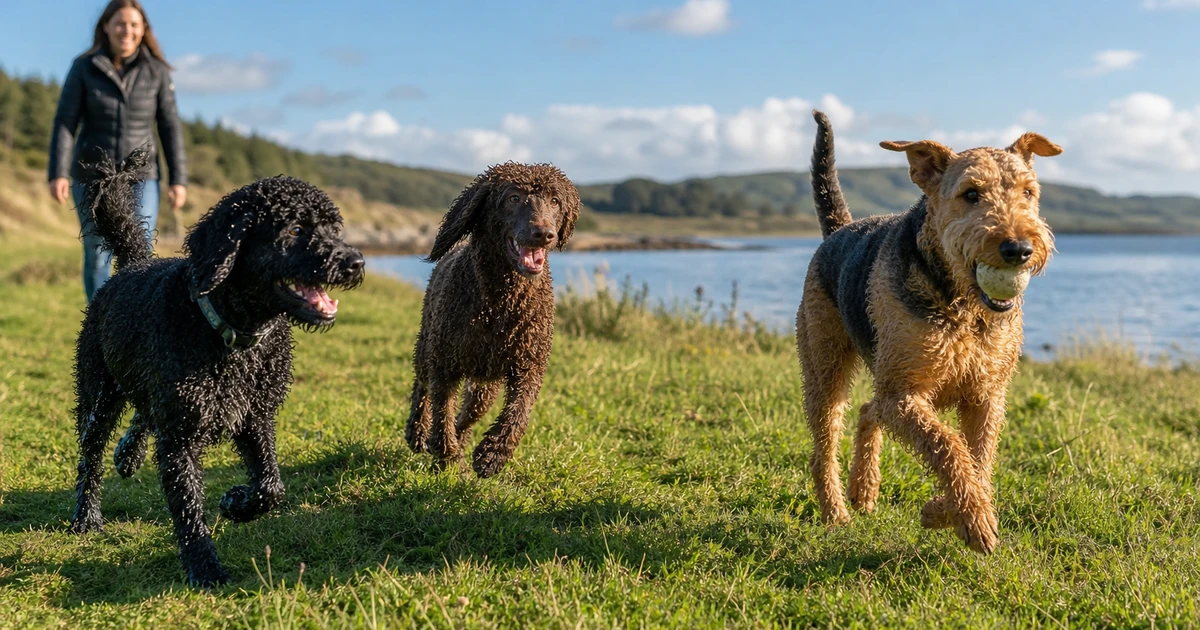
First Dog for Families With Kids: 8 Breeds and Trade-Offs
Choosing & ComparingBy Best Family Dog Breeds Editorial Team

First Dog for Families With Kids: 8 Breeds and Trade-Offs

A dog that forgives clumsy cuddles and a first-timer’s learning curve—these eight breeds deliver. Here’s how to choose the right one for your family.

Family decision guide

Is this your family’s first dog?

Best for: New owners who need a forgiving temperament, trainability, and a sustainable care routine.

Watch out: A popular family breed can still be overwhelming if its exercise or grooming needs do not fit.

This page answers the narrower question first dog for families with kids: trainability and routine trade-offs. For the full shortlist across sizes and lifestyles, start with our best dog breeds for families guide, or use the Family Dog Fit Matrix.

How this guide fits the topic

This guide adds the children-at-home constraint. Use the broader guide to compare a first dog across household types.

Best Dog Breeds for First-Time Owners

Deciding to bring a dog into a home full of kids when you’ve never owned one before can feel like you’re assembling a piece of furniture without the instructions. You know it should work out, but a few missing bolts could send the whole thing sideways. The breeds that crack the code share a forgiving nature, manageable daily needs, and a genuine fondness for the noise and chaos of family life. They won’t demand a flawless handler, and they rarely hold a grudge when a child’s hug is a little too enthusiastic.

When you’re searching for best dog breeds for families, start with those that have documented gentle temperaments, not just a pretty face. These eight breeds consistently show up as first-time-friendly and kid-approved. I’ve seen them navigate crayons dropped on their heads, impromptu living-room parades, and owners who still mix up “stay” and “wait.” They manage it all with a wag and a nudge for more.

Breeds That Make the Grade

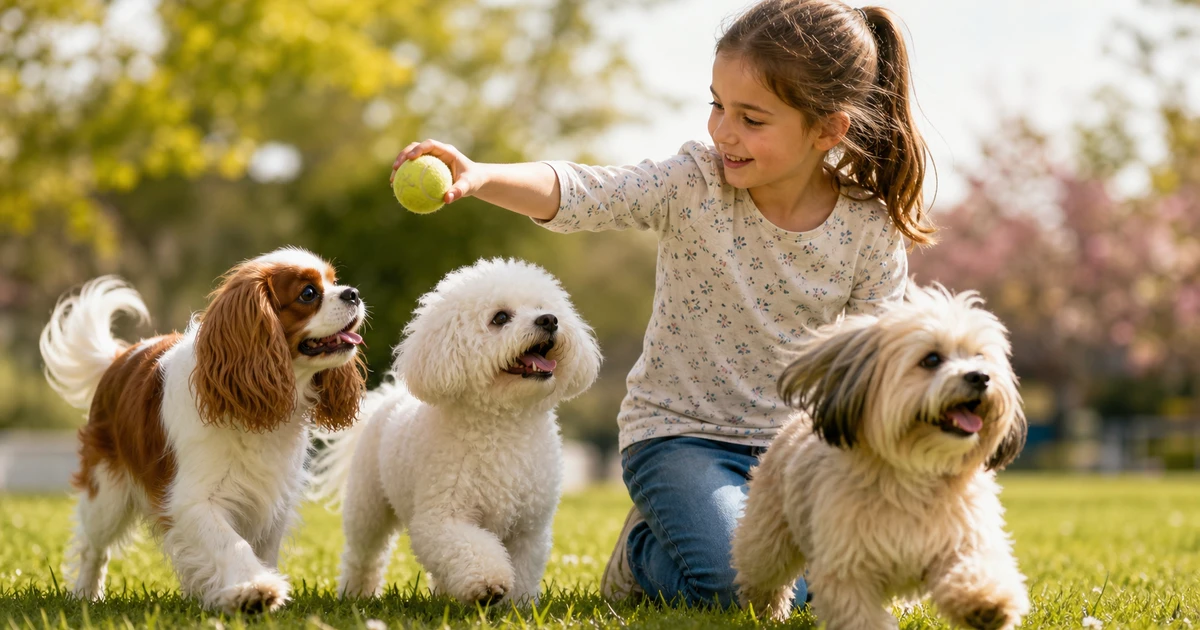
Cavalier King Charles Spaniel (11–18 lb, energy 3, trainability 4, grooming 3, barking 2). If you want a dog who treats every child like a long-lost friend, the Cavalier is the one. They’re gentle enough to nap through a movie and playful enough to chase a ball down the hall. Their eagerness to please makes training feel like a conversation, not a chore, and their low barking level means fewer noise complaints from the neighbors.

Bichon Frise (11–15 lb, energy 3, trainability 4, grooming 4, barking 3). For families who love small fluffy dog breeds, the Bichon Frise brings a powder-puff coat and a happy-go-lucky attitude. They barely shed, which is a win for allergy-prone homes, but that coat demands daily brushing and a regular date with a groomer. Their playful, affectionate streak makes them a hit with kids who understand that a 12-pound dog is a lap companion, not a stuffed toy.

Havanese (7–13 lb, energy 3, trainability 4, grooming 4, barking 3). The Havanese is a tiny, upbeat shadow who wants to be part of every board game and snack break. They’re smart and responsive, though house training can test your patience if you aren’t consistent. Their silky coat is another non-shedding option, but the grooming commitment is real – count on combing out that floor-length hair several times a week.

Coton de Tulear (8–15 lb, energy 3, trainability 4, grooming 4, barking 2). Known for a cottony-soft coat and a long, healthy lifespan (15–19 years is common), the Coton brings a cheerful, clownish energy that kids adore. They’re sturdy enough for gentle play yet compact enough for apartment living. Like the Bichon and Havanese, they’re low-shedding but high-maintenance on the grooming front, so a family that can’t commit to daily brushing should look elsewhere.

Pug (13–18 lb, energy 2, trainability 2, grooming 2, barking 2). The Pug’s charm is the relaxed, affectionate way they wedge themselves into your life—and onto your couch. They need a daily walk but not much more, and their grooming is straightforward except for those iconic wrinkles, which need a quick wipe every day. Stubbornness can make training a negotiation (food helps), and the constant shedding surprises many new owners. Still, for a busy family wanting a low-key companion, the Pug’s loyalty and comic timing are hard to beat.

Boston Terrier (11–24 lb, energy 4, trainability 4, grooming 1, barking 2). If you want low maintenance dogs that still pack personality, the Boston Terrier’s short, smooth coat needs only a quick brush and the occasional bath. They’re lively and playful but settle after a couple of short walks and a puzzle toy. Their gentle, friendly nature makes them a steady playmate for respectful kids, and their quiet, non-barking bent suits apartment life.

Beagle (20–24 lb, energy 4, trainability 3, grooming 2, barking 4). The Beagle’s sunny, tail-wagging personality fills a house with joy, but know that a nose run the show. A fenced yard and leash walks are non-negotiable, because a scent trail can override every command. Their vocal, baying bark can test thin walls, and they’ll counter-surf with Olympic precision. For active families who love a daily adventure and can laugh at a stubborn streak, the Beagle repays the patience with endless affection.

Golden Retriever (55–75 lb, energy 4, trainability 5, grooming 3, barking 2). No surprise here: the Golden tops almost every family-friendly list. They are patient, forgiving, and eager to please, with a trainability score that makes first-time owners look like pros. The trade-offs are real—shedding at 5/5, a higher daily activity need, and a body that can accidentally knock over a toddler in excitement. If you have space and time, this breed can become the center of your home.


What First-Time Families Often Underestimate

Bringing a dog into a house with kids isn’t just about picking the right breed—it’s about setting the whole family up to succeed. These are the pieces I’ve seen trip up new owners again and again.

Consistent rules are the glue. If the kids let the puppy chew on shoelaces one day and scold him the next, you’re teaching confusion, not boundaries. Dogs thrive on predictability. Even a smart breed like a Bichon won’t generalize a rule that isn’t enforced by everyone, every time. Decide as a family what’s off-limits (the couch, the kitchen, jumping up) and stick to it.

Supervision isn’t optional. Even the calmest Golden can get accidentally hurt by a toddler who falls on it. Teach kids to sit on the floor for cuddles, to never interrupt a dog while he’s eating, and to freeze like a statue if the dog jumps. A dog’s body language—a stiff posture, a hard stare, a lip lick—is the early warning system. When you see it, give the dog a break before the air turns tense.

Reward-based training isn’t just kinder—it’s more effective. These breeds respond to praise, play, and treats because they’re bred to work with people. Punishment or harsh tones can shut down a sensitive Cavalier or make a Beagle more stubborn. A clicker and a handful of pea-sized treats go further than any scolding. And remember: a tired dog is a well-behaved dog. A bored, under-exercised puppy will find his own entertainment, usually involving your furniture.

Calm introductions shape a lifetime. When the new dog first walks through the door, resist the urge to throw a welcome party. Let him explore the house on a leash, at his own pace. Have kids sit quietly and let the dog approach them. A slow, controlled first meeting prevents the overexcitement that can lead to nervous nipping or a dog who hides for the next three days.

The dogs on this list didn’t end up here by accident. They’ve earned their place through generations of close living with families, and they’ll repay your effort with a kind of affection that fills in the quiet moments. A little preparation turns a gamble into a sure thing.

Breeds mentioned in this article

Free dog tools

Useful calculators for dog owners

All tools →

Dog Diary

More articles you might like

All articles →

Find your perfect dog

Browse our in-depth breed guides:

Share